Rijeka, Croatia Executive Search

Executive Search in Rijeka

KiTalent brings sector-specific intelligence and direct headhunting capability to senior leadership searches across Rijeka.

Track record on suitable mandates: 7–10 working days to validated shortlist · 96% one-year retention · NPS 72. How we measure performance.

Why Rijeka is one of the Adriatic's most concentrated executive markets

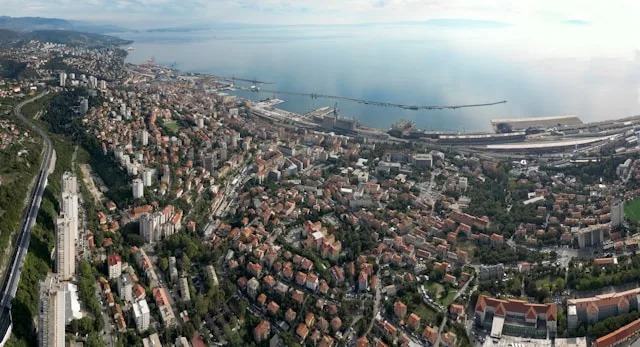
Searches in Rijeka are managed from KiTalent's Turin hub, with support from our other hubs when the candidate pool crosses markets. Standard recruitment methods fail in Rijeka for reasons that go beyond the usual talent shortage narrative. The city is a mid-size economy undergoing a rare triple pivot: from bulk cargo to high-value containerised logistics, from legacy shipbuilding to green marine engineering, and from pharmaceutical manufacturing to biotech R&D. Each of these transitions demands a different type of leader. And the pool of candidates qualified for any of them is extraordinarily small.

Rijeka's professional community is compact. The working-age population is contracting at roughly 0.8% per year, and the executive layer across maritime logistics, pharma, and advanced manufacturing is even thinner. A poorly handled approach to a senior supply chain director at APM Terminals or a regulatory affairs lead at JGL does not just risk that candidate. It risks the client's reputation across the entire Primorje-Gorski Kotar business community. The hidden 80% of passive talent that determines search quality in Rijeka requires discreet, individually calibrated outreach. Mass LinkedIn campaigns are not just ineffective here. They are counterproductive.

Senior roles in supply chain management and pharma R&D now command 20 to 30% premiums over 2023 levels. This is not gradual wage growth. It is a correction driven by two forces: EU labour mobility pulling experienced professionals toward Western European employers, and the sudden influx of logistics and biotech investment creating demand that Rijeka's local talent base cannot absorb. Companies that enter a search with outdated compensation assumptions lose candidates at the offer stage. The cost of recalibrating mid-search is measured in months, not days.

Rijeka's geography makes it a naturally cross-border market. The Slovenian border is 30 kilometres away. Cross-border commuting from both Slovenia and Bosnia-Herzegovina is embedded in the city's workforce model. Senior hires in marine engineering, port automation, and industrial components routinely involve candidates holding qualifications from multiple jurisdictions. This means every search carries an element of international executive search complexity, even when the role is nominally domestic. A firm that treats Rijeka as a purely Croatian market will miss a material portion of the available talent. These dynamics make Rijeka a market where the Go-To Partner approach is not a brand claim but a practical necessity. The city rewards firms that already know who holds which role, at which company, before a mandate begins.

What is driving executive demand in Rijeka

Several structural forces are converging to shape executive demand across Rijeka.

Maritime logistics and port operations

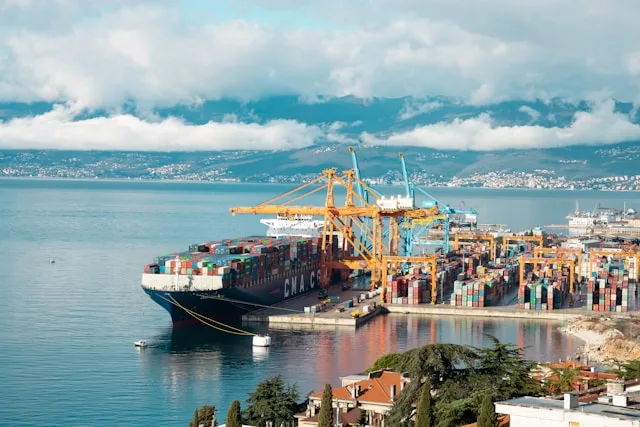
The Rijeka Gateway deep-water terminal, backed by €280 million in investment from APM Terminals, reached operational capacity of 600,000 TEU annually in late 2025. Port of Rijeka Authority projects 26 to 28 million tonnes of cargo throughput in 2026, up from 18 million in 2023. This is not incremental growth. It is a fundamental repositioning of Rijeka as the preferred Adriatic entry point for Central European supply chains serving Czech, Slovak, and Hungarian manufacturing. APM Terminals Croatia alone employs over 1,200 people directly, and Free Zone Rijeka hosts 140+ entities across customs-free warehousing, automotive parts distribution, and cold-chain logistics. The leadership demand here spans Chief Supply Chain Officers capable of multimodal integration, port automation engineers managing AGV and crane systems, and general managers for logistics park tenants. KiTalent's industrial manufacturing and maritime, shipbuilding and offshore practices are directly relevant to every one of these mandates.

Pharmaceutical manufacturing and biotech R&D

Jadran Galenski Laboratorij is the city's largest private employer with approximately 1,800 full-time staff and annual exports exceeding €180 million. The completion of Phase II of the Kantrida Biotech Campus in late 2025, focused on nanotechnology drug delivery systems, signals Rijeka's ambition to move from pharmaceutical manufacturing into higher-value R&D functions. The surrounding ecosystem is growing too. University Hospital Centre Rijeka anchors a contract research organisation cluster serving multinationals running Phase II and III trials under EU regulatory frameworks. Demand for Regulatory Affairs Directors with EU MDR expertise, pharmaceutical QA specialists, and biotech campus directors will intensify as the cluster scales. Our healthcare and life sciences search practice works extensively with pharma and medtech firms navigating exactly this kind of capability expansion.

Green marine engineering and energy transition

Rijeka's shipbuilding legacy is not disappearing. It is being rewritten. The 3. Maj and Viktor Lenac shipyards have pivoted toward green retrofitting: scrubber installation, hybrid propulsion systems, and offshore platform maintenance. Siemens Energy's selection of Rijeka over Koper and Trieste for a Grid Stabilization Technology Hub in 2025 confirms the city's positioning in the Northern Adriatic offshore wind corridor. The recently launched Croatian Maritime Innovation Hub supports SME suppliers in digital twinning and predictive maintenance. Marine Retrofit Project Managers with green compliance expertise are among the most difficult roles to fill. The talent sits at the intersection of naval architecture, environmental regulation, and project management. A conventional search rarely surfaces candidates with all three. This is where talent mapping conducted before a mandate begins delivers its highest value.

Automotive and industrial components

The Škrljevo Industrial Zone hosts Denso Manufacturing Croatia, producing hybrid vehicle componentry, alongside Končar Electrical Industries' traction systems operations. The zone's rail electrification, completed in 2025, and its integration into Free Zone Rijeka create a manufacturing corridor that is increasingly attractive to Central European OEMs looking for near-shore production capacity. The automotive leadership talent required to run these operations often overlaps with the industrial automation skill sets needed by the port sector, creating direct competition for the same candidates within the same city.

Digital economy and maritime AI

STEP RI, Rijeka's science and technology park, houses over 65 startups with 2025 to 2026 cohorts concentrated in maritime AI for port optimisation, cybersecurity for critical infrastructure protection, and immersive tech built on the city's European Capital of Culture digital investments. The University of Rijeka's Center for Artificial Intelligence and Cybersecurity launched in 2025 and directly feeds this cluster. Senior DevOps engineers in Rijeka now earn approximately €42,000 annually, narrowing the gap with Zagreb. The talent war for AI and technology leaders in Rijeka is not fought against other Croatian cities alone. It is fought against remote-work offers from Western European tech firms willing to pay Berlin or Amsterdam rates for Rijeka-based talent.

Sector strengths that define Rijeka executive search

Rijeka's executive search market is strongest where its economic specialisation is deepest.

Why companies partner with KiTalent for executive search in Rijeka

Companies rarely need only reach in Rijeka. They need interpretation, calibration, and a search architecture that reflects the real structure of the market.

We operate across Croatia

Our team runs Rijeka mandates through KiTalent's four regional hubs, combining local market intelligence with cross-border execution across Europe, the Americas, the Middle East, and Asia Pacific.

We reach the candidates that matter

The strongest executives in Rijeka are passive. Our direct headhunting approach engages the hidden 80% of passive talent through discreet outreach rooted in real market knowledge.

We do not start from scratch

Our parallel mapping methodology means we already hold live intelligence on restructuring, transition windows, compensation patterns, and candidate attraction opportunities when a brief arrives.

Our model de-risks the investment

In Rijeka, the cost of a wrong executive hire extends far beyond the recruitment fee. Our Proof-First Search model lets clients see real market output and qualified candidates before the bulk of the investment is committed.

Essential reading for Rijeka hiring decisions

These resources provide deeper market intelligence and explain how KiTalent turns insight into a faster, more transparent search process.

Frequently asked questions about executive search in Rijeka

These are the questions most closely tied to how executive search really works in Rijeka.

Why do companies use executive recruiters in Rijeka?

Rijeka's senior talent pool is exceptionally concentrated. The city's economy is defined by a small number of large employers in maritime logistics, pharma, and marine engineering, and the qualified leaders across these sectors largely know each other. Job postings attract active candidates, but the executives capable of running a container terminal ramp-up, scaling a biotech campus, or leading a green retrofit programme are already employed and not searching. An executive recruiter with pre-existing relationships and sector-specific credibility is the only way to access this population. The 20 to 30% wage premiums that have emerged in supply chain and pharma R&D since 2023 make compensation calibration equally critical. Without it, offers fail.

What makes Rijeka different from Zagreb for executive search?

Zagreb offers a larger talent pool, more diversified sectors, and greater candidate liquidity. Rijeka's market is the opposite: smaller, more specialised, and defined by sector concentration. A supply chain director search in Zagreb can draw from banking, retail, FMCG, and tech logistics talent. The same search in Rijeka draws primarily from the port ecosystem, the Free Zone, and a handful of industrial zone tenants. This concentration means search methodology must be more precise, outreach more discreet, and compensation intelligence more granular. The cross-border dimension is also more pronounced in Rijeka, with Slovenian and Bosnian talent flows forming a meaningful part of the candidate universe.

How does KiTalent approach executive search in Rijeka?

Every Rijeka mandate is coordinated from our European headquarters in Turin, with consultants who understand the Adriatic economic corridor and Croatia's regulatory environment. We begin with parallel mapping: continuous pre-mandate intelligence on who holds which role at Rijeka's key employers. This means we have already identified potential candidates before a brief is finalised. We then conduct direct headhunting into the passive talent market, approaching candidates individually with propositions calibrated to their specific career situation. Every search produces detailed market intelligence alongside the shortlist, giving clients a complete view of compensation structures and competitive positioning in the Primorje-Gorski Kotar region.

How quickly can KiTalent present candidates in Rijeka?

Our standard is 7 to 10 days from brief confirmation to a qualified, interview-ready shortlist. This speed is possible because of parallel mapping. We do not start research from zero when a mandate arrives. In Rijeka's sectors, where we continuously track career movements across maritime logistics, pharma, marine engineering, and the digital economy, the foundational intelligence already exists. The traditional search timeline of 8 to 12 weeks is not just slow. In a market where multiple employers are competing for the same finite group of senior professionals, it is a competitive disadvantage that directly affects hiring outcomes.

How does Rijeka's demographic decline affect executive search?

The city's working-age population is contracting at approximately 0.8% annually, with no reversal projected before 2030. For executive search, this means the candidate pool does not replenish itself. Every senior professional who leaves Rijeka for a Western European opportunity is not replaced by an equivalent entrant. This makes proactive talent pipeline development essential. Companies that build relationships with future leaders before a vacancy arises will consistently outperform those that begin searching only when a seat is empty. The demographic pressure also increases the importance of retention-focused assessment. A placement that fails within a year is not just costly. It removes a leader from a market that cannot afford to lose one.

Start a conversation about your Rijeka search

Whether you are hiring a Chief Supply Chain Officer to lead port-rail integration, a Regulatory Affairs Director for your biotech campus, a Marine Retrofit Programme Director for green compliance, or a Country General Manager to establish your Croatian operations, this is where the conversation begins.

What we bring to Rijeka executive mandates:

Executive search and direct headhunting · Talent mapping and market intelligence · Compensation benchmarking and mandate calibration · Connection to KiTalent's European headquarters in Turin and international executive search network.

Tell us about your Rijeka hiring challenge

Whether you are running a live mandate or want to pressure-test a brief before going to market, this is the right place to start the conversation.

Explore Our Executive Search Guides

Produced by KiTalent Research. Based on local market intelligence and executive-search data. Reviewed by KiTalent Research Team.