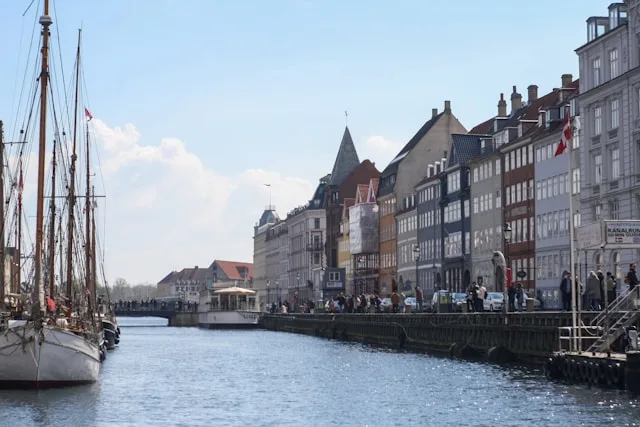
Lübeck, Germany Executive Recruitment

Executive Search in Lübeck

KiTalent brings sector-specific intelligence and direct headhunting capability to senior leadership searches across Lübeck.

7-10

days to qualified shortlists in many searches

80%

of relevant passive talent reached through direct headhunting

42%

faster time-to-hire than traditional search benchmarks

96%

one-year retention from KiTalent's broader methodology

Learn more about our track record on our about, services, and methodology pages.

Executive Recruiters in Lübeck, Germany

Lübeck's economy is defined by two forces that rarely coexist in a city of 218,000: a globally dominant medical technology cluster anchored by Drägerwerk AG and Philips Medical Systems, and a Baltic port in active transformation toward offshore wind servicing and green hydrogen import. Finding leaders who can operate at the intersection of deep regulatory expertise, industrial heritage, and energy transition is the central hiring challenge here. KiTalent delivers executive search built for exactly this kind of specialised, concentrated market.

Discuss a Lübeck BriefContact How We WorkMethodology

7–10 days average time to qualified shortlist 80% of passive executive talent reached 42% reduction in time-to-hire 96% one-year candidate retention rate

Benchmarked against industry baselines. Learn more about our track record, services, and methodology.

Beyond candidate lists: what Lübeck mandates actually require

A search brief in Lübeck typically arrives with a tension built into it. The role is specialised. The candidate pool is small. The employer needs discretion because the professional community is tight. And the timeline is compressed because the role has been vacant too long already, often because a conventional approach produced no results. In a city where 120-plus MedTech SMEs compete with Drägerwerk and Philips for the same regulatory affairs managers and embedded systems engineers, the visible candidate market is essentially depleted. Job postings attract applications from professionals who are available, not necessarily from professionals who are exceptional. The hidden 80% of passive talent concept is not theoretical in Lübeck. It is the operational reality. The regulatory strategy VP you need is currently employed at a competitor three kilometres away. She is not on any job board. She will not respond to a generic LinkedIn message. She will respond to a carefully constructed, personally relevant approach from a consultant who understands MDR compliance timelines and can articulate why your opportunity is different. Compensation calibration is equally critical. Industrial electricity prices in Lübeck remain 40% above 2021 baselines, and Drägerwerk's manufacturing margins are under pressure. Yet the same candidates are being courted by Hamburg employers offering big-city packages with better rail connectivity. Getting the offer wrong, even slightly, means losing a candidate at the final stage. Market benchmarking that accounts for the Lübeck-to-Hamburg compensation differential, housing cost realities under UNESCO heritage restrictions, and sector-specific equity structures is not optional. It is what separates a completed search from a failed one. The cost of a bad executive hire is amplified in Lübeck's concentrated ecosystem. A misplaced MedTech operations director does not just cost 50 to 200% of annual compensation in direct losses. In a community where MedTech Cluster North meetings put competitors in the same room quarterly, the reputational damage to the employer's brand as a place for serious professionals lingers far longer than the financial hit. This is why KiTalent operates on a pay-per-interview model. There is no upfront retainer. The primary financial commitment occurs only after we deliver a qualified shortlist and comprehensive market intelligence. Clients evaluate real candidates and real data before making their main investment. In a market where previous search attempts may have already consumed budget and patience, this alignment of incentives matters. See our full service rangeServices How we use compensation dataMarket Benchmarking

Why companies partner with KiTalent for executive search in Lübeck

Companies rarely need only reach in Lübeck. They need interpretation, calibration, and a search architecture that reflects the real structure of the market.

We operate across Germany

Our team coordinates Lübeck mandates from our European headquarters in Turin, with direct access to the talent intelligence, compensation dynamics, and sector developments that drive search outcomes.

We reach the candidates that matter

The strongest executives in Lübeck are passive. Our direct headhunting approach engages the hidden 80% of passive talent through discreet outreach rooted in real market knowledge.

We do not start from scratch

Our parallel mapping methodology means we already hold live intelligence on restructuring, transition windows, compensation patterns, and candidate attraction opportunities when a brief arrives.

Our model de-risks the investment

In Lübeck, the cost of a wrong executive hire extends far beyond the recruitment fee. Our interview-fee model lets clients see real market output and qualified candidates before the bulk of the investment is committed.

What this means for search design

A Lübeck mandate must be designed for a market where the total addressable talent pool for any given senior role may number fewer than fifty professionals in the region. Search methodology cannot rely on volume. It must rely on precision, speed, and the quality of initial engagement.

1. Parallel mapping before the brief is live

We do not start research when a client signs an engagement. Our methodology is built on continuous, pre-mandate intelligence gathering. For Lübeck, this means we track career movements across Drägerwerk, Philips Medical Systems, UKSH Campus Lübeck, LHG, and the MedTech Cluster North SME network on an ongoing basis. When a mandate arrives, we activate an existing map rather than building one from scratch. This is what enables a qualified shortlist in 7 to 10 days, a timeline that would be impossible if we started cold in a market this specialised.

2. Direct headhunting into the hidden 80%

In a city where the senior MedTech, port, and energy professionals number in the hundreds, direct headhunting through individually crafted, discreet outreach is the only approach that works. Generic InMail campaigns are not just ineffective in Lübeck. They are counterproductive. In a professional community this small, a clumsy approach to a Dräger engineering director is remembered and discussed. Our sector-native consultants engage candidates with conversations grounded in regulatory specifics, compensation realities, and genuine understanding of what a move within or into Lübeck actually means for a career.

3. Market intelligence as a search output

Every Lübeck engagement produces more than a shortlist. Clients receive a comprehensive market benchmarking report covering compensation structures across the city's key employers, candidate availability analysis, and competitive positioning intelligence. In a market where the gap between Lübeck packages and Hamburg packages can determine whether a top candidate accepts or declines, this data is not supplementary. It is what prevents offer-stage failures.

Essential reading for Lübeck hiring decisions

These are the questions most closely tied to how executive search really works in Lübeck.

Why do companies use executive recruiters in Lübeck?

Lübeck's dominant sectors, medical technology and maritime energy, rely on a small population of highly specialised senior professionals. Many of these leaders work at Drägerwerk, Philips, UKSH, or the port operators, and they are not actively seeking new roles. Standard job postings and internal HR teams reach the visible minority who happen to be in transition. Executive recruiters with sector depth and established networks in the city can access the passive majority. In a market where the total addressable talent pool for a given senior role may be fewer than fifty people regionally, this access determines whether a search succeeds or stalls.

What makes Lübeck different from Hamburg for executive hiring?

Hamburg offers scale. Lübeck offers concentration. A search in Hamburg draws from a metropolitan talent pool of nearly two million. A search in Lübeck draws from a professional community where most senior people know each other by name. This concentration means discretion is paramount, compensation benchmarking must account for the Hamburg premium that candidates compare against, and the search firm must understand why a candidate would choose Lübeck's specialised ecosystem over Hamburg's breadth. The delayed railway electrification, not complete until 2027, makes the commuter bridge between the two cities less fluid than geography suggests.

How does KiTalent approach executive search in Lübeck?

Through continuous pre-mandate talent mapping of Lübeck's core clusters, direct and discreet outreach to passive candidates, and compensation intelligence calibrated to the Lübeck and Hamburg differential. Every search is coordinated from our European headquarters in Turin, with consultants who bring sector-native knowledge in MedTech, energy, and maritime industries. The process includes three-tier candidate assessment covering technical competency, cultural and motivational fit, and optional psychometric evaluation for senior roles. Clients receive weekly pipeline updates and full market mapping documentation throughout.

How quickly can KiTalent present candidates in Lübeck?

Interview-ready candidates are typically presented within 7 to 10 days. This speed is possible because our parallel mapping methodology means we have already identified and begun building relationships with relevant professionals in Lübeck's key sectors before a mandate is formally signed. In a city where vacancy costs are amplified by the small number of qualified replacements, this timeline difference is material.

How does the energy transition affect executive hiring in Lübeck?

The simultaneous scale-up of offshore wind servicing from the Skandinavienkai and green hydrogen import through SoutH2Port has created entirely new leadership roles in Lübeck that did not exist five years ago. The candidate pool for these positions, hydrogen infrastructure engineers, offshore programme directors, EU ETS compliance officers, is dispersed across the North Sea corridor from Norway to the Netherlands. Filling these roles requires cross-border search capability and deep energy sector networks, not a regional recruitment approach. The competition for these professionals is intense, and compensation expectations are set by markets larger than Lübeck.

Start a conversation about your Lübeck search

Whether you are hiring a Chief Digital Officer for a MedTech SME, a Director of Sustainability for a port logistics operator, a Regulatory Affairs VP for medical device certification, or an Offshore Wind Programme Director for Baltic Sea operations, this is where the conversation begins.

What we bring to Lübeck executive mandates:

Executive search and direct headhunting · Talent mapping and market intelligence · Compensation benchmarking and mandate calibration · Connection to KiTalent's European headquarters in Turin and international executive search network.

How does the energy transition affect executive hiring in Lübeck?

Whether you are running a live mandate or want to pressure-test a brief before going to market, this is the right place to start the conversation.