Serving hub
Germany searches are anchored by the real European hub that actually runs the mandate.
Germany Executive Search
Published · Last updated
The EU's largest economy and the world's leading exporter of capital goods, Germany concentrates executive demand in automotive, mechanical engineering, chemicals and pharmaceuticals, and industrial technology. Searches in Germany are managed from KiTalent's Turin hub, with support from our other hubs when the candidate pool crosses markets. That demand is spread across Munich, Frankfurt, Berlin, Hamburg and Düsseldorf, not gathered in a single capital city.
Track record on suitable mandates: 7–10 working days to validated shortlist · 96% one-year retention · NPS 72. How we measure performance.
Germany's executive market is more complex than its reputation for order and efficiency suggests. Corporate power is dispersed across sixteen Bundesländer, each with a distinct industrial base, regulatory posture and talent pool. No single city dominates. An automotive VP in Stuttgart, a fintech CTO in Berlin and a logistics director in Hamburg operate in labour markets that share a currency but little else in daily practice. Treating Germany as a single hiring environment is the fastest route to a failed search.
Germany's skilled worker shortage extends well beyond the factory floor. Employer surveys from industry associations such as VDI and VDMA cite engineering and digital talent scarcity as a binding constraint on growth. Hundreds of thousands of skilled vacancies remain unfilled across the economy. At the senior level, the pressure is acute for roles combining German industrial domain knowledge with digital fluency: heads of digital manufacturing, CTOs for IIoT platforms, and supply chain leaders for European reshoring programmes. The working-age population is on a declining trajectory that migration alone cannot offset, according to Destatis projections. Every year, the pool of qualified candidates for leadership positions in German industry gets smaller. This is precisely the environment where reaching the passive majority of senior talent determines whether a mandate succeeds or stalls. A VP of Power Electronics at Infineon in Dresden or a Head of Supply Chain at Bosch in Stuttgart is not responding to job advertisements. Direct identification and discreet outreach are the only viable approach.
Germany's federal structure creates real operational complexity for executive search. Bavaria and Baden-Württemberg concentrate automotive and precision engineering talent. North Rhine-Westphalia anchors chemicals, heavy industry and logistics. Saxony is emerging as a semiconductor corridor. Berlin draws software engineers and AI researchers. Frankfurt houses the financial infrastructure. Munich blends corporate headquarters with deep R&D capability. Each Land has its own works council conventions, co-determination norms and compensation benchmarks. A search designed for one region often fails when transposed to another.
The Mitbestimmung system means that works councils and employee representatives sit on supervisory boards of large companies. This affects executive hiring at a level that many international clients underestimate. Board composition, reporting structures and even interview processes differ from markets without co-determination. Search firms that do not understand this dynamic waste time presenting candidates who cannot operate within it, or structuring mandates that ignore the supervisory board's role in leadership appointments.
KiTalent's directly engaged search partnership is built for this complexity. Operating from our European headquarters in Turin, we coordinate German mandates across multiple Bundesländer, matching sector-native consultants to each search. The firm's proximity to German industrial clients and its continuous presence in the market allow us to map talent across Hamburg, Düsseldorf and the southern manufacturing belt simultaneously, rather than treating each city as an isolated engagement.
Real Hub Coverage
We do not present Germany as a market covered through a decorative local office footprint. Germany mandates are coordinated from Turin and executed through live market mapping across Munich, Frankfurt, Berlin, Hamburg, Stuttgart, and the wider German leadership market.
That model fits Germany because industrial Baden-Wurttemberg, Bavaria's mobility corridor, Frankfurt's financial ecosystem, Berlin's software layer, and Hamburg's logistics base all pull from different executive populations. One real hub with cross-border reach is more credible than pretending to operate a branch-office grid we do not actually use.
Route Map
Germany briefs usually need a deliberate jump between the real hub anchor, sector lanes, role routes, and the commercial answer layer.
Germany searches are anchored by the real European hub that actually runs the mandate.
Use the sector route that best matches the industrial and operator pool behind the brief.
Use the role route when the brief is driven more by leadership function than sector label.
Use the commercial cluster when the engagement model needs to be decided before the search expands.

Executive talent in Germany distributes across distinct city economies, each with its own sector strengths and leadership dynamics.
Bavaria's capital is Germany's highest-concentration executive market for technology, automotive and financial services combined. BMW, Siemens, Allianz and Munich Re anchor a corporate ecosystem that blends manufacturing heritage with deep R&D capability.
Germany's financial capital hosts the European Central Bank, Deutsche Börse and the country's largest concentration of banking, asset management and professional services firms. Frankfurt Airport is Europe's leading air cargo hub, anchoring a logistics ecosystem that connects German exports to…
Germany's capital has evolved from a political and cultural centre into the country's fastest-growing technology and startup ecosystem. Software development, AI research, deeptech scale-ups and digital health companies recruit alongside federal government institutions and major media groups.
Germany's second-largest city combines maritime industry, logistics, media and a growing technology sector. The Port of Hamburg, the country's largest seaport, achieved strong container throughput growth in 2025 and anchors a logistics and trade cluster that includes shipping companies, freight…
The capital of North Rhine-Westphalia sits at the centre of the Rhine-Ruhr metropolitan region, Germany's most populous urban area. The city anchors a diverse economy spanning chemicals, telecommunications (Deutsche Telekom), heavy industry, professional services and retail.
Executive mobility across Germany's cities is shaped by compensation expectations, relocation appetite, family considerations, and international exposure.
A search that maps where the right leaders actually operate, and understands the conditions under which they would consider a move, is fundamentally more effective than one that treats Germany as a flat national market.
Germany's executive search market is strongest where its economic specialisation is deepest.
remain Germany's largest source of executive hiring. Volkswagen, BMW and Mercedes-Benz Group anchor an OEM ecosystem that extends deep into supplier networks across Bavaria and Baden-Württemberg. The transition to electric drivetrains and software-defined vehicles is reshaping leadership requirements: roles in battery procurement, EV supply chain strategy and connected-vehicle software now sit…
represent Germany's most consequential industrial investment cycle. The ESMC project in Dresden, backed by TSMC, Bosch, Infineon and NXP with EU state aid exceeding €5 billion, is anchoring a European chipmaking corridor in Saxony. Infineon's Smart Power Fab expansion adds further capacity for automotive and industrial semiconductors.
is the backbone of the Mittelstand. Thousands of family-owned hidden champions export machine tools, industrial equipment and automation systems worldwide. They cluster in Baden-Württemberg, Bavaria, North Rhine-Westphalia and Hesse.
drive executive hiring from BASF's operations in Rhineland-Palatinate to Bayer's presence in North Rhine-Westphalia and speciality chemical firms across Hesse and Bavaria. Energy transition costs are reshaping the leadership agenda: heads of sustainability, energy procurement directors and plant managers with decarbonisation experience are in high demand. The healthcare and life sciences…
Energy, Natural Resources & Infrastructure · Industrial, Manufacturing, and Robotics
are creating an entirely new layer of executive roles. Renewables supplied a majority share of Germany's public electricity generation in 2025. Wind, solar, green hydrogen, grid infrastructure and battery storage projects require leadership in engineering, project finance, regulatory affairs and corporate energy strategy.
round out the demand picture. Frankfurt remains the seat of European Central Bank operations, Deutsche Börse and major banking institutions. Insurance, asset management and fintech hiring concentrates there and in Munich.
Banking · Insurance · Industrial, Manufacturing, and Robotics
Companies rarely need only reach in Germany. They need interpretation, calibration, and a search architecture that reflects the real structure of the market.
Our team runs Germany mandates through KiTalent's four regional hubs, combining local market intelligence with cross-border execution across Europe, the Americas, the Middle East, and Asia Pacific.
The strongest executives in Germany are passive. Our direct headhunting approach engages the passive majority of senior talent through discreet outreach rooted in real market knowledge.
Our parallel mapping methodology means we already hold live intelligence on restructuring, transition windows, compensation patterns, and candidate attraction opportunities when a brief arrives.
In Germany, the cost of a wrong executive hire extends far beyond the recruitment fee. Our Proof-First Search model lets clients see real market output and qualified candidates before the bulk of the investment is committed.
A rotating view of the city-level market shifts shaping executive hiring across Germany.
Berlin's €207 billion economy runs on digital platforms, life sciences, photonics, and a deep creative sector that no other German city replicates. With real GDP growth of 1.3%…
Munich is where Europe's automotive, semiconductor, insurance and deep-tech industries compete for the same finite population of senior leaders. With BMW, Siemens, Allianz, Munich…
Northern Germany's economic centre runs on a rare combination: Europe's leading rail-port handling over 8 million TEU annually, one of the world's largest civil aerospace clusters…
Continental Europe's financial nerve centre, Frankfurt am Main concentrates monetary authority, exchange infrastructure, and wholesale banking within a few square kilometres of…
These resources provide deeper market intelligence and explain how KiTalent turns insight into a faster, more transparent search process.
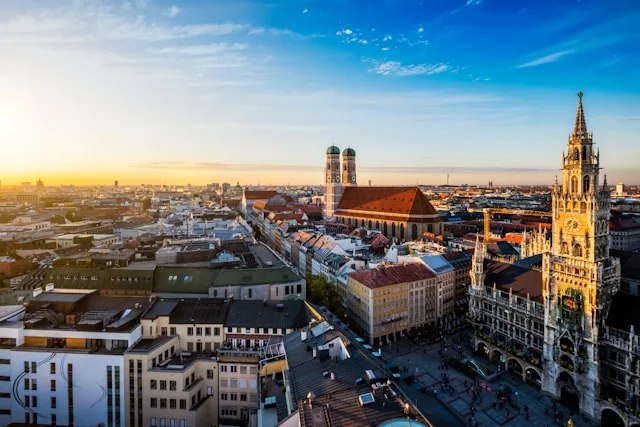
Berlin's digital economy added 4,200 new startups in 2024, the highest formation rate in the city's history. Venture capital continued to concentrate in Berlin at levels that...
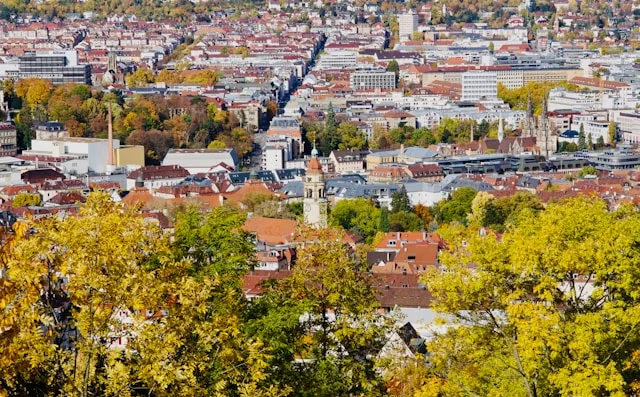
Stuttgart produces more engineering graduates per capita than any other German city. Its two anchor financial institutions, LBBW and Börse Stuttgart, are executing their most...
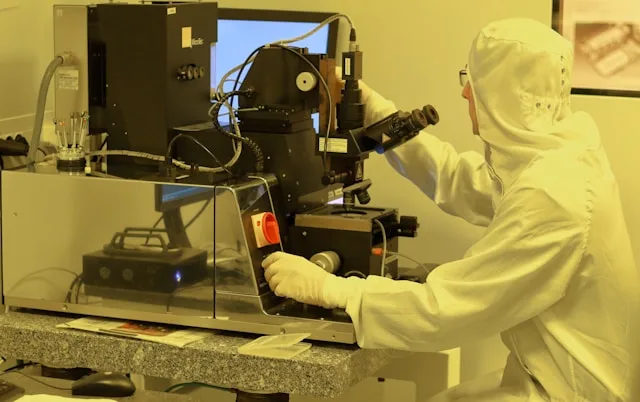
Munich's high tech engineering cluster entered 2026 sitting on one of the largest confirmed investment pipelines in European semiconductor history. Between Infineon's backend...
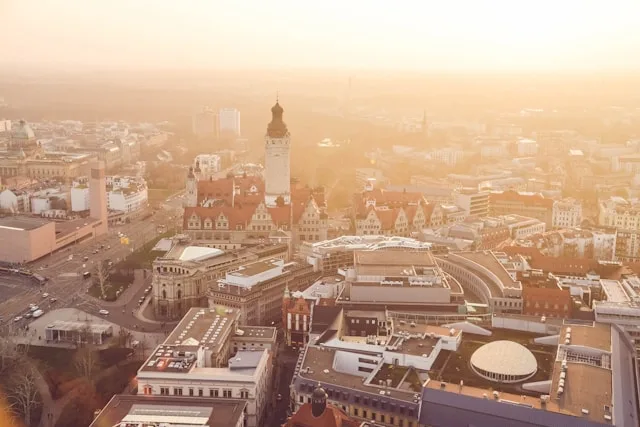
Leipzig processes more express air cargo than any other hub in Europe. The city's logistics sector employs 42,000 people, anchored by DHL's massive sort facility at...
Use these pages to move between city clusters, sector pages, and supporting articles.
These are the questions most closely tied to how executive search really works in Germany.
Germany's skilled worker shortage, the Fachkräftemangel, extends to the executive level. Passive candidates in engineering, digital transformation and industrial leadership roles are deeply embedded in long-tenure positions and do not respond to advertisements. Executive recruiters with sector expertise and direct networks can reach candidates that internal teams and generalist agencies cannot. The co-determination system and complex compensation structures add further reasons to engage a specialist firm. Companies working with experienced recruiters reduce time-to-hire and the risk of costly mis-hires in a market where replacement cycles are exceptionally long.
Three factors distinguish Germany from other European markets. First, corporate power is decentralised across sixteen Bundesländer, each with distinct industries and talent pools. Second, co-determination (Mitbestimmung) means works councils and employee board representation affect leadership appointments in ways that many international clients do not anticipate. Third, notice periods of three to six months mean that even a successful search takes longer to deliver a seated executive. Combined with acute talent scarcity in engineering and digital roles, these dynamics make Germany one of Europe's most demanding executive search environments.
KiTalent deploys sector-native consultants who combine deep knowledge of German industry with direct access to passive talent networks. Searches are coordinated from our European headquarters in Turin, with parallel mapping beginning before the mandate is formally launched. Each search is supported by compensation benchmarking calibrated to the specific Bundesland and sector. Our three-stage assessment process drives a 96% one-year retention rate. On suitable mandates we work Proof-First, with no material fee until the shortlist has been validated against the brief.
Our parallel mapping methodology enables initial shortlists within seven to ten days of mandate confirmation. Pre-built talent intelligence on key German sectors, including automotive, semiconductors, chemicals, energy and financial services, allows us to compress the identification phase. Assessment, referencing and offer support follow a structured timeline. The overall process runs approximately 42% faster than industry benchmarks while maintaining the rigour that Germany's complex hiring environment demands.
Yes. KiTalent covers all sixteen German Bundesländer, from Bavaria and Baden-Württemberg in the south to Schleswig-Holstein and Mecklenburg-Vorpommern in the north. The complete directory above links to dedicated pages for every Land. Whether a mandate sits in the financial services cluster in Hesse, the semiconductor corridor in Saxony, the automotive heartland in Baden-Württemberg or the logistics hub in Hamburg, we design the search to match the regional talent market.
German labour law, including statutory notice periods, works council consultation rights and the EU pay transparency directive, directly affects how quickly a senior hire can be completed. Notice periods of six months are common at the executive level, meaning that a candidate identified today may not start for nine months or more. Works council involvement in certain appointment processes adds additional steps. KiTalent accounts for these timelines in every German mandate, often recommending interim management solutions to bridge the gap between identification and start date.
Whether you are appointing a CTO for a Mittelstand industrial firm in Baden-Württemberg, a Head of Semiconductor Strategy in Saxony, a CFO for a Frankfurt-based financial services group, or a sustainability director for a chemicals company on the Rhine, this is where the search begins.
What we bring to Germany executive mandates:
Executive search and direct headhunting · Talent mapping and market intelligence · Compensation benchmarking and mandate calibration · Connection to KiTalent's European headquarters in Turin and international executive search network.
Whether you are running a live mandate or want to pressure-test a brief before going to market, this is the right place to start the conversation.
Use these pieces to turn federal, industrial and co-determination context into a scoped mandate and an evidence-led shortlist.
Applied research
For Germany, this separates geographic and competitor mapping from the evidence threshold required for an assessed shortlist.
Editorial
For Germany, this sets the circulation standard: mandate-relevant evidence before a profile is introduced to the client.
Author of record: Chiara Giacoletti, Associate Director, Central & Eastern Europe. Based on local market intelligence and executive-search data.
Share your CV and a sentence on the mandate types you'd consider. We respond within five working days.