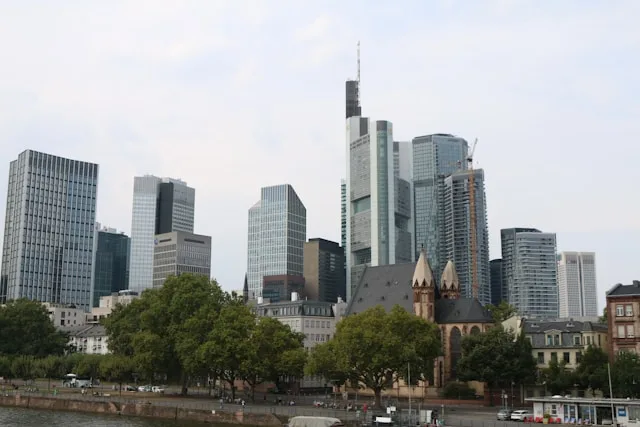
Frankfurt, Germany Executive Recruitment

Executive Search in Frankfurt

KiTalent brings sector-specific intelligence and direct headhunting capability to senior leadership searches across Frankfurt.

7-10

days to qualified shortlists in many searches

80%

of relevant passive talent reached through direct headhunting

42%

faster time-to-hire than traditional search benchmarks

96%

one-year retention from KiTalent's broader methodology

Learn more about our track record on our about, services, and methodology pages.

Executive Recruiters in Frankfurt, Germany

Continental Europe's financial nerve centre, Frankfurt am Main concentrates monetary authority, exchange infrastructure, and wholesale banking within a few square kilometres of the Bankenviertel. KiTalent delivers executive search for the institutions and growth-stage firms competing for leaders across financial services, RegTech, life sciences, and the logistics economy anchored by Europe's busiest cargo airport.

Discuss a Frankfurt Brief | How We Work

7–10 days to qualified shortlist | 80% of passive talent reached | 42% reduction in time-to-hire | 96% one-year retention rate

Methodology and track record detail: About KiTalent · Services · Methodology

Beyond candidate lists: what Frankfurt mandates actually require

A Frankfurt executive search that delivers only a list of names has failed before it begins. The city's senior talent market is too interconnected, too heavily regulated, and too well-informed for a sourcing-only approach to produce results. The first challenge is access. Roughly 80% of the executives who would be genuine contenders for a senior Frankfurt role are not considering a move. They hold well-compensated positions at Deutsche Bank, DWS, the ECB, or one of the city's specialist asset managers. They are not on job boards. They do not respond to templated LinkedIn messages. Reaching them requires direct headhunting built on individually crafted outreach and, in many cases, pre-existing professional relationships. This is the population that determines whether a search produces a strong shortlist or merely an available one. The second challenge is calibration. Frankfurt's compensation environment is unusually layered. A Head of AI Transformation at a RegTech scale-up and a Chief Sustainability Officer at a universal bank may operate in overlapping talent pools but occupy entirely different compensation structures. Layer on the Rhein-Main retention dynamic, where a candidate in Darmstadt or Wiesbaden weighs housing savings against career positioning, and the margin for error in offer design shrinks considerably. Market benchmarking is not a supplementary service here. It is the difference between a closed placement and a collapsed offer. The third challenge is the cost of getting it wrong. A failed senior hire in a city this interconnected does not just cost 50 to 200% of annual compensation in direct financial terms. It damages the hiring organisation's standing in a professional community where reputation compounds over years. The hidden cost of a bad executive hire is amplified in a market where the same 500 senior professionals rotate across a finite number of institutions. This is why KiTalent structures Frankfurt mandates on an interview-fee model. The primary financial commitment occurs after a qualified shortlist and comprehensive market intelligence have been delivered. Clients evaluate real candidates and real data before making their main investment. The incentive structure is simple: quality output first, payment after. See our full service rangeServices How we use compensation dataMarket Benchmarking

Why companies partner with KiTalent for executive search in Frankfurt

Companies rarely need only reach in Frankfurt. They need interpretation, calibration, and a search architecture that reflects the real structure of the market.

We operate across Germany

Our team coordinates Frankfurt mandates from our European headquarters in Turin, with direct access to the talent intelligence, compensation dynamics, and sector developments that drive search outcomes.

We reach the candidates that matter

The strongest executives in Frankfurt are passive. Our direct headhunting approach engages the hidden 80% of passive talent through discreet outreach rooted in real market knowledge.

We do not start from scratch

Our parallel mapping methodology means we already hold live intelligence on restructuring, transition windows, compensation patterns, and candidate attraction opportunities when a brief arrives.

Our model de-risks the investment

In Frankfurt, the cost of a wrong executive hire extends far beyond the recruitment fee. Our interview-fee model lets clients see real market output and qualified candidates before the bulk of the investment is committed.

What this means for search design

Frankfurt's regulatory density means that every candidate assessment must go beyond commercial capability. A shortlist for a Head of Compliance at a Frankfurt-based asset manager requires candidates who can demonstrate fluency with BaFin supervisory expectations, DORA implementation requirements, and the evolving Basel IV output floor regime. Technical assessment must be sector-native, not generic.

1. Parallel mapping before the brief is live

KiTalent does not begin research when a mandate arrives. Through parallel mapping, the firm continuously tracks career movements, compensation shifts, and organisational changes across Frankfurt's core sectors. When Deutsche Börse's DB1 Ventures announces a new DLT pilot, or when BaFin issues updated guidance on AI in credit scoring, the implications for the city's leadership market are already being analysed. This pre-existing intelligence is the engine behind the 7 to 10 day shortlist timeline. It is also what makes the difference in a market where the same senior professionals are being approached by multiple search firms simultaneously.

2. Direct headhunting into the hidden 80%

The executives who define Frankfurt's leadership market are not visible through conventional channels. A Chief Sustainability Officer who designed Deutsche Bank's Pillar 3 disclosure framework is not posting a CV on StepStone. A Head of RegTech at a BaFin-supervised scale-up is not responding to mass InMail campaigns. KiTalent's direct headhunting methodology reaches these individuals through discreet, individually crafted engagement. Every interaction is treated as a branding exercise for the client, because in a professional community as dense as Frankfurt's Bankenviertel, the quality of the approach determines whether the candidate engages or declines.

3. Market intelligence as a search output

Every Frankfurt mandate produces more than a shortlist. Clients receive comprehensive market intelligence documenting who holds what role at which institution, how compensation is structured across comparable positions, and how candidates responded to the opportunity. This intelligence has strategic value that extends well beyond the immediate hire. It informs workforce planning, retention strategy, and competitive positioning in a market where a handful of institutions are competing for the same finite population of leaders.

Essential reading for Frankfurt hiring decisions

These are the questions most closely tied to how executive search really works in Frankfurt.

Why do companies use executive recruiters in Frankfurt?

Frankfurt's senior talent market is dominated by passive candidates who are well-compensated, well-positioned, and not responding to job postings. Approximately 78,000 people work in financial services within city limits, but the pool of executives qualified for C-suite or senior leadership roles is a fraction of that number. These individuals are concentrated in a small number of institutions and are approached frequently. An executive search firm with pre-existing relationships and market credibility can engage candidates that an internal talent acquisition team or a generalist recruiter simply cannot reach. The regulatory complexity of most Frankfurt roles adds an assessment dimension that requires sector-native expertise.

What makes Frankfurt different from Munich or Berlin for executive hiring?

Munich offers breadth across automotive, technology, and insurance. Berlin offers scale, startup density, and cost advantages. Frankfurt offers depth in a narrower range of sectors, primarily financial services, regulatory technology, and institutional infrastructure. The practical difference is that Frankfurt's talent pool is smaller, more interconnected, and more heavily competed for. A failed search or a mishandled candidate interaction carries reputational consequences that do not arise in larger, more anonymous markets. Compensation benchmarking must account for the Rhein-Main periphery, where many senior leaders choose to live. The regulatory overlay from BaFin and the ECB adds a compliance dimension to almost every leadership hire.

How does KiTalent approach executive search in Frankfurt?

KiTalent maintains continuous talent mapping across Frankfurt's core sectors, tracking career movements, compensation trends, and organisational changes independently of any single mandate. When a client engages the firm, this pre-existing intelligence allows the team to deliver an interview-ready shortlist within 7 to 10 days. Each candidate undergoes a three-tier assessment covering technical competency, cultural fit, and motivation. The process is designed for a market where discretion and process quality are as important as sourcing capability.

How quickly can KiTalent present candidates in Frankfurt?

Qualified shortlists are delivered within 7 to 10 days of mandate confirmation. This speed comes from parallel mapping, not from compressing assessment. KiTalent's consultants have already identified and built preliminary relationships with potential candidates before the client defines the need. In a market where the same senior professionals receive multiple approaches per quarter, the ability to move quickly while maintaining quality is what determines whether a search produces a strong outcome or misses the window entirely.

How does Frankfurt's regulatory environment affect executive search?

The concentration of the ECB, Deutsche Bundesbank, and BaFin within the metro area means that virtually every senior hire in Frankfurt's financial ecosystem carries a compliance dimension. The 2026 implementation of Basel IV, MiCA, and DORA has created leadership roles that require both commercial acumen and regulatory fluency. This dual requirement narrows the qualified candidate pool considerably and makes assessment more complex. An executive search firm operating in this market must be able to evaluate regulatory expertise with the same rigour it applies to commercial and leadership capabilities.

Start a conversation about your Frankfurt search

Whether you are hiring a Chief Sustainability Officer for a universal bank, a Head of AI Transformation for a RegTech scale-up, or a Defence Finance Structurer for a dual-use technology programme, the starting point is the same: a conversation about what this role needs to achieve and what the Frankfurt market can realistically deliver.

What we bring to Frankfurt executive mandates:

Executive search and direct headhunting · Talent mapping and market intelligence · Compensation benchmarking and mandate calibration · Connection to KiTalent's European headquarters in Turin and international executive search network.

How does Frankfurt's regulatory environment affect executive search?

Whether you are running a live mandate or want to pressure-test a brief before going to market, this is the right place to start the conversation.