Frankfurt Is Building Europe's Digital Financial Infrastructure. It Cannot Find the People to Run It
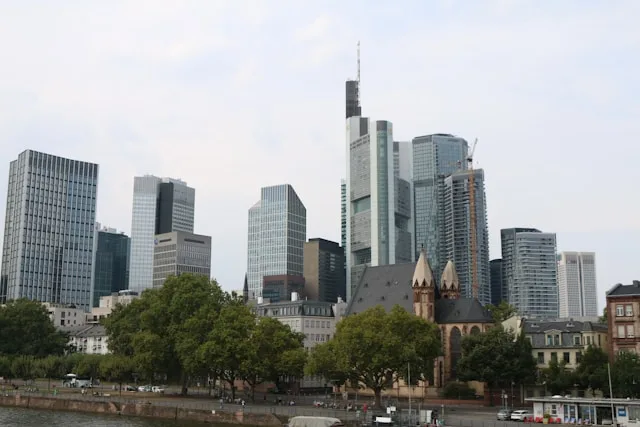
Frankfurt's position as continental Europe's primary financial centre has never rested on glamour. It has rested on plumbing: the payment systems, custody networks, and clearing infrastructure that settle trillions of euros in transactions each year. Clearstream Banking AG managed €15.3 trillion in assets under custody as of Q3 2024, a figure that grew 4.2% year over year as Deutsche Börse's D7 digital post-trade platform gained traction. By 2026, D7 is projected to handle €500 billion in tokenised securities volume alone. The capital investment is in place. The regulatory framework is in place. The talent is not.
This is not a generic hiring complaint. Frankfurt's financial district houses approximately 180 financial institutions with more than 75,000 employees, and the city's aggregate financial services unemployment rate sits at just 3.2%. The shortage is granular and severe. Quantitative risk modellers who understand Basel IV implementation. Smart contract developers with financial services regulatory fluency. Climate risk analysts who can bridge EU Taxonomy requirements and credit portfolio modelling. These three categories face demand-to-supply ratios as extreme as 4:1, and 85% to 90% of qualified candidates in the most critical functions are passive. They are not looking. They will not respond to a job posting. They must be found individually and approached with a proposition that justifies the disruption of leaving a stable, well-compensated role.
What follows is a structured analysis of the forces reshaping Frankfurt's banking and capital markets sector, the specific talent gaps that threaten the city's competitive position, and what senior hiring leaders need to understand before they commit to a search in this market.
Frankfurt's Financial Centre in 2026: Growth in Infrastructure, Contraction in Headcount
The numbers tell two stories at once, and the gap between them is where the real challenge lives.
On the growth side, Frankfurt continues to consolidate its position as the EU's financial infrastructure capital. The city ranks 4th globally in the Global Financial Centres Index, behind London, Zurich, and Geneva but ahead of every other continental European competitor. Deutsche Börse's acquisition integration of SimCorp and the continued expansion of D7 have created a digital settlement platform with no direct equivalent elsewhere in the eurozone. The ECB's presence in the Ostend district, with 4,300 staff overseeing monetary policy and the Single Supervisory Mechanism, anchors institutional credibility that cannot be replicated.
On the contraction side, net employment in traditional banking roles is projected to shrink by 2.1%. Commerzbank's "Strategy 2024" restructuring programme eliminated 3,400 positions globally, with a concentration of back-office cuts in Frankfurt. Deutsche Bank announced 3,500 global job cuts. These headlines created a surface impression of surplus labour. The impression is wrong.
The Rebalancing Underneath the Headlines
Commerzbank's restructuring was not a simple reduction. It was a swap. The bank projected the creation of 1,200 technology and ESG advisory roles in Frankfurt to offset the back-office losses. According to the IWH Halle Institute for Economic Research, the broader Frankfurt financial sector is expanding 8.4% in fintech infrastructure and regulatory technology roles even as traditional functions contract.
The layoff headlines created a false impression that qualified talent was available. The cuts targeted operations, branch management, and administrative functions. The simultaneous shortage in quantitative risk, digital custody, and sustainability analytics deepened in the same period. This is skill-biased structural unemployment: aggregate stability masking acute scarcity in the roles that matter most for the sector's next phase.
For hiring leaders reading aggregate data, the lesson is direct. A 3.2% unemployment rate in Frankfurt financial services tells you almost nothing about your ability to hire a Basel IV implementation specialist or a blockchain architect with custody experience. The market is loose in roles the sector is moving away from and extremely tight in roles the sector is moving toward. Every search strategy must account for this bifurcation, or it will fail before it begins.
The Three Talent Gaps That Define Frankfurt's Market
Frankfurt's hiring challenges are not diffuse. They concentrate in three categories, each driven by a distinct regulatory or technological pressure, and each exhibiting its own supply dynamics.
Quantitative Risk and Basel IV Implementation
The finalisation of Basel III reforms, implemented in the EU via CRR III effective January 2025, required wholesale recalculation of risk-weighted assets across every bank in Frankfurt. Demand for senior credit risk modellers and CRR III implementation specialists exceeds supply by 4:1, according to the Robert Walters Frankfurt Salary Survey 2024. The supply constraint is not temporary. Basel IV implementation is a multi-year programme that requires specialists who understand both the quantitative modelling and the regulatory interpretation. These professionals do not emerge from graduate programmes. They are built over 8 to 15 years of practice.
The passive candidate ratio tells the fuller story. According to Odgers Berndtson's Frankfurt Financial Services Practice Report 2024, 85% of qualified quantitative risk directors are employed and not actively seeking new roles. Average search time for these profiles via retained executive search runs 6 to 9 months.
Digital Assets and DLT Infrastructure
Deutsche Börse's D7 platform expansion requires 400 additional blockchain infrastructure specialists by end of 2026. Clearstream's digital assets division is scaling simultaneously. BaFin authorised 24 crypto custody providers in Frankfurt by Q4 2024, each needing compliance-fluent technical staff to maintain their licences under MiCA's full implementation.
The problem here is cultural as much as numerical. Local hiring managers report persistent friction in attracting blockchain-native developers from cities like Berlin or Lisbon to Frankfurt's traditional banking environment. The city hosts the continent's most advanced institutional digital infrastructure but struggles to secure the agile development talent required to iterate these platforms. This creates a paradox: structural advantage in regulation and settlement, combined with innovation velocity risk from talent gaps. If the builders are elsewhere, the building slows regardless of how strong the foundations are.
Sustainable Finance and Climate Risk
The EU Taxonomy and corporate sustainability reporting requirements have created a new category of specialist that barely existed five years ago. Climate risk modellers, ESG integration architects, and sustainable finance advisors are in acute demand across every major Frankfurt institution.
According to the Financial Times and Handelsblatt, Deutsche Bank's search for a Head of Climate Risk Analytics at Managing Director level remained open for 11 months between March 2023 and February 2024. The bank ultimately restructured the role into a dual-hat position shared with London after being unable to secure candidates with combined Basel modelling and EU Taxonomy expertise locally. Filling the role required relocating a specialist from Zurich with a 35% premium on base compensation plus cross-border tax equalisation.
That single search illustrates the deeper dynamic. The skills required for executive hiring in banking and wealth management increasingly sit at the intersection of disciplines that were historically separate. Regulatory knowledge and quantitative modelling. Sustainability frameworks and credit risk. Blockchain architecture and financial compliance. The candidates who combine these disciplines are rare, and they know it.
Compensation: What Frankfurt Pays, Where It Loses, and Why the Gaps Matter
Frankfurt's compensation structure reflects both the city's institutional weight and its competitive vulnerabilities. Understanding where the numbers sit is essential for any hiring leader designing a package that can actually move a passive candidate.
At the investment banking level, Managing Director total compensation ranges from €450,000 to over €1.2 million, with base salaries between €220,000 and €350,000. Quantitative risk modellers command a 15% to 20% premium over generalist risk professionals, pushing senior specialist total compensation to €200,000. Chief Risk Officers at large banks earn total packages between €600,000 and €900,000. In the digital assets space, senior blockchain architects command €160,000 to €220,000 total, while fintech CTOs earn €200,000 to €300,000 base plus equity participation valued at €150,000 to €400,000 annually.
These figures are competitive within the German market. They are not competitive internationally.
London offers 30% to 45% higher total compensation for equivalent Managing Director roles, driven by sterling strength and deeper bonus culture. Zurich and Geneva offer net compensation premiums of 25% to 35% due to lower personal taxation and established wealth management infrastructure. Frankfurt loses senior private bankers to Swiss institutions regularly, retaining its advantage only in EU cross-border servicing capabilities.
The compensation gap between Frankfurt and its nearest competitors is not closing. It is widening fastest at exactly the seniority level where the most critical roles sit. A Head of Digital Assets Product Development commands €336,000 in base salary at Frankfurt's premium end, according to Funds Europe Magazine's reporting on Clearstream's Q2 2024 hire from Euroclear. That move required a 40% base salary increase and a €180,000 relocation premium to bring the candidate from Brussels. Retention bonuses across Frankfurt-based custody banks followed immediately.
For hiring leaders, the implication is that compensation alone will not solve the problem for the most specialised roles. But compensation below market will guarantee failure. The floor has risen, and the candidates who possess the rarest skill combinations know their market value to the euro. Organisations that have not recalibrated their salary benchmarking for financial services roles since 2022 are working with outdated figures in a market that has moved materially.
The Regulatory Pressure Wave: Basel IV, DORA, and MiCA
Three regulatory frameworks arrived in force between mid-2024 and January 2025, and their combined impact on Frankfurt's talent market is greater than the sum of their parts.
Basel IV, via the CRR III and CRD VI transposition, demands recalculation of operational risk and credit valuation adjustments. The Bundesbank's Financial Stability Review 2024 projects that this will reduce return on equity for Frankfurt-based banks by 1.5 to 2.0 percentage points. That margin compression does two things simultaneously: it constrains bonus pools and hiring budgets while increasing the regulatory complexity that demands more specialist staff. The institutions that can least afford to hire expensively are the ones that need the most expensive talent.
The Digital Operational Resilience Act (DORA), effective January 2025, mandates stringent ICT risk management across all financial entities. Compliance costs for Frankfurt's medium-sized banks with €1 billion to €10 billion in assets are estimated at €12 million to €25 million annually. This diverts technology investment from innovation to compliance, a pattern that intensifies the competition for professionals who can work across both domains.
MiCA's full implementation in December 2024 has created immediate compliance urgency for every crypto custody provider BaFin has authorised. Frankfurt now hosts 24 licensed providers, each maintaining dedicated compliance and technology teams to meet the regulation's requirements for reserve management, disclosure, and operational standards.
The compounding effect matters more than any single regulation. A compliance officer who understood only credit risk was sufficient in 2020. In 2026, the same institution needs a professional who understands credit risk, ICT resilience requirements, and digital asset custody rules. That profile barely exists. You cannot recruit experience that has not yet accumulated in sufficient quantity. The regulatory apparatus has moved faster than the professional development pipeline that supplies it. Organisations that recognise why executive searches fail in this environment understand that the bottleneck is not effort or budget. It is the finite number of people who have had the time to develop expertise across three regulatory domains that converged in a single 18-month window.
Why Frankfurt's Infrastructure Advantages Are Not Solving Its Talent Problem
Frankfurt possesses structural advantages that should, in theory, make it easier to attract financial services talent than almost any other European city. The ECB is here. The largest eurozone payment systems run through here. Deutsche Börse operates the continent's primary derivatives exchange and the most advanced digital post-trade platform. BaFin's proximity creates a regulatory ecosystem that benefits any firm needing licensing speed.
None of this is sufficient to overcome three infrastructure deficits that consistently undermine talent acquisition.
Housing and Quality of Life
Frankfurt residential rents increased 8.4% year over year in 2024, according to the Empirica Housing Price Index. The cost advantage that Frankfurt held over London during 2020 to 2022 has narrowed. International candidates comparing Frankfurt with Amsterdam or Dublin, both of which compete for EU regulatory specialists, find higher quality-of-life indices and better international school infrastructure in those cities. The 28% of Frankfurt's banking workforce over age 50 will retire into a market where replacement candidates face housing costs that would have seemed unreasonable five years ago.
The Cultural Friction in Digital Talent
The research consistently surfaces a tension between Frankfurt's institutional strength and its attractiveness to the developers and engineers who build digital platforms. Blockchain-native professionals who have spent their careers in Berlin, Lisbon, or remote-first environments perceive Frankfurt as culturally conservative. The perception may or may not be accurate. It is, however, a real barrier that costs time and money in every digital assets search.
FintecSystems, a Frankfurt-based fintech infrastructure provider, reportedly relocated its entire 35-person blockchain development team from Berlin to Frankfurt in late 2024, spending €4.2 million in relocation packages and absorbing Frankfurt rent premiums of 30% above Berlin rates. According to Handelsblatt's Fintech Quarterly, the company cited the inability to hire locally for the specialised intersection of regulatory and technical skills as the driving factor. The solution was to move an existing team rather than build one from Frankfurt's local market.
That decision tells hiring leaders something important. When a 200-person company spends €4.2 million to relocate a team it already has, the cost of assembling equivalent talent through individual hiring in Frankfurt exceeds even that figure. The hidden 80% of passive talent in this market is not hidden because candidates are hard to find on LinkedIn. They are hidden because they are in other cities, embedded in other cultures, and disinclined to move without extraordinary inducement.
The Competitive Geography: Where Frankfurt Wins and Where It Loses
Frankfurt does not compete with one city. It competes with five, each of which draws from a different segment of the talent pool.
London remains the gravitational centre for investment banking and trading talent, offering 30% to 45% higher total compensation at senior levels. Post-Brexit passporting restrictions limit EU market access from London, which gives Frankfurt an advantage for roles requiring direct EU regulatory interaction. But for pure compensation-driven moves, London wins.
Paris competes specifically for derivatives trading and structured products talent. Base salaries are comparable, but higher French social charges reduce net take-home. The more material barrier for Paris is language: roles increasingly require French proficiency, which creates a natural filter that favours Frankfurt's English-speaking business environment for international candidates.
Zurich and Geneva dominate wealth management and private banking recruitment. Net compensation premiums of 25% to 35%, driven by lower Swiss taxation, make these cities the default destination for senior private bankers considering a move. Frankfurt retains advantage only in EU cross-border servicing, a technical selling point that does not always outweigh a six-figure after-tax difference.
Dublin competes for English-speaking technology talent in payments and fund administration. Salaries run approximately 10% below Frankfurt, but materially lower cost of living and Ireland's 12.5% corporate tax rate create an environment that attracts both employers and employees.
Luxembourg competes for fund technology and custody innovation, offering multilingual environments and fund-specific regulatory expertise.
For organisations hiring in Frankfurt, the competitive geography means that every senior search is implicitly a comparison exercise. The candidate you approach is evaluating your offer against what London, Zurich, or Dublin would pay for the same skills. If your talent mapping has not accounted for where the candidate's alternatives sit geographically, your offer will be calibrated to the wrong benchmark. This is particularly acute for roles requiring international mobility, where the candidate's next move may take them out of Germany entirely if the Frankfurt proposition does not account for the full competitive set.
What This Means for Hiring Leaders in 2026
The Frankfurt market in 2026 presents a specific challenge that traditional hiring methods are not built to solve. The candidates who matter most are passive, internationally mobile, and evaluating offers against a competitive set that spans five countries. The regulatory environment has created demand for skill combinations that did not exist as recognisable career paths five years ago. And the aggregate employment data obscures the reality that the roles driving the sector's future are the ones where supply is most constrained.
The conventional approach of posting a role, collecting applications, and building a shortlist from respondents reaches, at most, 10% to 15% of viable candidates in Frankfurt's most critical functions. EU Regulatory Affairs heads show a passive candidate ratio of approximately 9:1. Senior traders with EU regulatory licences are 78% passive. Quantitative risk directors move only when individually targeted with a proposition designed for their specific situation.
Speed matters as much as method. According to Options Group's Frankfurt Trading Market Review, passive candidates in flow trading move only for guaranteed bonus structures or proprietary desk launches. These windows are narrow. A search process that takes four months to produce a shortlist will find that the strongest candidates accepted other approaches in month two.
KiTalent's approach to this market reflects these realities. By combining AI-powered talent mapping with direct headhunting methodology, KiTalent identifies and approaches the passive candidates that job boards and conventional search processes never reach. The model delivers interview-ready executive candidates within 7 to 10 days, a timeline calibrated to markets where the difference between week two and week eight of a search is the difference between meeting the best candidates and missing them entirely.
The pay-per-interview pricing structure removes the upfront retainer risk that makes organisations hesitate to launch speculative searches in tight markets. Clients pay when they meet qualified candidates, not before. Across 1,450 executive placements, this approach has produced a 96% one-year retention rate, a figure that reflects the quality of match rather than the speed of placement alone.
For organisations competing for regulatory technology leadership, digital custody specialists, or climate risk expertise in Frankfurt's financial services market, where the candidates you need are solving problems at other institutions and will not respond to a job posting, speak with our executive search team about how we approach this specific market.
Frequently Asked Questions
What are the hardest financial services roles to fill in Frankfurt in 2026?
Three categories dominate: quantitative risk modellers with Basel IV (CRR III) implementation expertise, where demand exceeds supply 4:1; digital assets and DLT infrastructure specialists, particularly smart contract developers with financial regulatory knowledge; and sustainable finance professionals combining EU Taxonomy expertise with climate risk modelling. Passive candidate ratios in these categories range from 78% to 90%, meaning the vast majority of qualified professionals are employed and not actively searching. Search timelines for these roles typically run 6 to 11 months through conventional methods, making proactive headhunting approaches essential rather than optional.
How does Frankfurt banking compensation compare to London and Zurich?
London offers 30% to 45% higher total compensation for equivalent Managing Director investment banking roles, driven by sterling dynamics and bonus culture. Zurich and Geneva offer net compensation premiums of 25% to 35% for wealth management roles due to lower personal taxation. Frankfurt remains competitive within the German market and holds advantages for roles requiring direct EU regulatory interaction, but senior candidates evaluating offers will benchmark against these international alternatives. Organisations that do not account for the full geographic competitive set when structuring packages risk losing candidates to Swiss or UK institutions.
What impact has Basel IV had on Frankfurt's talent market?
The CRR III implementation effective January 2025 required recalculation of risk-weighted assets and capital allocations across all Frankfurt-based banks. The Bundesbank projects this will reduce return on equity by 1.5 to 2.0 percentage points, simultaneously constraining hiring budgets while increasing demand for the quantitative specialists needed to implement the reforms. Combined with DORA and MiCA requirements arriving in the same period, Frankfurt institutions now need professionals who span multiple regulatory domains, a profile that has had insufficient time to develop in the market.
Why do Frankfurt executive searches take so long for specialist roles?
The primary cause is the passive candidate ratio. In quantitative risk, 85% of qualified directors are not actively seeking roles. In EU regulatory affairs, the ratio is approximately 9:1 passive to active. Conventional search methods that rely on job advertising and inbound applications access only the 10% to 15% of the market that is actively looking. Reaching the remaining candidates requires direct identification and targeted approach, combined with compensation intelligence and role propositions designed for professionals who are not dissatisfied with their current positions but would consider the right opportunity.
Is Frankfurt losing financial services talent to other European cities?
Frankfurt faces asymmetric competition across different specialisms. It loses senior private bankers to Zurich and Geneva for compensation reasons. It loses digital and blockchain talent to Berlin and Lisbon for cultural and lifestyle reasons. It loses technology professionals to Dublin for cost-of-living advantages. It retains its strongest position in roles requiring direct proximity to the ECB, BaFin, and Deutsche Börse's market infrastructure. The competitive dynamic means every senior search in Frankfurt is implicitly an international retention exercise. Understanding where each candidate's alternatives sit geographically is a prerequisite for designing an offer that holds.
How can organisations improve executive hiring outcomes in Frankfurt's financial services market?
Three factors determine success in this market: speed of approach, quality of candidate intelligence, and competitiveness of the total proposition. KiTalent's methodology combines AI-driven talent mapping with direct headhunting to reach passive candidates within days rather than months. The pay-per-interview model aligns cost with outcomes, and weekly pipeline transparency ensures hiring leaders maintain real-time visibility into market conditions. In a market where the best candidates are not visible on any job board and accept approaches within narrow decision windows, the method of search matters as much as the mandate itself.