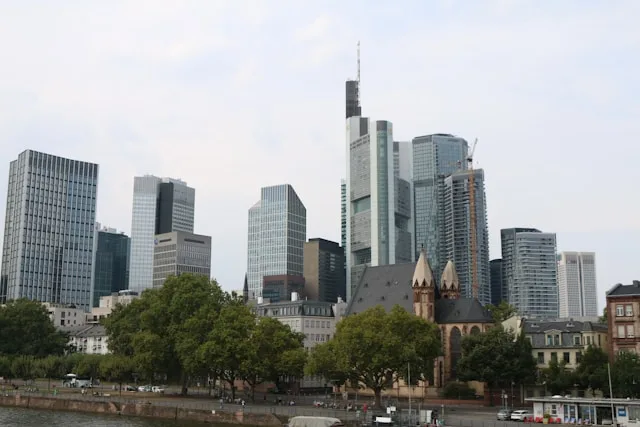
Frankfurt Air Cargo Talent: Why €1.5 Billion in Infrastructure Cannot Solve the Workforce Ceiling
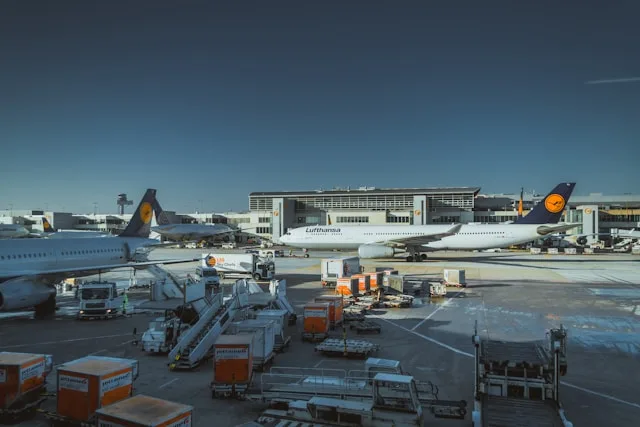
Frankfurt Airport processed 1.93 million tonnes of air cargo in 2024. Fraport and Lufthansa Cargo are spending €1.5 billion between 2024 and 2026 on terminal modernisation and fleet renewal. The Cargo City North project is scheduled for completion by the end of this year. On paper, the growth trajectory is clear: a target of 2.15 million tonnes by 2026, rising towards a mature high-yield cargo hub anchored by pharmaceuticals, automotive components, and high-tech manufacturing.
The capital is flowing. The infrastructure is being built. But the people required to run it are not arriving at the same pace. A search for a Director of Digital Cargo Infrastructure at Fraport, according to reporting in the Frankfurter Allgemeine Zeitung, ran for eleven months before stalling entirely. Certified Dangerous Goods Safety Advisors with air freight specialisation number just 340 in the greater Frankfurt area, with effective unemployment at zero. At the executive level, 85 to 90 per cent of cargo operations directors are passive candidates with average tenures exceeding six years. These are not the signs of a market that more money alone can unlock.
What follows is a ground-level analysis of Frankfurt's air cargo talent market in 2026: where the hiring gaps are deepest, why they resist conventional recruitment, what drives compensation in this cluster, and what organisations investing heavily in Frankfurt's cargo future need to understand before their next critical search.
The Paradox at the Centre of Frankfurt's Cargo Market
The most striking feature of Frankfurt's air freight and logistics cluster is the disconnect between macroeconomic conditions and micro-market reality. Germany's GDP contracted by 0.3 per cent in 2024. The national logistics sector shed 12,000 jobs that year, according to Federal Employment Agency statistics. E-commerce normalisation and recessionary pressure freed up generic logistics labour across the country.
None of that helped Frankfurt's cargo employers fill their most critical roles.
The vacancy duration for certified air cargo handling supervisors in this market averages 142 days. The national average is 98 days. Digital logistics profiles, including ERP specialists and cargo IT systems architects, show an 18.2 per cent vacancy rate, the highest of any logistics sub-sector in Germany, according to the Bitkom Digital Office Index 2024. In Hesse alone, 4,800 logistics positions remained unfilled as of late 2024, with 34 per cent concentrated in air transport and support activities.
This is the paradox that defines the market heading into 2026. The broader economy suggests labour should be loosening. In the aviation-specific corner of logistics, it is tightening. The skills that matter most here, regulatory knowledge, safety certifications, multi-stakeholder coordination across carriers, handlers, and customs authorities, are not transferable from general warehousing or road freight. A surplus of truck dispatchers does not help when you need a Dangerous Goods Safety Advisor who understands IATA regulations and holds current air cargo certification.
The economic slowdown has not relieved hiring pressure in this cluster. It has deepened it by creating a false impression of availability.
The Infrastructure Bet and Its Workforce Dependency
Fraport's "CargoHub Frankfurt 2030" strategy is one of the largest single-site cargo infrastructure investments in Europe. The €350 million Cargo City North modernisation, now approaching completion, is designed to shift the airport from volume throughput toward high-yield specialty cargo. Lufthansa Cargo has committed €1.2 billion to fleet modernisation, ordering B777F and A350F aircraft alongside sustainable aviation fuel procurement commitments driven by ReFuelEU Aviation mandates.
Physical Capacity Is Already Saturated
The constraint is not ambition. It is operational headroom. Cargo terminal utilisation runs at 88 to 92 per cent during weekday morning peaks. The airport operates at 126 cargo slots per hour across four runways, and slot allocation prioritises belly freight on passenger widebodies, which accounts for 77 per cent of total cargo volume, over dedicated freighters at just 23 per cent. There is no greenfield expansion space. The airport is surrounded by urban development and the Frankfurter Wald, and vertical construction near runways faces fire safety restrictions on high-bay storage.
Regulatory Pressure Is Compressing Capacity Further
The Hesse state government's draft Luft- und Lärmschutzprogramm proposes excluding older B747-400F aircraft during night hours, potentially reducing available freighter capacity by 8 to 11 per cent. A separate policy signal from the state coalition would reduce night flights between 22:00 and 06:00 by 15 per cent by 2027. Express integrators such as FedEx and UPS, who depend on the 02:00 to 05:00 arrival window for next-day European distribution, would be hit directly. Estimates suggest 120,000 to 150,000 tonnes could divert annually to Leipzig or Liège if these restrictions take effect.
The capital investment assumes growth. The regulatory trajectory threatens contraction. The resolution of this tension will determine whether Frankfurt remains Europe's premier cargo hub or becomes a high-value niche operation. Either outcome demands a workforce that does not yet exist in sufficient numbers.
Who Employs Frankfurt's Cargo Workforce and What That Means for Hiring
The Cargo Community Frankfurt, comprising over 120 member companies, generates approximately €12.8 billion in annual gross value added for the Rhein-Main region. It directly employs 28,000 people in cargo handling, logistics, and related services, with a further 52,000 in indirect roles.
But the employment structure is concentrated. Fraport AG accounts for roughly 3,200 cargo-related roles. Lufthansa Cargo employs 4,800 in Frankfurt, with 1,200 in handling operations. DHL Global Forwarding, headquartered in Frankfurt, has approximately 4,100 employees in the Rhein-Main region, 1,800 of them at cargo terminals. DB Schenker, prior to its integration into DSV, maintained 1,200 air freight specialists at Frankfurt hubs. Specialised handlers including FRA Ground Services, Lufthansa Cargo Handling, WFS, and Swissport collectively employ over 4,000.
This concentration matters for two reasons. First, the talent pool for senior cargo operations roles is small and everyone in it knows everyone else. A VP of Ground Handling Services has likely worked at two or three of these employers over the course of a career. Second, the DSV acquisition of DB Schenker, expected to close in the first half of 2025, is consolidating two of the top five forwarders at Frankfurt. Administrative functions may relocate to Copenhagen or Hamburg. The near-term effect is a hiring freeze in middle management. The medium-term effect is increased demand for integration specialists and a pool of displaced mid-level professionals who lack the certifications needed for the roles that are actually short.
The consolidation creates movement. It does not create supply where it counts.
The Compensation Architecture That Holds Passive Candidates in Place
Understanding why senior talent in this market does not move requires understanding what these roles pay and how the packages are structured.
Operations and Ground Handling Leadership
A Cargo Operations Manager with five to eight years of experience earns a base salary of €72,000 to €88,000, reaching total compensation of €85,000 to €105,000 with bonuses and allowances, according to the StepStone Gehaltsreport and Hays Salary Guide for 2024. At director level, a Director of Cargo Operations at Fraport or Lufthansa Cargo commands a base of €165,000 to €195,000, with total packages of €220,000 to €280,000. A VP of Ground Handling Services reaches €180,000 to €220,000 base and €250,000 to €320,000 total, according to Korn Ferry's Executive Compensation Study for Transport and Logistics Germany.
These figures explain retention. At the VP level, long-term incentive plans and non-compete clauses create exit barriers that a competitor's offer must clear by a material margin. When Lufthansa Cargo recruited a Vice President of Global Cargo Operations from Kuehne+Nagel's Amsterdam Schiphol hub in 2024, according to Air Cargo News, the compensation premium was 32 per cent above the candidate's previous base: €285,000 versus €216,000, plus relocation support. That level of premium was required to move a single individual.
Digital and Supply Chain Strategy
The premium for digital skills in this market reflects the scarcity. A Digital Logistics Solutions Architect earns €85,000 to €110,000 base, a 15 per cent premium over general IT, because aviation-specific regulatory knowledge is embedded in the role. A Supply Chain Manager specialising in pharma air freight earns €78,000 to €95,000 base. At the executive level, a Chief Digital Officer in a logistics division commands €200,000 to €250,000 base and €300,000 to €400,000 total with equity and long-term incentives, according to Morgan McKinley's Frankfurt salary data.
Compliance and Technical Specialisation
Dangerous Goods Safety Advisors with air cargo certification earn €65,000 to €80,000 base, with a 10 to 15 per cent shortage premium on top. Customs Compliance Managers with AEO certification earn €70,000 to €88,000 base. The Head of Regulatory Affairs and Compliance reaches €150,000 to €185,000 base and €190,000 to €240,000 total.
The compensation data tells a story that aggregate salary surveys miss. At every level where acute shortage exists, packages are structured to retain rather than attract. LTIPs vest over three to five years. Non-compete clauses restrict movement to direct competitors. The counteroffer dynamic is especially pronounced: three finalist candidates for Fraport's Director of Digital Cargo Infrastructure reportedly accepted counteroffers from technology firms or relocated to Amsterdam Schiphol, according to reporting in the Frankfurter Allgemeine Zeitung. Moving passive candidates in this market requires more than matching their current compensation. It requires outbidding the retention structures already holding them.
The Competitor Hubs Drawing Frankfurt's Talent Away
Frankfurt does not operate in isolation. It competes for a finite pool of senior air cargo professionals against hubs with specific structural advantages, and the competition is asymmetric.
Amsterdam Schiphol offers 15 to 20 per cent higher net disposable income for senior professionals, driven by the Dutch 30 per cent ruling for expatriates and lower marginal tax rates above €100,000. The Netherlands also leads in flexible work policies: according to McKinsey's "Future of Logistics Talent in Europe" research, 68 per cent of Dutch logistics firms offer hybrid arrangements versus 41 per cent in Germany. For a passive operations director comfortable in a hybrid role, moving to Frankfurt often means accepting both a lower net income and a full-time office mandate.
At the executive tier, the draw of Dubai and Singapore is more acute. Effective tax rates of 0 to 15 per cent versus Germany's 42 per cent top rate represent a total compensation differential that no Frankfurt employer can close through base salary alone. According to a Russell Reynolds Associates Aviation Practice Survey, approximately 12 per cent of senior German air cargo executives aged 40 to 50 have relocated to these hubs in the past 36 months.
Leipzig-Halle, DHL's European hub, competes for operational staff and mid-level talent with housing costs 50 per cent below Frankfurt. Paris CDG attracts multilingual talent into global headquarters roles at Air France-KLM and DHL's French cluster.
The net effect is a talent drain at both ends of the seniority spectrum. Junior and mid-level staff move to Leipzig for affordability. Senior executives move to Amsterdam for net income or to the Gulf for tax efficiency. Frankfurt's air cargo employers are left competing for the professionals who remain, which is precisely the pool that is already passive, retained, and difficult to reach through conventional recruitment.
The Original Synthesis: Capital Moved Faster Than Human Capital Could Follow
Here is the analytical claim that the data supports but no single data point states directly.
Fraport and Lufthansa Cargo committed €1.5 billion to infrastructure and fleet modernisation between 2024 and 2026. The Cargo City North project will deliver new terminal capacity by year-end. The B777F and A350F orders will arrive on schedule. SAF procurement contracts are signed. Electric ground support equipment investment is budgeted.
Every element of the capital programme is proceeding. The workforce to operate it is not.
The investment thesis assumed that modern infrastructure would attract talent. That a new terminal, electrified equipment, and next-generation aircraft would make Frankfurt a more compelling place to work. But the bottleneck is not employer brand. It is structural supply. There are 340 certified DGSAs with air freight expertise in the greater Frankfurt area. That number does not increase because a new terminal opens. The 82 per cent passive rate among aviation IT systems architects does not decline because Fraport installs IoT sensors. The 142-day vacancy duration for handling supervisors does not shorten because the facility they would supervise is newer.
Capital investment and human capital operate on fundamentally different timescales. Buildings can be completed in 24 months. The pipeline for a certified, experienced cargo operations director takes 10 to 15 years to produce. Frankfurt's cargo cluster has invested at the speed of capital markets while its workforce develops at the speed of professional careers. The gap between these two timescales is the defining challenge for every employer in this market in 2026.
What This Means for Hiring Leaders in Frankfurt's Cargo Cluster
For organisations operating in this market, three implications follow directly from the analysis.
First, traditional recruitment methods reach a fraction of the viable candidate pool. When 85 to 90 per cent of cargo operations directors are passive, an advertised vacancy serves primarily as employer branding. It will not generate a shortlist of qualified candidates. The same applies to digital logistics architects at 82 per cent passive and dangerous goods specialists at 78 per cent. Direct identification and approach of specific individuals, through systematic talent mapping of the known employer base, is not a premium option. It is the only method that reaches the market.
Second, the timeline expectations that work in other sectors do not apply here. A 142-day average vacancy duration for handling supervisors is not evidence of a broken process. It is the baseline for a market where the qualified population is small, mostly employed, and retained by structures designed to prevent movement. Hiring leaders who plan their searches based on standard logistics sector timelines will consistently underestimate how long it takes to identify, approach, and move a qualified candidate through a comprehensive search process.
Third, the compensation conversation must begin before the search begins. In a market where Lufthansa Cargo paid a 32 per cent premium to move a single VP-level candidate from Amsterdam, and where DB Schenker offered €12,000 signing bonuses for customs specialists, the package must be designed to clear the retention barriers at the candidate's current employer. This requires current market benchmarking specific to the aviation cargo sub-sector, not generic logistics salary data.
KiTalent's approach to markets like Frankfurt's air cargo cluster is built for precisely these conditions. Our AI-enhanced talent mapping identifies the specific individuals holding the certifications, clearances, and operational experience that these roles require, including the 85 per cent who will never respond to a job advertisement. With interview-ready candidates delivered within 7 to 10 days, a pay-per-interview model that eliminates upfront retainer risk, and a 96 per cent one-year retention rate across 1,450 placed executives, the method is designed for passive-candidate markets where speed and precision both matter.
For organisations building leadership teams in Frankfurt's air cargo and logistics sector, where the infrastructure investment is committed but the workforce to operate it remains the binding constraint, start a conversation with our industrial and logistics search team about how we approach this market.
Frequently Asked Questions
What is the average salary for a cargo operations director in Frankfurt?
A Director of Cargo Operations at a major Frankfurt employer such as Fraport or Lufthansa Cargo earns a base salary of €165,000 to €195,000, with total compensation reaching €220,000 to €280,000 including bonuses and allowances. At VP level, total packages reach €250,000 to €320,000. These figures reflect 2024 salary guide data from Korn Ferry and represent a market where long-term incentive plans and non-compete clauses are standard retention tools at senior levels.
Why is it so hard to hire air cargo specialists in Frankfurt?
Frankfurt's air cargo talent shortage exists within a broader German economic contraction because the skills required are aviation-specific and not transferable from general logistics. Regulatory knowledge, safety certifications such as Dangerous Goods Safety Advisor accreditation, and multi-stakeholder coordination experience create a structurally separate labour market. With 85 to 90 per cent of senior candidates passive and average vacancy durations of 142 days for handling supervisors, conventional job advertising reaches only a small fraction of the qualified pool.
How does Frankfurt compare to Amsterdam Schiphol for air cargo careers?
Amsterdam offers senior air cargo professionals 15 to 20 per cent higher net disposable income through the Dutch 30 per cent expatriate tax ruling and lower marginal rates above €100,000. Hybrid work is more prevalent, with 68 per cent of Dutch logistics firms offering flexible arrangements versus 41 per cent in Germany. Frankfurt offers proximity to major pharmaceutical and automotive clients and a denser employer base, but the net compensation gap is a persistent challenge for Frankfurt employers recruiting from Schiphol.
What impact will the DSV acquisition of DB Schenker have on Frankfurt logistics hiring?
The acquisition consolidates two of Frankfurt's top five air freight forwarders. In the near term, administrative roles face hiring freezes and potential relocation to Copenhagen or Hamburg. Operationally, demand is increasing for integration specialists who can merge systems, processes, and teams. Mid-level professionals displaced by the consolidation may lack the aviation-specific certifications needed for the roles that remain unfilled, meaning the acquisition creates talent movement without addressing the core shortage in specialist functions.
How can companies find passive air cargo executives in Frankfurt?
In a market where the overwhelming majority of qualified candidates are employed and not actively looking, direct headhunting and AI-enhanced talent mapping are the primary effective methods. Advertised vacancies serve primarily as employer branding in this sub-sector. Effective searches require systematic identification of individuals by certification, employer history, and operational experience, followed by confidential direct approach with a compensation proposition designed to clear the retention barriers at the candidate's current employer.
What are the biggest risks to Frankfurt's air cargo growth in 2026?
The principal risks are regulatory, operational, and talent-related. Proposed Hesse state night flight restrictions could divert 120,000 to 150,000 tonnes annually to competing hubs. Terminal utilisation at 88 to 92 per cent leaves no buffer for disruption. The EU ETS phase-out of free aviation allowances and ReFuelEU SAF mandates will increase operating costs by €0.08 to €0.12 per kilogram of cargo. And the workforce required to operate new infrastructure is developing on a slower timeline than the capital investment that built it, creating a gap that no single hiring cycle can close.