The Hidden 80%
Why the strongest candidates never appear on job boards and how direct search reaches them.
Thuringia, Germany Executive Recruitment
with experience in photonics and optics, automotive manufacturing, and logistics-led growth. The Land’s demand concentrates around the Erfurt–Jena–Weimar labour market, with further pull from western automotive sites and university-linked engineering centres. Searches here succeed when they combine technical credibility with cross-region reach.
days to qualified shortlists in many searches
of relevant passive talent reached through direct headhunting
faster time-to-hire than traditional search benchmarks
one-year retention from KiTalent's broader methodology
These are KiTalent track-record figures referenced across our core about, services, and methodology pages.
Standard recruitment underperforms in Thuringia because leadership demand is specialised, talent is often already employed inside incumbent ecosystems, and the effective market extends beyond Land borders.
In Jena’s optics and photonics network, many credible candidates sit inside established employers such as ZEISS units, Jenoptik, SCHOTT, Fraunhofer IOF, and Leibniz-IPHT. They do not respond to job advertising. They respond to a serious product story, research partnerships, and a clear role mandate, which is why the hidden 80% matters more here than in broader labour markets.
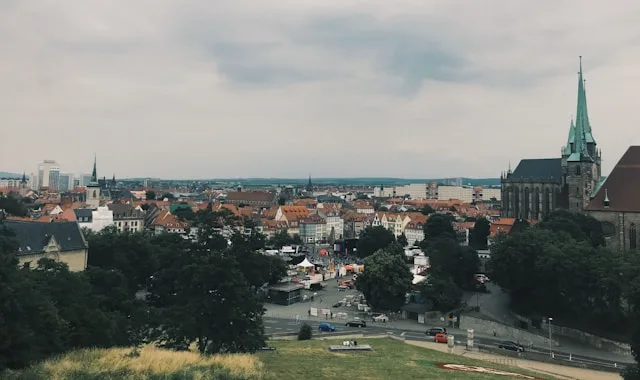
The practical centre of gravity is the Erfurt–Jena–Weimar corridor, while automotive operations and supplier leadership needs often sit further west. That geography shapes both commute patterns and candidate motivation. It also changes what “local” means for mandates based in Erfurt’s executive market, where ICE connectivity can widen the addressable candidate radius.
Co-determination, works councils, and collective agreements influence decision rights, reporting lines, and timelines, even when a hire is above tariff structures. Foundation-owned or research-adjacent entities can add stakeholder complexity and slower appointment cycles. This is where a partner-led approach with clear process governance reduces risk and protects employer brand.
This is the operating context KiTalent is built for: long-term market intelligence, direct outreach, and transparent delivery grounded in the realities of Thuringia’s specialist clusters. Learn more about who we are on About.

Thuringia mandates should start with role clarity and stakeholder mapping, because governance structures and works council interfaces shape the real decision rights of the hire. This matters most in research-adjacent entities and in large manufacturing operations with established co-determination patterns. Geography must be designed into the process. Erfurt’s ICE connectivity makes commuter and hybrid leadership models more realistic, which can widen the shortlist without forcing immediate family relocation. It also changes the target map, because candidates can remain anchored in major hubs while leading Thuringian sites. The outreach plan needs parallel tracks. Local technical depth in Jena and Ilmenau can produce exceptional specialists, while broader corporate roles such as scaling CFO, CRO, or CHRO often require cross-region pulls from Hesse, Bavaria, or Saxony. This is where talent mapping and a standing talent pipeline reduce time-to-hire for recurring needs. Some situations still require a bridge leader. Plant turnarounds, programme rescue, or interim commercial leadership can be stabilised through interim management while the permanent search runs at full depth. When the candidate market must extend beyond Germany, an international executive search structure keeps governance, assessment, and relocation planning coherent. Interim leadership solutions
Leadership demand is shaped by the Jena cluster’s mix of global groups, institutes, and specialised SMEs. The strongest hires blend product authority with commercial scaling, often tracked via semiconductors and electronics manufacturing requirements…
Operations in western Thuringia drive mandates for plant leadership, quality, EHS, and supply chain heads, anchored by the BMW Plant Eisenach footprint and its supplier ecosystem. Searches often require proven delivery under automotive cadence and customer audit pressure, within the [automotive…
Precision manufacturing and export-facing commercial needs are sustained by specialty glass activity around Jena operations. Mandates sit at the interface of process excellence, quality systems, and international account growth, aligned with the [industrial manufacturing…
A dispersed Mittelstand base creates demand for business unit leaders, international sales heads, and CEO profiles with consolidation readiness. Many clients frame these searches through industrial automation, robotics, and control systems…
Erfurt’s central transport position supports leadership needs in fulfilment, 3PL operations, and distribution reliability. When mandates are anchored in the Erfurt market, success depends on strong workforce planning and data-led operations governance.
Executive mobility across Thuringia's cities is shaped by compensation expectations, relocation appetite, family considerations, and international exposure.
A search that maps where the right leaders actually operate, and understands the conditions under which they would consider a move, is fundamentally more effective than one that treats Thuringia as a flat national market.
Thuringia's executive search market is strongest where its economic specialisation is deepest.
is pulled by Jena’s dense ecosystem of industry and institutes, including Jenoptik, ZEISS units, SCHOTT, Fraunhofer IOF, and the university-linked Abbe Centre and Beutenberg campus. These mandates call for R&D directors, CTO and CPO profiles, and product executives who can commercialise deep-tech innovation, often mapped through the [semiconductors and electronics manufacturing…
remain a core driver in western Thuringia, anchored by BMW Group Plant Eisenach and wider press-tool and metal-forming capabilities, alongside OEM and supplier footprints that include an Opel presence. Hiring demand leans towards plant managers, quality and EHS leaders, and supply chain heads, typically benchmarked against the automotive sector and wider industrial operations…
continues to create leadership pull around Jena operations such as SCHOTT JENAer GLAS, with requirements spanning process engineering, export-facing commercial leadership, and manufacturing modernisation. This is where cross-functional leadership sits between the industrial manufacturing sector and precision-driven quality systems.
is strengthened by Erfurt’s role as an ICE rail junction and motorway node, plus industrial parks and the freight village (GVZ). For organisations building fulfilment, 3PL, or distribution capacity, the leadership requirement often sits in Erfurt and tends to blend operations, workforce planning, and service reliability, with a strong need for…
is fuelled by Jena’s university hospital and research base, which supports product, clinical affairs, and regulatory leadership in technology-led ventures. These searches typically sit within the healthcare and life sciences sector and require leaders who can translate research credibility into market access.
Companies rarely need only reach in Thuringia. They need interpretation, calibration, and a search architecture that reflects the real structure of the market.
Our team coordinates Thuringia mandates from our European headquarters in Turin, with direct access to the talent intelligence, compensation dynamics, and sector developments that drive search outcomes.
The strongest executives in Thuringia are passive. Our direct headhunting approach engages the hidden 80% of passive talent through discreet outreach rooted in real market knowledge.
Our parallel mapping methodology means we already hold live intelligence on restructuring, transition windows, compensation patterns, and candidate attraction opportunities when a brief arrives.
In Thuringia, the cost of a wrong executive hire extends far beyond the recruitment fee. Our interview-fee model lets clients see real market output and qualified candidates before the bulk of the investment is committed.
Thuringia is not one talent pool. It is a set of specialised micro-markets with different candidate motivations, compensation anchors, and governance norms.
We build a live market map before and during the mandate, covering incumbents, spin-outs, and research-adjacent leadership networks, then keep it current for future hiring. This is the core of our methodology and it reduces rework when a brief shifts.
We run targeted outreach to passive leaders inside the cluster, with a mandate story that withstands technical scrutiny and governance questions. This is delivered through headhunting and is designed around the hidden 80%.
Thuringia packages must reconcile local pay anchors with the premiums required for scarce profiles and relocation. Our market benchmarking provides the reference points needed to secure acceptance without destabilising internal equity.
Leadership demand is shaped by the Jena cluster’s mix of global groups, institutes, and specialised SMEs. The strongest hires blend product authority with commercial scaling, often tracked via semiconductors and electronics manufacturing requirements and research-linked credibility.
These resources provide deeper market intelligence and explain how KiTalent turns insight into a faster, more transparent search process.
Why the strongest candidates never appear on job boards and how direct search reaches them.
What a failed senior appointment really costs, and how the right search process prevents it.
How parallel mapping, direct headhunting, and a visible process reduce time-to-hire and improve search outcomes.
Where executive search, talent mapping, compensation benchmarking, and interim solutions fit together.
Use these pages to move between city clusters, sector pages, and supporting articles.
These are the questions most closely tied to how executive search really works in Thuringia.
Because many of the most qualified leaders are already employed inside the optics, photonics, specialty glass, and automotive ecosystems, and they rarely apply to posted roles. A search partner is useful when the mandate needs discreet outreach, technical screening, and governance-aware process control. In Thuringia, this often includes candidates tied to Jena’s institute network and senior operators in established manufacturing sites. A high-quality process also protects your employer brand in a smaller executive community where reputational signals travel quickly.
Thuringia typically offers lower labour and occupancy costs than southern hubs, and it has a distinctive concentration in photonics and optics around Jena. The trade-off is executive depth for certain functions. For scaling CFO, CRO, or CHRO mandates, Thuringian employers more often need to recruit from outside the Land, then compete on mission, career stretch, and a complete rewards package. Southern markets also have denser peer networks, which can reduce the perceived risk of a move.
Both are engineering-led eastern Länder, but Saxony’s Dresden ecosystem has greater scale in microelectronics and semiconductors. Thuringia is more concentrated in optics, photonics, and precision glass, with strong institute adjacency. That difference affects target mapping. A good search will identify transferable leadership skills, such as laser and optical metrology experience that can translate between photonics and semiconductor-adjacent manufacturing, while still matching domain credibility.
We start with a market map that reflects where the real talent sits, including incumbents, suppliers, and institute-linked networks, then run direct outreach rather than relying on applicants. We calibrate compensation with market benchmarking that reflects regional pay anchors and the premiums required for scarce profiles. We also design the process around co-determination realities, notice periods, and stakeholder cycles, so offers and start dates are realistic.
Shortlists are typically produced within 7 to 10 days when the brief is clear and stakeholder access is available early. Speed comes from parallel mapping and pre-existing talent intelligence, not from narrowing standards. In Thuringia, timelines can still be influenced by governance and works council interfaces, as well as relocation decision cycles for candidates coming from Bavaria, Hesse, or Saxony. We manage that risk through upfront timeline design and weekly pipeline visibility.
Because many of the most qualified leaders are already employed inside the optics, photonics, specialty glass, and automotive ecosystems, and they rarely apply to posted roles. A search partner is useful when the mandate needs discreet outreach, technical screening, and governance-aware process control. In Thuringia, this often includes candidates tied to Jena’s institute network and senior operators in established manufacturing sites. A high-quality process also protects your employer brand in a smaller executive community where reputational signals travel quickly.
Thuringia typically offers lower labour and occupancy costs than southern hubs, and it has a distinctive concentration in photonics and optics around Jena. The trade-off is executive depth for certain functions. For scaling CFO, CRO, or CHRO mandates, Thuringian employers more often need to recruit from outside the Land, then compete on mission, career stretch, and a complete rewards package. Southern markets also have denser peer networks, which can reduce the perceived risk of a move.
Both are engineering-led eastern Länder, but Saxony’s Dresden ecosystem has greater scale in microelectronics and semiconductors. Thuringia is more concentrated in optics, photonics, and precision glass, with strong institute adjacency. That difference affects target mapping. A good search will identify transferable leadership skills, such as laser and optical metrology experience that can translate between photonics and semiconductor-adjacent manufacturing, while still matching domain credibility.
We start with a market map that reflects where the real talent sits, including incumbents, suppliers, and institute-linked networks, then run direct outreach rather than relying on applicants. We calibrate compensation with market benchmarking that reflects regional pay anchors and the premiums required for scarce profiles. We also design the process around co-determination realities, notice periods, and stakeholder cycles, so offers and start dates are realistic.
Shortlists are typically produced within 7 to 10 days when the brief is clear and stakeholder access is available early. Speed comes from parallel mapping and pre-existing talent intelligence, not from narrowing standards. In Thuringia, timelines can still be influenced by governance and works council interfaces, as well as relocation decision cycles for candidates coming from Bavaria, Hesse, or Saxony. We manage that risk through upfront timeline design and weekly pipeline visibility.
If you are hiring a photonics R&D leader linked to Jena’s ecosystem, an automotive plant executive in western Thuringia, or a logistics operations head anchored in Erfurt, the search plan should reflect the Land’s real talent geography.
What we bring to Thuringia executive mandates:
Baden-Württemberg · Bavaria · Berlin · Brandenburg · Bremen · Hamburg · Hesse · Lower Saxony · Mecklenburg-Vorpommern · North Rhine-Westphalia Rhineland-Palatinate · Saarland · Saxony · Saxony-Anhalt · Schleswig-Holstein
Whether you are running a live mandate or want to pressure-test a brief before going to market, this is the right place to start the conversation.