
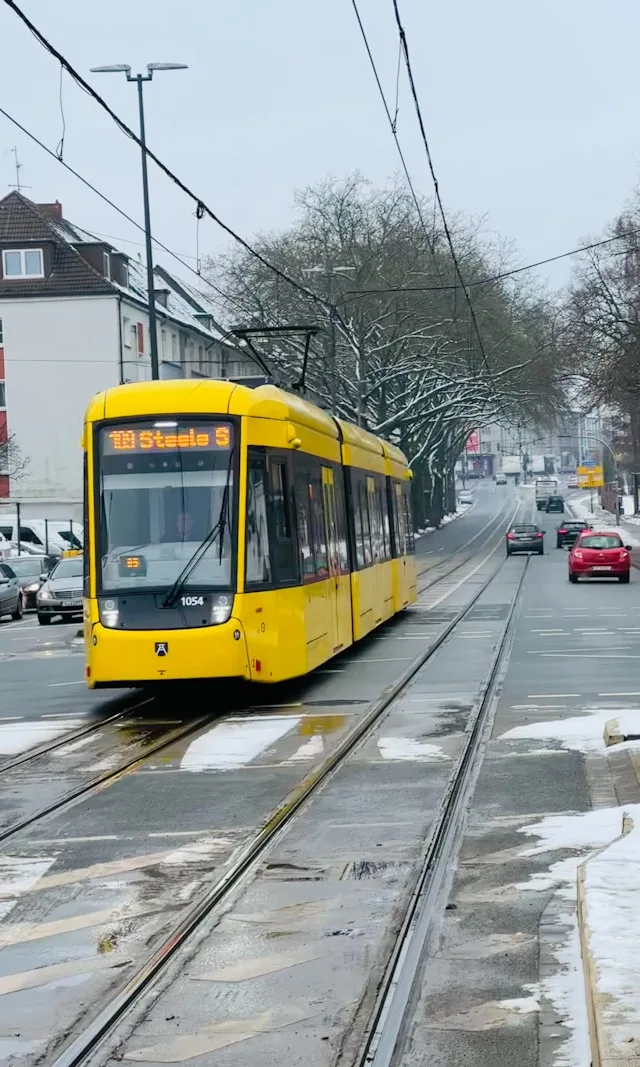
Düsseldorf's Trade Fair Boom Is Running Out of the People Who Build It
Messe Düsseldorf has pre booked 85% of its available hall capacity for 2026. The K Show, MEDICA, and a convergence of triennial and quadrennial cycles will create the most...
North Rhine-Westphalia, Germany Executive Search
supporting leadership hiring across energy and utilities, chemicals and industrial manufacturing, logistics, and digital and professional services. Searches in North Rhine-Westphalia are managed from KiTalent's Turin hub, with support from our other hubs when the candidate pool crosses markets. The Rhine-Ruhr conurbation creates a dense, polycentric executive market where headquarters, industrial sites, and research institutions pull talent between major cities every week.
Track record on suitable mandates: 7–10 working days to validated shortlist · 96% one-year retention · NPS 72. How we measure performance.
Standard recruitment underperforms in North Rhine-Westphalia because the best-fit leaders are rarely active, and mandates usually sit at the intersection of industrial change, stakeholder complexity, and tight functional skill mixes. In NRW, you are competing against a dense set of corporates, Mittelstand groups, and transformation programmes at the same time.
NRW’s executive catchment moves along the Rhine-Ruhr corridor, so shortlists must be built with commuting and relocation realities in mind. A CFO who works in Düsseldorf may still be the right fit for a mandate anchored in an industrial site elsewhere, if the stakeholder plan is credible.
Energy transition, electrification and digitalisation create senior roles with high change intensity, and that changes the hiring sequence. Works councils and co-determination expectations can extend timetables, especially where restructuring, CAPEX, or site conversion is involved, so search design must anticipate governance and communications.
Many of the leaders you need are incumbents in long-tenured organisations, including family-owned mid-caps and large HQ ecosystems. That is why searches in NRW depend on direct outreach, confidentiality, and a value proposition that respects what keeps passive candidates in seat, as described in the passive majority of senior talent. NRW rewards a directly engaged search partnership model because mandates are rarely isolated hires, and continuity matters when the market is this interlinked. This is the operating context described in our about page, and it is why we prioritise parallel mapping over reactive sourcing.
North Rhine-Westphalia is not one talent pool: it is a connected set of city markets with different employer mixes and candidate expectations.
The strongest concentration is around corporate and operational leadership in Essen, where transformation scope, regulatory exposure, and capital allocation skills define senior fit, aligned to oil, energy and renewables.
Operational excellence, HSE leadership, and supply-chain resilience remain decisive, and the market often pulls leaders through the Cologne corridor into complex industrial environments tied to the industrial manufacturing sector.
NRW’s headquarters density creates recurring CFO, legal, compliance and transformation appointments, and Düsseldorf is a frequent anchor for these searches, with overlap into banking and wealth management hiring patterns.
Port, airport and multimodal nodes drive demand for operational leaders who can run complex networks and trade exposure, and searches often include candidates based in and around Dortmund, linked to real estate and construction and infrastructure-driven growth.
NRW’s research infrastructure supports CTO, R&D and innovation leadership, and Aachen is a key reference point for mandates tied to university partnerships and advanced engineering, aligned to industrial automation, robotics and control systems.
Because NRW’s transport links reduce domestic relocation friction, searches regularly extend into quality-of-life markets such as Münster, even when the role is anchored elsewhere in the Rhine-Ruhr system.
Executive mobility across North Rhine-Westphalia's cities is shaped by compensation expectations, relocation appetite, family considerations, and international exposure.
A search that maps where the right leaders actually operate, and understands the conditions under which they would consider a move, is fundamentally more effective than one that treats North Rhine-Westphalia as a flat national market.
North Rhine-Westphalia's executive search market is strongest where its economic specialisation is deepest.
is anchored in the Ruhr, with major employers such as RWE and E.ON driving demand for executives who can run asset transition, regulatory affairs, project delivery and portfolio choices in Essen and beyond, often aligned to the oil, energy and renewables sector.
remain a core engine, with clusters around Leverkusen and large sites linked to Bayer, Evonik and wider chemical park ecosystems. These mandates favour plant credibility, HSE discipline and supply-chain command, and they often draw leadership attention into the industrial manufacturing sector from the wider Cologne catchment.
create steady demand for CTO, CISO, customer operations, and transformation leadership, shaped by the Bonn HQ presence of Deutsche Telekom and Deutsche Post DHL Group. These roles often sit at the intersection of infrastructure and service delivery in Bonn, with relevance to the telecommunications and media sector.
are reinforced by RWTH Aachen University, RWTH campus networks, and links between R&D and industry. Searches often target leaders who can translate research into scalable production and partnerships, which is why NRW sees recurring demand aligned to industrial automation, robotics and control systems in Aachen.
Industrial, Manufacturing, and Robotics · AI, Technology & Digital Infrastructure
is pushed by infrastructure nodes such as duisport, Cologne-Bonn Airport, and Düsseldorf Airport, with executive hiring focused on supply-chain optimisation and trade compliance. Because the Rhine-Ruhr network is connected, searches frequently include outreach into Dortmund as part of the operational and industrial logistics corridor.
Companies rarely need only reach in North Rhine-Westphalia. They need interpretation, calibration, and a search architecture that reflects the real structure of the market.
Our team runs North Rhine-Westphalia mandates through KiTalent's four regional hubs, combining local market intelligence with cross-border execution across Europe, the Americas, the Middle East, and Asia Pacific.
The strongest executives in North Rhine-Westphalia are passive. Our direct headhunting approach engages the passive majority of senior talent through discreet outreach rooted in real market knowledge.
Our parallel mapping methodology means we already hold live intelligence on restructuring, transition windows, compensation patterns, and candidate attraction opportunities when a brief arrives.
In North Rhine-Westphalia, the cost of a wrong executive hire extends far beyond the recruitment fee. Our Proof-First Search model lets clients see real market output and qualified candidates before the bulk of the investment is committed.
Nearby market moves worth watching across the region.
Aachen is where deep-tech production meets cross-border complexity. Europe's leading battery validation cluster, a production technology ecosystem generating €1.2 billion in…
Bonn is Germany's sovereign digital infrastructure capital, a city where cybersecurity clusters, UN-affiliated professional ecosystems, and pharmaceutical logistics converge…
Cologne's economy runs on an unusual combination: Germany's largest media and broadcast cluster, FMCG and retail headquarters like REWE Group, specialty chemicals production…
Dortmund is where Germany's logistics infrastructure meets its industrial future. The city's dual economy pairs Europe's largest inland canal port with a fast-growing cluster of…
These resources provide deeper market intelligence and explain how KiTalent turns insight into a faster, more transparent search process.
Messe Düsseldorf has pre booked 85% of its available hall capacity for 2026. The K Show, MEDICA, and a convergence of triennial and quadrennial cycles will create the most...
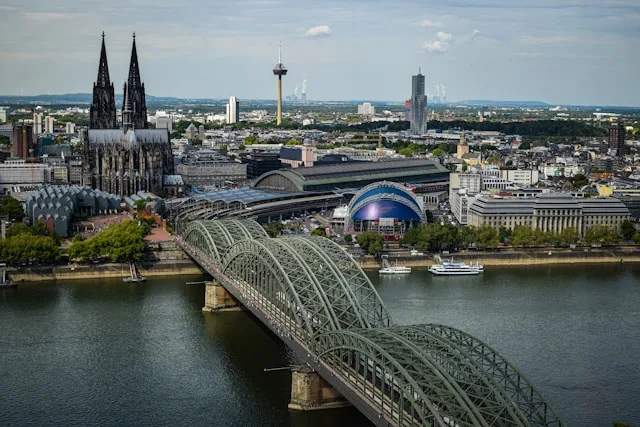
Cologne's trade fair, air cargo, and river logistics cluster generated €5.2 billion in regional GDP through 2025. Koelnmesse reported record booking levels. The Port of Cologne...
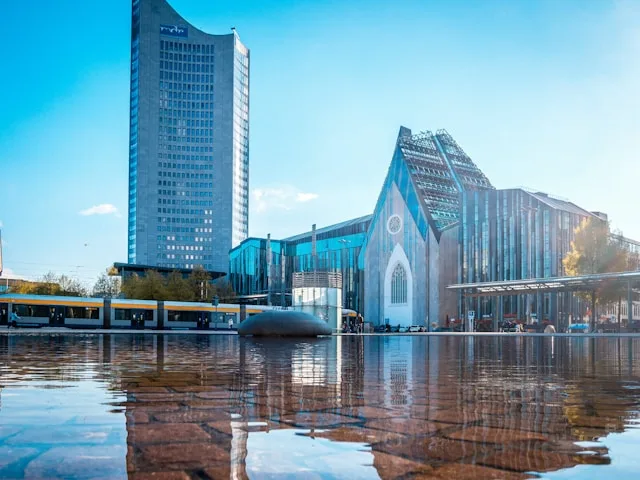
Münster's advanced manufacturing sector has announced €340 million in capital expenditure for 2026. Clean room expansions. E mobility filtration lines. Industry 4.0 retrofits....
ThyssenKrupp announced 5,000 job cuts across its group through 2025. The headlines suggested a market awash with available engineers. The reality on the ground in Essen tells a...
Use these pages to move between city clusters, sector pages, and supporting articles.
These are the questions most closely tied to how executive search really works in North Rhine-Westphalia.
NRW is a high-volume executive market, yet many of the best candidates are passive and embedded in large corporates or established mid-caps. Standard recruitment tends to surface active applicants, which can miss the leaders with the exact transformation mix you need. Executive search is also a risk-control tool here, because works councils, governance, and multi-site realities change how roles must be shaped and sold. For C-suite scope, specialist C-level executive search improves coverage and process discipline.
NRW is broader in scale and more diversified across heavy industry, logistics and services, while Bavaria and Baden-Württemberg are more concentrated in premium automotive and high-value engineering. That changes both the candidate pool and the mandate mix: NRW can offer deeper availability in energy, chemicals and logistics leadership, while southern states can be stronger magnets for very specialised automotive talent. In practice, NRW searches often need sharper positioning to attract niche southern profiles.
Hesse, and Frankfurt in particular, is a stronger reference point for finance-driven roles and corporate services tied to banking ecosystems. NRW competes well on headquarters density and industrial transformation scope, which appeals to operational and programme leaders. The trade-off is that some pure financial services candidates may default to Hesse unless the NRW mandate offers clear board access, investment runway, or distinctive scope.
We treat NRW as a connected system of city markets, not a single “local” pool, and we design searches around commuting reality, stakeholder sequencing, and the acceptance triggers for passive incumbents. Our approach prioritises parallel mapping, direct outreach, and decision-grade intelligence on availability and compensation. That combination is built to perform in dense markets where several employers move at once.
For well-defined mandates, we typically deliver an initial shortlist within 7 to 10 days, then iterate fast as stakeholder feedback comes in. Speed depends on role complexity, governance constraints, and how narrow the target pool is in technical functions. Where co-determination, restructuring sensitivity, or cross-border sourcing is involved, we keep pace by running mapping and outreach in parallel rather than in stages.
If you are hiring a transformation CEO in Essen, a CTO profile in Bonn, or a plant leader through the Cologne corridor, the first step is aligning scope, stakeholders, and target market reality. The team supports direct search, mapping, and cross-border outreach when needed, including international executive search for Benelux and wider European candidate pools.
What we bring to North Rhine-Westphalia executive mandates:
Executive search and direct headhunting · Talent mapping and market intelligence · Compensation benchmarking and mandate calibration · Connection to KiTalent's four regional hubs, Proof-First Search, and our international executive search network.
Whether you are running a live mandate or want to pressure-test a brief before going to market, this is the right place to start the conversation.
Author of record: Chiara Giacoletti, Associate Director, Central & Eastern Europe. Based on local market intelligence and executive-search data.
Share your CV and a sentence on the mandate types you'd consider. We respond within five working days.