Schleswig-Holstein, Germany Executive Recruitment

Executive Search in Schleswig-Holstein

supporting maritime logistics, naval and marine engineering, renewable energy, chemicals and med-tech leadership hiring across Kiel, Lübeck and the wider coastal economy. The Land’s ports, shipyards, research institutes and process plants create recurring demand for operational, programme and regulated-market executives. Competition from Hamburg and cross-border hiring routes into Denmark shape how fast you can secure proven leaders.

7-10

days to qualified shortlists in many searches

80%

of relevant passive talent reached through direct headhunting

42%

faster time-to-hire than traditional search benchmarks

96%

one-year retention from KiTalent's broader methodology

These are KiTalent track-record figures referenced across our core about, services, and methodology pages.

Why Schleswig-Holstein searches fail with standard recruitment

In Schleswig-Holstein, “available” candidates are rarely the right candidates. The most hireable leaders are in long-tenure roles within family-owned SMEs, port operators, research institutes, or regulated industrial sites, and they do not apply to adverts.

Naval and marine-technology work around Kiel creates demand for programme, export/compliance and operations leaders who have handled mission-critical delivery and public-procurement realities. Those profiles are scarce, and co-determination expectations affect how roles are shaped and accepted in practice.

The Kiel maritime and public-sector market behaves differently from Lübeck’s med-tech and logistics cluster, and hiring plans often underestimate this. If you treat the Land as one talent pool, you will either overpay for generalists or miss specialised operators.

Regional sources highlight a lower share of university-qualified resident labour than the German average, which constrains local supply for deep-specialist and multinational leadership roles. That pushes companies into cross-regional hiring and into carefully built relocation propositions, not generic sourcing.

KiTalent builds searches around these constraints, with transparent weekly reporting and parallel market mapping that targets the hidden 80% rather than the visible applicant pool, supported by local context from our About team.

What is driving executive demand in Schleswig-Holstein

Several structural forces are converging to shape executive demand across Schleswig-Holstein.

Maritime, shipbuilding and naval engineering:

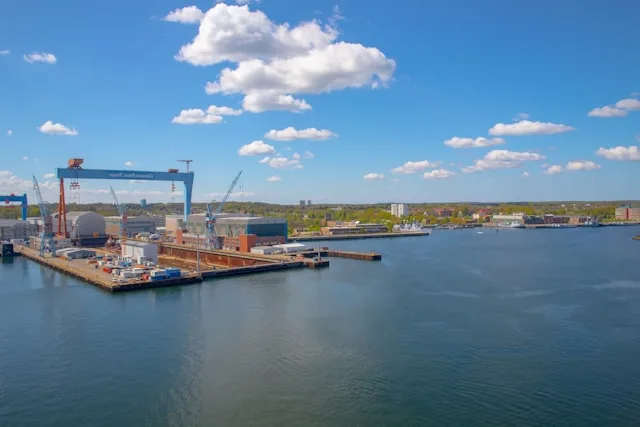
Demand concentrates in the executive market in Kiel, where thyssenkrupp Marine Systems (HDW) and the Kiel Canal economy drive programme leadership, operations and complex supply-chain mandates tied to the maritime, shipbuilding and offshore sector.

Ports, ferry and RoRo logistics:

Executive hiring is pulled by port operations and freight corridors anchored in the Lübeck and Travemünde gateway and linked to Scandinavian flows, with the Fehmarn Belt fixed link expected to reshape traffic patterns as approvals and timelines progress. This drives terminal, commercial and logistics-technology leadership needs in port networks rather than single sites.

Renewables and energy transition delivery:

Schleswig-Holstein is cited as a leading German wind region, with offshore supply-chain nodes and hydrogen pilot activity around coastal and port infrastructure such as Brunsbüttel and Husum. This supports sustained mandates for grid-integration, asset management and project leadership aligned to the oil, energy and renewables sector.

Chemicals and process-industry operations:

The ChemCoast and Brunsbüttel industrial area, including Covestro’s site, drives senior hiring for plant leadership, HSE and industrial compliance. These roles sit at the intersection of industrial safety, environmental permitting and workforce representation, and fit within the industrial manufacturing sector.

Medical technology and life sciences leadership:

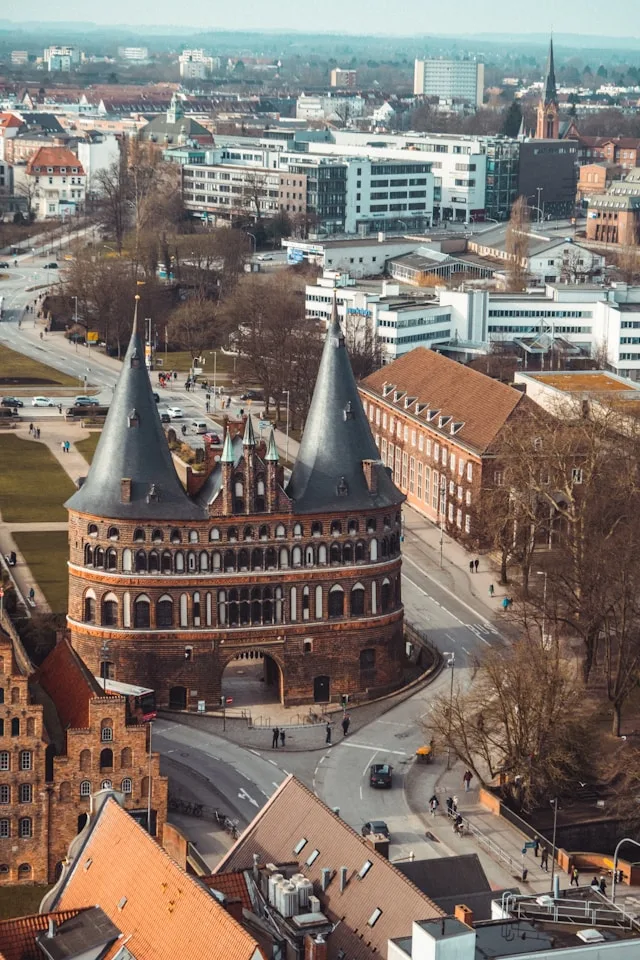
Lübeck’s med-tech ecosystem, with Dräger, Universität zu Lübeck and Fraunhofer IMTE presence, creates recurring demand for product leadership and regulated-market executives. Searches often span RA/QA and clinical-facing leadership within the healthcare and life sciences sector.

What this means for search design

Role design should assume inbound hiring pressure from Hamburg and peer northern states, especially for corporate, commercial and digital leadership. The search must also be resilient to longer stakeholder timetables driven by co-determination and regulated approvals. For programme and operations mandates, a targeted longlist beats a broad one. Candidate evaluation should test public-procurement literacy, export and compliance discipline, and evidence of leading through multi-party governance. When hiring depends on sector-specific scarcity, it is safer to build a live market map before the mandate is fully signed off. That is where talent mapping reduces time lost on unrealistic specifications. For repeat hiring in ports, renewables and process industry, pipeline thinking matters more than one-off transactions. A talent pipeline approach keeps successor options warm before project timetables compress. When timing is critical, interim leaders can stabilise delivery while the permanent search runs to the right standard. Use interim management to bridge plant leadership, programme oversight or regulated-market commercial gaps.

Maritime and naval engineering leadership

Centred on the Kiel executive market, these searches reward proven delivery in complex programmes and stakeholder-rich environments, and align closely with the aerospace, defence and space sector.

Port operations, terminals and freight commercial leadership

The strongest concentration sits in the Lübeck port and logistics economy, where operators need leaders who combine operational discipline with customer-led growth, often within maritime networks.

Renewables project and asset leadership

Coastal nodes connect ports, offshore servicing and grid infrastructure, and Kiel and Lübeck both compete for technical commercial leaders who can deliver wind and emerging hydrogen initiatives within the oil, energy and renewables sector.

Chemicals, HSE and site leadership

Process-industry roles around Brunsbüttel demand executives who can run safe, compliant operations and handle workforce representation, a recurring pattern within the industrial manufacturing sector.

Med-tech and regulated product leadership

Lübeck’s cluster drives demand for international commercial leaders, regulatory heads and product-line executives who can operate under strict quality systems, within the healthcare and life sciences sector.

Why mobility matters

Executive mobility across Schleswig-Holstein's cities is shaped by compensation expectations, relocation appetite, family considerations, and international exposure.

A search that maps where the right leaders actually operate, and understands the conditions under which they would consider a move, is fundamentally more effective than one that treats Schleswig-Holstein as a flat national market.

BROWSE ALL 2 CITIES IN SCHLESWIG-HOLSTEIN

Sector strengths that define Schleswig-Holstein executive search

Schleswig-Holstein's executive search market is strongest where its economic specialisation is deepest.

OTHER REGIONS IN GERMANY
Baden-WürttembergBavariaBrandenburgHesseLower SaxonyMecklenburg-VorpommernNorth Rhine-WestphaliaRhineland-PalatinateSaxonySaxony-AnhaltThuringia

Why companies partner with KiTalent for executive search in Schleswig-Holstein

Companies rarely need only reach in Schleswig-Holstein. They need interpretation, calibration, and a search architecture that reflects the real structure of the market.

We operate across Schleswig-Holstein

Our team coordinates Schleswig-Holstein mandates from our European headquarters in Turin, with direct access to the talent intelligence, compensation dynamics, and sector developments that drive search outcomes.

We reach the candidates that matter

The strongest executives in Schleswig-Holstein are passive. Our direct headhunting approach engages the hidden 80% of passive talent through discreet outreach rooted in real market knowledge.

We do not start from scratch

Our parallel mapping methodology means we already hold live intelligence on restructuring, transition windows, compensation patterns, and candidate attraction opportunities when a brief arrives.

Our model de-risks the investment

In Schleswig-Holstein, the cost of a wrong executive hire extends far beyond the recruitment fee. Our interview-fee model lets clients see real market output and qualified candidates before the bulk of the investment is committed.

Schleswig-Holstein’s leadership markets by sector

Schleswig-Holstein is not one talent pool. It is a set of coastal and corridor economies, with different leadership price points and candidate motivations between the state capital and the eastern port gateway.

1. Parallel mapping before the market moves

We use our methodology to map target organisations in parallel with role definition, so clients see real-time availability, competitor pay patterns and likely blockers before interviews begin.

2. Direct headhunting that reaches long-tenure leaders

Our headhunting approach is built for passive candidates, using the dynamics in the hidden 80% to shape outreach, conversion and confidentiality in small-market ecosystems.

3. Market intelligence that de-risks acceptance

We apply market benchmarking to calibrate compensation levers, relocation support and notice-period solutions, which is critical when Hamburg alternatives are credible and timelines are project-driven.

Maritime and naval engineering leadership

Centred on the Kiel executive market, these searches reward proven delivery in complex programmes and stakeholder-rich environments, and align closely with the aerospace, defence and space sector.

Essential reading for Schleswig-Holstein hiring decisions

These resources provide deeper market intelligence and explain how KiTalent turns insight into a faster, more transparent search process.

Frequently asked questions about executive search in Schleswig-Holstein

These are the questions most closely tied to how executive search really works in Schleswig-Holstein.

Why use executive recruiters in Schleswig-Holstein?

Because the senior market is relationship-led and often passive. Many viable leaders sit in long-tenure SME, public-sector research or stable plant roles, and will only engage through confidential outreach and a credible mandate narrative. Schleswig-Holstein also faces strong pull from Hamburg, so speed and clarity in the process matter. A specialist partner can combine direct outreach with compensation and relocation calibration so offers land cleanly.

What makes Schleswig-Holstein different from other German Länder?

Its economy is shaped by maritime logistics, naval engineering, ports and offshore-adjacent renewables, alongside a major chemicals cluster around Brunsbüttel and a med-tech nucleus in Lübeck. Compared with Bavaria or Baden-Württemberg, talent depth is thinner for broad high-tech leadership, which increases inbound hiring and raises the value of precise targeting. Compared with Hamburg, Schleswig-Holstein is often the operational base while Hamburg supplies more headquarters-style functions.

How does KiTalent approach executive search in Schleswig-Holstein?

We start with parallel mapping and stakeholder-aware role design, then run direct headhunting into competitor sets, adjacent Länder and relevant cross-border pools. We keep weekly reporting and pipeline visibility, and we use structured assessment to test delivery evidence in regulated environments. Our work is grounded in transparent process control rather than assumptions about applicant flow. For an overview, see our executive search capability.

How quickly can KiTalent present candidates in Schleswig-Holstein?

In many mandates, we deliver a first credible shortlist in 7 to 10 days, provided the role scope and decision process are clear. Speed is easier when the brief accounts for co-determination touchpoints, regulated approvals and relocation realities from day one. Where the role is highly specialised, such as complex programme leadership or hydrogen integration, the timeline depends on candidate notice periods and stakeholder scheduling.

How do works councils and co-determination affect senior hiring?

They influence timelines, interview design and candidate confidence. For site and operations roles, candidates often expect clarity on decision rights, stakeholder interfaces and how employee representation is engaged during change. Building these elements into the mandate narrative and assessment reduces late-stage friction and counteroffer risk.

Why use executive recruiters in Schleswig-Holstein?

Because the senior market is relationship-led and often passive. Many viable leaders sit in long-tenure SME, public-sector research or stable plant roles, and will only engage through confidential outreach and a credible mandate narrative. Schleswig-Holstein also faces strong pull from Hamburg, so speed and clarity in the process matter. A specialist partner can combine direct outreach with compensation and relocation calibration so offers land cleanly.

What makes Schleswig-Holstein different from other German Länder?

Its economy is shaped by maritime logistics, naval engineering, ports and offshore-adjacent renewables, alongside a major chemicals cluster around Brunsbüttel and a med-tech nucleus in Lübeck. Compared with Bavaria or Baden-Württemberg, talent depth is thinner for broad high-tech leadership, which increases inbound hiring and raises the value of precise targeting. Compared with Hamburg, Schleswig-Holstein is often the operational base while Hamburg supplies more headquarters-style functions.

How does KiTalent approach executive search in Schleswig-Holstein?

We start with parallel mapping and stakeholder-aware role design, then run direct headhunting into competitor sets, adjacent Länder and relevant cross-border pools. We keep weekly reporting and pipeline visibility, and we use structured assessment to test delivery evidence in regulated environments. Our work is grounded in transparent process control rather than assumptions about applicant flow. For an overview, see our executive search capability.

How quickly can KiTalent present candidates in Schleswig-Holstein?

In many mandates, we deliver a first credible shortlist in 7 to 10 days, provided the role scope and decision process are clear. Speed is easier when the brief accounts for co-determination touchpoints, regulated approvals and relocation realities from day one. Where the role is highly specialised, such as complex programme leadership or hydrogen integration, the timeline depends on candidate notice periods and stakeholder scheduling.

How do works councils and co-determination affect senior hiring?

They influence timelines, interview design and candidate confidence. For site and operations roles, candidates often expect clarity on decision rights, stakeholder interfaces and how employee representation is engaged during change. Building these elements into the mandate narrative and assessment reduces late-stage friction and counteroffer risk.

Start a conversation about your Schleswig-Holstein search

If you are hiring a programme director for Kiel’s maritime economy, a terminal commercial leader in Lübeck, or a site head tied to process-industry operations, the brief needs to be built for scarcity and stakeholder complexity.

What we bring to Schleswig-Holstein executive mandates:

Baden-Württemberg · Bavaria · Berlin · Brandenburg · Bremen · Hamburg · Hesse · Lower Saxony · Mecklenburg-Vorpommern · North Rhine-Westphalia Rhineland-Palatinate · Saarland · Saxony · Saxony-Anhalt · Thuringia

Tell us about your Schleswig-Holstein hiring challenge Whether you have a live mandate or want to pressure-test a role before going to market, this is the right starting point.

Whether you are running a live mandate or want to pressure-test a brief before going to market, this is the right place to start the conversation.