Kiel, Germany Executive Recruitment

Executive Search in Kiel

KiTalent brings sector-specific intelligence and direct headhunting capability to senior leadership searches across Kiel.

7-10

days to qualified shortlists in many searches

80%

of relevant passive talent reached through direct headhunting

42%

faster time-to-hire than traditional search benchmarks

96%

one-year retention from KiTalent's broader methodology

Learn more about our track record on our about, services, and methodology pages.

Executive Recruiters in Kiel, Germany

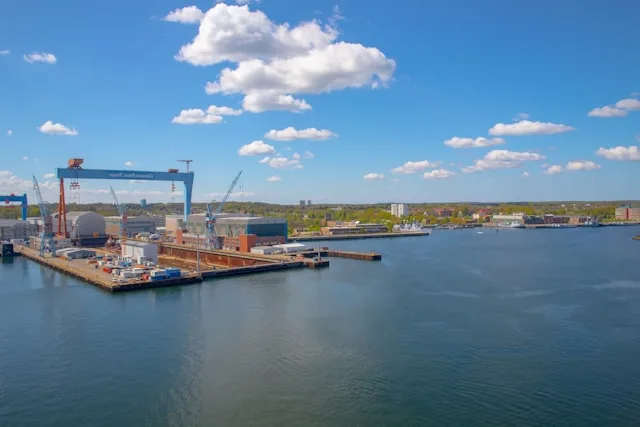
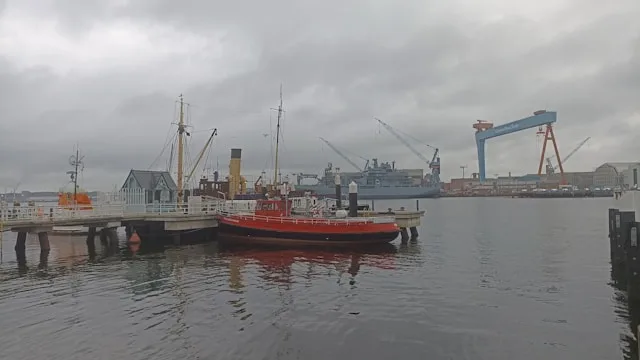
Germany's northern maritime-defense capital, home to the country's sole submarine production site and Europe's densest auditory implantology cluster. Kiel's executive market is defined by security-cleared naval technology, precision medicine, and a rapidly scaling hydrogen-port economy. KiTalent delivers interview-ready shortlists in 7 to 10 days for the leadership roles that keep this city's dual industrial-research complex moving forward.

Discuss a Kiel Brief | How We Work

7–10 days average time to qualified shortlist | 80% of passive executive talent reached | 42% reduction in time-to-hire | 96% one-year retention rate

Figures reflect KiTalent's global track record. Details on our story, services, and methodology.

Beyond candidate lists: what Kiel mandates actually require

A shortlist of names is the minimum deliverable, not the product. In Kiel, the gap between a list of candidates and a successful placement is wider than in most German cities, because the factors that determine whether an offer is accepted are unusually complex. Start with compensation. Defence-sector salaries in Kiel carry security-clearance premiums that are not captured in standard benchmarking databases. MedTech regulatory leaders command packages that reflect the scarcity of their qualifications under the new EU MDR regime. Port and energy executives weighing Kiel against Hamburg or Bremen factor in housing costs, commute logistics, and the city's quality-of-life proposition. Without precise compensation benchmarking calibrated to Kiel's specific clusters, offers fail at the finish line. Every failed offer in a community of 180 maritime SMEs travels fast. Then consider the cost of getting it wrong. The hidden cost of a bad executive hire in a classified defence programme is not just the standard 50 to 200 per cent of annual compensation. It includes the time to re-clear a replacement, the programme delays that cascade through NATO delivery timelines, and the reputational damage within a supply chain where every firm knows every other firm. In the medtech cluster, a misaligned regulatory affairs appointment can stall a product's European market access by twelve months or more. This is why KiTalent operates on an interview-fee model. No upfront retainer. The primary financial commitment occurs only after we deliver a qualified shortlist and comprehensive market intelligence. Clients evaluate real candidates and real data before making their main investment. The incentives are aligned from the start. See our full service rangeServices | How we use compensation dataMarket Benchmarking

Why companies partner with KiTalent for executive search in Kiel

Companies rarely need only reach in Kiel. They need interpretation, calibration, and a search architecture that reflects the real structure of the market.

We operate across Germany

Our team coordinates Kiel mandates from our European headquarters in Turin, with direct access to the talent intelligence, compensation dynamics, and sector developments that drive search outcomes.

We reach the candidates that matter

The strongest executives in Kiel are passive. Our direct headhunting approach engages the hidden 80% of passive talent through discreet outreach rooted in real market knowledge.

We do not start from scratch

Our parallel mapping methodology means we already hold live intelligence on restructuring, transition windows, compensation patterns, and candidate attraction opportunities when a brief arrives.

Our model de-risks the investment

In Kiel, the cost of a wrong executive hire extends far beyond the recruitment fee. Our interview-fee model lets clients see real market output and qualified candidates before the bulk of the investment is committed.

What this means for search design

Kiel's security-clearance requirements mean that candidate identification cannot rely on public profiles. Search design must incorporate direct intelligence: who holds which programme role, at which classification level, with which contractual constraints. This demands consultants who already know the defence maritime sector, not generalists running keyword searches.

1. Parallel mapping before the brief is live

KiTalent continuously tracks career movements, organisational changes, and compensation evolution across defence maritime, medtech, and energy sectors. When a Kiel client defines a need, the search methodology does not start from zero. We already know which TKMS programme directors moved to Lürssen last year. We already know which Cochlear regulatory leaders are approaching the end of non-compete periods. We already know which hydrogen-sector executives are watching Kiel's infrastructure investment with interest. This pre-existing intelligence is what makes 7-to-10-day shortlists possible without sacrificing depth.

2. Direct headhunting into the hidden 80%

The leaders who will transform a Kiel defence programme or accelerate a medtech product's European market entry are not on job boards. Many are contractually restricted from signalling availability. Direct headhunting built on individually crafted, sector-credible outreach is the only method that reaches them. Our consultants speak the language of the sectors they serve: submarine programme milestones, MDR compliance timelines, hydrogen offtake economics. This credibility is what earns a response from a passive candidate who ignores ten generic recruiter messages a week.

3. Market intelligence as a search output

Every Kiel engagement produces more than a shortlist. Clients receive comprehensive market benchmarking data: who holds comparable roles at competitor organisations, what compensation packages are being offered, how candidates are responding to the opportunity, and where the search stands relative to the available market. In a city where 180 maritime SMEs compete for the same finite population of cleared engineers and programme leaders, this intelligence is a strategic asset that outlasts the individual placement.

Essential reading for Kiel hiring decisions

These are the questions most closely tied to how executive search really works in Kiel.

Why do companies use executive recruiters in Kiel?

Kiel's core industries operate under constraints that make direct hiring exceptionally difficult. Defence maritime roles require security clearance, which means candidates cannot be identified through public channels. MedTech regulatory positions demand EU MDR expertise held by a very small population of specialists. The city's unemployment rate of 5.8% reflects a market where the most qualified leaders are employed and not looking. Companies use executive recruiters because the visible candidate market does not contain the talent they need. The hidden 80% must be reached through direct, discreet, sector-credible outreach.

What makes Kiel different from Hamburg for executive hiring?

Hamburg is a diversified metropolitan economy of 1.9 million people with deep talent pools across media, logistics, consumer goods, and financial services. Kiel is a specialised city of 247,000 where defence maritime, auditory implantology, and hydrogen port infrastructure dominate. The talent pools are narrower, the professional community is more interconnected, and the security-clearance dimension adds a layer of complexity that Hamburg searches rarely encounter. Compensation benchmarking must account for Kiel's smaller housing market, its demographic contraction, and the premiums that classified work commands. A search approach designed for Hamburg will systematically underperform in Kiel.

How does KiTalent approach executive search in Kiel?

Every Kiel mandate draws on pre-existing talent mapping across the city's defence, medtech, and energy sectors. Searches are coordinated from our European headquarters in Turin with direct engagement in the German market. We combine parallel mapping intelligence with sector-native consultant knowledge to produce shortlists of candidates who are qualified, genuinely motivated, and assessed for cultural fit. The process includes technical competency evaluation, a personal career-storytelling meeting, and optional psychometric assessment for senior roles. Clients receive weekly pipeline reports and full market intelligence documentation throughout the engagement.

How quickly can KiTalent present candidates in Kiel?

Interview-ready candidates are typically presented within 7 to 10 days of mandate confirmation. This speed is possible because our parallel mapping methodology means we have already identified and built preliminary relationships with relevant professionals in Kiel's key sectors before the search formally begins. In a market where a vacant programme leadership seat can delay a submarine delivery timeline or stall a medtech product launch, this speed is not a convenience. It is a material commercial advantage.

How does Kiel's demographic decline affect executive recruitment?

Kiel's working-age population is shrinking. The 20-to-64 cohort contracted by 0.8% in 2025, and the city's total population is projected to decline by 4% by 2035. This means the local candidate pool is getting smaller while demand from defence procurement and green energy investment is growing. Every senior search now carries a relocation dimension: identifying leaders willing to move to Kiel and designing total compensation packages, including housing support and quality-of-life positioning, that make the move attractive. Proactive talent pipeline development is becoming a strategic necessity for Kiel employers, not an optional enhancement.

Start a conversation about your Kiel search

Whether you are hiring a submarine programme director with NATO clearance, a Regulatory Affairs Director for hearing implant technology, a Chief Digital Officer for a maritime SME, or a hydrogen infrastructure leader for the Port of Kiel, the starting point is the same: a conversation with a consultant who already knows this market.

What we bring to Kiel executive mandates:

Executive search and direct headhunting · Talent mapping and market intelligence · Compensation benchmarking and mandate calibration · Connection to KiTalent's European headquarters in Turin and international executive search network.

How does Kiel's demographic decline affect executive recruitment?

Whether you are running a live mandate or want to pressure-test a brief before going to market, this is the right place to start the conversation.