Kiel Offshore Wind: Why 8% Unemployment and 14% Vacancy Rates Exist in the Same Workforce
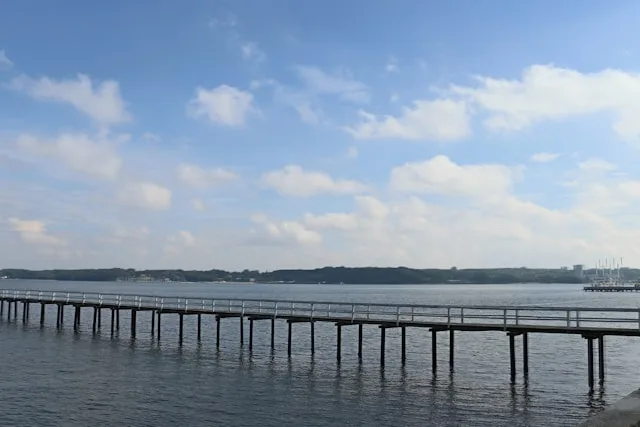
Kiel sits closer to the Baltic Sea's largest offshore wind clusters than any competing German port. Transit times to Arcadis Ost 1 and Baltic Eagle are shorter from Kiel than from Rostock, Sassnitz, or Bremerhaven. Fuel cost savings for service vessels operating from Kiel would run 18 to 22 per cent lower. On paper, the city should be the dominant base for operations and maintenance across the southern Baltic. It is not.
The reality is more complicated and more interesting than a simple infrastructure story. Kiel's offshore wind and marine renewables market employs roughly 1,200 to 1,400 people directly, handles a fraction of the project cargo moving through Rostock, and has secured none of the major O&M base contracts for operational Baltic wind farms. Yet within this constrained market, specific technical roles remain stubbornly unfilled. German Naval Yards Kiel has carried 40 open positions for offshore-certified welders for more than six months. Senior offshore service technicians in Schleswig-Holstein take 127 days to fill, 43 per cent longer than the same roles in Lower Saxony. The talent problem is real. But it is not the talent problem most people assume.
What follows is an analysis of why Kiel's offshore wind talent market is splitting in two: a surplus of traditional shipbuilding workers who cannot cross into offshore wind roles, and an acute shortage of the specialists the energy transition actually requires. The gap between these two populations is not closing. It is widening, and the implications reach well beyond Kiel.
The Market Kiel Actually Has, Not the One It Expected
Kiel's position in the offshore wind value chain requires honest framing. The city is not an O&M hub. Active O&M bases for Baltic Sea assets, including Arcadis Ost 1, Wikinger, and Baltic 2, are concentrated in Sassnitz at Port Mukran, Rostock, and Esbjerg in Denmark. According to WindEurope's reporting, these locations were selected for a combination of quay depth, heavy-lift capacity, and regulatory priority that Kiel has not matched.
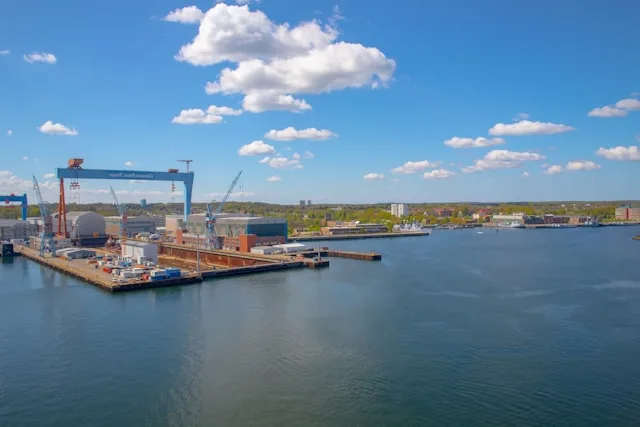
What Kiel does have is a vessel construction and conversion niche. German Naval Yards Kiel holds contracts for two Service Operation Vessel conversions and one newbuild Crew Transfer Vessel, representing €180 million in offshore wind revenue. The Fraunhofer Institute for Silicon Technology operates 120 researchers developing power electronics for offshore grid connections. Kiel University's Kiel Marine Science cluster hosts the Collaborative Research Centre "Future Ocean," funded through 2026. The city's contribution is real. It is concentrated in building and designing the vessels and systems that other ports then operate.
This distinction matters enormously for hiring. A city that builds SOVs needs naval architects, certified welders, and marine engineers. A city that operates O&M bases needs technicians, logistics coordinators, and fleet managers. Kiel's talent needs are shaped by what it actually does, not by what its geographic position suggests it should do.
Port Constraints That Shape the Workforce
The Port of Kiel's 14-metre depth at Ostuferhafen is technically sufficient for heavy-lift vessels. But only 340 linear metres of quay are allocated to project cargo annually. Rostock's Überseehafen allocates 1,200 metres. The gap is not accidental. Kiel's port authority prioritises ro-ro ferry traffic for Color Line and Stena Line, naval surface vessel maintenance for the Type 126 frigate programme, and an estimated 180 cruise ship calls projected for 2026.
Under Kiel's Hafenordnung, the port authority can unilaterally cancel offshore wind vessel berthing rights with 48 hours' notice during the June to August peak season. No O&M contractor can build a reliable operational schedule around that kind of uncertainty. This is not a temporary constraint. The Port of Kiel Development Plan for 2025 to 2030 confirms this priority allocation will continue, leaving only Ostuferhafen Terminal 3 available for offshore wind on an intermittent basis.
The consequence for talent acquisition is direct. Without a permanent O&M base, Kiel cannot offer the continuous employment that attracts and retains offshore service technicians. The workforce that stays in Kiel is the workforce that builds vessels in shipyards. The workforce that services turbines at sea goes to Rostock, Sassnitz, or Esbjerg.
The Skills Mismatch That Defines This Market
This is the original analytical insight that makes Kiel's market different from any other in the German offshore wind sector. The city has unemployed metalworkers and unfilled offshore roles simultaneously. These are not contradictory data points. They describe two populations separated by a certification and skills boundary that is far harder to cross than it appears.
Kiel's general shipbuilding sector reports metalworker unemployment at 8.3 per cent, well above the German average of 5.7 per cent, according to the Bundesagentur für Arbeit. Lindenau Werft's insolvency in 2023 to 2024 reduced Kiel's shipyard capacity by 40 per cent and left the yard operating at roughly 60 per cent of its 2019 workforce levels. These displaced workers are available.
Yet offshore wind fabrication roles certified to EN 1090 Execution Class 3 show vacancy rates of 14.2 per cent. GNYK has maintained 40 open welder positions since Q2 2024 without filling them. The shipyard has turned to recruiting Polish and Romanian subcontractors through staffing agencies, according to IG Metall Küste, paying a 25 to 30 per cent wage premium over standard shipyard rates.
The traditional shipbuilding competencies these workers hold do not transfer to offshore wind standards despite apparent structural similarities. A welder who has spent 20 years on commercial vessel hulls is not certified for offshore steel structures requiring EN 1090-2 EXC 3 compliance and C5-M corrosion protection standards. The retraining pathway exists in theory. In practice, Schleswig-Holstein hosts only three GWO-certified training providers, compared to eight in Lower Saxony. This creates a four to six month lag between hire and offshore deployment eligibility. For a shipyard trying to deliver an SOV conversion on a fixed contract timeline, that lag is unworkable.
The investment in Germany's energy transition has not eliminated jobs in Kiel's maritime sector. It has replaced one kind of job with another that requires qualifications the existing workforce does not hold and cannot acquire quickly enough to match demand.
Where the Shortages Are Most Acute
Offshore-Certified Welders and Fabricators
The 40 unfilled positions at GNYK represent the most visible bottleneck. EN 1090 EXC 3 certification requires specific training in offshore steel fabrication techniques, welding procedures qualified for marine environments, and corrosion protection methods rated for the most severe atmospheric conditions. A conventional shipyard welder cannot pass the certification without additional training. The three GWO training providers in Schleswig-Holstein cannot process enough candidates to close the gap.
The premium GNYK pays to subcontracted workers, 25 to 30 per cent above standard rates, is a market signal. It tells you the local supply is exhausted and the employer has been forced to source internationally at a cost that erodes project margins. For a shipyard operating on fixed-price vessel conversion contracts worth €180 million in aggregate, every percentage point of wage premium above plan reduces margin directly.
Senior Offshore Service Technicians
Senior offshore service technicians with electrical qualifications remain vacant for an average of 127 days in Schleswig-Holstein. The comparable figure in Lower Saxony is 89 days. The 43 per cent differential is partly explained by Lower Saxony's deeper pool of GWO training infrastructure, but also by Kiel's structural inability to offer continuous O&M employment. A technician who wants steady offshore deployment chooses a market with a permanent O&M base. Kiel does not have one.
Approximately 75 to 80 per cent of qualified senior offshore wind technicians are passive candidates, employed and not actively searching. Active candidates in this space often lack specific Baltic Sea operational experience. The implication for any organisation hiring in this market is clear: job postings reach, at best, the weakest quarter of the available talent pool.
Port Logistics Coordinators
Maritime logistics coordinators specialising in heavy-lift abnormal loads represent a mixed market. Roughly 60 per cent are passive. The active candidates who do appear typically come from container or break-bulk sectors rather than offshore wind, requiring material reskilling before they can manage the specific requirements of turbine component staging and SOV provisioning. A case study cited by Hays Germany, matching Kiel's profile, documented a major offshore wind developer poaching a logistics coordinator from a competing vessel operator with a €35,000 signing bonus and €25,000 salary uplift to relocate to Hamburg.
That poaching premium tells you something about the thinness of the market. When a single hire commands €60,000 above the going rate just to change employers, the supply of qualified professionals is not merely tight. It is functionally exhausted at current compensation levels.
Compensation in a Market Competing with Larger Hubs
Kiel's compensation benchmarks for offshore wind roles are competitive within their category but face structural disadvantage against Hamburg, Bremerhaven, and Esbjerg. Understanding the exact dynamics helps hiring leaders benchmark offers accurately.
At the senior individual contributor level, an O&M Manager with ten or more years of experience commands €92,000 to €118,000 in base salary plus offshore allowances of €400 to €600 per day at sea. A VP of Operations or Head of O&M for the Baltic Region sits at €165,000 to €215,000 base with 30 to 40 per cent bonus potential and long-term incentive plans. Senior Naval Architects specialising in offshore vessels earn €78,000 to €96,000. Offshore Wind Project Directors overseeing construction and installation reach €180,000 to €240,000 in total compensation.
These figures are broadly in line with Bremerhaven. But Esbjerg offers 15 to 20 per cent salary premiums for O&M technicians and marine coordinators. Hamburg draws senior executives with corporate headquarters roles offering €20,000 to €35,000 above Kiel levels, though Hamburg's cost of living runs 28 per cent higher according to Mercer's survey data. The net effect is that Kiel loses senior candidates to Hamburg on total compensation, loses operational technicians to Esbjerg on salary premium, and loses mid-career engineers to Bremerhaven on career trajectory. Bremerhaven's concentration of headquarters functions for firms like Siemens Gamesa and RWE means career progression velocity is perceived as 30 per cent faster there. That perception, accurate or not, moves candidates.
The counteroffer dynamic compounds these pressures. When a passive candidate in Kiel receives an approach from an Esbjerg employer offering 18 per cent more with a relocatable lifestyle, the incumbent Kiel employer must either match or lose. Many cannot match, because their contract economics do not support Esbjerg-level compensation on Kiel-level revenues.
The Demographic Cliff Behind the Current Shortage
The numbers above describe the present. The trajectory into 2027 and beyond is worse.
Thirty-five per cent of Kiel's maritime workforce in shipbuilding and port logistics is aged 55 or older, according to the Institut für Arbeitsmarkt- und Berufsforschung. Apprenticeship uptake in offshore-specific certifications is insufficient to replace the retirements coming in the next five to eight years. The qualification bottleneck described above, three GWO providers in the entire state versus eight in Lower Saxony, means that even if apprenticeship enrolment increased materially tomorrow, the certification pipeline could not process new entrants fast enough.
GNYK plans to expand its offshore wind vessel division from 400 to 500 employees by end of 2026. That is a 25 per cent headcount increase in a market where 40 existing positions have been open for six months. The arithmetic does not work without either a step-change in training capacity or a sustained campaign of international recruitment. Both take time that the contract delivery schedule does not provide.
The demographic pressure intersects with the skills mismatch in a way that traditional executive recruiting methods struggle to address. The workers retiring hold traditional shipbuilding skills. The workers replacing them need offshore wind certifications. The transition is not generational continuity. It is generational replacement with an entirely different skills profile.
Structural Risks That Could Accelerate or Delay Everything
Defence Budget Dependency
GNYK's 2,800-person workforce is not primarily an offshore wind employer. Approximately 400 employees work in the offshore vessel division. The remainder serve naval contracts. A defence budget reallocation affecting the Type 126 or Type 127 frigate programmes could force workforce reductions that spill into the civilian offshore division. The diversification into offshore wind, while genuine, remains vulnerable to the political decisions that drive naval procurement. Any hiring executive assessing GNYK's workforce expansion plans should factor in this dependency. The planned growth to 500 offshore division employees by end of 2026 assumes naval contract stability that is not guaranteed.
Offshore Grid Connection Delays
Regulatory delays in the Ostwind 2 and Ostwind 3 grid connection approvals, reported by the Bundesnetzagentur, risk deferring service demand from 2026 to 2028 or 2029. If the 8.8 GW of Baltic Sea capacity scheduled for commissioning between 2026 and 2028 under the BMWK's acceleration package is delayed, Kiel's vessel conversion investments may be stranded. SOVs built for a 2027 deployment schedule that slips to 2029 represent capital employed without revenue for two years. That kind of delay changes hiring plans fundamentally.
RWE and Ørsted have both confirmed O&M strategies utilising Rostock and Sassnitz for their 2026 to 2027 asset commissioning phases, bypassing Kiel entirely. Unless grid connection timelines firm up and new developers choose Kiel for operational reasons, the city's offshore wind employment growth depends almost entirely on vessel construction contracts rather than operational service demand.
What This Means for Organisations Hiring in Kiel's Offshore Wind Market
The hiring challenge in Kiel is not a generic shortage. It is a precise and measurable mismatch between the workforce the city's industrial history produced and the workforce the energy transition requires. Unemployed metalworkers cannot fill offshore-certified welder vacancies without retraining that takes months and passes through a bottleneck of only three providers. Passive senior technicians choose markets with permanent O&M bases and higher salaries. Naval architects with offshore vessel experience have an 85 per cent passive ratio and average tenure exceeding 4.5 years, meaning they are not looking and will not move without a proposition that addresses far more than compensation.
For organisations operating in this market, the conventional recruitment approach of posting a vacancy and waiting for applications reaches at most 20 to 25 per cent of the qualified talent pool. The other 75 to 80 per cent must be identified, mapped, and approached individually. That requires specialist talent mapping across a geographic footprint that includes not just Kiel but Bremerhaven, Hamburg, Rostock, Esbjerg, and increasingly Poland and Romania where subcontractor pools are concentrated.
KiTalent's approach to executive hiring across the energy and renewables sector uses AI-enhanced direct search to identify and engage passive candidates who do not appear on any job board. In a market like Kiel, where 85 per cent of naval architects and 80 per cent of senior technicians are passive, this is not a marginal advantage. It is the difference between seeing the full market and seeing a quarter of it. KiTalent delivers interview-ready candidates within 7 to 10 days, with a 96 per cent one-year retention rate, because the matching process is built on deep market intelligence rather than application volume.
For organisations competing for offshore wind engineering and vessel construction leadership in the Baltic region, where the candidates capable of filling your most critical roles are employed, satisfied, and not searching, start a conversation with our executive search team about how we approach this specific market.
Frequently Asked Questions
Why is Kiel not a major offshore wind O&M base despite its proximity to Baltic wind farms?
Kiel offers the shortest transit times to major Baltic wind clusters, but its port infrastructure is allocated primarily to ferry traffic, naval contracts, and cruise ship calls. Only 340 linear metres of quay are available for offshore wind project cargo, compared to 1,200 metres at Rostock. Port regulations allow cancellation of offshore wind berthing with 48 hours' notice during summer. RWE and Ørsted have confirmed O&M strategies using Rostock and Sassnitz, bypassing Kiel. The city's role centres on vessel construction and conversion rather than continuous operations.
What offshore wind roles are hardest to fill in Kiel?
Three categories face acute shortages. Offshore-certified welders holding EN 1090 EXC 3 qualifications have a 14.2 per cent vacancy rate, with GNYK carrying 40 unfilled positions for over six months. Senior offshore service technicians take 127 days to fill in Schleswig-Holstein. Port logistics coordinators specialising in heavy-lift loads command signing bonuses exceeding €35,000 when they move. KiTalent's AI-enhanced direct search methodology is specifically designed for markets where 75 to 85 per cent of qualified candidates are passive.
How do Kiel offshore wind salaries compare to competing German markets?
Senior O&M Managers earn €92,000 to €118,000 base in Kiel plus offshore allowances. VP Operations roles reach €165,000 to €215,000. These are competitive with Bremerhaven but trail Esbjerg by 15 to 20 per cent for technician roles and Hamburg by €20,000 to €35,000 for senior executives. The compensation gap, combined with Bremerhaven's perceived faster career progression, creates sustained outflow pressure on mid-career and senior talent in Kiel.
What is the GWO certification bottleneck affecting offshore wind hiring in Schleswig-Holstein?
Schleswig-Holstein has only three Global Wind Organisation certified training providers, compared to eight in Lower Saxony. This creates a four to six month lag between hiring a candidate and that candidate being eligible for offshore deployment. For shipyards and service contractors operating on fixed delivery timelines, this delay is operationally unworkable and forces employers to recruit internationally at 25 to 30 per cent wage premiums.
How can organisations access passive offshore wind candidates in the Kiel region?
With 75 to 85 per cent of qualified offshore wind professionals in passive employment, conventional job advertising reaches only a fraction of the market. KiTalent uses AI-powered talent mapping to identify candidates across the full Baltic corridor, including Kiel, Bremerhaven, Hamburg, Rostock, and Esbjerg. Our pay-per-interview model means organisations only invest when they meet qualified, interview-ready candidates, delivered within 7 to 10 days of engagement.
What structural risks could affect offshore wind employment in Kiel through 2028?
Three risks dominate. Defence budget changes could reduce GNYK's workforce, with spillover into its offshore division. Grid connection delays for Ostwind 2 and 3 could defer vessel demand from 2026 to 2028 or later. And 35 per cent of the maritime workforce is aged 55 or over, with apprenticeship uptake insufficient to replace retirements. Organisations building long-term talent pipelines in this market need to account for all three.