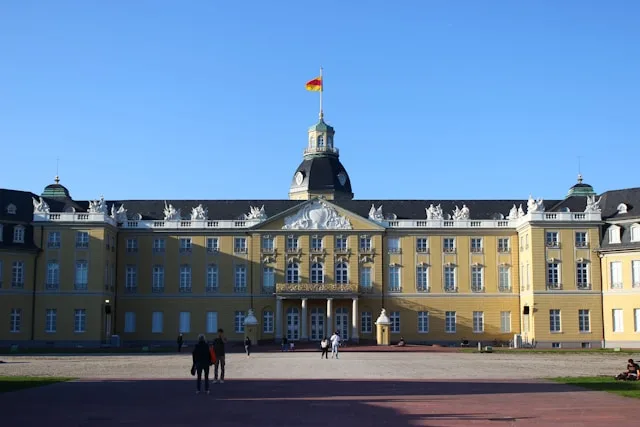
Karlsruhe, Germany Executive Recruitment

Executive Search in Karlsruhe

KiTalent brings sector-specific intelligence and direct headhunting capability to senior leadership searches across Karlsruhe.

7-10

days to qualified shortlists in many searches

80%

of relevant passive talent reached through direct headhunting

42%

faster time-to-hire than traditional search benchmarks

96%

one-year retention from KiTalent's broader methodology

Learn more about our track record on our about, services, and methodology pages.

Executive Recruiters in Karlsruhe, Germany

Germany's energy transition capital demands leadership that operates at the intersection of grid infrastructure, applied AI, and deep-tech manufacturing. Karlsruhe's R&D intensity of 8.4% of gross value added, its concentration of federal institutions, and an unemployment rate of 4.2% make this one of Europe's tightest executive markets. KiTalent delivers executive search in Karlsruhe with the speed and sector depth this market requires.

Discuss a Karlsruhe BriefContact How We WorkMethodology

7–10 days average time to qualified shortlist 80% of passive executive talent reached 42% reduction in time-to-hire 96% one-year candidate retention rate

Exposed methodology and track record: About KiTalent · Services · Methodology

Beyond candidate lists: what Karlsruhe mandates actually require

A Karlsruhe search mandate that produces only a list of names is a mandate that has already failed. The executives capable of leading in this market are not browsing job boards. They are managing grid digitalisation programmes at EnBW, building AI governance frameworks at Sapiens, or scaling surgical robotics at KLS Martin. They are well-compensated, intellectually engaged, and not looking. The visible candidate market in Karlsruhe is thin. With a city population of 312,000 and functional full employment in STEM, the number of executives who are both qualified and actively seeking a new role is negligible. This is why the hidden 80% of the executive talent pool matters so much here. Reaching them requires individually crafted outreach, sector-specific credibility, and a proposition calibrated to what will actually move them. Compensation calibration is critical. Senior AI engineers command €95,000 to €120,000. Grid infrastructure project managers earn €88,000 to €110,000. Regulatory and AI ethics consultants sit at €85,000 to €115,000. These ranges have shifted sharply in the past 18 months. An offer based on 2023 benchmarks will fail at the negotiation stage. Our market benchmarking service provides the compensation intelligence that prevents offer-stage collapse and ensures a client's proposition reflects current market reality. The cost of a failed executive hire is amplified in a market this small and interconnected. Karlsruhe's professional community is compact. CyberForum alone has 1,200 member companies. A mishandled search, a withdrawn offer, or a placement that fails within six months does not just cost money. It damages an employer's reputation in a community where referral networks are tight and word travels fast. This is why the interview-fee model matters. No upfront retainer means the primary financial commitment occurs only after a qualified shortlist and comprehensive market intelligence have been delivered. Clients evaluate real candidates and real data before making their main investment. The incentive alignment is complete: quality output first, payment second. See our full service rangeServices How we use compensation dataMarket Benchmarking

Why companies partner with KiTalent for executive search in Karlsruhe

Companies rarely need only reach in Karlsruhe. They need interpretation, calibration, and a search architecture that reflects the real structure of the market.

We operate across Germany

Our team coordinates Karlsruhe mandates from our European headquarters in Turin, with direct access to the talent intelligence, compensation dynamics, and sector developments that drive search outcomes.

We reach the candidates that matter

The strongest executives in Karlsruhe are passive. Our direct headhunting approach engages the hidden 80% of passive talent through discreet outreach rooted in real market knowledge.

We do not start from scratch

Our parallel mapping methodology means we already hold live intelligence on restructuring, transition windows, compensation patterns, and candidate attraction opportunities when a brief arrives.

Our model de-risks the investment

In Karlsruhe, the cost of a wrong executive hire extends far beyond the recruitment fee. Our interview-fee model lets clients see real market output and qualified candidates before the bulk of the investment is committed.

What this means for search design

In a city where energy systems engineers remain unfilled for nearly five months on average, speed is not a luxury. It is a competitive advantage. Every week a leadership seat remains vacant is a week of delayed grid expansion, deferred product launches, or stalled regulatory compliance. Search design in Karlsruhe must prioritise velocity without sacrificing assessment rigour.

1. Parallel mapping before the brief is live

We do not begin research when a client calls. Our methodology is built on continuous, independent talent mapping across the sectors that define Karlsruhe's economy. We track career movements within EnBW and its supplier ecosystem, monitor leadership changes at Siemens Mobility and Daimler Truck's software centre, and maintain a live view of the AI governance talent pool that InsurTech and ClimateTech firms compete for. When a mandate arrives, we activate an existing intelligence base. This is why we deliver interview-ready shortlists in 7 to 10 days rather than the 8 to 12 weeks that conventional search requires.

2. Direct headhunting into the hidden 80%

The executives who will define Karlsruhe's next phase of growth are not on job boards. They are leading grid digitalisation at the Mainau Campus, building explainable AI frameworks at Sapiens, or managing rail signalling production at the Siemensallee industrial park. Our direct headhunting approach reaches them through individually crafted, sector-credible outreach. Each conversation is built on genuine understanding of their current role, their market context, and what a move would need to look like. This is fundamentally different from mass LinkedIn InMails or database-driven contact lists.

3. Market intelligence as a search output

Every Karlsruhe mandate produces more than a shortlist. Clients receive a comprehensive market map: who holds which roles at which companies, how compensation has evolved, which organisations are expanding or contracting, and how candidates are responding to the opportunity. This intelligence, delivered through our market benchmarking process, has standalone strategic value. It informs not just the current hire but future workforce planning, employer brand positioning, and competitive awareness. For C-level searches in particular, this market context is what separates a reactive hire from a strategic one.

Essential reading for Karlsruhe hiring decisions

These are the questions most closely tied to how executive search really works in Karlsruhe.

Why do companies use executive recruiters in Karlsruhe?

Karlsruhe operates at functional full employment in STEM fields, with energy systems engineering vacancies lasting nearly five months on average. The executives who can lead in this market are not applying to job postings. They are deeply embedded in roles at EnBW, Siemens Mobility, Sapiens, or KIT-affiliated ventures. Reaching them requires direct, sector-credible outreach into the passive talent pool. Executive recruiters with pre-existing market intelligence and established relationships in Karlsruhe's compact professional community are the only reliable path to a qualified shortlist within a commercially viable timeframe.

What makes Karlsruhe different from Munich or Stuttgart for executive hiring?

Munich and Stuttgart are larger markets with broader talent pools and more diverse employer bases. Karlsruhe is smaller, more specialised, and more interconnected. The professional community here overlaps across energy, AI, manufacturing, and regulation in ways that larger cities do not replicate. Sector convergence means search mandates regularly cross conventional industry boundaries. The housing vacancy rate below 0.8% creates a relocation bottleneck that Munich's market does not face to the same degree. These factors make Karlsruhe searches more demanding in terms of precision, discretion, and local market knowledge.

How does KiTalent approach executive search in Karlsruhe?

The approach centres on parallel mapping: continuous, pre-mandate intelligence across Karlsruhe's key sectors. This means we have already identified and begun building relationships with potential candidates before a client defines a role. Direct headhunting then targets the hidden 80% of passive talent through individually crafted outreach. Every candidate undergoes a three-tier assessment covering technical competency, cultural fit, and motivation. Mandates are coordinated from our European headquarters in Turin, with direct consultant access throughout the process and full pipeline transparency via weekly progress reports.

How quickly can KiTalent present candidates in Karlsruhe?

Interview-ready executive candidates are typically presented within 7 to 10 days of mandate confirmation. This speed comes from parallel mapping, not from reduced assessment quality. In a market where conventional searches take three to four months, this timeline gives clients a decisive advantage in competing for scarce leadership talent. The pay-per-interview model means the primary financial commitment occurs only after the shortlist and market intelligence have been delivered.

How does regulatory complexity affect executive search in Karlsruhe?

Karlsruhe's unique concentration of federal courts, EU AI Act implementation activity, and multi-regulation compliance obligations means that many senior roles require a hybrid of technical and regulatory expertise. A VP of AI Governance needs both machine learning depth and understanding of the EU's risk classification framework. A CSO at an energy utility needs industrial operations experience alongside regulatory navigation skills. Search design must reflect this dual requirement. Candidate assessment goes beyond technical screening to evaluate regulatory awareness, stakeholder management capability, and the ability to operate under evolving compliance frameworks. Standard search processes that focus solely on sector experience miss the regulatory dimension that defines leadership effectiveness in this city.

Start a conversation about your Karlsruhe search

Whether you are hiring a Chief Sustainability Officer for a clean-tech venture, a VP of AI Governance for an InsurTech scale-up, a grid digitalisation director for an energy utility, or a plant director for a rail technology manufacturer, this is the right starting point.

What we bring to Karlsruhe executive mandates:

Executive search and direct headhunting · Talent mapping and market intelligence · Compensation benchmarking and mandate calibration · Connection to KiTalent's European headquarters in Turin and international executive search network.

How does regulatory complexity affect executive search in Karlsruhe?

Whether you are running a live mandate or want to pressure-test a brief before going to market, this is the right place to start the conversation.