
Serving hub
Switzerland is coordinated from the real European hub rather than from a decorative office footprint.
Switzerland Executive Search
Published · Last updated
A CHF 287 billion export economy anchored by life sciences in Basel, financial services in Zurich and commodity trading in Geneva, Switzerland demands executive search that accounts for trilingual talent pools, cantonal tax variation and one of the world's most competitive labour markets for senior technical and regulatory professionals.
Track record on suitable mandates: 7–10 working days to validated shortlist · 96% one-year retention · NPS 72. How we measure performance.
Searches in Switzerland are managed from KiTalent's Turin hub, with support from our other hubs when the candidate pool crosses markets. Switzerland ranks first on the Global Innovation Index and sits at the centre of European pharmaceutical, financial and precision manufacturing value chains. That combination produces an executive market where almost every senior hire involves competing against multinationals that can offer world-leading compensation, research infrastructure and quality of life. Outsiders often underestimate how quickly a poorly managed approach burns through a small, tightly networked professional community.
Executive talent in Switzerland does not sit in one pool. German-speaking Zurich and Basel operate on different professional networks from francophone Geneva and Lausanne. A Chief Scientific Officer search in Basel requires different sourcing channels, cultural signals and compensation norms than a Head of Commodities mandate in Geneva. Cantonal tax regimes add another variable: candidates weigh net take-home pay across cantons, and relocation between them involves real financial calculus.
Switzerland's unemployment rate remains among the lowest in the OECD. Qualified executives in pharmaceuticals, AI, compliance and manufacturing leadership are rarely on the open market. Over 80 per cent of the senior professionals a search must reach are passive candidates, already performing well and not visible on job boards. Reaching the passive majority of senior talent requires direct, discreet outreach calibrated to Swiss professional norms.
Switzerland is not an EU member. Labour mobility depends on bilateral agreements that are politically sensitive and subject to periodic renegotiation. Cross-border commuter flows from France, Germany, Italy and Austria are essential to the Swiss economy but create regulatory and contractual complexity for employers. Hiring a senior leader who holds an EU passport but must relocate to Switzerland, or a Swiss national returning from a US assignment, demands familiarity with permit categories, social security coordination and non-compete enforceability.
These dynamics explain why long-term partnerships with a search firm matter more in Switzerland than in most European markets. KiTalent operates from its European headquarters in Turin, maintaining continuous intelligence on Swiss executive movement across all three language regions. That proximity, combined with a directly engaged search partnership model built on seven-year average client relationships, ensures search quality does not reset with every mandate.
Real Hub Coverage
KiTalent covers Switzerland from Turin rather than claiming a notional Swiss office network. Searches are run with mapped coverage across Zurich, Geneva, Basel, Zug, Lausanne, and the wider Swiss market, while staying close to the cross-border talent flows that matter in life sciences, finance, and precision industry.
That matters because Switzerland is not one hiring market. Language regions, cantonal dynamics, financial-services regulation, and the Basel-Geneva-Zurich triangle all shape candidate mobility differently. A real nearby hub is a better operating anchor than a cosmetic local-office story.
Route Map
Swiss searches often turn on language region, sector concentration, and governance constraints, so the route needs to be chosen deliberately.
Switzerland is coordinated from the real European hub rather than from a decorative office footprint.
Choose the sector route that best matches the candidate pool and market mechanics behind the brief.
Switch to the role path when the leadership function is the real constraint in the search.
Use the commercial answer layer to align Proof-First, fees, and process before launch.

Switzerland is not one talent pool. It is a collection of sector-specific markets distributed across language regions, each with its own competitive dynamics and candidate expectations.
Basel's cluster of global pharmaceutical companies, contract development organisations and biotech spin-outs creates the country's deepest and most competitive executive market. Searches for R&D leadership, regulatory affairs directors and manufacturing heads require direct access to candidates…
Zurich and Geneva split Switzerland's financial leadership market along functional and linguistic lines. Zurich dominates universal banking, insurance headquarters and fintech.
ETH Zurich and EPFL produce research talent, but the conversion rate from academia to commercial leadership remains a bottleneck. CTO and Head of AI searches in Switzerland increasingly involve candidates from the US, UK and Germany who must be assessed not only on technical…
Distributed across German-speaking industrial cantons, this sector relies on a Mittelstand model where family-owned companies compete for the same plant directors and heads of operations as multinationals. Succession planning is often informal, and external hires must demonstrate both technical…
Concentrated in the Jura arc and western Switzerland, the watchmaking sector's executive market is small, closed and relationship-driven. Searches for commercial directors, heads of product development and brand leaders require established networks and exceptional discretion.
Nestlé's headquarters in Vevey and its network of R&D centres and manufacturing sites define the upper end of this market. Corporate restructuring and efficiency programmes in 2025 and 2026 have created both displaced talent and new leadership requirements.
Executive mobility across Switzerland's cities is shaped by compensation expectations, relocation appetite, family considerations, and international exposure.
A search that maps where the right leaders actually operate, and understands the conditions under which they would consider a move, is fundamentally more effective than one that treats Switzerland as a flat national market.
Switzerland's executive search market is strongest where its economic specialisation is deepest.
dominate hiring at the senior level. Basel hosts Europe's densest life-sciences cluster, with Roche, Novartis and Lonza anchoring an ecosystem of contract manufacturers, biotech spin-outs and specialist suppliers. Record goods exports in 2025, driven by chemicals and pharmaceuticals, have intensified demand for Chief Scientific Officers, Heads of Clinical Development and plant directors…
continue to reshape leadership requirements from Zurich and Geneva. The post-Credit Suisse integration of UBS has created ripple effects across the banking sector. Private banks, asset managers and insurers are competing for Chief Compliance Officers, Heads of Digital Transformation and CFOs who understand both FINMA requirements and international regulatory convergence.
represent the fastest-growing demand segment. Venture financing into Swiss AI startups surged in 2025, with Zurich's ETH ecosystem and Lausanne's EPFL corridor producing a strong but insufficient supply of senior technical leaders. CTOs, Heads of Data and AI Engineering Directors are being recruited from across Europe and the US to fill gaps that domestic training alone cannot close.
remain structural pillars. Thousands of specialised SMEs in machine tools, medical devices and automation components supply multinational value chains. US tariff actions in 2025 and franc appreciation have compressed margins, increasing pressure on operational leadership.
Industrial, Manufacturing, and Robotics · Industrial Automation
in Geneva create a distinct executive market. Global commodity traders require senior compliance, risk and operations leaders who combine trading-floor instinct with regulatory rigour. This demand extends to the broader international executive search requirement for leaders who can operate across Swiss, EU and emerging-market jurisdictions simultaneously.
Companies rarely need only reach in Switzerland. They need interpretation, calibration, and a search architecture that reflects the real structure of the market.
Our team runs Switzerland mandates through KiTalent's four regional hubs, combining local market intelligence with cross-border execution across Europe, the Americas, the Middle East, and Asia Pacific.
The strongest executives in Switzerland are passive. Our direct headhunting approach engages the passive majority of senior talent through discreet outreach rooted in real market knowledge.
Our parallel mapping methodology means we already hold live intelligence on restructuring, transition windows, compensation patterns, and candidate attraction opportunities when a brief arrives.
In Switzerland, the cost of a wrong executive hire extends far beyond the recruitment fee. Our Proof-First Search model lets clients see real market output and qualified candidates before the bulk of the investment is committed.
A rotating view of the city-level market shifts shaping executive hiring across Switzerland.
Switzerland's federal capital is quietly building one of Europe's most focused medtech translation clusters, anchored on the Insel hospital campus, while Swisscom and BKW sustain…
Zurich generates roughly CHF 55–60 billion in annual GDP and anchors a metropolitan region responsible for approximately 40% of Switzerland's total economic output. Financial…
Geneva's executive market sits at the intersection of global commodities trading, ultra-high-net-worth private banking, and multilateral governance. With an estimated 30–35% of…
Basel is Europe's most concentrated life-sciences economy and one of the most demanding executive hiring environments on the continent. With Roche and Novartis headquartered…
These resources provide deeper market intelligence and explain how KiTalent turns insight into a faster, more transparent search process.
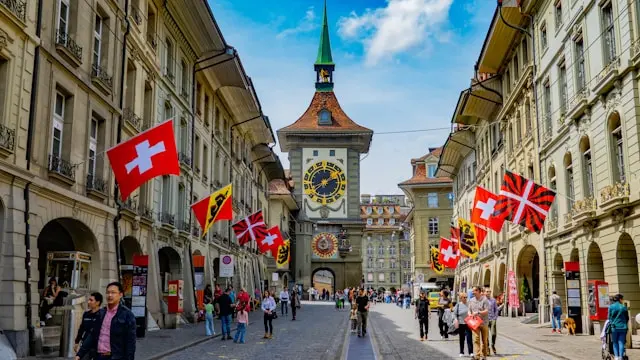
Die Mobiliar committed CHF 450 million to a four year digital transformation programme. PostFinance restructured its entire operating model around digital banking. FINMA...

Two of the world's five largest reinsurance groups maintain their global headquarters within three kilometres of each other along Zurich's Mythenquai waterfront. Zurich...
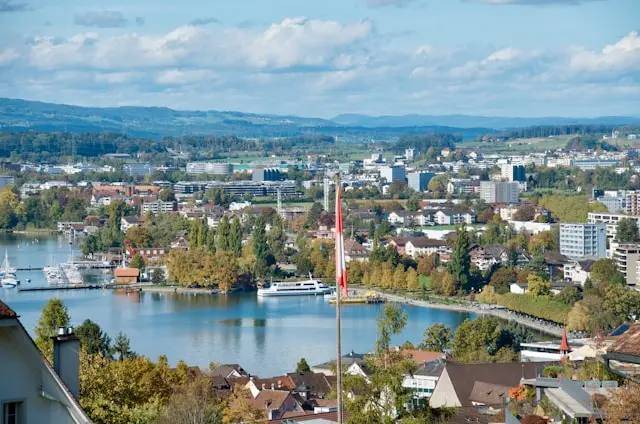
Zug registered its 30,000th company sometime in 2024. By Q4 of that year, the canton's economic office was projecting 3.2% annual growth in financial services through 2026,...

St. Gallen's textile cluster has completed one of the quieter industrial pivots in European manufacturing. A region historically defined by decorative embroidery for fashion...
Use these pages to move between city clusters, sector pages, and supporting articles.
These are the questions most closely tied to how executive search really works in Switzerland.
Switzerland's unemployment rate is among the OECD's lowest. Senior executives in pharmaceuticals, financial services, AI and manufacturing are overwhelmingly passive. They are not visible on job boards or responding to direct applications. A qualified executive search firm provides access to the passive majority of senior talent of the market through direct, discreet outreach. In addition, trilingual market coverage, cantonal compensation intelligence and regulatory knowledge around bilateral agreements make professional search essential for both domestic and cross-border mandates.
Three factors set Switzerland apart. First, the market operates across three professional languages: German, French and Italian. A Basel life-sciences search and a Geneva commodity-trading search require different networks and cultural fluency. Second, cantonal tax competition means compensation benchmarking must be granular, not national. Third, Switzerland's bilateral relationship with the EU creates permit and mobility complexity that neither Germany nor the UK faces in the same way. These layers reward search firms with continuous local presence over those parachuting in for individual mandates.
KiTalent combines sector-native consultants with continuous parallel mapping of Swiss executive populations. Searches are coordinated from our European headquarters in Turin, with direct connectivity to all three language regions. Each mandate applies a structured assessment process designed for the Swiss market's emphasis on technical depth, cultural alignment and governance fit. The interview-fee model ensures clients see qualified candidates before committing financially.
Typical shortlist delivery is seven to ten working days from mandate confirmation. This speed is possible because parallel mapping means the search does not start from zero. For sectors where KiTalent maintains ongoing intelligence, such as life sciences and financial services, the initial candidate identification phase is substantially compressed.
Trade friction and a strong Swiss franc directly affect export-dependent sectors: pharmaceuticals, precision instruments, watchmaking and machinery. Companies under margin pressure accelerate hiring for operational transformation leaders, supply chain restructurers and CFOs with FX risk expertise. At the same time, uncertainty can delay expansion-driven searches. KiTalent's market benchmarking service helps clients calibrate timing and package design against these macroeconomic variables, ensuring mandates proceed on realistic terms.
Whether you need a Chief Scientific Officer for Basel's life-sciences corridor, a CTO for Zurich's deep-tech ecosystem, a Chief Compliance Officer for Geneva's financial services sector, or a Plant Director for a precision manufacturing operation in an industrial canton, this is the right starting point.
What we bring to Switzerland executive mandates:
Executive search and direct headhunting · Talent mapping and market intelligence · Compensation benchmarking and mandate calibration · Connection to KiTalent's European headquarters in Turin and international executive search network.
Whether you are running a live mandate or want to pressure-test a brief before going to market, this is the right place to start the conversation.
Author of record: Chiara Giacoletti, Associate Director, Central & Eastern Europe. Based on local market intelligence and executive-search data.
Share your CV and a sentence on the mandate types you'd consider. We respond within five working days.