Basel's Biopharmaceutical Manufacturing Boom Has a Problem: The People to Run It
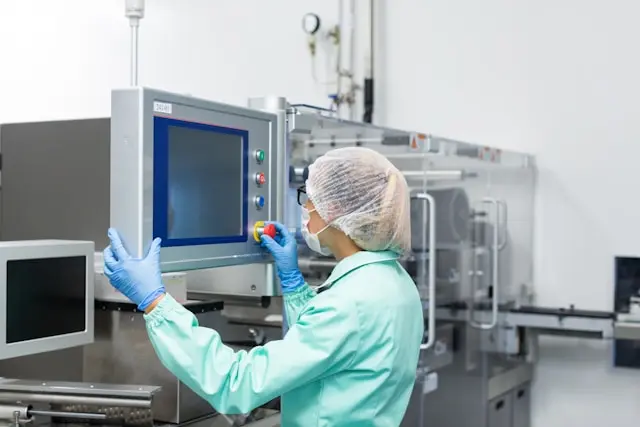
The Greater Basel region invested CHF 340 million in CDMO and biopharmaceutical manufacturing capacity in 2024 alone. Bachem is activating Phase 3 of its Bubendorf expansion. Lonza is completing a modular biologics build-out at Stein that will increase drug substance capacity by 30%. Novartis continues to operate one of Europe's largest fill-finish operations in the same canton. By every capital measure, Basel's position as a global centre for advanced pharmaceutical manufacturing is strengthening.
Yet a senior downstream processing manager search at one of these facilities ran for eleven months before being abandoned as an external hire. A quality control leader moved between local CDMOs at a 35 to 40 percent compensation premium. Fourteen out of twenty-eight technician positions at a major Stein facility went unfilled for six months, prompting the employer to introduce cross-border housing subsidies just to attract candidates from Zurich and Bern. The capital is flowing. The people are not.
What follows is a ground-level analysis of why Basel's biopharmaceutical manufacturing sector faces a talent constraint that investment alone cannot resolve, where the pressure is most acute, and what organisations operating in this market need to understand before they commit to their next hire or their next expansion.
A Manufacturing Cluster Running at the Edge of Its Workforce
The life sciences sector employed approximately 47,800 people across Basel-Stadt and Basel-Landschaft as of late 2024. Within that figure, dedicated biopharmaceutical manufacturing and CDMO operations account for an estimated 8,500 to 9,200 direct positions. These roles are concentrated in peptide synthesis, biologics fill-finish, and specialised API manufacturing across facilities operated by Lonza, Bachem, Novartis, Roche, and a network of smaller analytical service providers.
The Basel life sciences cluster is not short of activity. Capacity utilisation across Basel-Landschaft GMP facilities exceeded 85% throughout 2024. Lonza's Stein mammalian cell culture suites reported utilisation above 90%. Bachem's peptide manufacturing operated at near-maximum throughput. These are not facilities with room for error in staffing.
BaselArea.swiss projects biopharmaceutical manufacturing employment to grow by 3.8 to 4.5% annually through 2026. BAK Economics forecasts pharmaceutical manufacturing output in Northwest Switzerland to expand by 5.2% in real terms this year, nearly three times the national manufacturing growth rate of 1.8%. The demand curve is unambiguous. The supply of qualified professionals to meet it is not keeping pace.
The vacancy rate for pharmaceutical technicians and process operators in Basel-Stadt reached 4.8% in Q4 2024, more than double the 2.1% rate for the overall cantonal economy. For bioprocess engineers with GMP experience, the average time-to-fill in the Basel market is 127 days. In Zurich, the equivalent figure is 68 days. Basel's manufacturing searches take nearly twice as long despite Basel being the larger and more established manufacturing hub.
This is the core paradox. The city with the deepest concentration of biopharmaceutical manufacturing talent in continental Europe is also the city where filling a senior GMP role takes the longest.
Why R&D Layoffs Did Not Solve the Manufacturing Shortage
Anyone following the Swiss pharmaceutical press through 2023 and 2024 would have been forgiven for assuming that talent was becoming more available in the Basel market. Novartis eliminated approximately 680 positions in Basel-Stadt during its global restructuring, primarily in R&D and commercial functions. Headlines suggested a market loosening.
The opposite happened in manufacturing.
During the exact period that Novartis was reducing R&D headcount, the vacancy rate for GMP manufacturing technicians and bioprocess engineers in the same postal codes rose from 3.2% to 4.8%. Displaced research scientists, despite being qualified, experienced, and geographically proximate, could not transition into cGMP manufacturing roles. The skills barrier is hard. A molecular biologist with fifteen years in drug discovery does not meet the regulatory and process requirements of a GMP production suite without extensive retraining and revalidation.
This is the analytical point that aggregate employment statistics obscure and that hiring leaders in this sector need to internalise. Basel's life sciences employment figures look large. But the labour market for R&D headquarters staff and the labour market for GMP manufacturing personnel are functionally separate pools. Movement between them is minimal. A restructuring in one does not create supply in the other.
The Skills That Cannot Transfer
The specificity of demand compounds this problem. Basel's manufacturing facilities are not running commodity production lines. They are producing high-potency APIs, antibody-drug conjugates, CAR-T therapies, and complex peptide products. The skills required include upstream and downstream bioprocessing at commercial scale, EU GMP Annex 1 compliance for sterile manufacturing, FDA inspection readiness, and process analytical technology implementation for real-time release testing.
These are not skills that develop quickly. A bioprocess engineer who has spent five years in academic research or in a non-GMP laboratory environment is years away from being deployment-ready in a validated commercial manufacturing suite. The pipeline from the University of Basel's Department of Biosystems Science and Engineering produces approximately 45 master's-level professionals annually who enter manufacturing. FHNW's School of Life Sciences in Muttenz adds roughly 180 laboratory technicians and process engineers each year.
Combined, the region's academic pipeline delivers approximately 225 manufacturing-ready graduates annually into a market that needs to add hundreds of positions each year just to meet the expansion plans already committed. The arithmetic does not balance.
The Investment That Outran Its Workforce
Here is the original synthesis this article is built around, and it is the claim that makes Basel's manufacturing talent crisis structurally different from a cyclical hiring squeeze.
The capital invested in new manufacturing capacity has moved faster than the human capital required to operate it. CHF 340 million was deployed in 2024. Bachem's Phase 3 expansion in Bubendorf will add 150 high-skilled technical positions in the first half of 2026. Lonza's Stein modular expansion reaches completion in Q4 2026 with a 30% capacity increase in biologics drug substance. Every one of these facilities requires trained operators, qualified persons, QC analysts, and process engineers before a single batch can be released.
The investment decisions were made on commercial logic that is entirely sound. Global demand for peptide manufacturing, biologics CDMOs, and cell therapy production is real and growing. Basel's competitive advantages in handling cytotoxic materials and high-potency compounds are genuine defensive moats. The problem is not the strategy. The problem is that building a cleanroom takes eighteen months and building the workforce to staff it takes longer.
This gap between capital deployment speed and talent development speed is the defining feature of Basel's manufacturing market in 2026. It is not a gap that closes by paying more, though firms are certainly paying more. It is a gap that closes only when the industry's pipeline of qualified professionals catches up with the capacity that has already been built. That convergence is not yet visible on the horizon.
Compensation Is Splitting in Two Directions
The headline figures on pharmaceutical sector wages in the Basel region can be misleading. BAK Economics data shows overall pharmaceutical sector wage growth moderating to 1.9% in 2024, down from 2.8% the previous year. At the aggregate level, the market looks like it is cooling.
It is not. Or rather, it is cooling in one stratum while overheating in another.
The Manager Tier: Stability Masking Stagnation
At the senior specialist and manager level, salaries have held relatively steady. A Senior Manager in Manufacturing Sciences earns CHF 145,000 to 175,000 base with a 15 to 20% bonus. A QC Manager in GMP Analytical sits at CHF 135,000 to 165,000 base. A Principal Process Engineer in biologics commands CHF 140,000 to 170,000. These are competitive packages by Swiss standards, but they are not moving materially year on year.
The Executive Tier: Acceleration Under Pressure
At the VP and functional leadership level, the picture is dramatically different. Executive search data reveals that VP-level manufacturing and CMC compensation in Basel increased 12 to 15% year-over-year for 2024 hires. A VP of Manufacturing Operations commanding site-head responsibilities now earns CHF 280,000 to 350,000 base with long-term incentives of 40 to 60% of base. A Head of CMC earns CHF 250,000 to 320,000 base with total packages reaching CHF 400,000 to 480,000. A VP of Quality Assurance and Regulatory Affairs sits at CHF 260,000 to 330,000 base.
These numbers reflect a market where general talent pools show slack while mission-critical leadership capable of managing multi-product CDMO facilities remains in acute shortage. The broader economic cooling that moderated average wages did nothing to ease the pressure at the top. If anything, it deepened the bifurcation. Organisations that benchmark their executive offers against aggregate sector data are benchmarking against the wrong number.
The named example from this market makes the point concretely. According to NZZ am Sonntag, Bachem paid a 35 to 40% compensation premium to secure a Head of Quality Control for peptide analytics from a competing Basel-based CDMO in Q3 2024. That is not a marginal adjustment. That is what it costs to move a qualified person between two employers in the same postcode when both employers are running at capacity and neither can afford the vacancy.
For senior leaders evaluating their own compensation positioning in this market, the message is clear. The aggregate statistics understate the real cost of executive-level manufacturing talent by a material margin.
The Structural Barriers That Make This Harder Than It Looks
Basel's manufacturing talent challenge is not purely a supply-demand imbalance. Several structural constraints compound the difficulty and ensure that conventional solutions deliver diminishing returns.
Immigration Quotas and Permit Exhaustion
Switzerland's federal quota system for B-permits, which cover non-EU and non-EFTA nationals, creates a hard ceiling on the importation of specialised talent. The Canton of Basel-Stadt exhausted its B-permit quota by September 2024, leaving 340 pending work permit applications for pharmaceutical technicians on hold until January 2025. For an industry that draws heavily on bioprocessing expertise from the United States, India, and Singapore, this is not a bureaucratic inconvenience. It is a structural barrier that removes an entire talent source for months at a time.
The timing of the quota exhaustion is particularly damaging. September is mid-financial year for most Swiss fiscal calendars. An employer that identifies the right candidate in October faces a three-month administrative freeze before the permit can even be processed. In a market where the average time-to-fill is already 127 days, adding a quarter of forced delay is often enough to lose the candidate entirely.
Environmental Permitting and Expansion Constraints
Manufacturing expansion in the Rhine basin is subject to the Federal Act on the Protection of Waters. The Canton of Basel-Landschaft issued zero new water extraction permits for industrial cooling in 2024. Bachem and Lonza invested CHF 45 million combined in closed-loop cooling systems simply to enable expansion within their existing water quotas. Environmental permitting timelines for new facilities averaged 18 to 24 months, with three major projects delayed pending wastewater treatment upgrades.
This constraint has a direct talent implication. When facilities cannot expand physically, the pressure to extract maximum output from existing capacity intensifies. That means the people operating those facilities bear a heavier workload. Retention risk rises. The cost of losing an experienced process engineer in a facility that cannot build its way out of a capacity problem is higher than in a market where new capacity can absorb the demand.
Real Estate Scarcity for GMP Space
Industrial vacancy in the Basel pharmaceutical corridor stood at just 1.2% in Q4 2024. Asking rents for GMP-grade manufacturing space reached CHF 220 to 250 per square metre annually, 40% above the Swiss average. Energy costs remain 25% higher than in competing German locations across the border in Baden-Württemberg. These cost pressures limit the ability of smaller CDMOs and analytical service providers to scale, concentrating talent demand among the larger employers who can absorb the overhead.
The regulatory compliance cost layer adds further pressure. The revised Swiss Federal Act on Medicinal Products requires CDMOs to invest approximately CHF 2 to 3 million per facility in serialisation and track-and-trace infrastructure by 2026. For the region's smaller analytical service providers, this is a material capital requirement that competes directly with investment in talent.
Every one of these constraints narrows the field in which effective talent acquisition can operate. The talent does not simply need to exist somewhere in the world. It needs to be available, willing to relocate, eligible for a permit, and affordable relative to the cost structure of the hiring organisation. Each additional filter removes candidates from an already thin pool.
Where the Competition for Talent Actually Comes From
Basel's biopharmaceutical manufacturing talent does not compete in a vacuum. The candidate pools overlap with several distinct competitor markets, and the competitive dynamics are different at each level.
Zurich and Zug draw senior regulatory and CMC talent with salary premiums of 8 to 12% and stronger dual-career infrastructure. Zurich offers international schooling options and a larger expatriate community, which matters disproportionately for the non-Swiss professionals who make up a meaningful share of the senior manufacturing workforce.
The emerging biotech cluster around St. Gallen and the Austrian Vorarlberg border presents a different kind of competitive threat. This region offers 15 to 20% lower cost of living and shorter commutes. According to Greater St. Gallen Economic Development, this cluster is successfully recruiting Basel-based technicians who are willing to accept 10% salary reductions in exchange for quality-of-life improvements. This is not a threat that shows up in compensation benchmarking. It shows up in attrition data six months later.
Ireland competes for a different segment. Dublin and Cork offer English-language working environments and EU market access at salary levels 30 to 40% below Basel equivalents for process engineers. The personal tax burden is higher, but career progression opportunities at rapidly scaling Irish facilities attract Basel's senior manufacturing executives who feel their growth has plateaued at mature Swiss sites.
U.S. biotechs offering fully remote analytical development and regulatory affairs positions at CHF 180,000 to 220,000 represent a newer competitive vector. Timezone alignment challenges limit this to 15 to 20% of applicable roles, but for the candidates it reaches, the proposition of a senior scientist salary without the Swiss cost of living or the daily commute to a manufacturing site is compelling.
Understanding where your candidates are being pulled is as important as understanding where to find them. For organisations running talent mapping exercises in this market, the competitor set extends well beyond the obvious Basel-based employers.
What This Means for Hiring Leaders in Basel's Manufacturing Sector
The passive candidate data for this market is stark. At VP and Director level for CMC and Regulatory Affairs roles, approximately 85% of qualified candidates are employed, not looking, and averaging more than seven years at their current employer. Senior QA and QC directors show a passive-to-active ratio of 9:1. Even specialised bioprocess engineers with commercial-scale cell therapy experience are 60% passive.
A job posting, no matter how well written, reaches the 15% of the market that is actively looking. The remaining 85% must be identified, approached, and engaged through direct headhunting that reaches the professionals no job board can surface. This is not a market where volume recruitment methods produce executive-level results.
The arithmetic is simple. If you need a VP of Manufacturing Operations for a Basel CDMO site, and 85% of qualified candidates are passive, and the average time-to-fill for a senior GMP role already runs 127 days through conventional channels, your search methodology is the variable you control. Everything else, the permit quotas, the water rights, the compensation premiums, is a constraint you must work within.
KiTalent operates in exactly this space. Our executive search methodology uses AI-powered talent mapping to identify the specific individuals who hold the skills, the regulatory experience, and the site leadership capability that Basel's CDMO expansion demands. We deliver interview-ready candidates within 7 to 10 days, with a pay-per-interview model that eliminates upfront retainer risk. Across more than 1,450 executive placements, our placed candidates maintain a 96% one-year retention rate.
For organisations competing for manufacturing and CDMO leadership in a market where the capital has been committed and the facility is being built but the leader to run it has not been found, start a conversation with our life sciences search team about how we identify and engage the passive talent that defines this market.
The facilities are ready. The investment is deployed. The constraint is human. In Basel's biopharmaceutical manufacturing sector, the organisations that approach executive hiring with speed and precision will operate at capacity. Those that wait for the right candidate to appear on a job board will wait a very long time.
Frequently Asked Questions
What is the average time-to-fill for senior biopharmaceutical manufacturing roles in Basel?
For bioprocess engineers with GMP experience, the average time-to-fill in the Basel market is 127 days, nearly double the 68-day average for equivalent roles in Zurich. Senior leadership searches can run considerably longer. A downstream processing manager search at one of Basel's largest CDMO facilities ran for 11 months before being resolved through internal promotion. These timelines reflect the extreme scarcity of candidates who combine commercial-scale manufacturing experience with Swiss regulatory qualification. Firms relying on conventional search approaches face particular difficulty in this market.
Why are Basel's biopharmaceutical manufacturing roles so hard to fill despite pharma layoffs?
The R&D layoffs that occurred through 2023 and 2024 in Basel did not create supply for manufacturing roles. The skills required for cGMP production, including validated bioprocessing, sterile manufacturing compliance, and regulatory inspection readiness, do not overlap with drug discovery or commercial research backgrounds. During the period that major employers reduced R&D headcount, vacancy rates for manufacturing technicians in the same area actually rose from 3.2% to 4.8%. These are functionally separate labour markets despite sharing a geography.
What do senior biopharmaceutical manufacturing executives earn in Basel?
VP-level manufacturing leaders in Basel command CHF 280,000 to 350,000 base salary with long-term incentives reaching 40 to 60% of base. A Head of CMC earns CHF 250,000 to 320,000 base with total packages of CHF 400,000 to 480,000 including equity. VP Quality Assurance roles sit at CHF 260,000 to 330,000 base. These figures rose 12 to 15% in 2024 for new hires, well above the sector's aggregate wage growth of 1.9%, reflecting acute competition at the leadership tier.
How do Switzerland's immigration quotas affect pharma manufacturing recruitment in Basel?
Basel-Stadt's annual quota for B-permits covering non-EU and non-EFTA nationals was exhausted by September 2024, freezing 340 pending applications until January 2025. This creates a structural gap where employers who identify qualified candidates from the US, India, or Singapore in the final quarter face months of forced delay. In a market with 127-day average time-to-fill, the additional permit wait often causes candidates to accept competing offers elsewhere. Organisations must factor permit timing into their talent pipeline strategy from the outset.
What percentage of senior Basel CDMO talent is passive?
The passive candidate concentration in Basel's manufacturing leadership is among the highest in any European life sciences market. At VP and Director level for CMC and Regulatory Affairs, 85% of qualified candidates are not actively seeking new roles. Senior QA and QC Directors show a 9:1 passive-to-active ratio. Even specialised bioprocess engineers are 60% passive. This means conventional job advertising reaches a small fraction of the viable candidate pool. KiTalent's AI-enhanced direct search methodology is designed specifically for markets with these passive candidate dynamics, delivering interview-ready shortlists within 7 to 10 days.
Which locations compete with Basel for biopharmaceutical manufacturing talent?
Basel faces multi-directional competition. Zurich offers 8 to 12% salary premiums and stronger dual-career infrastructure for senior regulatory and CMC professionals. The St. Gallen and Vorarlberg corridor attracts technicians with 15 to 20% lower living costs. Irish CDMO sites in Dublin and Cork offer career progression at rapidly scaling facilities at lower overall compensation. US biotechs compete for analytical and regulatory talent through fully remote roles at CHF 180,000 to 220,000. Each competitor targets a different tier and motivation, requiring market intelligence that maps the full competitive field rather than just local salary data.