

Yokohama Heavy Industry: Define the Engineering and Delivery Mandate
A source-scoped brief separating the distinct operating and leadership accountabilities behind a Yokohama Heavy Industry search.
Yokohama, Japan Executive Search
KiTalent brings sector-specific intelligence and direct headhunting capability to senior leadership searches across Yokohama.
Track record on suitable mandates: 7–10 working days to validated shortlist · 96% one-year retention · NPS 72. How we measure performance.
Searches in Yokohama are managed from KiTalent's Almaty hub, with support from our other hubs when the candidate pool crosses markets. Yokohama sits 30 minutes from Tokyo by rail. Many hiring managers assume they are fishing in the same talent pool. They are not. Yokohama's executive market operates under a distinct set of pressures that make conventional recruitment methods consistently underperform.
The city's economy is anchored by port logistics, Keihin coastal manufacturing, Nissan's global headquarters and R&D operations, a dense cluster of corporate research labs in Minato Mirai, and a growing life-sciences corridor. These sectors require leaders with highly specific technical credentials. The executives who hold these roles are not browsing job boards. They are embedded in long-tenured positions at companies where they manage complex operations and cross-functional R&D programmes. Reaching them requires direct headhunting built on individually crafted outreach, not mass messaging.
Japan's working-age population has been declining for over two decades. In Yokohama, this national trend collides with concentrated demand from port operators, heavy manufacturers, automotive R&D teams, and electronics firms all competing for the same finite population of engineers, supply-chain directors, and digital-transformation leaders. When a Head of Logistics role opens at a port-adjacent firm, the qualified candidate pool in Yokohama is small. It overlaps almost entirely with the candidate pools that three or four competing employers are also trying to access. Standard recruitment methods produce the same names that every other firm has already approached.
Nissan's 2024-2025 global restructuring programme, including workforce reductions and the closure of the Oppama plant, has sent ripple effects through Yokohama's automotive supply chain. Some senior professionals are newly available. Others are more cautious about moving, waiting to see how restructuring plays out before considering external opportunities. For hiring companies, this creates a paradox: a larger visible candidate pool of displaced talent alongside a deeper layer of passive candidates who are harder to engage than before. Understanding who is genuinely available, who is open but cautious, and who should not be approached at all requires real-time market intelligence. Not a database query.
Yokohama's senior executive community is more interconnected than Tokyo's. The Keihin industrial corridor, the Minato Mirai R&D cluster, and the port logistics ecosystem form overlapping professional networks. A poorly managed search process, an unrealistic compensation offer, or a withdrawn candidacy becomes known quickly. Firms that treat executive search as a transactional exercise risk damaging their employer brand in precisely the community they need to hire from. This is why process quality matters as much as candidate quality. It is also why the directly engaged search partnership approach to executive search exists: to build cumulative market knowledge and manage every candidate interaction as a branding exercise for the client.
Yokohama is not one talent pool. It is several distinct professional communities, each with its own compensation norms, career patterns, and competitive dynamics. Effective executive search requires sector-native expertise in each.
Senior operations, freight management, and warehouse automation leadership for Japan's principal container and vehicle gateway.
R&D directors, EV programme leads, and supply-chain executives serving Nissan's headquarters ecosystem and the broader Keihin automotive cluster.
Chief technology officers, R&D heads, and digital-transformation leaders for the Minato Mirai corporate research corridor.
Test engineers, semiconductor support leadership, and embedded-systems directors for the electronics R&D labs concentrated in Yokohama.
Translational research directors, regulatory affairs leaders, and commercialisation heads for Yokohama's university-hospital innovation platform.
Plant directors, process engineering leaders, and environmental compliance executives for the Keihin waterfront's heavy-industry base.
Yokohama's executive search market is strongest where its economic specialisation is deepest.
The Port of Yokohama handled approximately 3.0 to 3.2 million TEUs in recent annual counts, with H1 2025 container throughput reaching roughly 1.36 million oceangoing TEUs and modest year-on-year growth. E-commerce expansion and supply-chain reconfiguration are driving demand for warehouse automation, digital freight management, and cold-chain logistics leaders. The multiplier effect is broad:…
Nissan Motor Co. maintains its global headquarters and major technical facilities in Yokohama's Nishi Ward. Even as the company restructures its global footprint, its continued R&D presence means demand for EV and battery specialists, systems integrators, and product-development directors remains material.
Minato Mirai functions as Yokohama's innovation corridor. Corporate research labs for electronics, semiconductor support, IoT, and software development are concentrated here. The city actively brands itself as an "Innovation City" through platforms like ITOP Yokohama and the YOXO BOX incubator.
Yokohama's Life Innovation Platform connects university researchers at Yokohama City University and Yokohama National University with hospital-based translational research programmes. The cluster is smaller than Tokyo's or Osaka's pharmaceutical hubs, but it is growing deliberately. Demand is concentrated in translational research leadership, regulatory affairs, and commercialisation roles.
The Tsurumi, Isogo, and Daikoku Pier industrial zones house refining, petrochemicals, steel processing, and plant engineering operations. Companies like IHI and JFE operate major facilities here. Decarbonisation regulation and retrofit investment are creating demand for plant directors and process engineers with experience managing environmental compliance alongside production targets.
BASEGATE Yokohama Kannai, the Mitsui Fudosan-led mixed-use redevelopment of the former city hall site, opens in March 2026. The project includes DeNA entertainment facilities and Hoshino Resorts hotel operations. Pacifico Yokohama continues to anchor the city's conventions and trade-show economy.
Companies rarely need only reach in Yokohama. They need interpretation, calibration, and a search architecture that reflects the real structure of the market.
Our team runs Yokohama mandates through KiTalent's four regional hubs, combining local market intelligence with cross-border execution across Europe, the Americas, the Middle East, and Asia Pacific.
The strongest executives in Yokohama are passive. Our direct headhunting approach engages the passive majority of senior talent through discreet outreach rooted in real market knowledge.
Our parallel mapping methodology means we already hold live intelligence on restructuring, transition windows, compensation patterns, and candidate attraction opportunities when a brief arrives.
In Yokohama, the cost of a wrong executive hire extends far beyond the recruitment fee. Our Proof-First Search model lets clients see real market output and qualified candidates before the bulk of the investment is committed.
Related city stories from the same regional talent cluster.
Fukuoka is Japan's fastest-growing regional city and the commercial capital of Kyushu, with a metropolitan catchment of roughly 2.5 to 3 million people. The city's startup…
Kobe is where Japan's port-driven industrial base meets its most ambitious bets on biomedical innovation and supercomputing. With global headquarters for Sysmex, ASICS, and Kobe…
Kyoto is where six global electronics and precision-manufacturing headquarters, a world-leading gaming company, and Japan's most concentrated cultural-tourism economy compete for…
Nagoya is Japan's manufacturing capital: the epicentre of the world's largest automotive supply chain, a global leader in advanced ceramics and materials science, and a city where…
These resources provide deeper market intelligence and explain how KiTalent turns insight into a faster, more transparent search process.
A source-scoped brief separating the distinct operating and leadership accountabilities behind a Yokohama Heavy Industry search.
A source-scoped brief separating the distinct operating and leadership accountabilities behind a Yokohama Automotive search.
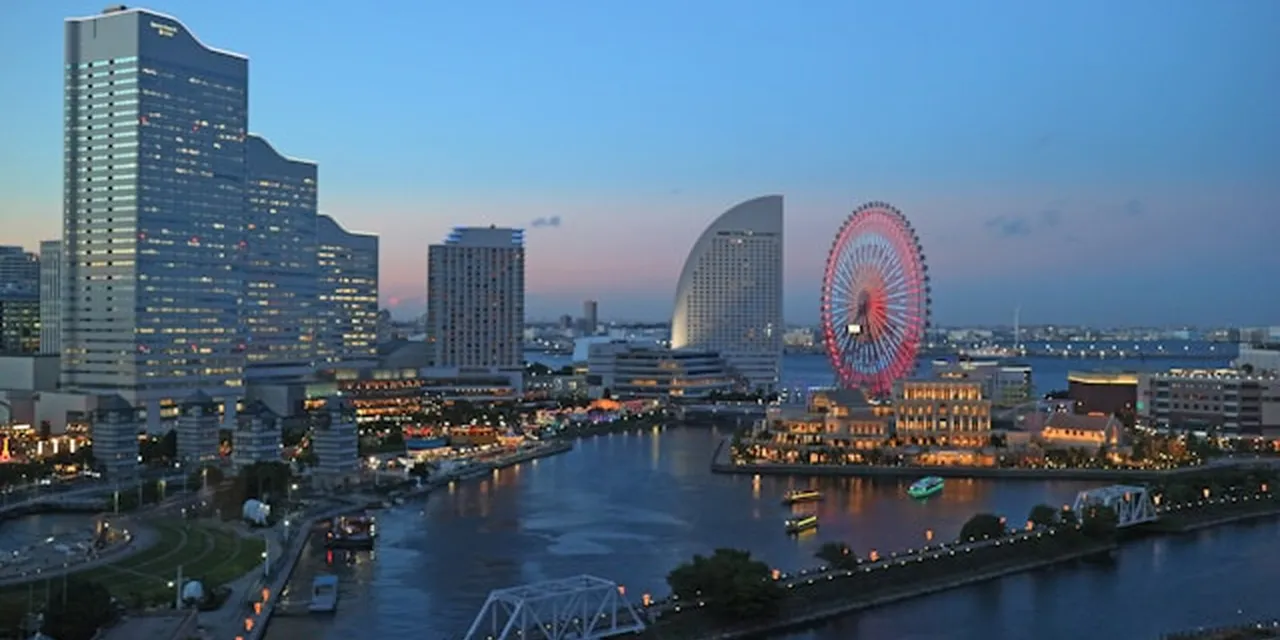
A source-scoped brief separating the distinct operating and leadership accountabilities behind a Yokohama Port Logistics search.
Use these pages to navigate between parent markets, sector pages, and supporting articles.
These are the questions most closely tied to how executive search really works in Yokohama.
Yokohama's senior talent market is defined by low candidate visibility and high employer concentration. The city's key sectors, including port logistics, automotive R&D, electronics, and heavy manufacturing, employ senior professionals who rarely appear on the open market. Japan's demographic decline makes this scarcity systemic, not cyclical. Companies use executive recruiters because internal HR teams and generalist agencies cannot access the passive candidate population that determines whether a search produces a strong shortlist or merely an available one. Direct headhunting, supported by continuous talent mapping, is the only reliable method for reaching leaders in these specialised clusters.
Tokyo's executive market is vast and relatively liquid across sectors. Yokohama's market is smaller, more sector-concentrated, and more interconnected. A search for a supply-chain director in Yokohama is competing with a handful of employers who all know each other's senior teams. Compensation bands overlap with Tokyo for R&D and digital roles but diverge for manufacturing and logistics positions. The professional community is tight enough that search quality, discretion, and employer brand management carry more weight than in Tokyo's more anonymous market.
KiTalent maintains continuous intelligence on Yokohama's key talent markets through parallel mapping. When a mandate is defined, we activate pre-existing candidate relationships and market data rather than starting from zero. Each search is led by a sector-native consultant who understands the specific dynamics of the relevant cluster, whether that is Keihin manufacturing, Minato Mirai R&D, or port logistics. Our performance-based model means clients see qualified candidates and comprehensive market intelligence before making their primary financial commitment.
Interview-ready executive candidates are typically presented within seven to ten days. This speed comes from parallel mapping, not from reduced assessment standards. Because we continuously track career movements and compensation data across Yokohama's sectors, the research phase that takes conventional firms weeks has already been completed before the mandate begins. Every shortlisted candidate has undergone technical competency evaluation and a personal career-storytelling meeting to assess cultural fit and motivation.
Nissan's 2024-2025 global programme, including workforce reductions and the Oppama plant closure, has reshaped Yokohama's automotive talent market in two ways. First, a cohort of experienced automotive executives and engineers is now available or open to approaches for the first time in years. Second, professionals at supplier firms and adjacent employers are more cautious, making passive-candidate engagement harder. This combination means timing and intelligence matter more than ever. Firms that can distinguish between genuinely available talent and cautious-but-movable talent, and calibrate their approach accordingly, will secure the best candidates before the window closes.
Whether you are hiring a Head of Logistics for a port-adjacent operation, an R&D Director for a Minato Mirai technology lab, a Plant Director for the Keihin industrial corridor, or a Country Manager for a multinational subsidiary, this is where to begin.
What we bring to Yokohama executive mandates:
Executive search and direct headhunting · Talent mapping and market intelligence · Compensation benchmarking and mandate calibration · Connection to KiTalent's Asia Pacific hub in Almaty and international executive search network.
Whether you are running a live mandate or want to pressure-test a brief before going to market, this is the right place to start the conversation.
Author of record: Katia Belous, Director, Middle East & Asia. Based on local market intelligence and executive-search data.
Share your CV and a sentence on the mandate types you'd consider. We respond within five working days.