Yokohama Port Logistics in 2026: ¥Billions in New Infrastructure, and Not Enough People to Run It
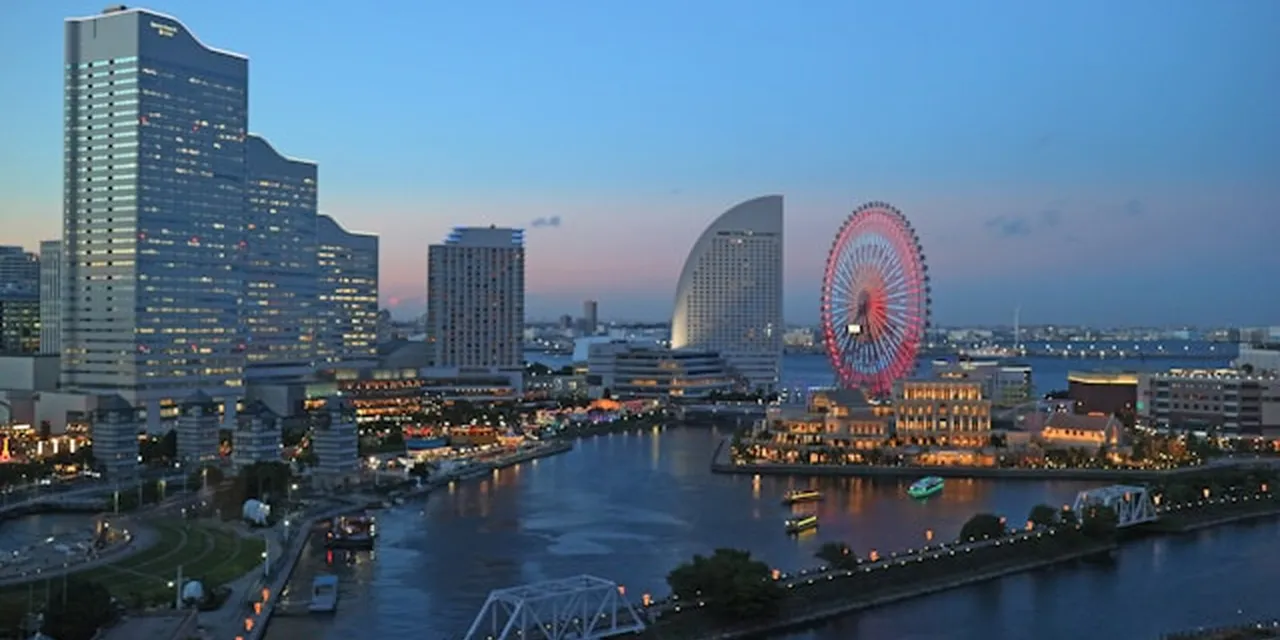
Yokohama's Honmoku D-4 terminal opened in March 2026, adding 400 metres of quay length and roughly 400,000 TEU of annual container capacity. It is the most consequential piece of port infrastructure built in the Keihin region in over a decade. It is also arriving in a labour market that cannot staff the terminals already in operation.
The core problem is not a general shortage of workers. Entry-level freight forwarding coordinators remain plentiful. Truck drivers, despite a well-documented deficit, are at least an active candidate market where firms compete on wages and conditions. The acute crisis sits in three specific categories: certified gantry crane operators, AEO-accredited customs brokers, and ammonia refrigeration technicians. These roles share a common trait. The people qualified to fill them are almost entirely employed, not looking, and bound by certification pipelines that take years to complete. Demand for them is growing at double or triple the rate of qualified supply.
What follows is a ground-level analysis of the forces reshaping Yokohama's port and logistics labour market in 2026: where the gaps are deepest, why infrastructure investment alone cannot close them, and what organisations hiring in this sector need to understand before they commit to a search strategy that worked five years ago but fails today.
The Capacity Paradox: A New Terminal Meets a Shrinking Workforce
The Port of Yokohama handled 2.69 million TEU in 2023, a 4.1% decline from 2022 as global trade normalised after the pandemic. Reefer throughput moved in the opposite direction, growing 2.3% to 412,000 TEU on the back of frozen meat and pharmaceutical imports. MLIT baseline projections place 2026 container throughput at 2.75 million TEU, contingent on stable Red Sea routing and no further escalation in US-China tariffs.
The D-4 terminal is designed to handle Ultra Large Container Vessels up to 24,000 TEU, addressing berth congestion that had pushed average waiting times for post-Panamax vessels to 1.8 days. Before D-4, the port was running at over 85% utilisation of existing container berths. The expansion was an emergency measure, not a growth initiative.
Here is the paradox that defines Yokohama's logistics sector in 2026: the port has invested heavily to remove its physical bottleneck, but the human bottleneck has tightened in the same period. The Kanto region faces a 12,000-driver shortfall, and port-related drayage has seen average container pickup delays increase by 18 to 24 hours since the April 2024 overtime cap took effect. New quay capacity means nothing if containers cannot move beyond the port gates. The constraint has simply shifted from berth availability to labour availability, and the second constraint is harder to solve with capital expenditure.
The 2024 Problem Has Become the 2026 Reality
Japan's "2024 Problem" refers to the enforcement of a 960-hour annual overtime limit for truck drivers under the Labour Standards Act, effective April 2024. The policy was well-intentioned: Japanese logistics drivers historically worked punishing hours, and the cap was designed to improve conditions and attract new entrants. The unintended consequence has been a sharp reduction in drayage capacity across every major port in the country.
How the Overtime Cap Reshaped Port Operations
For Yokohama, the impact is direct and measurable. According to the Japan Trucking Association's "State of Logistics 2024" report, the overtime cap structurally reduces drayage capacity by an estimated 15 to 20% unless productivity gains offset the labour loss. Those gains have not materialised at scale. Modal shift to rail remains marginal: JR Freight and private railways handle only 5 to 7% of containerised hinterland transport from Yokohama, compared to over 60% in European hub ports. Road transport via the Metropolitan Expressway, Route 1, and the Tomei Expressway remains the overwhelming mode of container movement.
Why Automation Has Not Closed the Gap
Terminal operators including YPTC and Mitsubishi Logistics have deployed semi-automated yard cranes and automated gate systems. These investments reduce the need for some traditional dockside labour. But they do not solve the drayage problem, which sits outside the terminal fence. A container that clears an automated gate still needs a driver and a truck on the other side. The technology investment has optimised the terminal interior while the exterior supply chain has degraded.
This is the analytical point most observers are missing. The capital that flowed into Yokohama's port expansion and terminal automation has not reduced the workforce requirement. It has replaced one kind of worker with another. The port needs fewer general stevedores and more certified crane operators who can manage semi-automated systems. It needs fewer manual gate clerks and more PCS architects who can build API-based data exchange on the NACCS Phase 5 platform. The automation investment moved faster than the certification pipeline could produce qualified replacements. The result is a port that is more modern, more efficient per worker, and more exposed to individual vacancies than at any point in its recent history.
Three Roles the Market Cannot Fill
The bifurcation of Yokohama's logistics labour market is stark. General freight forwarding coordinators represent a saturated supply, with an estimated 80% actively seeking work. Entry-level administrative roles attract surplus candidates. But three categories are in crisis, and each presents a distinct hiring challenge that conventional methods cannot resolve.
Certified Gantry Crane Operators
Demand for rubber-tired gantry and ship-to-shore crane operators exceeds supply by 3:1 in the Keihin port region. The average time to fill a senior crane operator role with 10 or more years of experience is 8.5 months, according to the Japan Harbor Transportation Association's 2024 Port Labor Survey. An estimated 85 to 90% of qualified operators are passive candidates. High barriers to entry, including national certification and a five-year apprenticeship, combined with union seniority structures, create extremely high tenure. These candidates move via direct headhunting or union referral. They do not use job boards.
The consequence is severe. Forty percent of terminal operators and major forwarders surveyed in the Keihin region reported cancelling vessel handling windows because they could not staff night shifts. A cancelled handling window does not just delay one vessel. It cascades through the berth schedule, compounding the waiting time problem that D-4 was built to solve.
AEO-Certified Customs Brokers
The Kanto region faces a 14% vacancy rate for licensed customs brokers with Authorized Economic Operator accreditation. An estimated 75% of these professionals are passive, with unemployment below 2% and high job security reducing any incentive to search. According to reporting in Nikkei Logistics, customs brokerage departments at major forwarders have been engaged in aggressive lateral hiring, offering compensation premiums of 20 to 30% above standard pay bands to attract AEO-certified brokers from competitors. Some offers reportedly include guaranteed bonus clauses, a practice that remains unusual in Japanese logistics employment.
This is not a market that grows by training new entrants quickly. AEO accreditation requires demonstrated institutional compliance history. A customs broker who holds the Customs Specialist License but has not worked within an AEO-accredited operation cannot be substituted in. The shortage is not just of people. It is of people with the right institutional affiliation.
Ammonia Refrigeration Technicians
Demand for technicians certified in ammonia refrigeration systems, required for warehouses operating at minus 25 degrees Celsius, increased 34% year over year in 2024. Qualified supply grew by only 12%. Yokohama's cold chain cluster, anchored by Nichirei Logistics Group's Tsurumi-ku terminal and handling 18% of Japan's imported frozen beef, depends entirely on this specialist workforce.
A survey of 120 Yokohama-based freight forwarders by the Yokohama Chamber of Commerce in Q2 2024 found that 28% of firms had stalled or abandoned expansion of cold-chain services specifically because they could not hire certified refrigeration engineers. These firms had the capital. They had the warehouse space. They lacked the people. This is the clearest evidence that traditional recruitment approaches are failing in this market. When more than a quarter of firms abandon growth plans not for lack of demand or funding but for lack of a specific technical certification, the problem has moved beyond compensation into the structure of the labour supply itself.
Compensation: What These Roles Actually Pay
Executive and senior technical compensation in Yokohama's port logistics sector sits in a specific band that reflects the city's position between Tokyo and regional alternatives.
Terminal Operations Director roles, equivalent to VP level, command ¥18 million to ¥28 million annually in base plus bonus. These positions require 15 or more years in container terminal management and Japanese harbour master licensure. Supply Chain Director roles with cold chain specialisation, covering temperature-controlled warehousing, HACCP compliance, and pharmaceutical GDP certification, pay ¥16 million to ¥24 million. Senior Logistics Managers at department head level, with 8 to 12 years of experience, earn ¥9.5 million to ¥14 million.
The Regional Premium Structure
Yokohama-based roles carry a 5 to 10% premium over equivalent positions in Osaka's Hanshin port. They sit at an 8 to 12% discount compared to Tokyo's Shinagawa and Minato logistics hubs, though specialised port engineering roles achieve near-parity with Tokyo because the technical expertise is concentrated in Yokohama rather than spread across the capital.
The competitive dynamic with Nagoya is different. Port of Nagoya competes fiercely for automotive logistics talent. Toyota's supply chain dominance offers stronger career trajectory stability but lower base salaries, running 8 to 10% below Yokohama. Mid-career automotive logistics managers leave Yokohama for Nagoya when seeking vertical integration into OEM supply chains. This is a pull factor that compensation benchmarking alone cannot counter. The appeal is not purely financial. It is the opportunity to move closer to the centre of an entire industry.
The most damaging talent drain, however, runs to Singapore. For regional VP-level supply chain roles with Asia-Pacific scope, Singapore offers 40 to 60% higher total compensation inclusive of housing allowances, combined with lower personal income tax rates. Yokohama-based maritime executives with international experience are drawn out of the Japanese market entirely. This is the international dimension of executive search that domestic hiring strategies consistently underestimate.
The Green Port Mandate and the Cybersecurity Gap
Two regulatory forces converging in 2026 are creating new talent requirements that barely existed three years ago.
The "Green Port Yokohama" initiative mandates shore power capability for 50% of cruise and container berths by the end of 2026. Terminal operators face an estimated ¥8.5 billion in infrastructure investment. But the hardware is only half the challenge. Operating shore power systems, managing EU ETS documentation for vessels calling Yokohama, and auditing IMO Data Collection System compliance require a category of maritime decarbonisation specialist that the Japanese logistics sector has not historically produced in volume. These roles sit at the intersection of environmental regulation, shipping operations, and compliance reporting. The pipeline of qualified candidates is thin because the regulatory framework itself is new.
Concurrently, amendments to the Port and Harbor Act taking effect in April 2026 introduce stricter cybersecurity mandates for port community systems. Yokohama's PCS infrastructure is transitioning from legacy CALS/EDI systems to API-based data exchange under NACCS Phase 5. This transition requires architects and security specialists who understand both maritime logistics workflows and modern cybersecurity frameworks. The typical candidate profile combines 8 to 10 years in logistics IT with specific PCS architecture experience. That combination is rare. It is also invisible to conventional job advertising, because professionals with this profile are embedded in critical infrastructure roles and have no reason to be on the open market.
The implication for hiring leaders is clear. The new regulatory environment is not simply adding compliance cost. It is creating entirely new executive and senior technical roles that must be filled by professionals whose skills were not in demand five years ago. Organisations that wait for these candidates to appear on job boards will wait indefinitely.
The Cruise Rebound Complicates an Already Tight Market
Cruise tourism adds a third dimension to Yokohama's labour market challenge. The port recorded 1.18 million cruise passengers in the fiscal year ended March 2024, recovering to 78% of pre-pandemic levels. Projections for 2025 indicated full recovery to over 1.5 million passengers, driven by homeporting operations for MSC Bellissima and Diamond Princess. By 2026, that recovery appears to be on track.
The cruise rebound generates demand for service, hospitality, and waterfront retail roles. These are largely low-skill, active-candidate positions that fill through conventional channels. But the economic sensitivity is real. According to the CLIA Japan Economic Impact Study, a 20% drop in cruise calls would eliminate approximately 3,500 seasonal service jobs in Yokohama's waterfront economy. Geopolitical instability, including Red Sea routing disruptions and regional tensions, directly affects itinerary planning.
What makes this relevant to the port logistics talent conversation is the bifurcation it creates. Yokohama is simultaneously experiencing a hiring surge in hospitality roles and a slow squeeze on unionised, high-wage stevedoring positions as automation reduces traditional dockside labour through attrition. The narrative of "automation eliminates jobs" is too simple. In Yokohama, automation is eliminating one category of jobs while cruise tourism recovery is creating another, at different wage levels, for different skill sets, in the same physical geography. The overall headcount may look stable. The composition is shifting beneath it.
This bifurcation means that aggregate labour statistics for the port sector are misleading. A hiring leader reading a headline about "stable port employment" would miss the fact that the specific roles they need to fill are experiencing acute shortages while the roles they do not need are in surplus. The cost of misreading this market is not abstract. It is measured in cancelled handling windows, stalled cold-chain expansions, and regulatory deadlines met without the people to sustain compliance past the first audit.
What Hiring Leaders in Yokohama's Logistics Sector Need to Do Differently
The evidence is consistent across every data point in this market. The candidates who fill the most critical roles in Yokohama's port logistics sector are not applying for jobs. Crane operators are 85 to 90% passive. Customs brokers are 75% passive. Cold chain operations managers are 70% passive. These are not estimates from a single recruiter. They are aggregate figures from the Japan Harbor Transportation Association, the Japan Customs Brokers Association, and the Japan Logistics Association.
A passive candidate market at this scale requires a fundamentally different search approach. Job postings reach the 10 to 25% of the talent pool that happens to be looking. The other 75 to 90% must be identified, mapped, and approached directly. In a market where a senior crane operator search averages 8.5 months and a quarter of firms have abandoned growth plans due to hiring failure, the cost of relying on inbound applications is not just inefficiency. It is strategic forfeiture.
The challenge is compounded by the certification structure of these roles. A five-year apprenticeship for crane operators. AEO accreditation that requires institutional compliance history. Ammonia refrigeration certification that takes years to obtain. These are not roles where a strong generalist can be trained up in six months. The qualified population is fixed in the short term. Every hire comes from the existing pool. And in a market where competitors are offering 20 to 30% salary premiums and guaranteed bonus clauses to move AEO-certified brokers laterally, speed and precision in candidate identification are the only competitive advantages that matter.
For organisations competing for senior logistics leadership and certified technical talent in Yokohama's port sector, where the qualified population is small, passive, and being actively pursued by every major operator in the Keihin region, KiTalent delivers interview-ready executive candidates within 7 to 10 days through AI-enhanced talent mapping that reaches professionals no job advertisement will surface. Our pay-per-interview model means clients pay only when they meet qualified candidates, eliminating the retainer risk that makes slow searches expensive as well as slow. With a 96% one-year retention rate across 1,450 executive placements, the method is designed for exactly the kind of closed, certification-bound talent market that Yokohama's logistics sector represents. To discuss how this approach applies to your specific search, speak with our executive search team about Yokohama's port and logistics market.
Frequently Asked Questions
What is the average salary for a Terminal Operations Director in Yokohama?
Terminal Operations Director roles in Yokohama's port sector command ¥18 million to ¥28 million annually in base salary plus bonus, according to 2024 salary surveys from Hays Japan and Michael Page Japan. These positions require 15 or more years in container terminal management and Japanese harbour master licensure. The role sits at an 8 to 12% discount compared to equivalent positions in Tokyo's Shinagawa or Minato logistics districts, though specialised port engineering roles approach parity due to Yokohama's concentration of maritime technical expertise. Compensation varies based on the scope of terminal automation oversight and whether the role includes responsibility for berth scheduling across multiple facilities.
Why is it so hard to hire certified crane operators in Yokohama?
Certified gantry crane operators in the Keihin port region are in a 3:1 demand-to-supply imbalance. National certification requirements and a five-year apprenticeship create high barriers to entry, while union seniority structures produce extremely high tenure among existing operators. An estimated 85 to 90% of qualified operators are passive candidates who do not use job boards. The average time to fill a senior crane operator role exceeds 8 months. Forty percent of terminal operators surveyed reported cancelling vessel handling windows due to inability to staff night shifts, making this one of the most consequential executive and specialist hiring challenges in Japan's port sector.
How has Japan's 2024 driver overtime cap affected Yokohama's port operations?
The 960-hour annual overtime limit for truck drivers, enforced from April 2024, has reduced drayage capacity in the Kanto region by an estimated 15 to 20%. Yokohama's port-related container pickup has experienced average delay increases of 18 to 24 hours. The Kanto region faces a 12,000-driver shortfall. Rail freight handles only 5 to 7% of containerised hinterland transport from Yokohama, offering limited alternative capacity. The constraint means that new terminal capacity, including the D-4 expansion, risks underutilisation not from lack of vessel demand but from inability to move containers beyond the port gates.
What regulatory changes are affecting hiring in Yokohama's port sector in 2026?
Two major regulatory forces are creating new talent requirements. The "Green Port Yokohama" initiative mandates shore power capability for 50% of cruise and container berths by end of 2026, requiring maritime decarbonisation specialists who understand EU ETS documentation and IMO DCS auditing. Separately, amendments to the Port and Harbor Act introduce stricter cybersecurity mandates for port community systems, driving demand for PCS architects with both logistics workflow and cybersecurity expertise. Both categories represent roles that barely existed three years ago, and the qualified candidate pool is extremely limited.
How does KiTalent approach logistics executive hiring in Japan's passive candidate market?
KiTalent uses AI-enhanced direct headhunting to identify and approach candidates who are not visible on job boards or active application channels. In a market like Yokohama's port sector, where 75 to 90% of qualified professionals in critical roles are passive, this method reaches the talent pool that conventional advertising misses entirely. KiTalent delivers interview-ready candidates within 7 to 10 days on a pay-per-interview pricing model, meaning clients only pay when they meet qualified candidates. The firm maintains a 96% one-year retention rate across more than 1,450 executive placements globally.
Is Yokohama competitive with Singapore for senior maritime logistics executives?
For regional VP-level supply chain roles with Asia-Pacific scope, Singapore offers 40 to 60% higher total compensation inclusive of housing allowances and benefits from lower personal income tax rates. This draws experienced Yokohama-based maritime executives out of the Japanese market. However, Yokohama retains advantages in port-specific technical roles where Japan's concentration of maritime engineering expertise and certification infrastructure creates career depth that Singapore's transshipment-focused market does not replicate. Organisations seeking to retain senior leaders must address the counteroffer and international mobility dynamic directly rather than assuming domestic loyalty will hold.