Serving hub
The UAE is served from the real Nicosia hub rather than from a decorative office-network narrative.
United Arab Emirates Executive Search
Published · Last updated
The UAE's executive market sits at the intersection of hydrocarbon wealth, global trade infrastructure and accelerating diversification into financial services, renewable energy and digital assets. Searches in United Arab Emirates are managed from KiTalent's Nicosia hub, with support from our other hubs when the candidate pool crosses markets.
Track record on suitable mandates: 7–10 working days to validated shortlist · 96% one-year retention · NPS 72. How we measure performance.
The UAE is not a single talent market. It is a federation of distinct economic zones, each governed by overlapping regulatory authorities, shaped by sovereign capital flows and populated by one of the world's most internationally mobile professional workforces. Assumptions that work in other Gulf states break down here.
The UAE's senior professional community is overwhelmingly international. Executives arrive from South Asia, Europe, the Americas and East Africa, often on two-to-three-year cycles. This creates a perpetually shifting candidate map. The leaders available twelve months ago may have relocated to Singapore or London. Reaching the passive majority of senior talent requires continuous mapping, not periodic searches triggered by a vacancy. The Abu Dhabi market rotates differently from Dubai; a search partner must track both rhythms simultaneously.
Federal Emiratisation targets now extend well beyond public-sector quotas. Private employers face escalating requirements to recruit, develop and retain Emirati nationals in skilled and leadership positions. For multinational clients, this adds a policy dimension to every senior hire. The search process must factor in nationality mix, sponsorship structures and the competitive premium that qualified Emirati candidates command. Misreading these dynamics costs time, credibility and, increasingly, regulatory penalties.
A Chief Compliance Officer hired into DIFC operates under DFSA rules. The same role in ADGM falls under FSRA oversight. A virtual-asset business in mainland Dubai reports to VARA. Each jurisdiction carries distinct licensing, conduct and reporting obligations. Executive search in the UAE demands granular understanding of which regulatory perimeter a role sits within. Generic Gulf-wide sourcing ignores these distinctions entirely. KiTalent's directly engaged search partnership approach is built for exactly this kind of market. Our Middle East hub in Nicosia maintains continuous intelligence on UAE candidate movements, compensation shifts and regulatory changes, giving clients an informed starting position before any mandate begins. ---
Real Hub Coverage
We do not present the UAE as a market covered through a symbolic local office network. UAE mandates are coordinated from Nicosia and executed through mapped coverage across Abu Dhabi, Dubai, Sharjah, and the wider Emirates leadership market, with direct visibility into the regional executive flows that shape hiring there.
That model fits the UAE because financial services, sovereign industrial policy, logistics, aviation, and AI infrastructure pull talent from overlapping regional pools. A real Eastern Mediterranean hub with cross-border reach is a stronger operating base than a decorative in-country office claim.
Route Map
UAE searches sit at the intersection of sovereign strategy, regulation, and regional executive movement, so the route has to be chosen deliberately.
The UAE is served from the real Nicosia hub rather than from a decorative office-network narrative.
Choose the sector route that best reflects how leadership talent actually moves across the Emirates.
Use the role path when the functional leadership problem is clearer than the industry route.
Use the commercial cluster when the client needs to align Proof-First, fees, and process before launch.

The UAE is not one talent pool but a network of sector-specific clusters spread across distinct jurisdictions and emirates. Each requires tailored sourcing.
Abu Dhabi drives the UAE's energy transition agenda. ADNOC's CCUS programme, Masdar's global renewables portfolio reaching 65 GW and EWEC's grid-scale battery projects create demand for programme directors, hydrogen specialists and project-finance leaders.
DIFC, ADGM and mainland Dubai host the UAE's financial leadership market. Heads of Compliance navigating DFSA, FSRA and VARA frameworks are among the hardest roles to fill.
Jebel Ali's record container volumes and AD Ports' expansion programme sustain demand for senior supply-chain, port-operations and freight-forwarding leaders. Sharjah and Ras Al Khaimah add manufacturing logistics depth.
Emirates Group, Dubai Airports and the broader hospitality ecosystem employ thousands at the senior level. Commercial directors, revenue-management heads and guest-experience leaders rotate through Dubai's aviation and tourism cluster on cycles that require constant pipeline awareness.
G42, MBZUAI and a growing ecosystem of cloud, cybersecurity and AI start-ups are competing for a thin pool of senior technologists. Chief Digital Officer and Head of AI searches stretch across Abu Dhabi's research institutions and Dubai's commercial tech cluster.
Large-scale infrastructure projects, including port expansions, renewable energy plants and Expo-legacy developments, drive demand for EPC programme directors and BIM-specialist project leads. Dubai and Abu Dhabi split this market roughly equally.
Executive mobility across United Arab Emirates's cities is shaped by compensation expectations, relocation appetite, family considerations, and international exposure.
A search that maps where the right leaders actually operate, and understands the conditions under which they would consider a move, is fundamentally more effective than one that treats United Arab Emirates as a flat national market.
United Arab Emirates's executive search market is strongest where its economic specialisation is deepest.
ADNOC's CCUS expansion at Habshan, Masdar's gigascale solar and storage programme and TAQA's grid investments have turned Abu Dhabi into a command centre for energy transition capital allocation. Demand for Heads of Hydrogen Projects, renewable energy programme directors and project-finance specialists has intensified as these programmes move from pilot to execution phase. KiTalent's oil,…
DIFC and ADGM continue to attract fund managers, family offices and institutional digital-asset firms. Emirates NBD, FAB and ADCB are expanding wealth and private-banking divisions. Meanwhile, VARA's regulatory framework for tokenised real-world assets has drawn compliance and product-structuring talent into Dubai at a pace that outstrips local supply.
DP World reported record throughput at Jebel Ali, exceeding fifteen million TEU in 2024. AD Ports is scaling Khalifa Port and expanding globally. Red Sea disruptions and Asia-to-Middle-East nearshoring are reinforcing the UAE's position as a regional aggregation node.
DXB handled approximately 95 million passengers in 2025, maintaining its status as the world's busiest international airport. Emirates Group, Dubai Airports and the hotel and events ecosystem around Expo-legacy projects generate continuous leadership hiring in commercial, operations and guest-experience functions. Our travel and hospitality team understands the seasonal and structural rhythms…
The UAE's AI-first national strategy, G42's partnerships with global technology firms and MBZUAI's research output are creating demand for Chief Digital Officers, AI engineering leads and data-centre infrastructure directors. Abu Dhabi anchors the research and compute investment; Dubai hosts the commercial application layer. KiTalent's AI and technology sector team sources across both clusters.
Companies rarely need only reach in United Arab Emirates. They need interpretation, calibration, and a search architecture that reflects the real structure of the market.
Our team runs United Arab Emirates mandates through KiTalent's four regional hubs, combining local market intelligence with cross-border execution across Europe, the Americas, the Middle East, and Asia Pacific.
The strongest executives in United Arab Emirates are passive. Our direct headhunting approach engages the passive majority of senior talent through discreet outreach rooted in real market knowledge.
Our parallel mapping methodology means we already hold live intelligence on restructuring, transition windows, compensation patterns, and candidate attraction opportunities when a brief arrives.
In United Arab Emirates, the cost of a wrong executive hire extends far beyond the recruitment fee. Our Proof-First Search model lets clients see real market output and qualified candidates before the bulk of the investment is committed.
A rotating view of the city-level market shifts shaping executive hiring across United Arab Emirates.
Abu Dhabi is the capital of a USD 30 billion industrial economy, a growing international financial centre through ADGM, and the headquarters of ADNOC, Mubadala, Masdar, and Etihad.…
Dubai's executive market is defined by velocity: over 6,000 firms registered in DIFC alone, record tourism volumes exceeding 18.7 million international visitors in 2024, and a…
Sharjah's economy runs on manufacturing, free-zone trade, and logistics, with a fast-growing layer of cultural tourism and knowledge-economy ventures anchored by SRTIP and Sheraa.…
Ajman is the UAE's most cost-competitive industrial emirate, home to 12,400 companies in its free zone alone and a manufacturing base that spans flexible packaging, construction…
These resources provide deeper market intelligence and explain how KiTalent turns insight into a faster, more transparent search process.

Abu Dhabi entered 2026 with more than $1.5 trillion in sovereign wealth across ADIA, Mubadala, and ADQ. It has committed $150 billion to clean energy deployment by 2030. It...
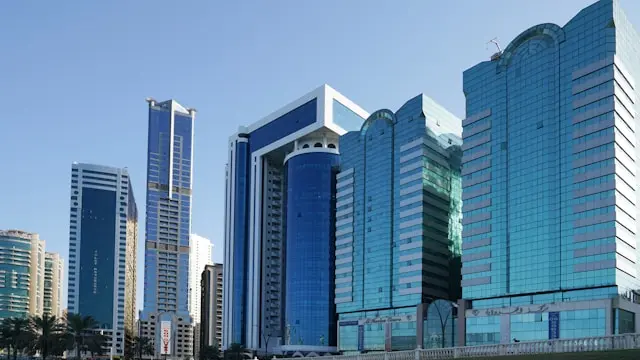
Sharjah's creative economy now contributes AED 3.2 billion annually to the emirate's GDP. That figure represents 4.8% of non oil output, anchored by a publishing and media...
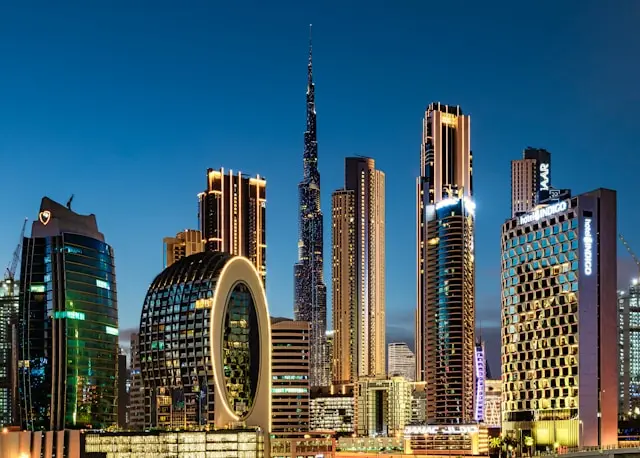
Dubai welcomed 18.72 million international overnight visitors in 2024, exceeding pre pandemic levels by 14%. The hotel inventory reached 154,000 keys across 832 establishments...

Ras Al Khaimah built its entire trade proposition on being cheaper than Dubai. Warehousing at AED 25 to 35 per square metre. Free zone licences at a fraction of JAFZA rates. A...
Use these pages to move between city clusters, sector pages, and supporting articles.
These are the questions most closely tied to how executive search really works in United Arab Emirates.
The UAE's senior talent pool is overwhelmingly expatriate, highly mobile and approached frequently by competitors. Roughly 80 per cent of the most qualified candidates are not actively seeking new roles. Reaching them requires direct headhunting and continuous market intelligence rather than job postings or database searches. Emiratisation requirements add a further layer of complexity that generalist recruiters are poorly equipped to handle.
Saudi Arabia's executive market is dominated by Vision 2030 mega-projects and a nationalisation agenda centred on large-scale Saudisation quotas. Qatar's market is smaller and more concentrated around a handful of sovereign entities. The UAE's distinguishing feature is its multi-jurisdictional regulatory architecture. DIFC, ADGM, VARA and federal frameworks each impose distinct requirements on the same role type. A Head of Compliance in Dubai may need three separate regulatory certifications depending on which zone the employer operates in. This complexity demands search partners with jurisdiction-level knowledge.
KiTalent combines continuous parallel mapping of the UAE executive market with sector-native consultants who understand the regulatory, compensation and cultural specifics of each emirate. Our Middle East hub in Nicosia coordinates mandates across Abu Dhabi, Dubai and Sharjah. We reach passive candidates through direct outreach, benchmark compensation across jurisdictions and assess candidates against the regulatory context of each role.
Our parallel mapping methodology means we maintain a live intelligence base on the UAE's senior professional community. For most mandates, we present a qualified shortlist within seven to ten days of the brief. This speed reflects continuous pre-mandate research, not a reactive scramble.
Yes. We maintain dedicated coverage of the UAE's three primary executive markets: Abu Dhabi, Dubai and Sharjah. Our sector consultants track candidate movements and compensation shifts across all three emirates, with additional intelligence on Ras Al Khaimah and Fujairah for industrial and maritime mandates.
---
Whether you are hiring a Head of Hydrogen Projects for Abu Dhabi, a Chief Compliance Officer for a DIFC-regulated fund in Dubai or a Plant Director for a manufacturing operation in Sharjah, the starting point is the same: a conversation with a consultant who already knows the market.
What we bring to United Arab Emirates executive mandates:
Executive search and direct headhunting · Talent mapping and market intelligence · Compensation benchmarking and mandate calibration · Connection to KiTalent's Middle East hub in Nicosia and our international executive search network.
Whether you are running a live mandate or want to pressure-test a brief before going to market, this is the right place to start the conversation.
Use these pieces to turn multi-emirate, regulated and cross-border context into a scoped mandate and an evidence-led shortlist.
Applied research
For United Arab Emirates, this separates geographic and competitor mapping from the evidence threshold required for an assessed shortlist.
Editorial
For United Arab Emirates, this sets the circulation standard: mandate-relevant evidence before a profile is introduced to the client.
Author of record: Katia Belous, Director, Middle East & Asia. Based on local market intelligence and executive-search data.
Share your CV and a sentence on the mandate types you'd consider. We respond within five working days.