

Budapest Hospitality: Define the Property and Commercial Mandate
A source-scoped Budapest hospitality brief separating property operations, revenue, food and beverage, guest experience and investment.
Hungary Executive Search
Published · Last updated
Hungary's executive market is shaped by one of Europe's densest automotive manufacturing clusters, a fast-expanding EV battery value chain, and a Budapest-centred services economy that anchors finance, technology and corporate headquarters activity across Central and Eastern Europe. KiTalent brings sector-specific intelligence and direct headhunting capability to senior leadership searches across Hungary
Track record on suitable mandates: 7–10 working days to validated shortlist · 96% one-year retention · NPS 72. How we measure performance.
Searches in Hungary are managed from KiTalent's Turin hub, with support from our other hubs when the candidate pool crosses markets. Hungary's executive talent pool is far smaller and more concentrated than its industrial output suggests. A GDP of approximately USD 223 billion supports OEM plants, battery gigafactories and a mature services hub in Budapest. Yet the working-age population is shrinking, unemployment sits near 4.3 to 4.6 per cent, and persistent vacancies number in the tens of thousands. The professionals who run these operations are a known quantity in a compact market, and most are not looking to move.
Audi in Győr employs around 12,000 people. Mercedes-Benz runs a major plant in Kecskemét. SK On operates battery facilities in Komárom and Iváncsa. Samsung SDI manufactures in Göd. EcoPro BM has opened cathode production in Debrecen. Each of these operations needs senior plant directors, supply chain heads and engineering leaders with highly specific experience. The total pool of executives who combine sector knowledge with Hungarian operating context is narrow. Conventional job advertising does not reach them. Reaching the passive majority of senior talent of passive candidates requires direct, confidential outreach conducted by consultants who understand the sector.
Hungary's prosperity is unevenly distributed. The north-western corridor from Győr to Komárom records the lowest unemployment and the highest wages. Budapest dominates services, finance and technology. Eastern regions around Debrecen are attracting greenfield investment but lag on available talent. Executives willing to relocate from Budapest to a battery plant in Debrecen or an OEM supplier in Kecskemét require careful positioning and precise compensation calibration. A search firm that treats Hungary as a single, homogeneous market will miss these dynamics entirely.
Germany accounts for 20 to 25 per cent of Hungarian goods exports. Automotive demand cycles in Stuttgart and Wolfsburg transmit directly to hiring decisions in Győr and Kecskemét. South Korean battery investors bring procurement cultures, reporting structures and leadership expectations that differ from European norms. Executives in Hungary's industrial heartlands must operate across these cultural and commercial boundaries. This is why KiTalent's position as a directly engaged search partner, coordinated through our European headquarters in Turin, matters. Seven-year-plus client relationships and continuous market intelligence mean we understand these cross-border flows before a mandate begins.

Hungary is not one talent pool but several distinct markets separated by geography, industry and language. An automotive plant director in Győr operates in a different professional ecosystem from a fintech CTO in Budapest or a battery cell engineer in Debrecen. Each requires a tailored search strategy grounded in sector knowledge and local market intelligence.
Hungary's automotive cluster is one of Europe's most concentrated. Audi, Mercedes-Benz and Suzuki run major production operations in the north-western and central corridor.
SK On, Samsung SDI and EcoPro BM have established Hungary as a European battery production centre. Roles at VP and director level in cell engineering, materials science and process scale-up are among the hardest to fill in Central Europe.
Budapest hosts OTP Group, regional insurance operations and a growing cluster of fintech firms. CFO, chief risk officer and head of compliance mandates concentrate in the capital.
OEMs are investing in Industry 4.0 infrastructure across Hungarian plants. Mercedes-Benz has adopted digital-first production planning.
MOL Group, the Paks II nuclear project and grid modernisation programmes create sustained demand for energy executives. Project finance directors, HSE leaders and construction programme managers are sought by both domestic operators and international contractors.
Budapest's expanding air cargo capacity and Hungary's position on TEN-T freight corridors generate demand for supply chain directors and regional logistics heads. Pharmaceutical cold-chain logistics and automotive just-in-time operations require executives with EU customs and trade compliance…
Executive mobility across Hungary's cities is shaped by compensation expectations, relocation appetite, family considerations, and international exposure.
A search that maps where the right leaders actually operate, and understands the conditions under which they would consider a move, is fundamentally more effective than one that treats Hungary as a flat national market.
Hungary's executive search market is strongest where its economic specialisation is deepest.
Hungary's automotive complex remains its largest export category. Audi Hungaria in Győr produces engines and vehicles. Mercedes-Benz Manufacturing Hungary is modernising its Kecskemét plant for EV platforms.
Automotive & Mobility · Industrial, Manufacturing, and Robotics
Hungary has become one of Europe's fastest-growing battery manufacturing locations. SK On operates cell plants in Komárom and is expanding in Iváncsa. Samsung SDI produces in Göd.
Budapest concentrates Hungary's banking and wealth management activity. OTP Group, Hungary's largest bank, anchors a domestic financial sector that also includes regional insurance operations and growing fintech ventures. Corporate treasury, compliance and CFO roles cluster in the capital, where proximity to regulators and international connectivity drive location decisions.
Hungary exports significant volumes of pharmaceutical products and medical devices. Manufacturing facilities and R&D operations create demand for regulatory affairs directors, quality assurance heads and commercial leaders with EU market access experience. The healthcare and life sciences sector benefits from Hungary's established chemistry and biology research base.
Healthcare and Life Sciences · Industrial, Manufacturing, and Robotics
MOL Group anchors Hungary's oil, energy and renewables sector from its Budapest headquarters. The Paks II nuclear expansion project represents a multi-billion-euro infrastructure commitment requiring project finance specialists, construction leaders and regulatory experts. Grid upgrades and firming capacity investments add further demand for senior energy professionals.
Companies rarely need only reach in Hungary. They need interpretation, calibration, and a search architecture that reflects the real structure of the market.
Our team runs Hungary mandates through KiTalent's four regional hubs, combining local market intelligence with cross-border execution across Europe, the Americas, the Middle East, and Asia Pacific.
The strongest executives in Hungary are passive. Our direct headhunting approach engages the passive majority of senior talent through discreet outreach rooted in real market knowledge.
Our parallel mapping methodology means we already hold live intelligence on restructuring, transition windows, compensation patterns, and candidate attraction opportunities when a brief arrives.
In Hungary, the cost of a wrong executive hire extends far beyond the recruitment fee. Our Proof-First Search model lets clients see real market output and qualified candidates before the bulk of the investment is committed.
A rotating view of the city-level market shifts shaping executive hiring across Hungary.
Budapest accounts for over half of Hungary's economic output and concentrates the country's financial headquarters, software product companies, pharmaceutical R&D, shared service…
Debrecen is Central Europe's fastest-forming industrial centre of gravity. The city now anchors the continent's most concentrated battery-to-vehicle value chain, with BMW's Neue…
Szeged has become southern Hungary's centre of gravity for EV manufacturing, biopharmaceutical R&D, and advanced business services. With €4.2 billion in foreign direct investment…
Győr is Hungary's most productive non-capital economy, a city where a single automotive ecosystem generates roughly 8% of national export value and where the forced transition…
These resources provide deeper market intelligence and explain how KiTalent turns insight into a faster, more transparent search process.
A source-scoped Budapest hospitality brief separating property operations, revenue, food and beverage, guest experience and investment.

Szeged graduated 280 computer science students last year. It also spent the same year unable to fill senior cloud engineering, embedded systems, and AI specialist roles across...

Győr's logistics sector handled over 1.2 million tonnes of automotive freight through its railway terminal alone in 2024. The M1 corridor between Budapest and Vienna has...
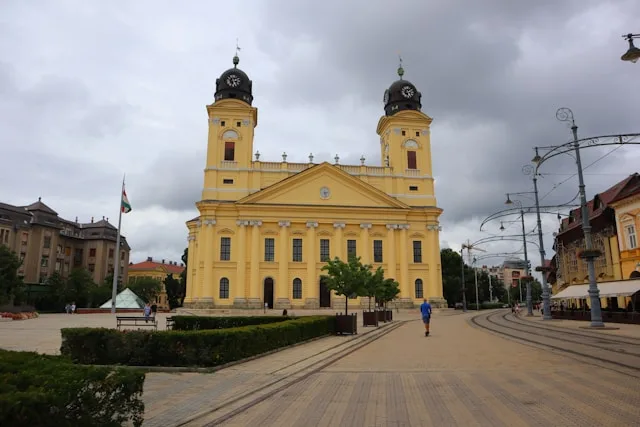
Debrecen's life sciences and medtech manufacturing sector generated close to EUR 1 billion in export revenue in 2024. By the end of that year, the city's pharmaceutical and...
Use these pages to move between city clusters, sector pages, and supporting articles.
These are the questions most closely tied to how executive search really works in Hungary.
Hungary's working-age population is shrinking and unemployment remains below 5 per cent. Senior leaders in automotive, battery and financial services are rarely active on the job market. Executive recruiters with direct search capability reach the passive majority that conventional recruitment cannot access. In a compact professional community where relationships and reputation govern career decisions, a structured and confidential approach is the only reliable method to engage high-calibre candidates.
Hungary's executive market is more industrially concentrated than Poland's and more geographically dispersed than the Czech Republic's. Poland offers a larger absolute talent pool across multiple major cities. The Czech Republic centres heavily on Prague. Hungary combines a dominant capital city with dispersed manufacturing clusters in Győr, Kecskemét and Debrecen, each with distinct compensation norms and talent dynamics. The EV battery value chain adds a layer of specialisation that neither neighbour matches at Hungary's scale.
We begin with parallel mapping to establish the realistic candidate universe before a mandate formally launches. Direct outreach targets passive professionals across Budapest and Hungary's industrial corridors. Every search includes structured market intelligence on compensation, candidate availability and competitor activity. Our European headquarters in Turin coordinates Hungarian mandates within a broader Central European network, ensuring cross-border alignment for multinational clients.
Our standard is 7 to 10 days from mandate confirmation to initial shortlist. In Hungary's concentrated sectors, parallel mapping often means we have pre-existing intelligence on the target candidate pool. This enables faster engagement without sacrificing assessment rigour. The three-stage evaluation process that follows ensures shortlisted professionals meet both technical and cultural requirements.
Yes. While Budapest is the primary hub for corporate and financial services mandates, our search coverage extends to every industrial cluster in the country. We regularly execute mandates targeting the Győr automotive corridor, Kecskemét's manufacturing base, the Debrecen battery cluster and the Komárom production zone. Our direct search methodology is designed for markets where candidates are geographically dispersed but sectorally concentrated.
Whether you need a plant director for a battery facility in Debrecen, a CFO for a Budapest financial group or a supply chain head for an automotive supplier in Győr, the starting point is the same: a precise understanding of the market and the candidates within it.
What we bring to Hungary executive mandates:
Executive search and direct headhunting · Talent mapping and market intelligence · Compensation benchmarking and mandate calibration · Connection to KiTalent's four regional hubs, Proof-First Search, and our international executive search network.
Whether you are running a live mandate or want to pressure-test a brief before going to market, this is the right place to start the conversation.
Produced by the KiTalent Research Team. Based on local market intelligence and executive-search data.
Share your CV and a sentence on the mandate types you'd consider. We respond within five working days.