

Baltimore's Port Is Rebuilding Its Bridge. It Cannot Rebuild Its Workforce.
The Port of Baltimore handled 847,158 vehicles in 2024, maintaining its position as the leading U.S. port for automobile imports despite the catastrophic collapse of the...
Baltimore, the United States Executive Search
KiTalent brings sector-specific intelligence and direct headhunting capability to senior leadership searches across Baltimore.
Track record on suitable mandates: 7–10 working days to validated shortlist · 96% one-year retention · NPS 72. How we measure performance.
Searches in Baltimore are managed from KiTalent's New York hub, with support from our other hubs when the candidate pool crosses markets. Standard executive hiring methods struggle in Baltimore for reasons that have nothing to do with the city's size. The problem is specificity. The sectors driving growth here require leaders who combine deep regulatory knowledge, institutional fluency, and tolerance for a market that operates under constraints most recruiters never encounter. A job posting on a national board will attract volume. It will not attract the VP of Advanced Therapeutics Manufacturing who already runs a CDMO operation at scale, or the Director of Port Cybersecurity who understands both ICS security and automated cargo systems.
Baltimore's 5.2% unemployment rate, 120 basis points above the national average, masks a labour market that is simultaneously loose at the entry level and ferociously tight at the senior level. The city has sufficient PhD researchers and service workers. What it lacks are the mid-to-senior operators who can translate research into GMP production, manage value-based care contracts across sprawling health systems, or lead logistics automation during a multi-year infrastructure rebuild.
Baltimore is not a headquarters city in the conventional sense. T. Rowe Price and Brown Advisory maintain meaningful downtown presences, but the economy's centre of gravity is institutional. Johns Hopkins alone employs over 40,000 people in the city. The University of Maryland Medical System adds another 12,000. These anchor institutions create enormous demand for specialised leaders but also create a gravitational pull that can make it harder for smaller employers to compete for the same profiles. When Emergent BioSolutions or Kite Pharma needs a senior quality director, they are recruiting against the same institutional ecosystem that trained most of the candidates in the first place.
Baltimore's executive talent pool is interconnected to a degree that surprises outsiders. The biotech community clusters around East Baltimore, Harbor East, and the University of Maryland BioPark. The finance community still orbits the downtown core and Harbor East. The port and logistics community is tightly bound by decades of operational relationships. In a market this networked, a poorly handled search process does not stay quiet. A withdrawn offer, a misrepresented role, or a recruiter who wastes a candidate's time becomes common knowledge within weeks. This is why employer brand protection is not a luxury in Baltimore. It is a condition of being able to recruit here at all.
Thirty-eight percent of Johns Hopkins graduates leave Maryland within five years, drawn to higher-profile metros despite Baltimore's 8% cost-of-living advantage over the national average. The leaders who remain tend to be deeply embedded: they have institutional relationships, board seats at local nonprofits, and families settled in the surrounding counties. Reaching the passive majority of senior talent in Baltimore means understanding that these executives are not browsing opportunities. They are running departments at Hopkins, managing clinical trial pipelines at UMMC, or overseeing container operations at Seagirt. Moving them requires a proposition calibrated not just on compensation but on the specific professional problem the new role solves. This is the kind of market where a directly engaged search partnership approach outperforms transactional search. The intelligence needed to hire well in Baltimore cannot be assembled after a mandate begins. It has to exist before the brief is written.
Baltimore is not one talent pool. It is a set of distinct, overlapping professional communities, each with its own competitive dynamics, compensation norms, and cultural expectations. The executive who thrives at T. Rowe Price is a fundamentally different profile from the one who succeeds at Emergent BioSolutions or at a Seagirt terminal operator.
Clinical leadership, advanced therapeutics manufacturing executives, and health system operators across Baltimore's anchor institutions and biotech production facilities.
Port operations leadership, terminal automation executives, and logistics directors managing the rebuild and modernisation of the Port of Baltimore.
Cybersecurity directors, Bio-Cyber specialists, digital infrastructure leaders, and data platform executives serving Baltimore's healthcare and logistics sectors.
Asset management leadership, ESG specialists, and fintech-integration executives at Baltimore's financial services headquarters.
Advanced manufacturing leaders for port-adjacent logistics facilities, bioprocessing production plants, and the Sagamore Ventures development at Port Covington.
Development executives overseeing downtown office-to-residential conversions, life sciences facility buildouts, and the 2,000-unit residential construction pipeline.
Baltimore's executive search market is strongest where its economic specialisation is deepest.
Baltimore's BioHub, designated a federal Tech Hub in 2024 under the CHIPS and Science Act, has shifted the city's biotech identity from pure research to GMP production. With $70 million in Phase 1 infrastructure deployed in East Baltimore and the CDMO incubator at 85% capacity by Q4 2025, demand has surged for manufacturing scientists, QA/QC specialists, and the executives who lead them.…
Healthcare and Life Sciences · Industrial, Manufacturing, and Robotics
The Port of Baltimore is rebuilding. Temporary navigation channels sustain 75 to 80% of pre-collapse cargo volume, with the permanent bridge replacement on track for 2028 completion. The port has retained its position as the top U.S.
Industrial, Manufacturing, and Robotics · Industrial Automation · Shipbuilding & Marine
Baltimore's cybersecurity cluster operates in the commercial shadow of Fort Meade and NSA Cyber Command without being dependent on federal contracting. The city's niche is applied: HIPAA compliance technology for healthcare organisations, maritime cyber-physical security for automated port systems, and fintech fraud prevention. Firms like ZeroFox, Fearless, and Mindgrub have built meaningful…
Healthcare and Life Sciences · AI, Technology & Digital Infrastructure
Healthcare accounts for 28% of non-farm payroll. This is not a market where hospitals are merely large employers. They are the economic infrastructure.
T. Rowe Price's global headquarters employs 3,500 people downtown under a hybrid model. Brown Advisory expanded its Harbor East footprint to accommodate 1,200 employees.
Baltimore's biotech firms increasingly operate supply chains that span European and Asian manufacturing sites. Kite Pharma coordinates with Gilead facilities globally. The port connects to international shipping networks that require leaders comfortable with multi-jurisdictional regulatory environments.
Healthcare and Life Sciences · Industrial, Manufacturing, and Robotics · Shipbuilding & Marine
Companies rarely need only reach in Baltimore. They need interpretation, calibration, and a search architecture that reflects the real structure of the market.
Our team runs Baltimore mandates through KiTalent's four regional hubs, combining local market intelligence with cross-border execution across Europe, the Americas, the Middle East, and Asia Pacific.
The strongest executives in Baltimore are passive. Our direct headhunting approach engages the passive majority of senior talent through discreet outreach rooted in real market knowledge.
Our parallel mapping methodology means we already hold live intelligence on restructuring, transition windows, compensation patterns, and candidate attraction opportunities when a brief arrives.
In Baltimore, the cost of a wrong executive hire extends far beyond the recruitment fee. Our Proof-First Search model lets clients see real market output and qualified candidates before the bulk of the investment is committed.
Related city stories from the same regional talent cluster.
Birmingham is a city where a $866 million research university, two Fortune 500 financial headquarters, and a federally funded biotechnology hub compete for the same finite pool of…
Huntsville is the fastest-growing metro in the American Southeast by GDP per capita, powered by a tri-sector economy of advanced defence-tech manufacturing, biotechnology…
Executive Recruiters in Mobile, Alabama
Montgomery is where electric vehicle manufacturing, fifth-generation fighter aerospace, and federal cybersecurity command converge in a metro of under 400,000 people. KiTalent…
These resources provide deeper market intelligence and explain how KiTalent turns insight into a faster, more transparent search process.
The Port of Baltimore handled 847,158 vehicles in 2024, maintaining its position as the leading U.S. port for automobile imports despite the catastrophic collapse of the...

Baltimore's cell and gene therapy manufacturing capacity is expanding at a pace that would have been unimaginable five years ago. Kite Pharma operates a 200,000 square foot...
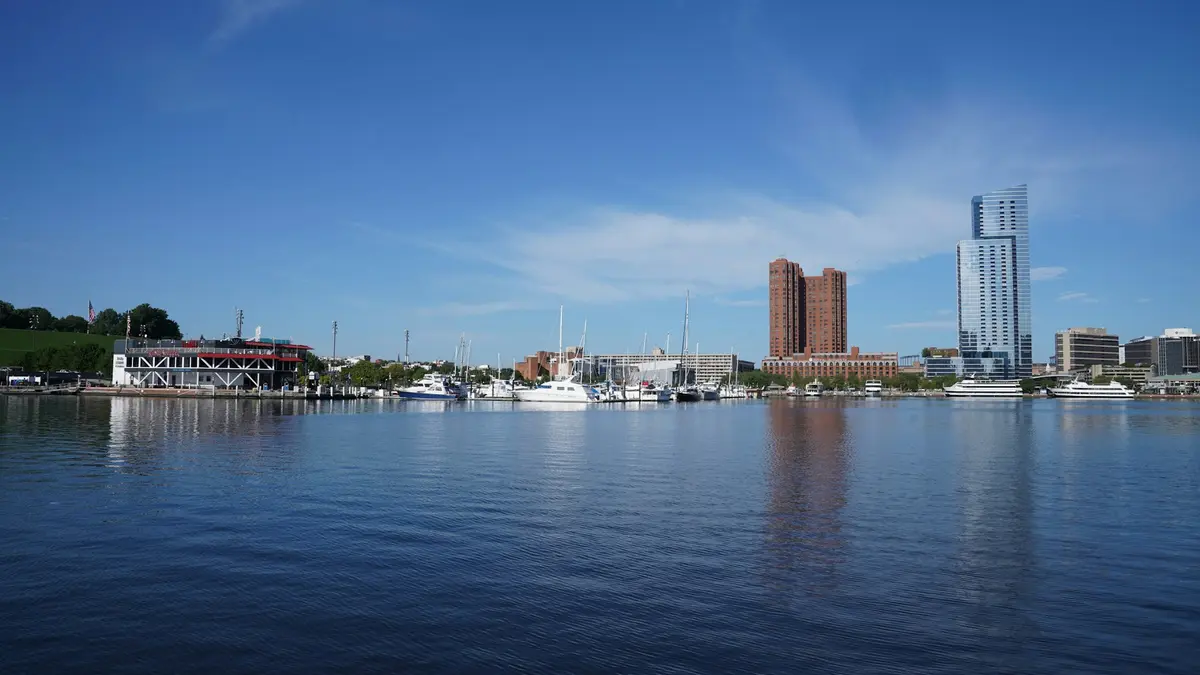
The Baltimore Columbia Towson metropolitan area manages approximately $2.1 trillion in collective assets. Three quarters of the professionals responsible for those assets work...
Use these pages to navigate between parent markets, sector pages, and supporting articles.
These are the questions most closely tied to how executive search really works in Baltimore.
Baltimore's senior talent market is shaped by institutional concentration and deep sector specialisation. The professionals qualified to lead a cell therapy CDMO, run a health system's value-based care programme, or direct cybersecurity for automated port operations are overwhelmingly employed and performing well. They do not respond to job advertisements. Reaching them requires direct headhunting capability, sector-specific credibility, and a process calibrated to the city's tightly networked professional communities. Companies use executive recruiters in Baltimore because the alternative, relying on inbound applications and visible candidates, consistently fails to produce senior leaders of sufficient calibre.
D.C.'s executive market is dominated by federal government, policy, and government-adjacent consulting. Philadelphia's is broader and more diversified across financial services, pharma headquarters, and higher education. Baltimore sits between them geographically but operates in a distinct economic register: institutional healthcare at enormous scale, advanced therapeutics manufacturing rather than pharmaceutical R&D headquarters, and a port logistics sector undergoing automation during a physical rebuild. The leadership profiles are different. The compensation benchmarks are different. The candidate communities overlap less than outsiders assume.
KiTalent maintains continuous market intelligence on Baltimore's key sectors before any mandate begins. This parallel mapping means that when a client engages us for a Baltimore search, we already have a current view of who holds the relevant roles at Hopkins, UMMC, the biotech cluster, the port operators, and the financial services headquarters. We deliver interview-ready candidates within 7 to 10 days through direct outreach to passive executives, supported by compensation data and market analysis specific to the role and sector. Our interview-fee model means the client's primary investment occurs only after they have reviewed real candidates and real intelligence.
Qualified shortlists are typically delivered within 7 to 10 days of mandate confirmation. This speed comes from pre-existing market intelligence, not from reduced assessment rigour. Every candidate undergoes technical competency evaluation and a personal career-storytelling meeting before being presented. For senior roles, optional psychometric assessment is available. This three-stage process is why our placements achieve a 96% one-year retention rate.
It shapes every search, but it is not an obstacle when addressed correctly. The 38% out-migration rate among Johns Hopkins graduates reflects early-career movement, not senior-leader attrition. Executives who remain in Baltimore tend to be deeply committed: they have institutional relationships, established networks, and family roots in the region. The challenge is not finding them. It is engaging them with a proposition specific enough to justify a move within a market where they are already well positioned. This requires the kind of granular talent mapping and role-specific intelligence that generic recruiters cannot provide.
Whether you are hiring a VP of Advanced Therapeutics Manufacturing for a scaling CDMO, a Chief Medical Officer to lead value-based care strategy, a Director of Port Cybersecurity for automated terminal operations, or a CFO for a biotech firm entering commercial-stage production, this is where the conversation begins.
What we bring to Baltimore executive mandates:
Executive search and direct headhunting · Talent mapping and market intelligence · Compensation benchmarking and mandate calibration · Connection to KiTalent's Americas hub in New York and international executive search network.
Whether you are running a live mandate or want to pressure-test a brief before going to market, this is the right place to start the conversation.
Author of record: Nicholas Finato, Business Development Manager. Based on local market intelligence and executive-search data.
Share your CV and a sentence on the mandate types you'd consider. We respond within five working days.