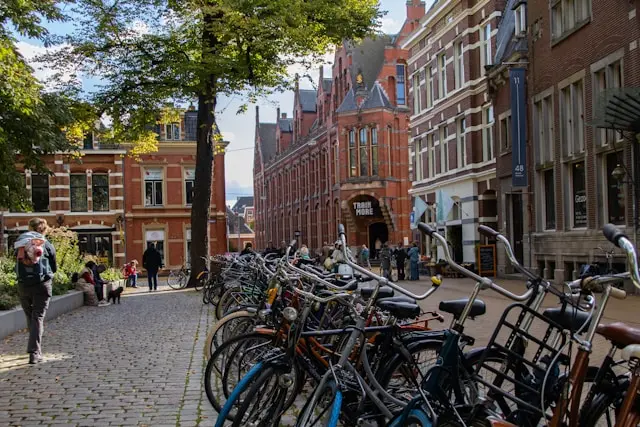
Groningen, Netherlands Executive Recruitment

Executive Search in Groningen

KiTalent brings sector-specific intelligence and direct headhunting capability to senior leadership searches across Groningen.

7-10

days to qualified shortlists in many searches

80%

of relevant passive talent reached through direct headhunting

42%

faster time-to-hire than traditional search benchmarks

96%

one-year retention from KiTalent's broader methodology

Learn more about our track record on our about, services, and methodology pages.

Executive Recruiters in Groningen, the Netherlands

Groningen is the northern Netherlands' capital of hydrogen innovation, healthy ageing research, and high-tech agrifood. With an €18.4 billion GDP now fully decoupled from natural gas extraction, the city runs on a new economic engine: green energy systems built on legacy pipeline infrastructure, a €1.8 billion life sciences research economy anchored by UMCG, and a growing cluster of 340 tech startups fed by two major universities. KiTalent delivers executive search for the leadership roles that keep this transition economy moving forward.

Discuss a Groningen BriefContact How We WorkMethodology

7–10 days to qualified shortlist 80% of passive executive talent reached 42% reduction in time-to-hire 96% one-year retention rate

Based on global engagement data. Details on our track record, services, and methodology.

Beyond candidate lists: what Groningen mandates actually require

A shortlist of names is the least valuable part of an executive search in Groningen. The real challenge is reaching the people on that list and giving a client the intelligence to close them. Consider the dynamics. The qualified candidate pool for most senior roles here is small and well-mapped. The hidden 80% of passive talent that conventional methods never reach is not a theoretical concept in Groningen. It is the practical reality. When a hydrogen systems engineering director is needed, there may be fifteen people in the northern Netherlands and northern Germany with the right profile. All of them are employed. None of them are on LinkedIn with an "open to work" banner. Reaching them requires individually crafted outreach from a consultant who understands their technical world and can articulate a proposition worth their attention. Compensation calibration is equally critical. Average salaries in Groningen's tech and energy sectors rose 6.2% in 2025, nearly double the national inflation rate of 2.8%. This creates compression issues between the private sector and public institutions like UMCG, where pay scales are less flexible. A client who enters the market with a compensation package benchmarked to last year's data, or to national averages, will lose candidates at the offer stage. Our market benchmarking service provides real-time compensation intelligence specific to Groningen's sector clusters, so that every offer is calibrated to what the market actually requires. The cost of a failed executive hire in a city this small is amplified. A poorly managed search process, a withdrawn offer, or a placement that collapses within six months does not just cost the 50-200% of annual compensation that the financial models calculate. It costs reputation. Groningen's professional community is interconnected. Senior leaders in the hydrogen cluster know each other. UMCG's research directors attend the same conferences. A search firm that damages a client's employer brand in this environment creates problems that persist long after the mandate ends. This is why KiTalent operates on a pay-per-interview model. The primary financial commitment occurs only after we deliver a qualified shortlist and comprehensive market intelligence. Clients evaluate real candidates and real data before making their main investment. In a market where precision matters more than volume, this alignment of incentives is not a pricing innovation. It is risk management. See our full service rangeServices How we use compensation dataMarket Benchmarking

Why companies partner with KiTalent for executive search in Groningen

Companies rarely need only reach in Groningen. They need interpretation, calibration, and a search architecture that reflects the real structure of the market.

We operate across Netherlands

Our team coordinates Groningen mandates from our European headquarters in Turin, with direct access to the talent intelligence, compensation dynamics, and sector developments that drive search outcomes.

We reach the candidates that matter

The strongest executives in Groningen are passive. Our direct headhunting approach engages the hidden 80% of passive talent through discreet outreach rooted in real market knowledge.

We do not start from scratch

Our parallel mapping methodology means we already hold live intelligence on restructuring, transition windows, compensation patterns, and candidate attraction opportunities when a brief arrives.

Our model de-risks the investment

In Groningen, the cost of a wrong executive hire extends far beyond the recruitment fee. Our interview-fee model lets clients see real market output and qualified candidates before the bulk of the investment is committed.

What this means for search design

In a city where graduate retention sits at 35% and the remaining senior talent pool is concentrated in a handful of institutions, search design must begin with intelligence, not advertising. Every Groningen mandate starts with a clear map of where the relevant executives sit, what their current compensation looks like, and what would need to change for them to consider a move.

1. Parallel mapping before the brief is live

KiTalent continuously tracks career movements, compensation shifts, and organisational changes across Groningen's core sectors. Before a client defines a specific need, we have already identified who leads hydrogen infrastructure projects at Gasunie New Energy, who runs clinical innovation at UMCG, and which startup CTOs are approaching a natural transition point. This parallel mapping methodology is why we deliver interview-ready shortlists in 7 to 10 days rather than the 8 to 12 weeks that traditional search firms require.

2. Direct headhunting into the hidden 80%

In a city with 3.8% unemployment and 11,200 open vacancies, the executives who would make the best hires are not looking. They are well-compensated, well-positioned, and fully engaged. Direct headhunting is the only method that consistently reaches this population. Each approach is individually crafted, referencing the candidate's specific background and articulating a proposition tailored to their professional trajectory. This is particularly important in Groningen, where the professional community is small enough that a generic InMail from an unfamiliar recruiter is more likely to damage the client's reputation than to generate a response.

3. Market intelligence as a search output

Every Groningen engagement produces more than a shortlist. Clients receive a complete picture of the talent market for their role: who is available, who is theoretically movable, what compensation is required to be competitive, and how the role compares to similar positions at competing organisations. This intelligence has standalone strategic value. It informs not just the current hire but future workforce planning, succession strategy, and competitive positioning in a market where the same finite group of senior professionals is being pursued by multiple employers.

Essential reading for Groningen hiring decisions

These are the questions most closely tied to how executive search really works in Groningen.

Why do companies use executive recruiters in Groningen?

Because the senior talent pool in Groningen is small, highly concentrated in a few major institutions, and overwhelmingly passive. With unemployment at 3.8% and over 11,200 vacancies, job postings and inbound applications produce weak results for leadership roles. The executives who could fill positions in hydrogen, health innovation, and digital technology are employed and not actively looking. Reaching them requires direct, discreet outreach from a search firm with pre-existing market intelligence and sector credibility. Without that capability, companies find themselves recycling the same visible candidates that every other employer has already approached.

What makes Groningen different from Amsterdam or Rotterdam for executive hiring?

Scale and concentration. Amsterdam and Rotterdam offer large, diversified talent pools where a well-positioned job posting can generate a meaningful response. Groningen's senior leadership market is narrow and interconnected. A hydrogen infrastructure director search here might have fifteen qualified candidates in the region, most of whom know each other. This means the search process itself must be more precise, more discreet, and better informed. Compensation dynamics also differ: Groningen's 6.2% wage growth in tech and energy outpaces national averages, but housing costs remain lower, creating a total-package calculation that requires local calibration.

How does KiTalent approach executive search in Groningen?

Through continuous parallel mapping of Groningen's core sectors, direct headhunting into the passive talent population, and real-time compensation benchmarking. Every search begins with intelligence that already exists, not with a cold research phase. For Groningen's cross-border roles, particularly in the hydrogen economy where German industrial partnerships are central, KiTalent's multi-hub structure and multi-language capability allow the search to extend naturally into Lower Saxony, Hamburg, and beyond. The result is a shortlist that reflects the full relevant market, not just the Dutch segment of it.

How quickly can KiTalent present candidates in Groningen?

Interview-ready candidates are typically delivered within 7 to 10 days of mandate confirmation. This speed comes from parallel mapping: KiTalent tracks career movements, compensation evolution, and organisational changes across Groningen's key sectors on an ongoing basis. When a client defines a need, the firm activates pre-existing intelligence and warm relationships rather than starting from zero. In a transition economy where government funding timelines and regulatory windows create real urgency, this speed is a material competitive advantage.

How does the cross-border dynamic with Germany affect executive search in Groningen?

Forty percent of Groningen's hydrogen economy depends on German industrial demand. Many senior roles require German-language proficiency and familiarity with both Dutch and German regulatory frameworks. The relevant candidate pool for energy transition, industrial manufacturing, and logistics leadership spans the Ems-Dollart Region and extends into major German cities. A search firm operating only within the Netherlands misses a significant portion of qualified candidates. KiTalent's international search capability and European coordination from Turin ensure that Groningen mandates are covered across both markets from day one.

Start a conversation about your Groningen search

Whether you are hiring a Chief Transition Officer for a hydrogen joint venture, a Director of Clinical Innovation for a health technology company, a CTO for a scaling clean-tech startup, or a regional managing partner for a professional services firm, this is where to begin.

What we bring to Groningen executive mandates:

Executive search and direct headhunting · Talent mapping and market intelligence · Compensation benchmarking and mandate calibration · Connection to KiTalent's European headquarters in Turin and international executive search network.

How does the cross-border dynamic with Germany affect executive search in Groningen?

Whether you are running a live mandate or want to pressure-test a brief before going to market, this is the right place to start the conversation.