
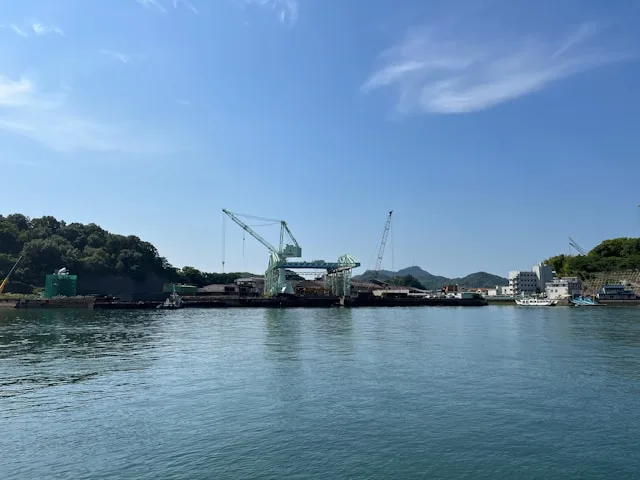
Batam Shipbuilding Hiring: Define the Certified Capability First
A source-scoped hiring brief for Batam shipbuilding and offshore fabrication: distinguish cluster scale from evidence of a specific certified capability gap.
Batam, Indonesia Executive Search
KiTalent brings sector-specific intelligence and direct headhunting capability to senior leadership searches across Batam.
Track record on suitable mandates: 7–10 working days to validated shortlist · 96% one-year retention · NPS 72. How we measure performance.
Searches in Batam are managed from KiTalent's Almaty hub, with support from our other hubs when the candidate pool crosses markets. From a distance, Batam looks straightforward. Manufacturing accounts for roughly 44% of employment. Thirty-one industrial estates span over 1,600 hectares. The Free Trade Zone regime simplifies customs. Investment realisations have posted double-digit growth through 2025 and into early 2026. With that momentum, the assumption is that senior talent should be easy to find.
It is not. The same conditions that make Batam attractive to investors make it punishing for executive hiring. The leadership population is small, tightly interconnected, and increasingly competed for by employers whose expansion timelines are accelerating simultaneously.
Batam's workforce is large at the technician and operator level. At the plant manager, operations director, and project director level, the pool thins dramatically. The island's industrial corridors, from Batamindo to Muka Kuning to the Tanjung Uncang shipyard belt, draw from essentially the same population of experienced leaders. When PT Sat Nusapersada, Batamec Shipyard, and the Panbil Group are all hiring senior operations or project leadership at the same time, the competitive dynamics are intense. Job postings do not reach the people who matter. The strongest candidates are already employed, often on retention packages designed to prevent exactly the kind of move a competitor needs them to make. Reaching the passive majority of senior talent requires a different methodology entirely.
Batam's proximity to Singapore is its greatest commercial asset and its most persistent hiring constraint. Senior professionals with export-compliance expertise, supply-chain leadership, or MRO certifications can command materially higher compensation across the Strait. The result is a steady pull of experienced managers toward Singapore and Johor, particularly in electronics and logistics. Companies hiring in Batam must compete not only with other island employers but with the gravitational pull of a neighbouring economy that pays multiples of local rates. Compensation calibration is not optional here. It is the difference between a search that closes and one that collapses at the offer stage.
The Tembesi Innovation District (Sembcorp and Panbil Group joint venture), Tanjung Sauh KEK, Batu Ampar port expansion, and Hang Nadim cargo terminal upgrades are all moving into operational phases. Each project requires experienced leadership: directors who understand KEK incentive frameworks, energy infrastructure planning, large-scale construction, and industrial-park management. These are not roles that can be filled from Batam's existing talent base alone. They require international executive search capability and access to professionals across Indonesia, Singapore, and the wider ASEAN region. These three dynamics, the shallow senior pool, the Singapore talent drain, and compressed expansion timelines, are why standard recruitment consistently underperforms in Batam. They are also why a Go-To Partner approach built on continuous market intelligence and direct headhunting produces materially better outcomes.
Batam is not one talent pool. It is several overlapping but distinct professional communities, each with its own compensation norms, certification requirements, and competitive dynamics.
Production directors, quality leaders, and supply-chain heads for contract manufacturing serving global OEMs. Electronics manufacturing executive search
Project directors, naval architects, and marine engineers for yards serving domestic naval and regional offshore programmes. Maritime and shipbuilding executive search
Terminal managers, customs-compliance heads, and freight-forwarding directors for Batam's expanding port and air-cargo infrastructure. Industrial manufacturing executive search
MRO directors, avionics leads, and certification-compliance managers for Batam's growing aircraft maintenance cluster. Aerospace and defence executive search
Plant directors, sustainability officers, and ESG leads for solar value-chain and low-carbon industrial park projects. Energy and renewables executive search
Automation engineers and digitalisation leads driving Industry 4.0 adoption across Batam's manufacturing base. Industrial automation executive search
Batam's executive search market is strongest where its economic specialisation is deepest.
Batam's largest export cluster is electronics manufacturing services. PT Sat Nusapersada, Indonesia's largest listed EMS operator, anchors a network of contract manufacturers supplying PCB/SMT assemblies, plastic injection, and metal stamping to Singapore-based OEMs and global supply chains. Industry 4.0 adoption is accelerating across these facilities: SMT automation, predictive maintenance,…
The Batu Aji and Tanjung Uncang corridor hosts shipyards including PT Batamec Shipyard, serving domestic naval procurement and regional offshore energy support. This cluster needs naval architects, marine engineers, and project directors experienced with classification society requirements. The talent is specialised and scarce.
Batu Ampar Container Terminal handled 583,267 TEUs in the first nine months of 2025, contributing roughly 65% of Batam's port volume. The Phase 2 expansion went live in 2025, and Hang Nadim Airport's cargo terminal is being repositioned as an ASEAN air-logistics hub. These infrastructure upgrades require port operations managers, customs and bonded-warehouse specialists, and digital logistics…
BP Batam and Indonesia's central government have designated Nongsa and the Batam Aero Technic zone for MRO development. Aircraft mechanics, avionics technicians, and MRO engineers with EASA or FAA-equivalent certifications are in short supply across Southeast Asia. The competition for these professionals extends well beyond Batam to MRO hubs in Singapore, Malaysia, and the Philippines.
The proposed Rempang Eco-City project, backed by Xinyi Group, targets multi-billion-dollar investment in glass and solar module manufacturing. If fully realised, this would create demand for heavy-industrial plant directors, sustainability leaders, and ESG compliance heads. The project remains politically sensitive and subject to environmental review, but forward-looking companies are already…
Energy, Natural Resources & Infrastructure · Industrial, Manufacturing, and Robotics
Nearly every senior role in Batam involves cross-border reporting lines, supply-chain relationships, or regulatory interfaces with Singapore, Jakarta, or both. Operations directors report to regional heads in Singapore. Procurement leaders source from Malaysian and Chinese suppliers.
Companies rarely need only reach in Batam. They need interpretation, calibration, and a search architecture that reflects the real structure of the market.
Our team runs Batam mandates through KiTalent's four regional hubs, combining local market intelligence with cross-border execution across Europe, the Americas, the Middle East, and Asia Pacific.
The strongest executives in Batam are passive. Our direct headhunting approach engages the passive majority of senior talent through discreet outreach rooted in real market knowledge.
Our parallel mapping methodology means we already hold live intelligence on restructuring, transition windows, compensation patterns, and candidate attraction opportunities when a brief arrives.
In Batam, the cost of a wrong executive hire extends far beyond the recruitment fee. Our Proof-First Search model lets clients see real market output and qualified candidates before the bulk of the investment is committed.
Related city stories from the same regional talent cluster.
West Java's provincial capital is where Indonesia's creative economy, textile manufacturing base, and fast-scaling tech startup cluster converge. Bandung's talent market is shaped…
Denpasar is Bali's administrative capital, its digital back-office engine, and the training ground for Eastern Indonesia's hospitality and healthcare workforce. With 5.2% GDP…
Jakarta is Indonesia's financial command centre, its largest digital economy hub, and the headquarters city for the state-owned enterprises that anchor Southeast Asia's biggest…
Makassar is eastern Indonesia's economic capital: a port city commanding trade flows across Sulawesi, Kalimantan, Papua, and the Maluku Islands, with a nominal PDRB of Rp 226.90…
These resources provide deeper market intelligence and explain how KiTalent turns insight into a faster, more transparent search process.
A source-scoped hiring brief for Batam shipbuilding and offshore fabrication: distinguish cluster scale from evidence of a specific certified capability gap.
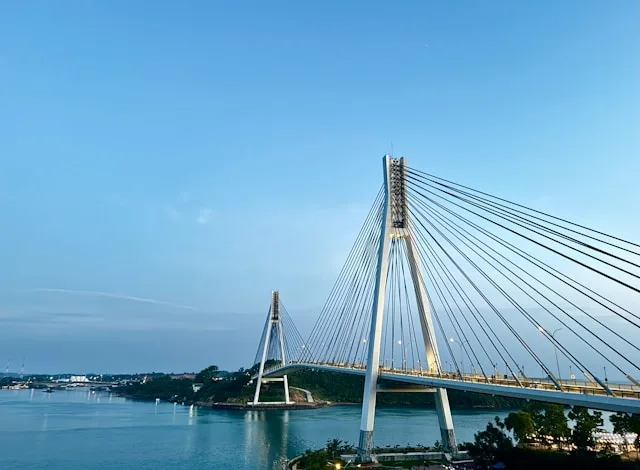
Batam's container throughput grew 8.3% in 2024, nearly double the Indonesian national port average. The Batu Ampar Port expansion is adding 400 metres of quay wall. Electronics...

Batam's electronics and electrical manufacturing sector secured IDR 6.8 trillion in foreign direct investment during the first nine months of 2025. That figure, a 12% year on...
Use these pages to navigate between parent markets, sector pages, and supporting articles.
These are the questions most closely tied to how executive search really works in Batam.
Batam's senior talent market is far smaller than its industrial output would suggest. Manufacturing employs roughly 44% of the workforce, but at the plant director and operations leadership level, the pool is shallow and fiercely contested. The strongest candidates are employed, retained, and not visible on any job board. Companies use executive recruiters to access this passive population through discreet, direct outreach. The FTZ's regulatory complexity adds a further filter: leaders must understand bonded-zone customs, export-origin protocols, and TKDN thresholds. A generalist approach consistently fails to surface candidates with this combination of operational and regulatory expertise.
Jakarta and Surabaya are large, diversified metropolitan economies with deep professional talent pools across multiple sectors. Batam is an export-oriented industrial island where the senior leadership community is compact and interconnected. Everyone knows everyone. Confidentiality is harder to maintain, employer reputation travels faster, and compensation must be calibrated against the pull of Singapore rather than against other Indonesian cities. These dynamics require a search approach built on discretion, market intelligence, and cross-border reach that most Jakarta-centric firms cannot deliver.
KiTalent begins with continuous talent mapping across Batam's key industrial clusters: electronics, shipbuilding, logistics, and aerospace MRO. This parallel intelligence means we have already identified and built preliminary relationships with senior professionals before a client defines a mandate. When a brief goes live, we activate direct headhunting into the passive candidate population, supported by compensation benchmarking calibrated to Batam's specific dynamics, including the Singapore wage differential. Every search produces both a qualified shortlist and a comprehensive market intelligence report.
Our standard is interview-ready candidates within 7 to 10 days of mandate confirmation. This speed comes from parallel mapping, not from shortcuts in assessment. Because we continuously track leadership movements across Batam's industrial estates, we do not start research from zero when a brief arrives. Candidates undergo technical competency evaluation and a personal career-storytelling meeting before they reach the client's shortlist. For time-critical needs, such as a ramp-up phase at a new facility, we can also deploy interim leadership to bridge the gap.
Batam's economy is export-intensive. Policy shifts in destination markets, whether US tariffs on electronics or changes to ASEAN trade frameworks, can alter hiring priorities rapidly. A company that was planning to hire a production expansion director may suddenly need a restructuring or trade-compliance leader instead. This volatility makes proactive talent intelligence essential. Companies with a live view of available leadership talent can pivot faster when market conditions shift. It also makes the interview-fee model particularly relevant: clients are not locked into a retainer for a role that may need to be redefined mid-search.
Whether you are hiring a plant director for an EMS facility in Batamindo, a project director for a KEK development at Tanjung Sauh, a marine engineering lead for a Tanjung Uncang shipyard, or a trade-compliance head to manage FTZ regulatory complexity, this is where the conversation starts.
What we bring to Batam executive mandates:
Executive search and direct headhunting · Talent mapping and market intelligence · Compensation benchmarking and mandate calibration · Connection to KiTalent's Asia Pacific hub in Almaty and international executive search network.
Whether you are running a live mandate or want to pressure-test a brief before going to market, this is the right place to start the conversation.
Produced by the KiTalent Research Team. Based on local market intelligence and executive-search data.
Share your CV and a sentence on the mandate types you'd consider. We respond within five working days.