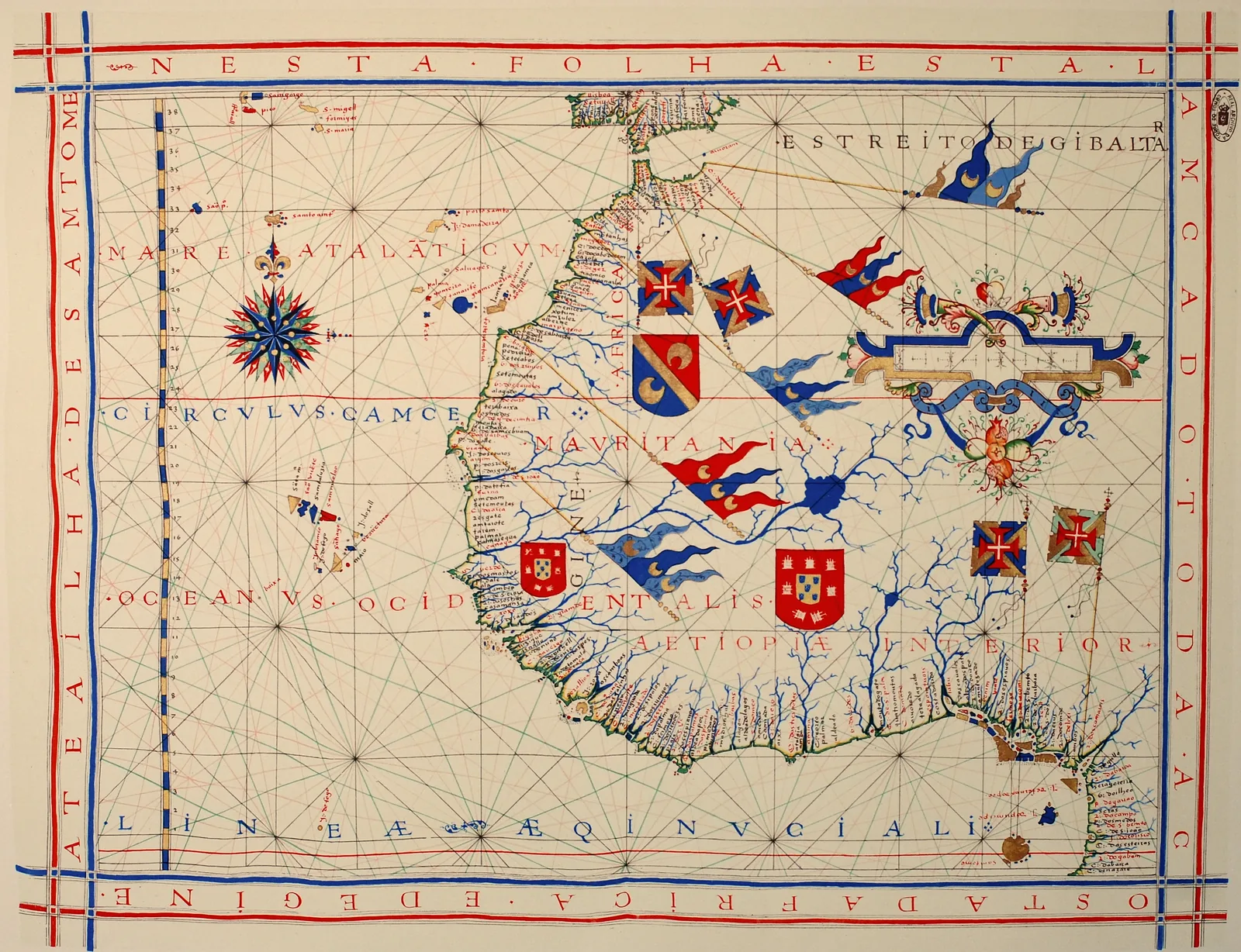
What a market map is, and why it is worth paying for
The confusion is not a buyer's error; it is a seller's product. So this article does three things: takes the map seriously as the valuable instrument it is, draws the line it cannot cross, and describes what actually happens in the distance between a name on a map and a person on a shortlist, because that distance is where search lives.
Talent mapping is the systematic survey of a defined talent market: who holds the relevant roles, in which organisations, with what trajectories, at what approximate compensation, with which movement signals. Done properly it is a demanding piece of research, and it answers questions that matter before any hire is attempted. Is this role fillable in this geography at this budget, or are we designing a job for a person who does not exist? Should we build internally instead of buying? What does the succession bench for this function look like across our industry? What has compensation actually done in this market, as against what the surveys say?
We sell mapping as a product in its own right, and some of the most consequential work we do ends with a map and a recommendation not to search. A map that prevents a doomed mandate is worth more than a search that runs one. Nothing in what follows diminishes the instrument. The argument is only about what the instrument is.
What a map cannot contain
Here is the line, and it is not operational but ontological: every entry on a market map is a representation, and the person is not in the representation.
A map entry is a profile, a title history, a set of inferences from public signals. What it cannot contain: whether this person will take the call; whether the achievements the profile implies were actually theirs, in the scope the titles suggest; whether they would move, for what, under which constraints that appear nowhere in any database, the spouse's career, the vesting schedule, the quiet feud with the chairman; and everything in the second register, how this person constitutes themselves in work, what they are like when the plan fails, which no volume of data about them will ever settle, because it is not the kind of thing data about a person contains. The research this article applies puts it directly: a human being is not understood by receiving information about them. A map is exactly that: information about people, arranged well. Its entries are hypotheses wearing names.
This is why the honest formula is that the map is a hypothesis about the market, and the shortlist is what survives contact with it.
The distance between the two
What happens between a 120-name map and a five-name shortlist is not filtering. Filtering implies the shortlist was already in the map, waiting to be selected, and it was not: the shortlist does not exist yet, at map stage, in any meaningful sense. What happens is work of a different kind, in four movements.
Engagement. Each relevant name must be approached, properly: the right channel, the right framing, a story about the mandate that a serious person will give an hour to. A meaningful fraction will decline, and the pattern of who declines, and why, is itself market intelligence the map did not hold.
Qualification. The conversations test the map's hypotheses. Titles turn out to have been inflated or understated; the achievement the profile implied belongs partly to someone else; the person the map scored highest is, in the event, a category error, and a name the map barely noticed becomes central. Every mapping-led search we have run has produced at least one of each.
Assessment. The remaining candidates are evidenced against the brief: capability interrogated through specific past events and verified outside the room, and the second register, identity, approached through the differently structured encounter it requires. None of this existed at map stage; all of it is the substance of the eventual recommendation.
Validation. What reaches the client is not "the best of the map" but a set of persons about whom specific claims can now be made and defended: this one has done the core of the job before, verifiably, at this scope; this one would accept in this range, for these reasons; here is what each will cost you, in every sense. That is what a validated shortlist means, and the validation is the product.
In our practice the numbers run roughly so: a map of 100 to 150 relevant names yields 25 to 40 real conversations, eight to twelve assessments, and four to six validated candidates. The attrition is not waste. The attrition is the search.
The philosophical point under the practical one
The book chapter this article leans on calls the underlying movement singularisation. A map holds people as instances of categories: VP Engineering, scale-up, Berlin, likely mobile. Categories are how a market becomes surveyable at all, and the map is right to use them. But nobody hires a category. Each conversation in a search moves one entry from instance to person: this particular history, these constraints, this way of describing the failure that taught them most. By the shortlist, the categories that made the map possible have become scaffolding, and the scaffolding has come down. A firm that hands you a filtered map has, in the precise sense, skipped the search: it has given you better-arranged instances and called them candidates.
Why the confusion is profitable, and getting more so
Maps scale; shortlists do not. A database licence and a research team can produce maps in volume, and generative tools now produce map-shaped documents at close to zero marginal cost. Shortlists require senior hours per candidate, and no tooling changes that, because the constraint is not information retrieval but encounter, judgment and verification. So the market has a standing incentive to dress the cheap product in the expensive product's clothes: the fifty-name "longlist" delivered in week one, the CV packet sold as a slate, the platform output labelled candidates. It is coverage, priced as judgment.
The AI development makes the distinction more important, not less, and this is Paper 02's point applied. As mapping cost falls toward zero, whatever value the map carried migrates entirely to the distance between map and shortlist: to the engagement no model can conduct on your behalf at this level, the verification no profile substitutes for, the judgment about a singular person that remains, structurally, a human act. Anyone whose offering collapses that distance is not showing you the future of search. They are showing you a very inexpensive map.
The two artefacts, side by side
| | Market map | Validated shortlist | |---|---|---| | Unit | Representations: profiles, inferred signals | Persons: engaged, assessed, verified | | Claim it supports | Who exists, and the market's shape | Who is worth your interview time, and why | | Candidate awareness | None required | Full: informed, interested, in process | | Verification status | Hypotheses | Claims evidenced and referee-tested | | Register reached | Capability, inferred | Capability verified; identity assessed | | Right use | Feasibility, org design, succession, compensation intelligence | Hiring decision | | Cost structure | Research hours; increasingly commoditised | Senior judgment hours; irreducible | | Failure mode when misused | Sold as candidates | None: it is the product the map imitates |
When to buy which
The clean rule: buy a map when the decision is about the market, and a search when the decision is about a hire. Mapping first is the right route when feasibility is genuinely uncertain, when a role is being designed rather than filled, when succession needs a bench view, or when the honest answer might be not to hire at all; it is a route we offer exactly because starting with the cheaper instrument is sometimes the disciplined choice. What should raise your hand is any offer in which the map arrives already dressed as candidates: names without engagement, a slate without validation, coverage priced as judgment. Ask one question of any such document: which of these people know about this role, have said they are interested, and have had their claims tested? The answer sorts the market quickly.
Where the distinction runs out
Honesty about the boundary's own limits. The two artefacts are stages of one discipline, not rival products: a good search keeps its map alive throughout, revising it as the market answers back, and a good map already embodies judgment, in which signals were counted and which ignored. Shortlist quality is also bounded by map quality; nobody validates their way out of having surveyed the wrong market. And occasionally a mapping engagement surfaces a person so evidently right that the client, reasonably, wants to move at once; the discipline is not to refuse, but to be clear that the shortcut has skipped the validation and to run it before the offer, not after. The distinction is a boundary between claims, not a wall between activities: the sin is never doing mapping, it is selling mapping's claims at shortlist prices.
Questions buyers ask
Is a longlist a shortlist? No. A longlist is the engaged subset of the map: people who have taken a first call. It carries more knowledge than the map and much less than the shortlist, and it should be priced and read accordingly.
Can AI produce the shortlist? It can produce increasingly good maps, and map-shaped documents that resemble slates. It cannot conduct the engagement, verification and assessment that make a shortlist's claims true, which is the argument of our research on what AI can and cannot do in executive search.
How many names should a map contain? Enough to be a true survey of the defined market: for most senior mandates, 80 to 150 relevant names. A 400-name map usually signals an undefined market; a 30-name map, an unfinished survey.
How long does mapping take, against search? A rigorous map: two to three weeks. The distance from map to validated shortlist: several more, because conversations, verification and assessment do not compress the way research does.
Can we build the map in-house? Often, and for standing intelligence you probably should. What is hard to build in-house is the rest: the approach credibility, the assessment instruments, and the willingness to tell you the map's bad news.
This article applies the boundary argued in our research on what AI can and cannot do in executive search and the account of singularisation in Executive Search as Erfahrung. Mapping as a standalone product is described at talent mapping; what validation adds to it is defined at what is a validated shortlist. If you are holding a document and wondering which of the two artefacts it is, send it over. Reading it costs us nothing, and it may save you a search.
===============================================================================