

Stockholm Games: Define the Studio and Production Mandate
A source-scoped Stockholm games brief separating creative direction, production, technology, live operations and studio leadership.
Sweden Executive Search
Published · Last updated
Sweden's executive market sits at the intersection of advanced manufacturing, digital innovation and green industrial investment. Searches in Sweden are managed from KiTalent's Turin hub, with support from our other hubs when the candidate pool crosses markets.
Track record on suitable mandates: 7–10 working days to validated shortlist · 96% one-year retention · NPS 72. How we measure performance.
Sweden presents a paradox to employers accustomed to larger European talent markets. The economy is highly advanced, exports account for roughly half of GDP, and the country hosts a disproportionate number of global headquarters. Yet the senior professional population is small, geographically concentrated and bound by strong cultural codes around transparency, consensus and work-life balance. Misreading any one of these factors turns a search into a prolonged, expensive exercise.
Ericsson, Volvo Group, Spotify, H&M and Atlas Copco are among Europe's most recognised employers. Their presence creates the impression of a deep leadership market. In practice, the number of executives with relevant sector experience, international exposure and Swedish cultural fluency is limited. Stockholm holds a disproportionate share of headquarters and scale-ups. Gothenburg concentrates automotive and mobility engineering talent around Volvo Group, Volvo Cars and SKF. Outside these two metros, the senior candidate universe narrows sharply. Reaching the passive majority of senior talent is not optional in this market. It is the only way to build a credible shortlist.
Swedish compensation packages appear straightforward but carry layers of employer social contributions, occupational pension obligations and collective-agreement constraints. Total employer cost for a senior hire can exceed the gross salary by 30% or more once social charges and pension premiums are included. Employers who benchmark against headline figures from other Nordic markets or the UK risk either overpaying or, more commonly, tabling offers that fall short of what incumbents already receive. Accurate market benchmarking requires granular local data, not regional averages.
Northern Sweden's battery and mining projects, Skåne's research infrastructure around ESS and MAX IV, and Gothenburg's electrified mobility cluster are pulling executive demand away from Stockholm and into regions with thin local talent pools. Site directors, grid-integration engineers and sustainability officers are needed in locations where housing, schools and healthcare are still catching up with industrial ambition. This geographic mismatch makes national-scope search essential. KiTalent operates as a directly engaged search partnership through long-term relationships, combining continuous market intelligence with the reach of our European headquarters in Turin to serve clients across Sweden's dispersed clusters.

Sweden is not one talent pool but a collection of specialised clusters shaped by geography, industrial heritage and research infrastructure. Each demands a distinct search strategy.
Stockholm's position as Europe's second-largest tech hub after London creates a leadership market defined by speed and counter-bidding. CTOs, VP Engineering and Head of Product roles require candidates who can operate at scale-up velocity while satisfying the governance expectations of listed or…
Gothenburg's cluster around AB Volvo, Volvo Cars, SKF and their tier-one suppliers is Sweden's densest concentration of mobility-sector leadership. The shift to electric and autonomous vehicles has added software, battery and AI competences to traditional mechanical-engineering requirements.
Sweden's export manufacturers, from Atlas Copco and Sandvik to ABB's Swedish operations, invest heavily in automation and industrial digitalisation. Plant directors, heads of operational technology and senior supply-chain leaders who combine manufacturing rigour with digital fluency are scarce.
The Uppsala-Stockholm-Lund triangle supports a life-sciences ecosystem that spans early-stage biotech, medtech scale-ups and multinational R&D centres. AstraZeneca's Swedish research operations, combined with ESS and MAX IV in Lund, create demand for leaders who bridge scientific discovery and…
Northern Sweden's green-industrial corridor and the national push for new nuclear capacity generate demand for a leadership profile that barely existed a decade ago: executives who understand heavy industry, energy markets and sustainability regulation simultaneously. LKAB, SSAB and the evolving…
Stockholm's financial sector spans traditional banking (SEB, Handelsbanken, Swedbank) and a fintech ecosystem that produced Klarna, Trustly and iZettle. Senior hires in banking and wealth management must reconcile Swedish regulatory expectations with the pace of digital disruption.
Executive mobility across Sweden's cities is shaped by compensation expectations, relocation appetite, family considerations, and international exposure.
A search that maps where the right leaders actually operate, and understands the conditions under which they would consider a move, is fundamentally more effective than one that treats Sweden as a flat national market.
Sweden's executive search market is strongest where its economic specialisation is deepest.
Stockholm remains one of Europe's top technology clusters. Ericsson anchors the telecom equipment segment while Spotify, Klarna and a steady pipeline of scale-ups sustain demand for CTOs, heads of engineering and commercial directors. The Kista corridor alone generates more senior AI and technology vacancies per capita than most European cities.
Gothenburg is Sweden's mobility capital. AB Volvo, Volvo Cars and Scania drive a supply chain that stretches from powertrain engineering to autonomous-vehicle software. Electrification commitments across these OEMs have created acute demand for battery-systems engineers, software architects and plant directors with experience scaling EV production.
LKAB transports roughly 25 million tonnes of iron ore annually from Norrbotten to ports at Luleå and Narvik, making it a cornerstone of European steel supply. SSAB, Boliden and the green-steel ambition around hydrogen-reduced iron add layers of executive demand in process engineering, environmental compliance and logistics. The industrial manufacturing leadership required for these operations…
Uppsala, Stockholm and the Malmö-Lund corridor host Sweden's strongest biotech, pharmaceutical and medical-device clusters. AstraZeneca maintains significant Swedish R&D operations. The ESS and MAX IV research facilities in Lund are drawing materials-science and clinical-research talent from across Europe.
Sweden's low-carbon electricity mix of hydro, nuclear and wind makes it attractive for hyperscaler data-centre investment. Microsoft, Google and AWS have all expanded or announced Swedish capacity. Yet grid constraints managed by Svenska Kraftnät limit where new large-scale users can connect.
Companies rarely need only reach in Sweden. They need interpretation, calibration, and a search architecture that reflects the real structure of the market.
Our team runs Sweden mandates through KiTalent's four regional hubs, combining local market intelligence with cross-border execution across Europe, the Americas, the Middle East, and Asia Pacific.
The strongest executives in Sweden are passive. Our direct headhunting approach engages the passive majority of senior talent through discreet outreach rooted in real market knowledge.
Our parallel mapping methodology means we already hold live intelligence on restructuring, transition windows, compensation patterns, and candidate attraction opportunities when a brief arrives.
In Sweden, the cost of a wrong executive hire extends far beyond the recruitment fee. Our Proof-First Search model lets clients see real market output and qualified candidates before the bulk of the investment is committed.
A rotating view of the city-level market shifts shaping executive hiring across Sweden.
Stockholm generates roughly one-third of Sweden's GDP and concentrates the country's highest density of technology scaleups, fintech innovators, and life-science research…
Executive Recruiters in Gothenburg, Sweden
Uppsala is Northern Europe's most concentrated life-science commercialisation economy, anchored by GE Healthcare's Cytiva division, Thermo Fisher's Olink proteomics headquarters…
Helsingborg has moved beyond its identity as a shipping and manufacturing city. It is now Sweden's proving ground for precision fermentation, biologics manufacturing, maritime…
These resources provide deeper market intelligence and explain how KiTalent turns insight into a faster, more transparent search process.
A source-scoped Stockholm games brief separating creative direction, production, technology, live operations and studio leadership.

Uppsala's medical technology cluster sits within five kilometres of one of Europe's most active clinical validation hospitals. It houses roughly 50 companies, employs over...

Malmö's digital and creative technology sector employs roughly 21,000 professionals and contributes SEK 18.4 billion to regional GDP. The headline story through 2025 was...
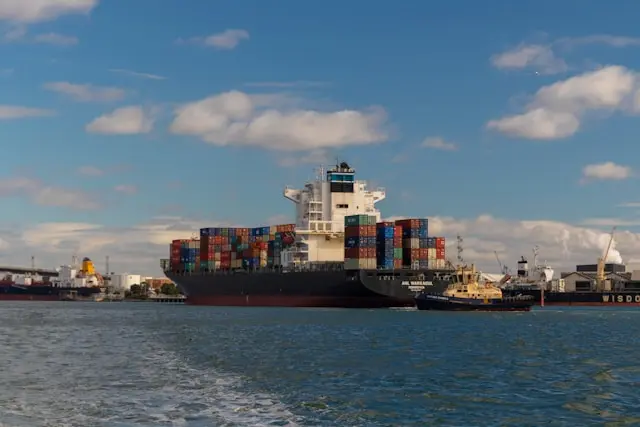
Gothenburg handled approximately 875,000 TEU in 2024. By 2026, container throughput is forecast to reach 920,000 to 950,000 TEU, driven by automotive exports from Volvo Cars...
Use these pages to move between city clusters, sector pages, and supporting articles.
These are the questions most closely tied to how executive search really works in Sweden.
Sweden's senior professional community is small, highly networked and overwhelmingly passive. Executives at firms like Ericsson, Volvo, Spotify and AstraZeneca rarely respond to job advertisements. Reaching them requires confidential, direct outreach by consultants who understand Swedish business culture, compensation norms and notice-period conventions. An executive search firm with sector expertise can access candidates that internal recruitment teams simply cannot reach, while protecting the client's reputation in a market where discretion is expected.
All three are small, open economies with well-educated workforces, but Sweden's executive market has distinct characteristics. Geographic dispersion is greater: critical talent sits not only in Stockholm but in Gothenburg, Lund-Malmö and increasingly in northern industrial towns. Sweden's collective-agreement framework and social-charge structure differ materially from Danish flexicurity or Dutch 30%-ruling models. The concentration of global headquarters in Stockholm also creates a counter-offer culture that is more intense than in Copenhagen or Amsterdam. Search strategies must account for these differences at every stage.
We combine sector-native consultants with continuous talent mapping across Sweden's key clusters. Our approach starts with parallel intelligence, so we understand candidate availability before a mandate is formally launched. Direct headhunting into passive networks, three-stage candidate assessment and Swedish-specific compensation benchmarking follow. Our European headquarters in Turin coordinates Swedish searches, ensuring access to cross-border candidates when local pools are insufficient.
Our standard commitment is a qualified shortlist within 7 to 10 days of mandate confirmation. In Sweden, this is possible because we maintain ongoing mapping of senior professionals across the country's core sectors. For highly specialised roles in emerging fields such as battery chemistry or grid engineering, the timeline may extend slightly, but the first candidate profiles are typically shared within the first fortnight.
Recent changes to residence and work-permit thresholds affect the supply of international talent at all levels. For executive roles, the practical impact is twofold: employers face longer processing times for non-EU candidates, and the pool of internationally mobile senior professionals willing to relocate to Sweden narrows. This makes domestic search more competitive and increases the premium on international executive search capability that can identify candidates already holding EU work rights or Swedish residency.
Whether you need a Chief Technology Officer for Stockholm's digital cluster, a Plant Director for an electrification programme in Gothenburg, or a Head of R&D for a life-sciences operation in Lund, the starting point is the same: a focused conversation about the role, the market and the calibre of leader required.
What we bring to Sweden executive mandates:
Executive search and direct headhunting · Talent mapping and market intelligence · Compensation benchmarking and mandate calibration · Connection to KiTalent's European headquarters in Turin and our international executive search network.
Whether you are running a live mandate or want to pressure-test a brief before going to market, this is the right place to start the conversation.
Produced by the KiTalent Research Team. Based on local market intelligence and executive-search data.
Share your CV and a sentence on the mandate types you'd consider. We respond within five working days.