Gothenburg Automotive Hiring in 2026: Why Acute Talent Scarcity Has Not Moved the Salary Needle
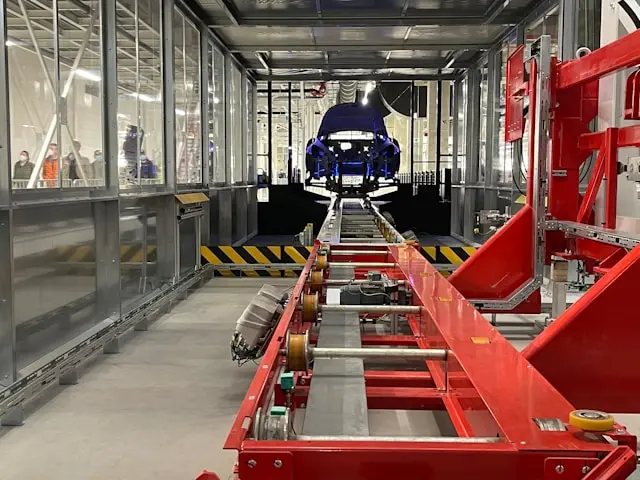
Gothenburg's automotive sector added R&D headcount at a 4.2% clip through 2024, even as Polestar pulled back and Northvolt entered Chapter 11. Volvo Cars is investing SEK 15 billion in local R&D. Volvo Group is building a new battery assembly plant that will require more than 400 hires. Zenseact plans to double its Gothenburg engineering workforce to 1,200 by end of this year. On paper, this is a market in full expansion.
Yet senior embedded systems architects take 7.5 months to hire. Autonomous driving roles sit open for nearly a year. A Tier-One safety supplier abandoned its search for a Head of Functional Safety entirely, outsourcing the function to a German consultancy because, in its own words, the candidate pool in Western Sweden did not exist. The supply of qualified engineering graduates falls short of demand by 1,300 people every year, and 85% of the specialists this market needs most are not looking for a new role.
Here is the puzzle that makes this market different from every other constrained automotive cluster in Europe. Despite all of this scarcity, nominal salary growth for senior software roles in Gothenburg's automotive sector ran at just 3.5% through 2024. Stockholm's tech sector paid 6.8% more year on year. German automotive hubs delivered 5.2%. What follows is an analysis of why Gothenburg's compensation has decoupled from its hiring reality, what that means for the organisations trying to fill critical roles here, and what must change for searches to succeed in a market where conventional assumptions about supply, demand, and price no longer hold.
The Paradox at the Centre of This Market
Standard economics offers a simple prediction. When demand exceeds supply, prices rise until the market clears. Gothenburg's automotive talent market has refused to follow that logic for three consecutive years.
The research data reveals a market where senior embedded software roles take more than twice as long to fill as mechanical engineering positions. Where autonomous driving engineers are 85% passive. Where battery electrochemists number fewer than 200 in all of Sweden. And where, despite all of this, the employers who dominate the market have held wage growth to 3.5%, roughly half the rate of their competitors in Stockholm and two thirds the rate of Munich.
This is not a paradox that resolves itself through conventional interpretation. It is the product of a specific market structure. Gothenburg's automotive sector is an oligopsony. A small number of very large employers, principally Volvo Cars, Volvo Group, CEVT, and Zenseact, account for the overwhelming majority of demand. When two or three employers set the effective ceiling, the market does not clear through price. It clears through time. Roles stay open longer. Searches drag on for months. Candidates who might move for a 30% premium stay put because that premium never materialises locally.
The consequence for hiring leaders is concrete. You cannot solve a search in this market by raising the offer. The salary bands are structurally compressed by the dominant employers' compensation frameworks. You solve it by reaching candidates who are not in this market at all, or by constructing a proposition that compensates for the salary gap with something these candidates value more. Both require a fundamentally different approach to executive search than posting a role and waiting.
The Employers Shaping Gothenburg's Automotive Talent Pool
Volvo Cars and Volvo Group: The Twin Anchors
Between them, Volvo Cars and Volvo Group employ roughly 31,500 people in the Gothenburg region. That figure represents more than 70% of the sector's direct employment. Both organisations are in the middle of generational technology transitions that are reshaping every job description in their operations.
Volvo Cars, owned by Zhejiang Geely Holding, maintains its global headquarters and Torslanda manufacturing plant in the city. The plant has annual capacity for approximately 300,000 units and is transitioning to the SPA3 platform for full electrification. The EX90 flagship entered ramp-up through 2024, and the company's Capital Markets Day in 2024 confirmed SEK 15 billion in R&D investment through 2026, targeting battery electric vehicle architecture and vehicle-to-everything connectivity.
Volvo Group anchors its global truck, bus, and construction equipment operations from Gothenburg, with around 18,000 regional employees. Its new battery assembly plant, scheduled for operational status in the second half of this year, will support the electric truck line and demands a wave of hires in battery system engineering and high-voltage safety.
These two organisations set the compensation framework for the region. When Volvo Cars pays a senior embedded software architect SEK 950,000 to SEK 1,300,000 in base salary, that becomes the reference point against which every other employer in the cluster is measured. Not because it is generous. Because it is Volvo.
The Second Tier: CEVT, Zenseact, and What Remains of Polestar
CEVT, Geely's European R&D arm, maintains approximately 1,800 engineers in Gothenburg. It functions as the architectural hub for Geely's compact and electric platforms. According to SvD Näringsliv reporting in June 2024, CEVT recruited at least 15 senior battery engineering managers from Volvo Cars' local operations during 2023 and 2024, offering packages 25 to 30% above Volvo's standard senior bands. This is one of the few documented instances of aggressive wage competition within the cluster, and Volvo Cars responded with targeted retention bonuses for its high-voltage battery teams.
Zenseact, Volvo Cars' wholly owned autonomous driving software subsidiary, employs around 650 engineers and plans to reach 1,200 by end of 2026. It is the most software-intensive employer in the cluster and the one most directly competing with Stockholm's tech sector and Berlin's mobility startups for the same candidates.
Polestar's story is instructive for what it reveals about the cluster's fragility. The company relocated its headquarters to the United States in 2022. Its Gothenburg headcount fell from approximately 1,200 to 850 between 2022 and 2024, a reduction of roughly 30%. Its stock price dropped 85% from its SPAC valuation. Yet aggregate automotive R&D employment in Gothenburg grew through this same period. The incumbents absorbed the displaced talent. The risk is not in the jobs lost. It is in the signal sent. A listed pure-play EV brand retreating from the cluster may constrain the venture capital and startup energy that feeds innovation in AI and technology-driven automotive development.
Where the Talent Gaps Are Deepest
The 2,800 open positions advertised across Gothenburg's automotive sector in Q3 2024 tell one story. The composition of those vacancies tells a more revealing one. Sixty-five percent required software, AI, or electrification expertise. That share was 45% in 2021. In four years, the sector's hiring need pivoted from metal and mechanisms to code and chemistry.
Embedded Software and Autonomous Systems
This is the most constrained talent category in the cluster. Autonomous driving and ADAS engineers are approximately 85% passive, with unemployment below 1.5% and average tenure of 4.2 years. Only 15% of qualified candidates submit applications to posted vacancies.
According to Dagens Industri and recruitment tracking data reported in March 2024, Zenseact maintained open requisitions for Senior Autonomous Driving System Architects for 11 months during 2023 and 2024. LinkedIn hiring data showed an average time to fill of over 340 days for principal autonomous driving engineer titles in the Gothenburg region. The roles were eventually filled through international recruitment from competitors in Stuttgart and Silicon Valley, not from the local market.
The skills required compound the difficulty. Proficiency in C++, Python, ROS2, automotive SPICE, and machine learning for perception systems is not a wish list. It is a baseline. Candidates who hold all of these competencies and have experience at the system architecture level number in the low hundreds across all of Europe. Reaching them requires direct headhunting methodologies designed for passive, employed professionals who will not respond to a job posting.
Battery Engineering and Electrochemistry
The battery talent challenge has a different shape. Sweden holds fewer than 200 battery electrochemistry specialists, nearly all of them PhD-level researchers with near-zero active job seeking behaviour. They are identified and approached through academic conference networks and patent tracking, not through job boards or LinkedIn messages.
Northvolt's Chapter 11 restructuring in October 2024 compounded this constraint. The company had been positioned as the anchor of a "local for local" battery cell supply chain serving Gothenburg manufacturers. Its insolvency did not release a flood of battery talent back into the market. It eliminated the institutional pathway that would have trained the next generation of cell engineers in Sweden. Gothenburg's OEMs now depend on CATL and LG Energy Solution, and the battery engineering talent pipeline that would support domestic capability remains broken.
Volvo Group's new battery assembly plant, requiring 400 or more hires, enters this environment. The competition for battery system engineers, thermal runaway management specialists, and BMS software developers will intensify through 2026, not ease.
Functional Safety: A Candidate Pool That Does Not Exist
Functional safety management under ISO 26262, particularly at ASIL-D levels, represents perhaps the starkest example of absolute scarcity. According to Plåt & Vent industry magazine, reporting in August 2024, a leading European Tier-One safety systems supplier with Gothenburg operations abandoned its internal search for a Head of Functional Safety after eight months. The role was outsourced to a German consultancy. The recruitment director cited a "non-existent candidate pool in Western Sweden."
Data from Sveriges Ingenjörer confirmed the pattern. Fewer than 50 qualified active candidates existed regionally for this specialism. TÜV Rheinland or equivalent certification creates a credential barrier that cannot be fast-tracked. Every qualified professional is known to the market. Every one of them is employed.
The cost of a failed executive search in this category is not measured in recruitment fees. It is measured in programme delays. A vehicle platform without a functional safety lead does not ship.
Why Compensation Has Not Responded
The salary data presents a picture that confounds anyone approaching this market with assumptions formed in other sectors. A VP of Engineering or Head of ADAS in Gothenburg earns SEK 2.2 million to SEK 3.2 million in base salary, with total compensation reaching SEK 3.0 million to SEK 5.1 million including long-term incentives. That represents a 15 to 20% discount to equivalent roles in Munich or Stuttgart, according to Korn Ferry's Global Technology and Automotive Executive Compensation Analysis for 2024.
Senior software specialists earn SEK 950,000 to SEK 1,300,000 in base salary. Stockholm's tech sector pays 12 to 18% more for senior software engineers who may have less specialised domain knowledge. The compensation gap is not closing. Through 2024, Gothenburg automotive software salaries grew 3.5% nominally. Stockholm's tech sector grew 6.8%.
This gap is widening fastest at exactly the seniority level where the most critical roles sit.
The explanation lies in market structure. When three related employers, Volvo Cars, Volvo Group, and their subsidiaries, employ more than 70% of the sector's workforce, they function as price setters rather than price takers. Each maintains structured compensation frameworks negotiated through collective agreements with Unionen and Sveriges Ingenjörer. These frameworks move slowly. They are designed for stability, not for responding to acute shortages in niche specialisms.
The result is a market where the hidden cost of a slow hire is enormous, but the compensation tool that would accelerate hiring is locked in institutional amber. Employers compensate with non-monetary retention: stability, brand prestige, work-life balance, and the quality of the engineering problems on offer. These work for retention. They do not work for attraction, particularly not when the candidate you need is sitting in Munich earning 35 to 45% more.
For executive roles in senior automotive leadership, the sign-on bonuses required to overcome switching inertia now average 30 to 40% of first-year salary. This is the market's workaround for structural wage compression. It is expensive, ad hoc, and unsustainable at scale.
The Three Markets Pulling Talent Away
Gothenburg is not losing talent to a diffuse global market. It is losing talent to three specific competitors, each offering a distinct proposition that exploits a specific weakness in Gothenburg's offer.
Stockholm draws 400 to 500 engineers annually from Gothenburg, according to LinkedIn talent migration data for 2024. The draw is straightforward. Higher pay for pure software roles, stronger hybrid and remote flexibility, and urban amenities that Gothenburg cannot match. An engineer who can write perception algorithms for autonomous vehicles can also write machine learning systems for a fintech firm. Stockholm's tech sector pays 12 to 18% more and, increasingly, does not require relocation at all.
Munich and Stuttgart present the prestige play. BMW, Mercedes, and Porsche offer deeper ecosystem density, clearer technical career ladders with dedicated specialist tracks, and total compensation 35 to 45% higher at VP level. Germany's Chancenkarte immigration pathway actively recruits Swedish engineers. The proposition is: do the same work, earn materially more, and join a larger professional community.
Berlin offers the startup narrative. Tesla's Gigafactory, emerging Rivian operations, and unicorn mobility startups provide equity upside and greenfield project authority that legacy Gothenburg structures cannot match. According to Atomico's State of European Tech 2024 report, passive candidate capture rates for automotive software architects run 40% higher in Berlin than Gothenburg. The equity story moves candidates that salary alone cannot.
Each of these competitors exploits a different dimension of Gothenburg's constraint. Stockholm exploits the compensation gap. Germany exploits the career progression gap. Berlin exploits the ambition gap. A hiring strategy that addresses only one of these pressures will not stem the outflow.
The Structural Barriers That Make Every Search Harder
Beyond compensation and competition, two systemic constraints make international executive recruitment into Gothenburg materially harder than into any comparable European automotive hub.
Housing: A Vacancy Rate of 0.4%
Gothenburg's residential vacancy rate is 0.4%. Average apartment wait times in municipal housing queues run eight to ten years. This is not an inconvenience for relocating talent. It is a structural barrier. A senior battery engineer recruited from Seoul or a functional safety architect hired from Stuttgart cannot accept the role if they cannot find housing for their family.
The Swedish Housing Agency's 2024 Housing Market Survey confirms that this constraint is not easing. It means that organisations hiring internationally must treat housing facilitation as part of the recruitment proposition, not as an afterthought. Sign-on packages that include relocation support, temporary accommodation guarantees, and mortgage facilitation have become standard among the employers winning international searches. Those that do not offer them lose candidates between acceptance and start date.
Immigration Processing: Six to Nine Months
Swedish work permit processing for non-EU engineers takes six to nine months, according to Migrationsverket's Q3 2024 data. Germany's Chancenkarte processes comparable applications in eight to twelve weeks. This gap is not abstract. It means a Gothenburg employer who identifies the perfect autonomous systems architect in Bangalore in January will not have them at a desk until August or September. A Munich employer offering a comparable role will have them working by March.
The processing delay creates a compounding problem. Candidates with multiple offers choose the employer who can onboard them fastest. Gothenburg consistently loses that race. For organisations dependent on non-EU talent pools, particularly for software and battery expertise from India, China, and Turkey, this constraint shapes every talent mapping exercise before a single candidate is approached.
What a Successful Search in This Market Actually Requires
The conventional search playbook fails in Gothenburg's automotive sector for a specific, measurable reason. When 85 to 95% of viable executive candidates are passive, and the local talent pool for critical specialisms numbers in the dozens rather than hundreds, a search built on job advertising and inbound applications reaches, at best, 10 to 15% of the available market. The other 85% must be identified and engaged directly.
This market demands a search methodology with three characteristics. First, the ability to map the total qualified population, not just the active fraction. In a specialism where fewer than 50 qualified candidates exist regionally, missing even five of them can mean the difference between a successful placement and an abandoned search. Second, the ability to construct propositions that compete on dimensions other than base salary, because the salary lever is structurally constrained. Authority over a novel engineering challenge, accelerated career progression, visa and housing support, and equity participation where available are the tools that move passive candidates in this market. Third, speed. A search that takes 7.5 months is not a search. It is a process that the best candidates have exited long before it concludes.
KiTalent's approach to executive search in automotive and manufacturing sectors is built for exactly this profile of constraint. AI-enhanced talent mapping identifies the full qualified population, including candidates outside the Gothenburg cluster who could be recruited from competing markets. Interview-ready candidates are delivered within 7 to 10 days, collapsing the timeline that allows competitors to intercept your shortlist. And the pay-per-interview model means organisations invest only when they are meeting qualified candidates, not when a retainer clock starts ticking.
For organisations competing for embedded systems architects, battery engineering leaders, or functional safety executives in a market where the candidates are known, passive, and courted by every employer in the cluster simultaneously, speak with our executive search team about how we approach Gothenburg's automotive talent market.
Frequently Asked Questions
What is the average time to fill senior automotive engineering roles in Gothenburg?
Senior roles in embedded systems and functional safety average 7.5 months to fill in the Gothenburg automotive sector, compared to 3.2 months for traditional mechanical engineering positions. Autonomous driving system architect roles have been documented taking 11 months or longer. This extended timeline reflects both the scarcity of qualified specialists and the passive nature of the candidate pool, where 85% or more of viable candidates are not actively seeking new roles. Organisations that rely on job advertising alone typically experience the longest vacancy durations, while those using direct search through firms like KiTalent can compress timelines to weeks rather than months.
How does Gothenburg automotive compensation compare to Munich and Stuttgart?
VP-level engineering roles in Gothenburg carry a 15 to 20% total compensation discount compared to equivalent positions in Munich or Stuttgart. At senior specialist level, the gap narrows to 20 to 25% on a tax-adjusted basis. Gothenburg automotive software salaries grew at 3.5% through 2024, lagging both Stockholm's tech sector at 6.8% and German automotive hubs at 5.2%. This compression reflects the oligopsonistic structure of Gothenburg's employer base, where a small number of large OEMs effectively set regional compensation ceilings through collective agreement frameworks.
Why is battery engineering talent so scarce in Gothenburg?
Sweden holds fewer than 200 battery electrochemistry specialists, nearly all PhD-level researchers with minimal active job seeking behaviour. Northvolt's Chapter 11 restructuring in October 2024 eliminated the primary institutional pathway for training new battery engineers domestically. Gothenburg manufacturers now depend on Asian cell suppliers, and the engineering talent required to support Volvo Group's new battery assembly plant must largely be recruited internationally, facing six to nine month immigration processing delays that German competitors do not share.
What percentage of automotive engineering candidates in Gothenburg are passive?
Across the most critical specialisms, passive candidate rates range from 70% for functional safety managers to 85% for autonomous driving engineers. At executive level, 90 to 95% of viable candidates are passive, meaning they are employed, not actively searching, and will not respond to job advertisements. Reaching this population requires direct headhunting and systematic talent mapping rather than conventional recruitment advertising.
What structural barriers affect international recruitment into Gothenburg?
Two barriers dominate. First, housing scarcity: Gothenburg's residential vacancy rate is 0.4%, with municipal housing queue waits of eight to ten years, making relocation difficult without employer-facilitated accommodation. Second, immigration processing: Swedish work permits for non-EU engineers take six to nine months, compared to eight to twelve weeks through Germany's Chancenkarte pathway. Together, these barriers mean Gothenburg consistently loses candidates to competing markets that can onboard faster and house more easily.
Which roles are hardest to fill in Gothenburg's automotive sector in 2026?
The three most constrained categories are autonomous driving system architects, battery engineering specialists with BMS or thermal management expertise, and functional safety leads certified to ISO 26262 ASIL-D standards. A Tier-One supplier in the region abandoned an eight-month search for a Head of Functional Safety in 2024, outsourcing the function to a German consultancy rather than continuing to search locally. These roles require search methodologies designed for markets where the total qualified candidate population is measured in dozens, not hundreds.