Ulsan's Petrochemical Downturn Created the Illusion of Available Talent. The Opposite Happened.
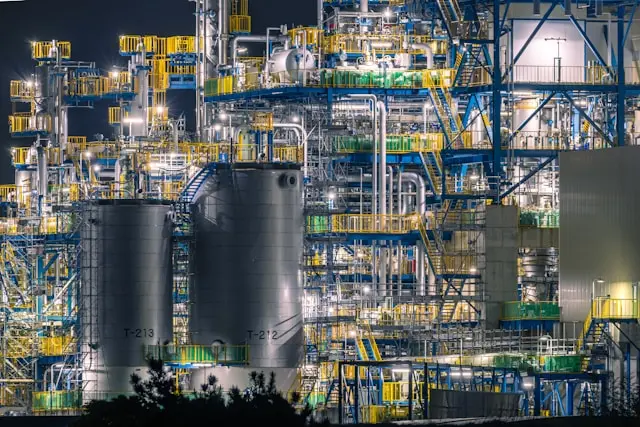
Korea's largest petrochemical concentration reported combined operating losses exceeding KRW 2 trillion across its anchor employers in 2024. S-Oil and SK Innovation both implemented voluntary retirement programmes. Headlines suggested a market where experienced talent would be plentiful, affordable, and willing to move. Hiring leaders scanning the Onsan National Industrial Complex from the outside would have seen a sector contracting and reasonably concluded that recruitment would become easier.
It did not. Over the same period that headcount was falling, average time-to-fill for process safety engineers at Ulsan's major complexes stretched from 90 days to over 180. Digital operations searches ran nine months or longer. The roles eliminated through downsizing and the roles urgently required for regulatory compliance and decarbonisation turned out to be entirely different categories of expertise. The layoffs removed maintenance technicians and administrative staff. The shortages intensified among carbon capture engineers, functional safety specialists, and professionals who could bridge chemical engineering with AI-driven process control. Capital left the old workforce. It did not arrive in the new one.
What follows is a ground-level analysis of the forces reshaping Ulsan's petrochemical talent market in 2026, where the real hiring gaps sit, what compensation is required to reach the professionals who can fill them, and why the conventional assumption that a cyclical downturn creates a buyer's market for talent has proven precisely wrong in this sector.
Ulsan's Petrochemical Cluster in 2026: Margin Pressure Meets Regulatory Acceleration
The Onsan National Industrial Complex and adjacent Ulsan industrial districts form the backbone of Korea's petrochemical output. The cluster contributed approximately 28% of the country's petrochemical production by volume as of 2024, anchored by S-Oil Corporation's 770,000-barrel-per-day Onsan Refinery, SK Innovation's Ulsan Complex spanning refining and chemicals, Hyundai Chemical's heavy feed cracking centre, Hanwha Solutions, and LG Chem's naphtha cracking operations. Korea's petrochemical exports reached $46.2 billion in 2023, and Ulsan's share of that figure makes the cluster nationally strategic.
The cyclical picture entering 2026 remains difficult. Ethylene margins in Northeast Asia averaged $180 to $220 per metric tonne in the final quarter of 2024, well below the $250 to $300 breakeven threshold for naphtha-fed crackers typical of Onsan. Chinese capacity additions of 12 to 15 million tonnes per year of new ethylene capacity through 2025 and 2026 have depressed regional margins further, potentially forcing Ulsan crackers to operating rates of 75 to 80 percent. This is not a temporary squeeze. Korean naphtha crackers face a systemic feedstock cost disadvantage of $400 to $500 per metric tonne of ethylene equivalent compared to US Gulf Coast ethane-based producers, and they compete against Chinese integrated refinery-chemical complexes with state-subsidised feedstock access.
K-ETS Phase 4 Changes the Compliance Calculus
Against this margin compression, the regulatory environment has tightened. K-ETS Phase 4 began in 2026, introducing stricter auctioning requirements and sectoral benchmarks. The Ministry of Environment indicated that petrochemicals would face a 10 to 15 percent reduction in free allocation, forcing Ulsan complexes to accelerate carbon capture deployment or purchase permits at an estimated KRW 80,000 to 120,000 (roughly $60 to $90) per tonne. The Onsan complex alone accounts for 18.7 million tonnes of CO2 equivalent annually, representing 34 percent of Ulsan's total industrial emissions.
The investment required is substantial. Industry estimates from the Korea Institute of Industrial Economics and Trade (KIET) put the combined carbon capture and renewable energy procurement cost for Ulsan complexes at KRW 3.5 to 5 trillion ($2.6 to $3.7 billion) by 2030 to avoid carbon costs equivalent to 8 to 12 percent of revenue. Meanwhile, Korea's K-REACH amendments in 2024 expanded supply chain disclosure requirements for petrochemical intermediates, increasing compliance headcount needs by 15 to 20 percent at major complexes.
The regulatory trajectory is now the dominant force. The margin cycle is painful but familiar. The simultaneous requirement to decarbonise at scale while operating under compressed margins is not.
The Workforce That Left Is Not the Workforce That Is Missing
This is the analytical core of the Ulsan talent problem in 2026, and it is the dynamic most consistently misread by observers outside the market.
SK Innovation reduced its Ulsan complex headcount by approximately 300 positions through voluntary retirement programmes in 2023 and 2024, representing roughly 8 percent of its workforce. S-Oil froze non-essential hiring after reporting operating losses of KRW 1.2 trillion in the first three quarters of 2024. From the outside, these moves look like a sector shedding workers into a market where they can be reabsorbed by competitors.
But the voluntary retirement programmes disproportionately removed workers in general operations, logistics, and administrative functions. The roles that Ulsan's complexes cannot fill sit in entirely different disciplines: process safety engineering for hydrocracking and delayed coker units, carbon capture and utilisation (specifically amine scrubbing and cryogenic CO2 separation), energy transition integration for co-processing bio-feedstocks within existing FCC and hydrocracker units, and advanced process control combining chemical engineering with Python and MATLAB programming for real-time optimisation.
The downturn did not release these professionals into the market. It deepened the urgency for them. Regulatory deadlines do not adjust to margin cycles. K-ETS Phase 4 compliance does not pause because ethylene prices are low. The complexes that cut commodity operations headcount must still invest in the compliance and transition capabilities that regulators demand. The result is a talent market where general availability has increased modestly while the scarcity of the specific professionals that matter most has become more acute.
This is the original synthesis that the data supports but that none of the individual data points state outright: the restructuring headlines created a false impression that qualified talent was available. The layoffs targeted general and commodity roles. The simultaneous shortage in specialised transition-critical functions deepened, because those functions were never overstaffed in the first place.
Concrete Evidence: Where Searches Are Stalling
The aggregate data confirms the bifurcation. Recruitment demand for transition-critical roles in Ulsan increased 23 percent year-over-year as of the fourth quarter of 2024, while general operations hiring contracted 12 percent. That 23 percent increase occurred against a backdrop of severe margin pressure, which makes it more remarkable, not less.
The Shaheen Complex Commissioning Bottleneck
The most detailed evidence comes from S-Oil's $7 billion Shaheen Residue Upgrading Complex. During the 2024 commissioning phase, according to reporting in The Korea Herald and analysis cited in KIET's labour market study, S-Oil maintained open requisitions for Senior Process Safety Engineers specialising in hydroprocessing units for an average of 7.3 months. The industry standard fill rate for comparable roles is approximately three months. The company eventually secured candidates from Hyundai Engineering & Construction and GS Caltex by offering salary premiums of 25 to 30 percent above standard petrochemical scales, plus guaranteed housing allowances of KRW 2 million ($1,500) per month. The Shaheen complex, now approaching full utilisation in 2026, requires an additional 450 specialised technical staff for heavy oil upgrading and petrochemical integration.
Digital Transformation Roles That Do Not Yet Have a Talent Pool
According to Electronic Times and analysis from Kospo Economic Research, SK Innovation restructured its Ulsan maintenance organisation to create integrated Digital Twin Operations Manager positions requiring both chemical engineering backgrounds and AI/ML implementation experience. A specific search for a Senior Manager to oversee predictive maintenance systems reportedly remained unfilled for nine months. The role was eventually filled by recruiting a senior engineer from POSCO's Pohang works, with a total compensation package exceeding KRW 600 million ($450,000) annually. That figure sits 45 percent above the Ulsan market median for equivalent experience levels.
These are not isolated anecdotes. They describe a pattern where executive recruiting methods built for active candidate markets fail in a market where the candidates with the required credentials are passive, employed, and not looking.
The Passive Candidate Problem in Ulsan Petrochemicals
The severity of the hiring challenge becomes clear when the passive candidate ratios are examined by role.
Among Senior Process Safety Engineers with 15 or more years of petrochemical safety experience, approximately 85 percent are passive candidates. They are employed, not seeking new roles, and maintained in their positions by long average tenure of 11 years per employer and deferred compensation structures that function as golden handcuffs. Specialised unit operations experts for hydrocrackers, catalytic reformers, and steam crackers show a 78 percent passive rate, with the small active segment typically representing professionals exiting the industry entirely rather than moving between employers. Executive Sustainability Officers, a role category that has only existed since 2022 to 2024, show passive rates exceeding 90 percent. Qualified candidates must be approached directly while they hold incumbent CSO positions at other industrial complexes or international firms.
By contrast, general maintenance technicians, laboratory analysts, and logistics coordinators remain predominantly active, with 60 to 70 percent actively seeking opportunities. The paradox is precise: the roles easiest to fill through conventional job postings are the roles least critical to the energy transition. The roles most critical to regulatory compliance and strategic transformation are almost entirely inaccessible through traditional application-based recruitment.
For organisations operating in this market, the method of search determines the outcome. An advertised position reaches the 15 to 22 percent of candidates who happen to be active. The remaining 78 to 90 percent, the professionals with the exact credentials that K-ETS Phase 4 compliance demands, must be identified, mapped, and approached through direct headhunting.
Compensation: What It Costs to Move Talent in This Market
Ulsan's petrochemical compensation structure reflects both the technical demands of the work and the industrial location premium required to attract and retain talent in a city that competes poorly on quality-of-life metrics against Seoul and Singapore.
At the Senior Specialist and Manager level, with 10 to 15 years of experience, total cash compensation ranges are as follows. Senior Process Engineers in petrochemicals earn KRW 450 to 550 million ($337,000 to $412,000). Process Safety Managers command KRW 380 to 480 million ($285,000 to $360,000). Digital Operations Managers, the Smart Factory role category where shortages are most acute, earn KRW 500 to 650 million ($375,000 to $487,000). Maintenance Managers specialising in rotating equipment earn KRW 420 to 520 million ($315,000 to $390,000).
At VP and executive level, the figures escalate. VP Operations roles overseeing a major refinery or petrochemical complex pay KRW 800 million to 1.2 billion ($600,000 to $900,000). The newly created Chief Sustainability Officer role for industrial complexes commands KRW 700 to 950 million ($525,000 to $712,000). Heads of Engineering or Technical Services earn KRW 750 million to 1.0 billion ($562,000 to $750,000).
The Narrowing Location Premium
Ulsan-based roles carry a 15 to 20 percent industrial location premium above Seoul-based corporate functions, reflecting hazardous working conditions and geographical remoteness. But this gap has narrowed materially. In 2019, the premium was 30 percent. The compression has occurred because Seoul-based R&D, trading, and sustainability strategy roles have appreciated faster than Ulsan plant roles, driven by the migration of corporate headquarters functions to the capital. SK Innovation has progressively relocated headquarters activities to Seoul Sejong City, and Seoul-based petrochemical trading firms including SK Trading International and Hanwha Solutions' trading division now offer 20 to 25 percent higher compensation for commercial roles without the shift-work requirements of Ulsan plant operations.
The compensation gap is widening fastest at exactly the mid-career seniority level where the transition-critical talent sits. A process engineer with 12 years of experience choosing between an Ulsan plant role and a Seoul trading role faces a calculation where the Ulsan position may pay more in base terms but offers a worse total proposition once spouse employment, children's education, urban amenities, and career trajectory are factored in. The salary negotiation required to close this gap increasingly extends beyond cash compensation into housing, education subsidies, and rotation guarantees.
Four Competing Markets Are Draining Ulsan's Talent Pool
Ulsan does not lose talent to one competitor. It loses talent in four directions simultaneously, each targeting a different career profile.
Yeosu and Gwangyang form Korea's second-largest petrochemical hub and compete directly for chemical engineers and safety professionals. While compensation runs 8 to 12 percent below Ulsan levels, Yeosu offers lower cost of living and proximity to the Korea Research Institute of Chemical Technology. According to the Korea Chamber of Commerce and Industry, Yeosu employers frequently attract mid-career engineers from Ulsan with promises of faster promotion tracks.
Seoul pulls senior managers seeking non-operations career paths. The migration of corporate, trading, and strategy functions to Seoul has created a permanent gravity well for professionals who have completed their plant operations phase and want to move into commercial or executive roles without continuing shift work.
Singapore offers a different proposition. Multinational firms including ExxonMobil Asia Pacific, Shell Eastern, and BASF South East Asia recruit Korean petrochemical talent for regional technical service and engineering roles. The draw is a combination of tax-effective compensation (Singapore's top marginal rate of 24 percent versus Korea's 45 percent), English-language career mobility, and international professional exposure. The drain is concentrated among process engineers with 10 to 15 years of experience seeking global careers.
The Middle East is the most aggressive competitor. Saudi Aramco, which holds a 63.4 percent majority stake in S-Oil, along with SABIC and ADNOC, actively recruit Korean refinery specialists for mega-projects including the Jafurah Gas Development and Neom manufacturing complex. These positions offer 2.5 to 3.5 times Korean salary levels, tax-free, with particular demand for hydroprocessing and catalytic reforming experts. The recruitment directly targets Ulsan's S-Oil and SK Energy alumni networks. When a passive candidate in Ulsan weighs a modest domestic move against a Middle Eastern package that triples their earnings, the counteroffer dynamics become extremely difficult for Korean employers to manage.
The combined effect is a market where Ulsan's talent pool is being compressed from four sides. The professionals entering through university pipelines are insufficient to replace the outflow: university chemical engineering graduates now prefer semiconductor or battery materials positions over petrochemicals by a ratio of four to one. The sector's "3D" reputation, dirty, dangerous, and difficult, repels younger workers at a structural level.
The Demographic Cliff Behind the Cyclical Downturn
The cyclical margin pressure is real. But the demographic data reveals a deeper problem that no recovery in ethylene prices will solve.
The Onsan complex employs approximately 75,000 direct workers across refining and petrochemical operations. The average workforce age is 47.3 years, which is 4.2 years above the national manufacturing average. Retirement eligibility between ages 58 and 60 will remove approximately 12,000 experienced technicians and engineers from the Ulsan industrial labour pool between 2025 and 2030.
Ulsan's working-age population (ages 15 to 64) declined 1.8 percent in 2024. That was the steepest drop among Korea's seven metropolitan cities. This is not a short-term fluctuation. Korea's national demographic trajectory is well documented, but the petrochemical sector faces a compounding version of the problem: the industry is not only losing workers to retirement at the national rate, it is failing to attract replacements at a rate specific to its reputational disadvantage.
Approximately 40 percent of Onsan complex process units exceed 25 years of age, requiring higher maintenance intensity but offering less attractive working environments than greenfield facilities in the Middle East or coastal China. The complex is geographically constrained by mountains and residential zones, preventing the kind of expansion that would justify the capital investment in modernising working conditions. The result is an ageing workforce operating ageing assets in a city with a shrinking working-age population, competing for talent against newer facilities in markets that can offer dramatically higher compensation.
For organisations running succession planning in this cluster, the maths is straightforward. Twelve thousand departures over five years means an average of 2,400 experienced professionals leaving annually. The university pipeline and domestic talent pool are not producing replacements at anything close to that rate. Proactive talent pipeline development is no longer a strategic option. It is an operational necessity.
What This Market Requires From a Search Partner
The characteristics of Ulsan's petrochemical talent market create a specific set of requirements for any organisation attempting to fill senior roles.
The candidates are passive. Eighty-five percent of senior process safety engineers are not looking. Ninety percent of qualified CSO candidates must be approached in their current positions. No job board, no posting, and no inbound application process will reach them. The search methodology must be built on direct identification and mapping of passive candidates across the four competing markets where they currently work.
The competition is international. An Ulsan employer competing for a hydroprocessing specialist is not competing against the firm down the road. They are competing against Saudi Aramco's tax-free packages, Singapore's lifestyle proposition, and Seoul's career trajectory. The search partner must understand cross-border executive compensation dynamics and be able to construct propositions that address the full decision matrix, not just salary.
The timeline is regulatory. K-ETS Phase 4 is not negotiable. The compliance deadlines that require carbon capture engineers, sustainability officers, and process safety specialists are fixed by regulation, not by business cycle. Every month a critical role remains unfilled represents a month of mounting regulatory exposure. KiTalent delivers interview-ready executive candidates within 7 to 10 days, operating on a pay-per-interview model with no upfront retainer. In a market where a nine-month search costs more in regulatory risk than in recruitment fees, speed is the primary differentiator.
KiTalent's experience in executive search across industrial and manufacturing sectors, combined with AI-powered talent identification that maps passive professionals across international competitor pools, addresses the specific structural barriers that make Ulsan's petrochemical market so difficult to recruit in. With a 96 percent one-year retention rate across 1,450 executive placements, the firm's methodology is designed for exactly the kind of market where the conventional approach fails: high passive ratios, international competition, and regulatory urgency.
For organisations competing for process safety, carbon capture, digital operations, and sustainability leadership in Ulsan's petrochemical cluster, where the candidates you need are employed, not looking, and being recruited by four competing geographies simultaneously, speak with our executive search team about how we approach this market differently.
Frequently Asked Questions
What is the average time to fill a senior process safety engineering role in Ulsan's petrochemical sector?
As of late 2024, senior process safety engineering roles in Ulsan's Onsan industrial complex averaged 7.3 months to fill, more than double the industry standard of approximately three months. The extended timelines reflect the extreme passivity of the candidate pool, with 85 percent of qualified professionals not actively seeking new roles. Employers have resorted to salary premiums of 25 to 30 percent above standard scales and guaranteed housing allowances to attract candidates from competing complexes. KiTalent's direct headhunting methodology is specifically designed to reach passive candidates within 7 to 10 days, compressing these search timelines.
Why is Ulsan experiencing talent shortages during a petrochemical downturn?
The downturn and the shortage target different parts of the workforce. Voluntary retirement programmes and hiring freezes at S-Oil and SK Innovation removed general operations and administrative roles. The roles in acute shortage are transition-critical: carbon capture engineers, digital operations managers, process safety specialists, and sustainability officers. These disciplines were never overstaffed. The regulatory calendar, particularly K-ETS Phase 4, drives demand for these roles independently of the ethylene margin cycle.
What do senior petrochemical roles pay in Ulsan in 2026?
Senior Specialist roles with 10 to 15 years of experience command KRW 380 to 650 million ($285,000 to $487,000) depending on specialism, with Digital Operations Managers at the top of the range. VP Operations roles overseeing major complexes pay KRW 800 million to 1.2 billion ($600,000 to $900,000). Chief Sustainability Officers, a newly created C-suite category, command KRW 700 to 950 million ($525,000 to $712,000). Ulsan roles carry a 15 to 20 percent location premium over equivalent Seoul positions, though this gap has narrowed from 30 percent in 2019.
Which markets compete with Ulsan for petrochemical talent?
Four markets actively drain Ulsan's talent pool. The Middle East (Saudi Aramco, SABIC, ADNOC) offers 2.5 to 3.5 times Korean salaries tax-free. Singapore attracts mid-career engineers with tax efficiency and international exposure. Seoul pulls senior managers seeking non-operations career paths. Yeosu competes for chemical engineers with lower cost of living and faster promotion timelines. Effective executive search in this market must map candidates across all four competing geographies.
What regulatory changes are driving petrochemical hiring demand in Ulsan?
K-ETS Phase 4, which began in 2026, reduced free carbon allocation for petrochemicals by 10 to 15 percent, with full elimination of free allocations for non-energy emissions targeted by 2030. Ulsan complexes face estimated investment of KRW 3.5 to 5 trillion in carbon capture and renewable energy. Separately, K-REACH 2024 amendments increased compliance headcount requirements by 15 to 20 percent. Both regulatory programmes create sustained demand for specialists that the existing workforce does not contain.
How can companies access passive petrochemical talent in Ulsan?
With 78 to 90 percent of critical-role candidates passive, conventional job advertising reaches only a fraction of the qualified pool. Accessing this talent requires systematic talent mapping across domestic complexes (Yeosu, Daesan), international employers (Middle East, Singapore), and adjacent sectors (steel, semiconductor). KiTalent uses AI-enhanced candidate identification to map passive professionals, delivering interview-ready shortlists within 7 to 10 days on a pay-per-interview basis, with no upfront retainer.