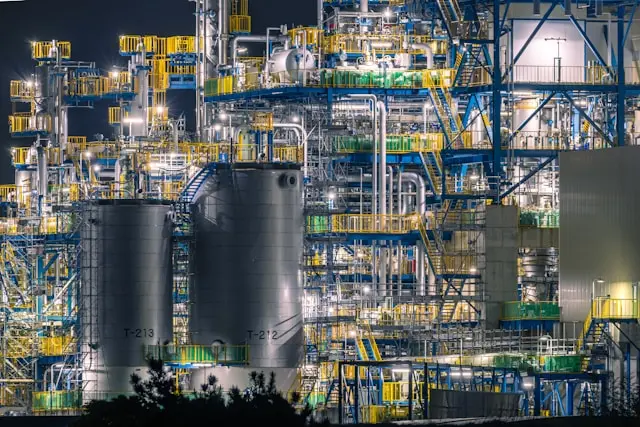
Ulsan's $42 Billion Problem: Record Orders, a Vanishing Workforce, and the Shipbuilding Crisis No One Can Automate Away
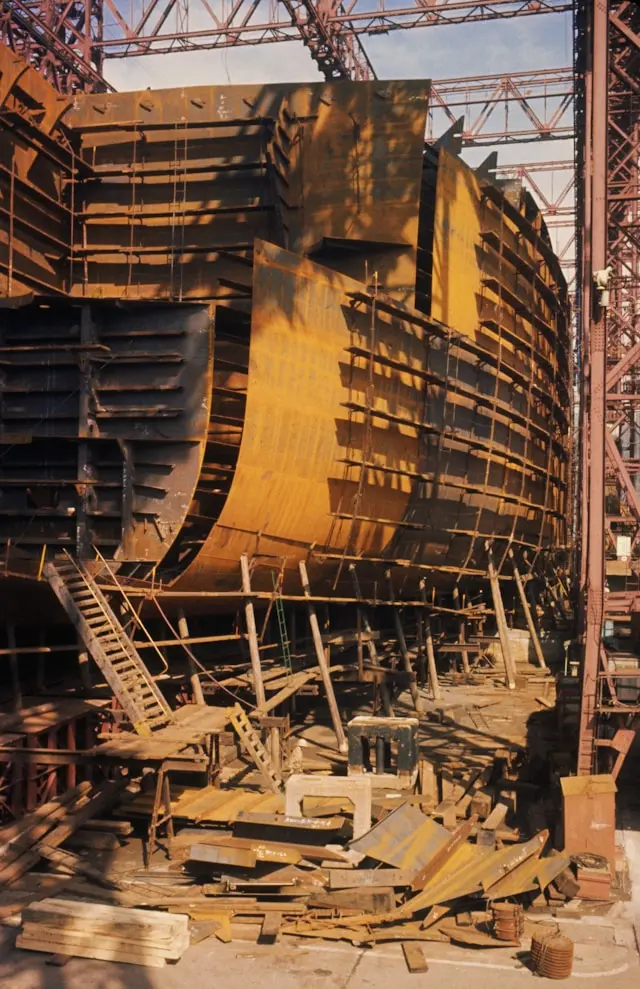
Hyundai Heavy Industries entered 2026 with an order backlog that any industrial CEO would envy. Across its Bangeojin and Mipo yards, 208 vessels sit on the production schedule, including 74 LNG carriers, 34 container ships, and 12 offshore wind installation vessels. The total value exceeds $42.3 billion. By any conventional measure, this is one of the strongest positions in the history of Korean shipbuilding.
The problem is that the yards cannot build them fast enough. In Q4 2024, HHI operated at just 78% of theoretical production capacity. Not because of steel supply. Not because of capital constraints. Because there are not enough welders, outfitting supervisors, and specialist engineers to fill the berths. The average production worker in Ulsan's shipyards is 48.3 years old, and 34% of the skilled trades workforce will be eligible for retirement by 2030. The Korea Shipbuilders' Association projects a shortfall of 4,200 skilled production workers by the end of 2026, potentially delaying 12 to 15 vessels valued at $3.8 billion.
What follows is an analysis of the forces converging on Ulsan's industrial core: a super-cycle order boom colliding with demographic collapse, a green transition that requires skills the existing workforce does not possess, and a talent war between Korea's Big Three shipbuilders that has turned executive recruitment into a zero-sum exercise. For senior leaders responsible for hiring into this cluster, the question is no longer whether the talent market is difficult. It is whether the traditional methods of finding and securing talent can work at all in a market where 85% of the candidates you need are not looking.
The Paradox at Ulsan's Core: A Super-Cycle the Yards Cannot Fully Operationalise
The shipbuilding super-cycle that began building through 2023 and accelerated through 2024 shows no signs of decelerating. Clarksons Research projects South Korean shipbuilders will capture $58 billion in new orders during 2026, with HHI targeting 35% market share. The drivers are structural rather than speculative: IMO carbon intensity regulations are triggering an LNG carrier replacement cycle, floating offshore wind investment is scaling globally, and the ammonia and methanol dual-fuel retrofit market is expanding as shipowners face EU Emissions Trading System compliance deadlines.
But Ulsan's physical production capacity has effectively contracted by 15% compared to 2015 levels. The cause is not infrastructure decay. It is human capital erosion. During the brutal 2016 to 2020 downcycle, the cluster lost approximately 1,800 skilled welders and watched 12 major subcontractors go bankrupt. The subcontractor ecosystem itself shrank from 4,200 firms in 2015 to roughly 2,800 by 2024, a consolidation driven by procurement centralisation and automation but accelerated by the simple departure of experienced tradespeople who found work in other industries and never returned.
The Gap Between Orders and Output
This is the central tension every hiring leader in Ulsan must understand. The order book says 2008-level demand. The workforce says something closer to 2018-level capacity. The gap between those two realities is not closing on its own. In 2024, the Ulsan shipbuilding cluster posted 14,300 job vacancies, a 67% increase from 2022. It filled only 8,900 of them, a 62% fill rate that represents the worst recruitment performance in the cluster's modern history.
The implications extend beyond delayed delivery schedules. Every vessel delivered late carries contractual penalty clauses. Every retrofit postponed pushes a shipowner closer to regulatory non-compliance. The hidden cost of failing to fill critical roles in this environment is measured not just in recruitment fees but in billions of dollars of deferred revenue and reputational damage to Korea's position in global shipbuilding. The automation strategy HHI has announced, targeting 30% of block assembly processes by 2026, does not eliminate the labour problem. It transforms it.
Automation Has Not Reduced the Workforce. It Has Replaced One Kind of Worker With Another.
This is the analytical reality that conventional coverage of Ulsan's "smart shipyard" strategy misses entirely. HHI's plan to automate 30% of block assembly by 2026 is not a workforce reduction programme. It is a workforce substitution programme that requires 800 additional robotics technicians the market does not currently contain.
The workers being partially displaced are manual welders performing repetitive hull section joins. The workers being demanded are specialists capable of programming Panasonic, Motoman, Kawasaki, and Fanuc robotic welding systems in a shipyard environment. These are not the same people. The vocational certificates held by 68% of the current Ulsan shipyard workforce cover traditional metalworking and welding trades with limited digital literacy. The automation investment has moved faster than the human capital pipeline could follow.
Why Reskilling Alone Cannot Close the Gap
The Ulsan Techno Park's Shipbuilding Industry Human Resources Development Centre trains 1,200 workers annually in smart welding and automated assembly. That output is meaningful but insufficient against a demand curve that requires thousands of qualified technicians within a compressed timeline. The Korea Welding Association's 2024 Labour Market Survey found 2,400 annual openings for automated welding technicians and supervisors against a supply of just 1,100 qualified candidates.
The automated welding supervisor role is particularly acute. Industry sources indicate that Tier-1 hull assembly subcontractors typically face 8 to 11 month vacancies for CO2 welding supervisors certified in automated GMAW systems. HHI's direct hiring for Smart Yard Welding Coordinators experienced a 73% offer rejection rate in 2024. Candidates cited competing bids from Samsung Heavy Industries and Hanwha Ocean at the Geoje yards, where compensation premiums of 15 to 20% made Ulsan the less attractive option.
For organisations trying to fill these roles through conventional job advertising, the arithmetic is punishing. The passive candidate ratio for automated welding supervisors sits at 70%. Those who are qualified are typically retained on 2 to 3 year binding contracts with retention bonuses. The active applicant pool contains entry-level welders, not the supervisors who programme and oversee robotic lines. The search method determines the outcome.
The Offshore Wind Pivot: New Technology, New Talent, No Existing Pipeline
Ulsan's transition from oil rig fabrication to floating offshore wind platform manufacturing represents the most consequential strategic shift in the cluster's recent history. HHI established its Offshore Wind Business Unit in 2023, now employing 1,200 engineers in Ulsan. The unit is constructing the 6MW Haewoori floating substructure for the Korea Floating Wind project. Offshore wind-related manufacturing accounted for 18% of Bangeojin yard output in 2025, up from just 4% in 2020.
The Korean government's Offshore Wind Roadmap designates Ulsan as the country's Floating Wind Industrial Complex, with $2.1 billion in local investment anticipated by 2027. The Ministry of Trade, Industry and Energy has structured this as a national industrial priority. Yet the workforce to deliver it barely exists.
A National Talent Pool of 180 Engineers
The Korea Maritime Institute's Offshore Wind Workforce Report identified approximately 180 qualified floating offshore wind structural engineers in all of South Korea as of 2024. HHI created 400 new positions in this specialisation across 2024 and 2025. The mathematics are stark: domestic supply covers fewer than half the positions at a single employer, before accounting for demand from Samsung Heavy Industries, classification societies, and the offshore wind developers themselves.
The passive candidate ratio in this category reaches 85%. Qualified professionals hold senior positions at firms like Equinor, Principle Power, or Samsung Heavy and receive three to five recruitment approaches monthly. According to BusinessKorea's September 2024 reporting, HHI's Offshore Wind Business Unit recruited a Lead Floating Platform Engineer from Samsung Heavy Industries' Geoje headquarters, reportedly offering a signing bonus of 120 million KRW (approximately $88,000) and a 35% base salary increase. The transfer triggered a contractual dispute and illustrated the zero-sum dynamics now governing this talent segment.
For the roughly 90 Korean engineers with five or more years of floating wind experience, demand from multiple employers has created a seller's market of extraordinary intensity. The skills required, including coupled analysis of mooring dynamics and hull structures using Sesam or ANSYS platforms, take years to develop and cannot be acquired through short-course reskilling. This is not a training gap. It is a knowledge gap, and the knowledge takes a decade to build.
Dual-Fuel Propulsion: The Decarbonisation Skills That Do Not Yet Exist in Sufficient Numbers
The third critical shortage intersects with the first two but carries its own distinct dynamics. HHI's HiMSEN engine division secured contracts for 156 methanol and ammonia dual-fuel engine retrofits across 2024 and 2025. These retrofits require conversion facilities at the Mipo yard and, more critically, engineers who understand ammonia fuel supply system design, methanol bunkering integration, and the IMO IGF Code amendments governing alternative fuel installations.
As of early 2025, the Korea Register of Shipping certified just 240 engineers in South Korea for alternative fuel system work. HHI needs 600 across its design and retrofit divisions by the end of 2026.
The passive candidate ratio in this segment is 80%. The small cohort of engineers with IMO Tier III compliance experience and alternative fuel system design backgrounds are almost universally employed by MAN Energy Solutions, WinGD licensees, or the Big Three Korean yards. According to Lloyd's List Intelligence's Marine Engineering Talent Report, these professionals are not looking for roles. They are being actively retained with contractual mechanisms designed to prevent exactly the kind of movement that the market now demands.
The EU Carbon Border Adjustment Mechanism, reaching full implementation in 2026, compounds the pressure. Ulsan yards rely on POSCO steel, and delayed implementation of low-carbon steel production at POSCO's Gwangyang works threatens CBAM compliance costs of €60 to €80 per ton of embedded carbon. Meeting these requirements demands data engineering capabilities for lifecycle carbon accounting that are currently scarce in Ulsan. This is a new category of demand layered onto an already overstretched technical workforce.
The Geographic Talent War: Why Ulsan Keeps Losing to Geoje, [Seoul](/seoul-south-korea-executive-search), and Singapore
Ulsan does not compete for talent in isolation. Four geographic competitors pull candidates away from the Bangeojin and Mipo yards, each exploiting a different vulnerability.
Geoje: Higher Pay, Newer Facilities
Samsung Heavy Industries and Hanwha Ocean operate their primary yards on Geoje island in Gyeongsangnam-do. The Korea Labor Institute's 2024 Regional Wage Gap Analysis found that Geoje yards offer 12 to 18% higher base compensation for welding supervisors and naval architects compared to HHI in Ulsan. Newer dormitory facilities reduce the housing friction that plagues Ulsan's eastern districts, where rental costs rose 23% between 2022 and 2024 and 40% of the workforce commutes more than 90 minutes each way. Geoje's geographic isolation creates a captive talent pool with lower turnover, which paradoxically makes it harder for Ulsan employers to recruit from there.
Seoul Capital Area: Quality of Life as Currency
White-collar engineering talent, naval architects, and CFD specialists increasingly prefer Seoul-region headquarters. KSOE's Seongnam office, classification society offices, and offshore wind developers based in the capital area offer compensation that is 8 to 10% lower than equivalent Ulsan roles. But the non-monetary proposition is powerful: international schools, dual-career spouse employment, and perceived career mobility into technology or finance sectors that do not exist in Ulsan. LinkedIn Talent Insights data from 2024 showed a consistent migration pattern of shipbuilding engineers moving from Ulsan to Seoul-based roles, trading salary for lifestyle.
Singapore and China: The International Premium
The international dimension intensifies the pressure. Singapore-based firms offer 40 to 60% compensation premiums for Korean expatriate engineers with FPSO experience. The English-language working environment attracts globally mobile talent from Ulsan's offshore division. Chinese yards, particularly CSSC subsidiaries in Shanghai and Nantong, have escalated recruitment of Korean LNG containment system experts. According to the Korea Trade-Investment Promotion Agency's 2024 reporting, offers of $200,000 to $300,000 annual packages represent a 100% premium over Ulsan rates for membrane-type LNG tank designers.
This multi-directional competition means that traditional executive recruiting methods fail systematically in Ulsan. A posted vacancy reaches active candidates, who represent at most 15 to 30% of the qualified pool depending on the role category. The remaining 70 to 85% must be identified, approached, and persuaded through direct headhunting methods that can articulate a proposition beyond base salary.
Compensation Architecture: What the Market Actually Pays
Understanding what roles command in Ulsan is essential for any organisation attempting to hire into the cluster. The compensation structure bifurcates sharply between production leadership and engineering leadership, with premiums attached to specific technology experience that can double the effective cost of a hire.
At the senior specialist level, plant managers and directors with 15 to 20 years managing shipyard blocks or offshore fabrication facilities earn 140 to 190 million KRW ($103,000 to $140,000) in base compensation, with performance bonuses adding 30 to 50% according to the Ministry of Employment and Labor's 2024 Shipbuilding Industry Wage Survey. Candidates with floating wind project delivery experience command a 25% premium over this range.
At executive and VP level, the Head of Yard Operations or COO of a shipbuilding division, responsible for P&L oversight of 8,000 or more workers, earns 350 to 600 million KRW ($258,000 to $442,000) in base compensation plus stock options. Total packages for HHI Holdings executive officers reach 900 million KRW based on HHI Holdings' 2024 audit report disclosures. This level draws candidates primarily from Samsung Heavy Industries and, unusually for industrial sectors, from retired Korean Navy engineering admirals. The passive candidate ratio at this tier is estimated at 85%.
Engineering leadership follows a parallel track. Principal Naval Architects and Chief Engineers leading LNG carrier or offshore wind substructure design earn 120 to 160 million KRW ($88,000 to $118,000), with ammonia engine integration experience adding a 20% rare-skill premium. At CTO level, packages at Samsung Heavy and HHI maintain approximate parity within 10% to prevent poaching, according to industry compensation surveys by Robert Walters Korea and Michael Page Korea.
The counteroffer dynamics in this market are particularly aggressive. When a candidate accepts an approach, their current employer almost always counter-bids. The retention contracts common among automated welding supervisors and dual-fuel engineers create additional friction. Any executive search process operating in this environment must account for counter-bids, contractual lock-ins, and geographic relocation resistance as standard features of every search, not exceptions.
What Hiring Leaders in This Market Need to Understand
The conventional response to a labour shortage is to increase advertising spend, raise compensation, and wait. In Ulsan's shipbuilding cluster, all three of those responses have already been tried and have already proven insufficient. HHI raised wages, expanded dormitory construction, and increased recruitment advertising. The fill rate remained at 62%.
The reason is that the shortage in Ulsan is not a recruitment problem. It is a demographic and structural problem that recruitment alone cannot resolve. Ulsan's working-age population declined 1.8% in 2024, the steepest drop among Korea's seven metropolitan cities. The subcontractor base that historically served as a training ground and labour buffer has contracted by a third. The green transition demands skills that the existing workforce does not hold and that short-course training cannot create.
For the senior and executive roles that determine whether yards deliver on time, at quality, and within regulatory compliance, the talent pool is finite and almost entirely passive. The 180 floating offshore wind structural engineers in South Korea know their market value. The 240 certified dual-fuel propulsion engineers are contractually retained. The welding supervisors capable of running automated lines are receiving competing bids from three or four employers simultaneously.
This is the market condition that makes AI-enhanced talent mapping and direct candidate identification not a luxury but a necessity. The 80% of qualified candidates who are not actively looking will not appear on any job board, in any applicant tracking system, or in any database built from inbound applications. They exist in a small number of organisations, in a small number of geographies, and they will move only for a proposition that addresses their specific career calculus at exactly the right moment.
KiTalent's approach to executive hiring in industrial and manufacturing sectors is built for exactly this dynamic. With interview-ready candidates delivered within 7 to 10 days, a pay-per-interview model that removes retainer risk, and a 96% one-year retention rate for placed candidates, the methodology reaches the passive talent that conventional searches systematically miss. In a market where a delayed senior hire can stall $3.8 billion in vessel deliveries, the cost of a slow search dwarfs the cost of an expert one.
For organisations competing for production leadership, offshore wind engineering talent, or dual-fuel propulsion specialists in one of the world's most constrained industrial labour markets, start a conversation with our executive search team about how to reach the candidates this market will not surface on its own.
Frequently Asked Questions
Why is there a talent shortage in Ulsan's shipbuilding industry despite record orders?
Ulsan's shipbuilding cluster holds over $42 billion in order backlogs, but the workforce that builds those vessels has contracted materially since the 2016 to 2020 downcycle. Approximately 1,800 skilled welders left the industry during that period and did not return. The average production worker is now 48.3 years old, and 34% of the skilled trades workforce reaches retirement eligibility by 2030. Meanwhile, the pivot toward offshore wind platforms and dual-fuel engine retrofits demands engineering specialisations that the existing workforce was never trained for. Demand accelerated while supply eroded, and the gap has proven resistant to conventional recruitment methods.
What are the hardest roles to fill in Korean shipbuilding in 2026?
Three role categories face the most severe shortages: automated welding technicians and supervisors, with 2,400 annual openings against 1,100 qualified candidates; floating offshore wind structural engineers, where approximately 180 qualified professionals serve an entire national market; and dual-fuel propulsion engineers certified for ammonia and methanol systems, with only 240 certification holders in South Korea against 600 positions needed by the end of 2026. All three categories have passive candidate ratios between 70% and 85%, meaning direct headhunting rather than job advertising is the only effective sourcing method.
How does Ulsan compete with Geoje and Seoul for shipbuilding talent?
Ulsan faces distinct competitive disadvantages against each geography. Geoje's Samsung Heavy Industries and Hanwha Ocean yards offer 12 to 18% higher base compensation for welding supervisors and naval architects, with newer housing infrastructure. The Seoul Capital Area attracts white-collar engineering talent with lifestyle factors including international schools and dual-career opportunities, despite paying 8 to 10% less. Ulsan's strengths lie in HHI's scale, the breadth of its order book, and proximity to the Bangeojin and Mipo production facilities, but employers must build compelling total propositions beyond base salary to compete effectively.
What do senior shipbuilding executives earn in Ulsan?
At the plant manager and director level, base compensation ranges from 140 to 190 million KRW ($103,000 to $140,000) with 30 to 50% performance bonuses. At VP and COO level for yard operations, base packages range from 350 to 600 million KRW ($258,000 to $442,000) with stock options and total compensation reaching 900 million KRW for HHI Holdings executive officers. Engineering leadership at principal naval architect level earns 120 to 160 million KRW, with a 20% premium for ammonia engine integration experience. Organisations preparing offers for these roles benefit from current market benchmarking to ensure their packages align with competitive realities.
How is the green transition affecting shipbuilding recruitment in South Korea?
The Korean government's $1.2 billion investment in Ulsan's Green Shipbuilding Cluster is creating demand for digital engineering, chemical engineering, and alternative fuel system design skills that the traditional shipyard workforce does not possess. Offshore wind platform manufacturing now accounts for 18% of Bangeojin yard output. However, 68% of current workers hold vocational certificates in traditional metalworking with limited digital proficiency. The green jobs being created are not accessible to the existing workforce without extensive reskilling, and the offshore wind sector frequently hires from Seoul-based engineering consultancies rather than retraining legacy production staff.
Can executive search firms help with shipbuilding talent shortages in Korea?
In a market where 70 to 85% of qualified candidates are passive and many are retained on multi-year contracts, conventional recruitment methods reach a small fraction of the viable talent pool. Specialist executive search firms with talent pipeline capabilities and AI-enhanced identification tools can map the full universe of qualified professionals across Korean yards, classification societies, and international competitors. KiTalent delivers interview-ready candidates within 7 to 10 days and has completed over 1,450 executive placements globally, with particular depth in industrial and manufacturing sectors where passive candidate ratios make direct search the only viable approach.