Foggia's Renewable Energy Paradox: A Province Generating 340% of Its Power That Still Cannot Hire the Technicians It Needs
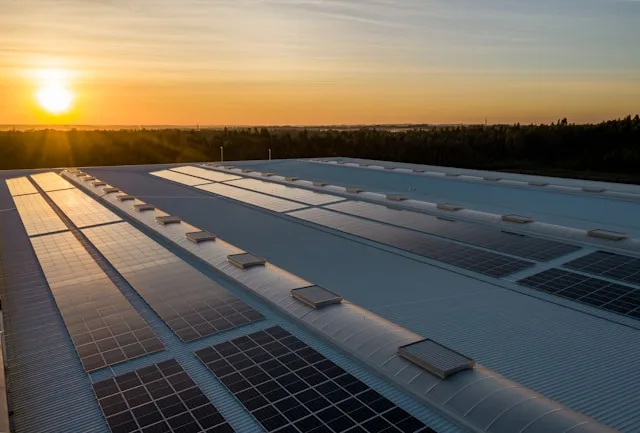
Foggia province produces more than three times the electricity it consumes. Roughly 1,400 MW of operational wind capacity stretches across the Tavoliere delle Murge corridor, supported by 23 biogas plants and a growing fleet of solar PV installations that together make this corner of Puglia one of Italy's most productive renewable energy zones. By any measure of installed capacity, the province is an energy success story.
The success, however, has created a problem that investment figures alone cannot solve. Grid saturation at primary substations means 1,180 MW of new projects sit in regulatory limbo, awaiting connections that may not arrive for years. New development is stalling, but existing assets still need to be maintained, repowered, and eventually decommissioned. The result is a talent market defined not by construction booms but by the persistent, grinding demand for technicians and specialists who keep ageing infrastructure running. Certified wind turbine service technicians in Southern Italy face unemployment rates below 2%. Biogas plant operator roles sat open for an average of 8.5 months in 2024. The people this province needs most are the people it can least afford to lose and finds hardest to replace.
What follows is a structured analysis of the forces reshaping Foggia's renewable energy sector, the employers and institutions driving that change, and what senior leaders need to understand before making their next hiring or strategic decision in this market. The province's dynamics carry implications well beyond its borders. Any international asset owner with wind or solar holdings in Southern Italy faces the same constraints, the same talent scarcity, and the same strategic choices.
The Grid Bottleneck Reshaping Foggia's Energy Economy
The defining constraint in Foggia's renewable energy market is not permitting, not financing, and not political opposition. It is the physical capacity of the electricity grid. According to Terna's Grid Development Plan, 68% of renewable project delays in the province stem from grid saturation at 150 kV primary substations rather than any regulatory failure. The Foggia grid node operates at 87% of designed thermal capacity during summer peak production. There is, in practical terms, almost no room for new electrons.
This bottleneck has created what ARERA describes as an extraordinary project backlog. As of 2025, 1,180 MW of renewable projects in the province held "preliminary acceptance" status awaiting grid availability. That figure represents a 340% increase over 2022 levels. Terna's ten-year plan forecasts 400 MW of new connections at the Foggia node by late 2026, but this is contingent on completing the 150 kV Foggia-Manfredonia line reinforcement. Until that infrastructure arrives, new greenfield development remains largely frozen.
What the Bottleneck Means for Employment
The conventional assumption is straightforward: grid constraints suppress project development, which suppresses hiring. In Foggia, the reality is more nuanced. The same constraints that prevent new capacity from connecting to the grid simultaneously sustain high demand for operations and maintenance staff on existing, effectively stranded assets. Plants that cannot export their full output still require full technical supervision. Turbines approaching end-of-design-life still require inspection, component replacement, and safety certification.
This is the maintenance trap. Technical employment in the province remains stable or grows modestly even as new project development and associated construction hiring contracts. Labour market data from Unioncamere Puglia shows 1,240 direct full-time equivalents in renewable O&M and bioenergy operations, with seasonal peaks adding 380 temporary positions during summer maintenance windows. The jobs exist. The pipeline of new jobs looks different from what the investment headlines suggest.
For any hiring leader managing a Southern Italian asset portfolio, the implication is direct. The roles you need to fill are not project-based EPC positions with defined end dates. They are permanent, technically demanding O&M positions requiring certifications that take years to acquire. The hiring challenge is not cyclical. It is embedded in the infrastructure itself.
The Repowering Wave and What It Demands
Approximately 220 MW of early-2000s wind turbines in the province will reach end-of-design-life through 2026. These are primarily 850 kW to 1.5 MW Vestas and Gamesa units. Installed during the first wave of Italian wind development, they now face a decision point: decommission, repower with modern higher-capacity turbines, or extend life through component overhaul.
Each option requires different technical capabilities, and none of them are easy to source locally. Decommissioning demands certified crane operators, hazardous materials handlers for nacelle electronics, and environmental remediation specialists familiar with Puglia's landscape protections. Repowering requires SCADA integration specialists who can programme new turbine control systems alongside legacy grid interfaces. Life extension demands structural engineers capable of certifying ageing tower foundations against updated wind loading standards.
The talent pool for these roles is thin across Italy. In Foggia, it is thinner still. ANIE reports that unemployment among certified wind technicians holding GWO Basic Safety Training credentials in Southern Italy sits below 2%. Average tenure at current employers exceeds 4.5 years. These are passive candidates by any definition. They are not browsing job boards. They are not responding to advertisements. They are employed, settled, and solving problems that their current employers cannot afford to lose them from.
This is the analytical core of the Foggia talent challenge. The province is not facing a shortage of work. It is facing a shortage of the specific, certified, experienced professionals who can perform work that did not exist at this scale five years ago. Capital investment in renewables moved faster than the human capital required to sustain it. The turbines arrived in the early 2000s. The technicians trained to maintain them are now approaching retirement or being recruited to higher-paying markets in Northern Italy and abroad. The replacement pipeline has not kept pace.
Bioenergy's Hidden Complexity
Foggia's agricultural economy supports 23 operational biogas plants processing tomato pomace, wine residues, olive mill wastewater, and cereal silage. Combined installed capacity reaches 28 MW. Four plants have upgraded to grid-injection quality biomethane as of mid-2025, and the sector anticipates 15 to 20 additional upgrading projects through 2026, driven by agricultural consortium investments and the Scarti Agroalimentari incentive scheme.
The Operator Problem
The bioenergy sector's hiring challenge is qualitatively different from wind. A modern agricultural biogas facility requires operators who understand anaerobic biology at a process-control level: mesophilic digester temperature management at 37 to 42 degrees, hydrogen sulfide scrubbing system calibration, and CHP engine maintenance. These skills do not naturally coexist in a single professional profile. Biologists do not typically maintain diesel engines. Mechanical engineers do not typically monitor microbial colony health.
According to the CIB Biogas Sector Employment Survey, biogas plant operator roles requiring this combined expertise remained open for an average of 8.5 months in 2024. Agricultural cooperatives typically required three recruitment cycles before filling positions, eventually hiring candidates from outside the energy sector entirely. Former dairy farm managers were a common source. These hires then required six-month upskilling programmes before they could operate independently.
The candidate pool is estimated to be 80% passive, with qualified operators employed by cooperatives or national biogas operators such as Biogest and EnviTec. Active candidates in this specialism frequently lack the combined biological-engineering capability that modern CHP facilities demand. This is not merely a hiring problem. It is a knowledge problem. The expertise required is so specialised that conventional recruitment approaches reach, at best, the 20% of viable candidates who happen to be looking.
Feedstock Risk Compounds the Challenge
Even when plants find operators, agricultural input volatility threatens the economic basis that justifies their salaries. The 2024 drought reduced corn silage availability in the province by 30%, according to Coldiretti Foggia, forcing biogas operators to purchase feedstock from external regions at 40% cost premiums. A Technical Director overseeing three to five plants must manage not only regulatory compliance and process engineering but also agricultural supply chain risk in a climate-vulnerable region.
This combination of biological expertise, engineering competence, and agricultural supply chain management defines the executive profile that biogas operators need and that almost no recruitment channel reliably produces.
Compensation in Context: What the Numbers Actually Tell Hiring Leaders
Compensation data for Foggia's renewable energy sector reveals a market operating at a persistent discount to Northern Italian equivalents. A Senior O&M Manager overseeing a 150 to 300 MW wind or solar portfolio earns €58,000 to €72,000 in base salary in the province, approximately 18% below the Milan equivalent of €70,000 to €88,000. With performance bonuses typically running 10 to 15% of base, total cash compensation ranges from €64,000 to €83,000.
Senior Electrical Engineers specialising in grid connections command €48,000 to €62,000 in base, with premiums of €8,000 to €12,000 for bilingual English-Italian capability required by international asset owners. At the executive level, a Technical Director managing multi-site biogas and biomethane operations earns €75,000 to €95,000 in base, with total cash compensation reaching €90,000 to €115,000 when biomethane production bonuses are included.
Country or Regional O&M Directors covering Southern Italy typically earn €95,000 to €130,000 plus equity participation. These roles, however, are almost always based in Milan or Rome with field oversight of Foggia assets. This structural arrangement tells you something important about how the market values proximity versus prestige.
The Cost-of-Living Offset That Does Not Fully Offset
Milan's cost-of-living index runs 45% above Foggia's. On paper, this means a €60,000 salary in Foggia delivers comparable purchasing power to a €75,000 salary in Milan. In practice, the offset is incomplete for two reasons. First, mid-career engineers weighing a move to or a stay in Foggia compare not only purchasing power but career trajectory. Rome offers a path into grid management and regulatory roles at salaries 20% above provincial levels. The career premium, not just the salary premium, pulls people north.
Second, international markets have entered the competition directly. Germany and Spain actively recruit Italian renewable energy project managers and grid specialists, offering 40 to 50% salary premiums and English-language working environments, according to Eurostat Labour Force Survey data. This creates a brain drain of senior technical profiles from Southern Italy that provincial compensation levels cannot counteract through purchasing power arguments alone.
For organisations trying to benchmark offers for technical talent in this market, the implication is clear. The competitor is not only the firm down the road offering 15% more. The competitor is Munich offering 45% more with a relocation package. Any offer strategy that ignores the international pull factor will lose senior candidates before the first interview.
The Contract Structure Problem
Beneath the salary data sits a deeper dysfunction in how Foggia's renewable sector employs people. INPS data indicates that 62% of renewable energy sector hires in the province during 2024 were fixed-term contracts of less than 12 months. This figure reflects the dominance of project-based EPC phases, where temporary agency hiring and co.co.pro arrangements are standard.
The consequence is predictable. Local STEM graduates, observing an industry that offers them twelve-month contracts followed by uncertainty, choose more stable public administration or agricultural employment instead. The sector's own hiring practices are undermining its future talent pipeline. Università di Foggia's AgroEnergy Lab graduates approximately 35 MSc-level agro-energy specialists annually, yet the conversion rate into permanent provincial energy sector employment remains low because the roles available at entry level are overwhelmingly temporary.
This creates a self-reinforcing cycle. Temporary contracts discourage new entrants. Fewer entrants tighten the experienced talent pool. Tighter supply forces employers to poach from adjacent sectors. Poaching inflates costs without expanding the pool. Local EPC contractors in the 20 to 50 employee range report systematic poaching of O&M technicians from agricultural machinery service centres, according to CNA Puglia's Artisan Federation Survey, offering premiums of 15 to 20% to secure candidates with mechanical-electrical cross-training. One contractor reportedly offered €42,000 annually, 25% above market, to a technician from a tractor service centre. The candidate declined, citing unwillingness to work at height on wind turbine platforms.
The refusal is as instructive as the offer. Compensation alone does not move candidates when the role itself carries conditions the candidate is unwilling to accept. Working at height, remote site locations, and rotating shift patterns are non-negotiable features of the work that no salary premium eliminates. Hiring strategies that rely exclusively on pay increases will continue to fail against candidates whose objections are not financial.
The Agrivoltaic Opportunity and Its Talent Implications
Puglia Region approved 12 pilot agrivoltaic projects in Foggia province in 2024, combining solar PV with table grape and olive cultivation across a combined 145 MW. Regional Law 15/2024 restricts ground-mounted solar on Class I agricultural land, including the Tavoliere's wheat lands and vineyards, pushing development toward these hybrid models.
Agrivoltaics are technically more demanding than conventional ground-mount solar. The systems must accommodate agricultural machinery access, maintain specific light transmission ratios for crop health, and integrate monitoring systems that track both energy yield and agricultural output. The professionals who design and manage these installations need competencies spanning solar engineering, agricultural science, and environmental permitting specific to Puglia's protected areas.
The environmental permitting dimension alone is formidable. VIA procedures for new wind capacity in Foggia province average 42 months, compared to 28 months nationally, according to ISPRA, due to Gargano National Park buffer zones and Murge karst protections. Agrivoltaic projects face similar scrutiny. Any Autorizzazione Unica or VIA specialist with Puglia-specific experience is immediately valuable to multiple competing developers. The pool of such specialists is small. The demand is growing faster than the pool.
This is where the province's second paradox becomes visible. Agricultural interests in Foggia simultaneously resist and enable the energy transition depending on revenue models. Fourteen active NIMBY committees oppose solar developments citing agricultural land preservation, according to Legambiente Puglia. Yet the agri-biogas sector relies on intensified agricultural activity to secure feedstock. The same farming community that blocks a solar installation on wheat land may simultaneously supply corn silage to the biogas plant next door. Any executive entering this market without understanding the regulatory and political environment will find their project timelines and hiring plans disrupted by dynamics that no technical competence alone can address.
What This Means for Organisations Hiring in Foggia's Energy Sector
The convergence of grid constraints, repowering demand, bioenergy growth, and agrivoltaic complexity has created a talent market where three conditions hold simultaneously. The roles are technically demanding. The candidates are overwhelmingly passive. And the competitive pull from Milan, Rome, Munich, and Madrid means that any candidate you want is also wanted by employers offering materially better packages in more attractive locations.
Vacancies for energy plant technicians in the province increased 34% year-on-year in early 2025, with average time-to-fill reaching 127 days compared to 89 days for general engineering roles. For specialist roles in biogas operations, the timeline extends to eight months or more. These are not figures that improve with patience. They reflect a systemic mismatch between what the market needs and what conventional hiring channels deliver.
A search process built around job advertisements and inbound applications will reach, at most, the fraction of candidates who happen to be actively looking. In a market where unemployment among certified wind technicians sits below 2% and 80% of qualified biogas operators are passive, that fraction is vanishingly small. The cost of running that search repeatedly while the role sits empty is measured not in recruiter fees but in lost plant availability, deferred maintenance, and regulatory non-compliance.
KiTalent's approach to executive search in energy and renewables markets is designed precisely for this condition. Using AI-powered talent mapping to identify passive candidates across Southern Italy and adjacent European markets, KiTalent delivers interview-ready candidates within 7 to 10 days. The pay-per-interview model means organisations invest only when they meet qualified professionals, not before. With a 96% one-year retention rate across 1,450 completed placements, the methodology is built for markets where the wrong hire is not merely expensive but operationally dangerous.
For organisations competing for grid connection specialists, biogas Technical Directors, or Senior O&M Managers in a province where every qualified candidate is already employed and being courted by competitors in three countries, start a conversation with our executive search team about how we identify and secure the talent this market requires.
Frequently Asked Questions
What types of renewable energy roles are hardest to fill in Foggia province?
Three categories face the most acute shortages: wind turbine service technicians holding GWO Basic Safety Training certifications, medium-voltage and high-voltage electrical technicians with PES/PAV switching authorisation, and biogas plant operators combining anaerobic biology expertise with CHP engine maintenance capability. Biogas operator roles averaged 8.5 months to fill in 2024, with agricultural cooperatives typically requiring three recruitment cycles. Wind technician unemployment in Southern Italy sits below 2%, making virtually every qualified candidate a passive target requiring direct headhunting methodology rather than job board advertising.
How does compensation for renewable energy roles in Foggia compare to Milan?
Senior O&M Managers in Foggia earn €58,000 to €72,000 in base salary, approximately 18% below equivalent Milan roles at €70,000 to €88,000. However, Foggia's cost-of-living index runs roughly 45% below Milan's, partially offsetting the gap. The real competitive threat comes from international markets: Germany and Spain recruit Italian renewable specialists at 40 to 50% salary premiums. Total compensation for Foggia-based senior roles, including performance bonuses tied to plant availability, typically reaches €64,000 to €83,000 for wind and solar managers and €90,000 to €115,000 for biogas Technical Directors.
What is driving the renewable energy project backlog in Foggia?
Grid saturation at 150 kV primary substations is the primary constraint. According to ARERA, 1,180 MW of renewable projects hold preliminary acceptance status awaiting grid availability, a 340% increase over 2022 levels. The Foggia grid node operates at 87% of thermal capacity during summer peaks. Terna forecasts 400 MW of new connections by late 2026, contingent on completing the Foggia-Manfredonia line reinforcement. Environmental permitting adds further delay, with VIA procedures averaging 42 months in the province compared to 28 months nationally.
Why is it so difficult to recruit biogas plant operators in Southern Italy?
Modern agricultural biogas facilities require operators who combine biological process control expertise with mechanical and electrical engineering skills. This cross-disciplinary profile is rare. An estimated 80% of qualified candidates are passive, employed by cooperatives or national operators and not actively seeking new positions. Active candidates frequently lack the combined competency set. KiTalent's AI-powered talent identification approach is designed to locate and engage these passive professionals across Southern Italy and adjacent markets, delivering interview-ready candidates within days rather than months.
What is agrivoltaics and why does it matter for Foggia's energy sector?
Agrivoltaics combines solar PV generation with agricultural cultivation on the same land. Puglia Region approved 12 pilot projects in Foggia totalling 145 MW, driven by regional restrictions on conventional ground-mounted solar on prime agricultural land. These systems are technically more complex than standard solar installations, requiring professionals who understand solar engineering, agricultural science, and Puglia-specific environmental permitting procedures. The talent implications are considerable: every agrivoltaic project competes for the same small pool of VIA and Autorizzazione Unica specialists already stretched across conventional renewable developments.
How long does it take to hire renewable energy specialists in Foggia province?
Unioncamere Puglia data shows an average time-to-fill of 127 days for energy plant technician roles in early 2025, compared to 89 days for general engineering positions. Specialist biogas roles take considerably longer, averaging 8.5 months. These timelines reflect both the scarcity of certified candidates and the limitations of conventional recruitment methods in a market dominated by passive professionals. Organisations that rely solely on job postings typically require multiple recruitment cycles before making a hire.