Foggia Logistics: Why Italy's Highest Unemployment Province Cannot Staff Its Supply Chains

Foggia province sits at the centre of the Tavoliere delle Puglie, Italy's largest agricultural plain and home to the country's most concentrated tomato processing cluster. The province handles roughly 18 to 20 million tonnes of freight annually. Its refrigerated warehousing accounts for 42% of Puglia's total cold-chain capacity. By every measure of output, this is a logistics market that should be thriving.
It is not thriving in the way that matters most. Foggia also carries one of Italy's highest general unemployment rates at 17.3%. Yet the Excelsior Information System, operated by Unioncamere and Anpal, identifies logistics and transport as the third most difficult sector to staff in the province. The difficulty rate for filling vacancies stands at 68%, against a national average of 54%. The paradox is sharp. A province with surplus labour cannot find the people its most important industry needs.
What follows is an analysis of why this gap persists, where the specific shortages sit, what compensation actually looks like in this market, and what the infrastructure investments now underway mean for the talent picture through 2026 and beyond. The core argument is that Foggia's logistics hiring crisis is not a labour supply problem. It is a skills formation failure compounded by geographic competition that conventional hiring methods cannot overcome.
The Paradox at the Heart of Foggia's Labour Market
A 17.3% unemployment rate and a 68% vacancy difficulty rate do not contradict each other. They describe different populations entirely. The unemployed pool in Foggia is concentrated in general labour categories. The vacancies going unfilled require specific technical certifications, digital competencies, and operational experience that the local education-to-employment pipeline is not producing in sufficient volume.
According to ISTAT provincial employment data, the disconnect is systemic. Foggia's general labour surplus coexists with near-zero unemployment among supply chain directors with ten or more years of agri-food experience. The Anpal data shows that figure sitting below 2%. These are not the same market. They share a postcode but nothing else.
This pattern echoes a broader challenge visible across Southern Italy's industrial zones, where high general unemployment masks acute shortages in roles requiring specific technical and leadership capabilities. The difference in Foggia is the severity. The province's dependence on a single dominant supply chain sector, agri-food, concentrates the shortage into a narrow band of roles where every unfilled position has outsized operational impact.
For hiring leaders operating in or entering this market, the implication is direct. The talent you need is not sitting in the unemployment statistics. It is either already employed by your competitors, or it has left Foggia entirely.
What Foggia's Logistics Sector Actually Looks Like
The starting hypothesis for many outsiders is that Foggia functions as an intermodal logistics hub, centred on its railway junction and linked to the nearby Port of Manfredonia. The reality is more complicated and less flattering.
A Road-Dominated Freight Market
Rail freight in Puglia accounts for approximately 4.2% of total freight tonne-kilometres, well below the national average of 11%. Foggia tracks below even this regional baseline. According to RFI's 2024 to 2028 industrial plan, insufficient last-mile rail spurs into the ASI industrial zone mean that freight must be trucked eight kilometres from the zone to the Foggia Scalo marshalling yard. That gap eliminates the cost advantages that would justify modal shift.
The result is that 87% of the province's freight moves by road, 9% by rail, and 4% by sea through Manfredonia. The A14 Bologna to Taranto motorway and the SS16 Adriatica form the arterial network. Chronic congestion at the Foggia ring road intersection with the A14 during harvest season, running from July through September, increases last-mile delivery times by 35% to 40%.
Cold-Chain Infrastructure as the Defining Asset
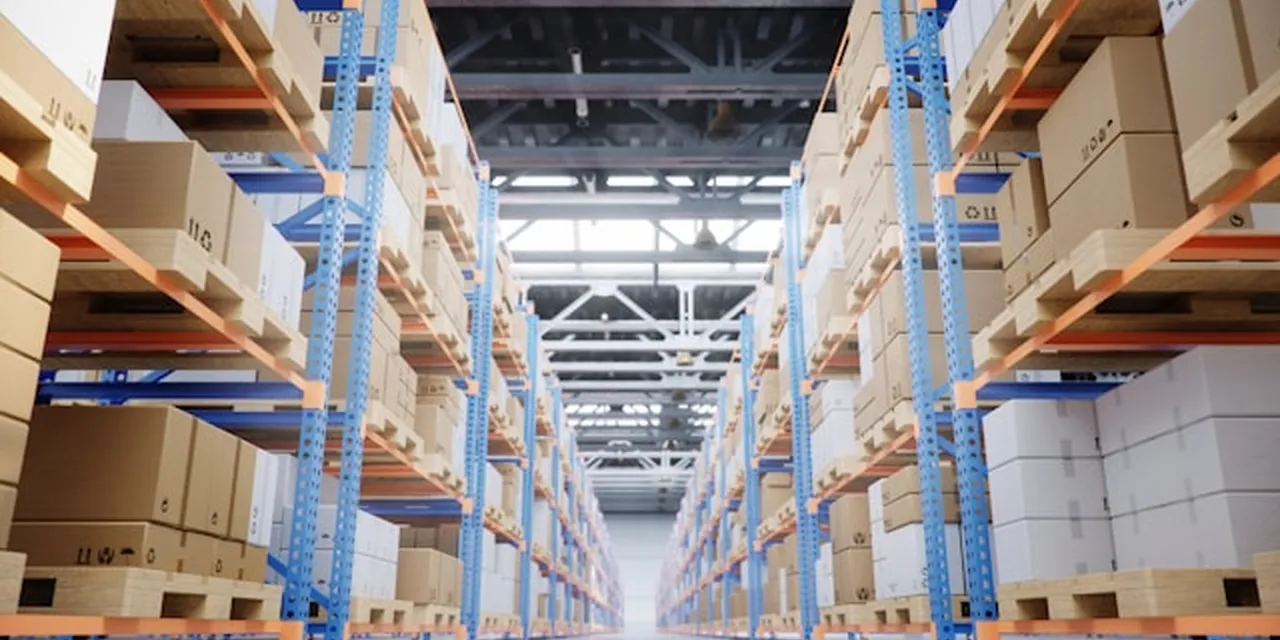
What makes Foggia's logistics market distinctive is not intermodal connectivity. It is temperature-controlled storage. The province hosts approximately 380,000 cubic metres of refrigerated warehousing capacity, serving Italy's largest tomato processing cluster, the Distretto Produttivo dell'Agroalimentare del Tavoliere. This cluster represents over 400 agri-food firms generating demand for specialised logistics that operates semi-independently of general freight flows.
Vacancy rates for Class A logistics space in the Foggia catchment area stand at 4.2%, considerably below the national average of 7.1%. Space is constrained. Landscape protection rules under the Piano Paesaggistico Regionale restrict greenfield warehouse development on the Tavoliere plain, driving land costs to €45 to €60 per square metre. Comparable northern zones run at €25 to €35.
This matters for talent because it means the logistics operations in Foggia are not generic. They require specialists who understand temperature-controlled environments, HACCP protocols, and seasonal surge operations. A warehouse supervisor from a general 3PL operation in Milan cannot walk into a Foggia cold-chain facility during tomato harvest and perform at the level required.
Where the Talent Gaps Are Most Acute
Three role categories account for the majority of Foggia's logistics hiring difficulty. Each has a different underlying cause, and each requires a different approach to resolve.
Cold-Chain Heavy Vehicle Drivers
Specialised refrigerated transport firms in the Foggia ASI zone typically advertise C+E driver positions requiring ATP cold-chain certification for 90 to 120 days without securing qualified candidates. The national average days-to-fill for comparable roles is 45 days. Foggia's search duration runs 100% to 150% longer.
This is not a passive candidate problem. The driver market is active. People are looking for work. The constraint is certification. The combination of C+E licence and ATP cold-chain certification narrows the eligible pool dramatically. The EU Mobility Package, specifically Regulation 2020/1054, compounds this by requiring digital tachographs and imposing cabotage restrictions that will further tighten driver availability through 2026.
Warehouse Management System Specialists
This is the category where the gap between what employers need and what the local market can provide is widest. Assologistica's 2024 survey on digitalisation in Southern Italy's logistics sector found that 70% of Foggia-based 3PLs have abandoned or delayed automation projects because they cannot find local specialists capable of implementing Tier 1 WMS platforms such as SAP EWM or Blue Yonder in temperature-controlled environments.
The workaround is expensive. Firms bring in external consultants from Bologna or Milan at a 40% cost premium. This is not a sustainable model. It means that every technology investment in Foggia's logistics sector carries a hidden surcharge because the implementation talent does not exist locally. Capital has moved faster than human capital can follow.
Executive Supply Chain Leadership
At the director and VP level, the market is almost entirely passive. Average tenure for supply chain directors with agri-food experience in Foggia runs at 7.2 years, nearly double the logistics sector average of 3.8 years. Unemployment among this cohort sits below 2%. Approximately 80% of successful placements at director level in this market come through direct headhunting of employed executives rather than active applications.
The high tenure figure is not a sign of loyalty. It is a sign of limited alternatives. In a market with few comparable employers, executives stay because moving means relocating. And relocation, as the next section explains, is exactly what many of them eventually do.
The Geographic Drain That No Compensation Package Can Fully Offset
Foggia's talent challenge cannot be understood without understanding where its mid-career professionals go when they leave.
[Bari](/bari-apulia-italy-executive-search): The Nearest Competitor
Bari draws logistics talent from Foggia with compensation offers 12% to 18% above equivalent Foggia roles. The city's port container terminal offers career progression into international shipping operations that Foggia cannot match. According to Unioncamere Puglia's interprovincial workforce mobility data, Bari represents the most common first move for Foggia logistics professionals seeking a step up.
Bologna: The Long-Distance Drain
Bologna, sometimes called Italy's "Logistics Valley," represents the most damaging talent drain for Foggia's mid-career supply chain managers. The compensation premium runs at 35% to 40% above Foggia equivalents. More than the money, Bologna offers exposure to automated intermodal hubs and international 3PL operations that accelerate career trajectories in ways Foggia's seasonal, road-dominated market cannot.
According to the Symbola Foundation's report on talent mobility in Southern Italy, this northward migration is the primary mechanism removing experienced supply chain managers from Foggia's available pool. Once they leave, they rarely return.
Rome: The Executive Pull
For senior leadership talent, Rome competes through multinational headquarters and regional 3PL offices offering hybrid working arrangements. This is a specific problem for Foggia. Logistics operations in Foggia are inherently on-site. Cold-chain facilities and fleet management do not accommodate remote work. When an executive with the right experience weighs an offer requiring full operational presence in Foggia against a hybrid role in Rome, the calculation often favours Rome even at equivalent compensation.
The net effect is a market where every competitor offers something Foggia structurally cannot: higher pay, better infrastructure, broader career paths, or greater flexibility. Competing on compensation alone, at a 20% to 25% discount to Northern Italian hubs, is insufficient.
What Logistics Roles Actually Pay in Foggia
Compensation data from Michael Page, Page Executive, and Unioncamere's sectoral surveys shows the following ranges for Foggia-based logistics roles in 2025.
At the senior specialist and manager level, supply chain and operations roles command €42,000 to €55,000 base salary with a 10% to 15% bonus. Transport and fleet management sits at €35,000 to €48,000, with experienced C+E drivers at €32,000 to €38,000. Cold-chain engineering specialists earn €38,000 to €52,000.
At executive and VP level, supply chain and operations directors reach €75,000 to €95,000 base with a 20% to 25% bonus. Transport and fleet leadership runs €60,000 to €78,000. Cold-chain engineering leadership sits at €70,000 to €85,000.
One premium category stands out. Executives capable of managing the seasonal agricultural surge from August through October, the tomato harvest period when processing runs 24/7, command 15% to 20% premiums above standard logistics compensation. The operational intensity of this period, combining volume spikes, temperature-critical product, and compressed timelines, requires a specific kind of leader. That specificity narrows the eligible pool further.
The non-monetary dimension matters in Foggia more than in most markets. Company housing and vehicle provision are standard components of executive packages, offsetting the geographic disadvantage. For organisations benchmarking compensation in this region, the total package comparison matters more than the base salary comparison.
Infrastructure Investment and the Talent Question It Cannot Answer
The Italian National Recovery and Resilience Plan allocates €142 million to the Mare Adriatico port system, with €28 million designated specifically for the Manfredonia to Foggia rail link electrification and digital signalling upgrades. Completion is scheduled for the fourth quarter of 2026. If delivered on time, projections suggest rail modal share could rise to 12% to 14% by 2027.
Unioncamere Puglia forecasts a 4.8% compound annual growth rate for logistics and transport employment in Foggia province through 2026. The growth drivers are expansion of e-commerce fulfilment serving the Gargano and Subappennino Dauno regions, which have been historically underserved, and increasing Asian export demand for Italian processed tomatoes requiring enhanced cold-chain capability.
The Capacity Overbuild Risk
There is a tension in this data that hiring leaders should understand. Current intermodal freight volumes on the Foggia corridor are flat or declining. RFI traffic data shows a 3% decrease in freight tonne-kilometres between 2022 and 2023. The infrastructure investment assumes that agricultural export growth will materialise to justify the rail upgrades. If drought conditions continue, and tomato yields were already down 15% in 2023 according to Coldiretti Foggia, then the new capacity may arrive into a market that cannot fill it.
For talent planning, this creates a specific dilemma. If the infrastructure investment succeeds and volumes grow, the demand for intermodal coordinators, digital logistics specialists, and operations leaders will intensify in a market that already cannot fill these roles. If it underperforms, the investment in rail infrastructure will not generate the career progression opportunities needed to retain the professionals Foggia trains.
Either outcome requires a different approach to finding and securing the people who will run these operations.
Why Conventional Hiring Fails in This Market
The core analytical claim of this article is this: Foggia's logistics talent crisis is not a shortage problem. It is a formation and retention problem operating inside a market where conventional hiring reaches almost none of the people who matter.
At the driver level, the issue is certification volume. The local pipeline produces fewer qualified C+E plus ATP drivers than the market absorbs. Advertising the role for 120 days does not change the supply. It simply extends the vacancy.
At the specialist level, the issue is that the required skills, WMS implementation in temperature-controlled environments, sit at the intersection of two specialisms that are each individually scarce. The combined profile barely exists in Southern Italy.
At the executive level, the issue is that 80% of viable candidates are employed, tenured, and not looking. They will not respond to a job posting. They will not appear on a recruiter's database. They must be identified, mapped, and approached directly. The average 7.2-year tenure in Foggia means these executives have deep operational knowledge that cannot be replicated quickly. Losing a search to a competitor or to delay carries a cost measured in entire harvest seasons.
For organisations hiring leadership roles across logistics and supply chain operations, the method matters as much as the specification. In a market where the qualified executive pool is this small and this passive, speed and precision in identifying the right candidates determine whether a search succeeds or stalls for months.
KiTalent's approach to markets like Foggia's is built specifically for this condition. AI-powered talent mapping identifies the passive executives who will never appear on a job board. Interview-ready candidates are delivered within 7 to 10 days. The pay-per-interview model means organisations only invest when they are meeting qualified people. In a market where 80% of the talent must be found rather than attracted, the difference between a traditional search and a direct headhunting approach is the difference between a 120-day vacancy and a completed placement.
For organisations competing for supply chain and operations leadership in Foggia's agri-food logistics sector, where the candidate pool is small, passive, and increasingly drawn toward Bari, Bologna, and Rome, start a conversation with our executive search team about how we map and reach the candidates this market requires.
Frequently Asked Questions
Why is logistics hiring so difficult in Foggia despite high unemployment?
Foggia province has a 17.3% general unemployment rate, but logistics vacancies carry a 68% difficulty rate because the skills required do not match the available labour pool. Cold-chain driver roles need C+E licences with ATP certification. Warehouse technology roles need WMS implementation experience in temperature-controlled environments. Executive roles need a decade of agri-food supply chain leadership. The unemployed population largely lacks these specific qualifications. This is a skills formation gap, not a labour supply gap, and it requires targeted sourcing rather than volume recruitment.
What do logistics executives earn in Foggia?
Supply chain and operations directors in Foggia earn €75,000 to €95,000 base salary with a 20% to 25% bonus. Transport and fleet leadership roles sit at €60,000 to €78,000. Cold-chain engineering leadership ranges from €70,000 to €85,000. Executives managing the August to October tomato harvest surge command an additional 15% to 20% premium. These figures run 20% to 25% below Northern Italian equivalents, but total packages often include company housing and vehicles to offset the geographic discount.
How does Foggia's cold-chain logistics sector compare to the rest of Puglia?
Foggia hosts 42% of Puglia's total refrigerated warehousing capacity, approximately 380,000 cubic metres, making it the region's dominant cold-chain hub. This infrastructure serves Italy's largest tomato processing cluster, the Distretto Produttivo dell'Agroalimentare del Tavoliere. Class A logistics space vacancy in the Foggia catchment area stands at 4.2%, well below the 7.1% national average, indicating constrained supply. Landscape protection regulations further limit new warehouse construction, tightening availability.
What infrastructure investments are planned for Foggia's logistics corridor?
The PNRR allocates €28 million specifically for Manfredonia to Foggia rail link electrification and digital signalling, with completion targeted for late 2026. The broader Mare Adriatico port system receives €142 million. If completed on schedule, rail modal share in the Foggia corridor could rise from approximately 9% to 12% to 14% by 2027. However, current freight volumes are flat, creating a risk that new capacity arrives before demand materialises to justify it.
How can organisations find passive logistics executives in the Foggia market?
Approximately 80% of successful director-level placements in Foggia's agri-food logistics sector come through direct headhunting rather than active applications. Average executive tenure is 7.2 years, indicating very low voluntary mobility. Job postings and database searches reach only the small active fraction of the market. KiTalent uses AI-enhanced talent mapping and direct executive search to identify and engage the employed professionals who will never appear on a job board, delivering interview-ready candidates within 7 to 10 days.
Which cities compete with Foggia for logistics talent?
Bari offers 12% to 18% higher compensation and port-based international shipping careers. Bologna provides 35% to 40% pay premiums and automated intermodal hub exposure. Rome attracts senior executives with multinational headquarters and hybrid working arrangements. Each competitor offers something Foggia structurally cannot match, whether higher pay, broader career paths, or greater flexibility. Retaining and attracting leadership talent in Foggia requires a proactive search approach and total compensation packages that address the geographic disadvantage directly.