Gothenburg's Port Is Growing Faster Than Its Workforce Can Follow: The Talent Bottleneck Reshaping Scandinavia's Largest Maritime Hub
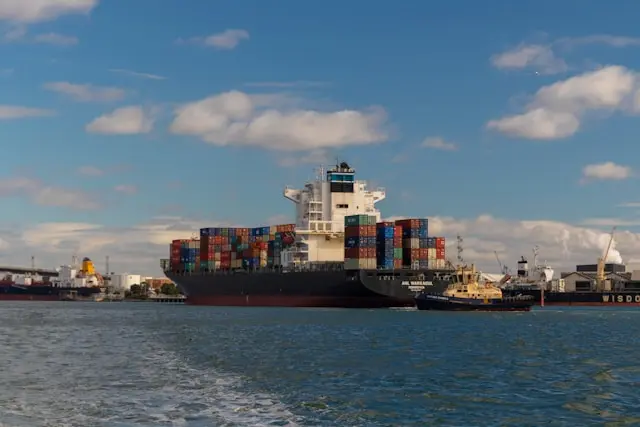
Gothenburg handled approximately 875,000 TEU in 2024. By 2026, container throughput is forecast to reach 920,000 to 950,000 TEU, driven by automotive exports from Volvo Cars and Geely and by accelerating ecommerce-driven imports. The investment pipeline is committed: SEK 1.2 billion earmarked for shore power completion at the Skandia Harbor container terminal and digital port community systems across 2025 and 2026. On paper, the conditions for growth are in place.
But the market that matters most is not behaving as the investment thesis requires. The regional unemployment rate for transport and logistics occupations sits at 1.8%, which is effectively full employment. Vacancies for transport, shipping, and logistics managers in Västra Götaland rose 34% between Q3 2023 and Q3 2024, while the pool of registered candidates with those qualifications shrank by 12%. The port authority's own growth forecast calls for 400 to 500 additional logistics and operations personnel. The people to fill those roles are not available through conventional channels, and the three most critical specialist categories are between 75% and 90% passive candidates who will never appear on a job board.
What follows is a ground-level analysis of why Gothenburg's maritime sector is hitting a workforce ceiling before it hits an infrastructure ceiling. It examines where the hiring gaps are most acute, what is driving the competition for senior maritime talent across Scandinavian borders, and what organisations operating in this market need to do differently to secure the leadership and specialist talent that will determine whether the port's growth ambitions translate into operational reality.
A Consolidated Logistics Node Running at Its Limits
The Port of Gothenburg processes roughly 55% of Sweden's total containerised trade. That concentration is not distributed across multiple competing terminals. It is funnelled through a single major facility: the GP Container Terminal, a joint venture between APM Terminals and Göteborgs Hamn AB. Berth utilisation averaged 87% in 2024, approaching the threshold where vessel waiting times become commercially damaging and carriers begin diverting feeder traffic to Helsingborg or Aarhus.
The intended relief is the Arendal container terminal expansion, which would add 400,000 TEU of annual capacity. That project remains stalled in environmental permitting, with construction not expected before late 2025 and completion unlikely before 2027 or 2028. Environmental appeals regarding dredging impacts on Natura 2000 areas have blocked progress. Until Arendal delivers, the system is running on what it has.
What it has is further constrained by its hinterland connections. The port operates four daily rail shuttles to inland terminals at Falköping, Jönköping, Stockholm, and Norrköping. Rail capacity utilisation exceeds 80%. The infrastructure those shuttles run on includes single-track sections of the Västra stambana, and Sweden's national transport plan indicates no major capacity expansion on those critical segments until 2028 to 2030. The port targets 30% rail modal share by 2026, up from 26% today. The infrastructure to reach that target does not yet exist.
This is the physical context for the talent discussion that follows. Every additional container that moves through this system places incremental demand on a workforce that is already operating at capacity, in a market where the people qualified to manage that capacity are among the scarcest professionals in Northern Europe.
Where the Talent Gaps Are Most Acute
The sector faces critical shortages in three distinct categories. Each has different drivers, different candidate dynamics, and different implications for executive hiring across maritime and industrial sectors.
Marine Engineers With Dual Fuel Competencies
The most severe shortage is in marine engineers who hold competencies in both traditional propulsion systems and alternative fuel technologies: LNG, methanol, and ammonia. This is not a volume shortage of marine engineers generally. It is a shortage of engineers whose training and experience span both worlds.
Marine engineer vacancies in Gothenburg remain open for an average of 142 days. Comparable shore-based engineering roles fill in 67 days, according to Sweden's Public Employment Service occupational data from 2024. The Swedish Maritime Administration projects a national deficit of 1,200 certified marine engineers by 2026 against current training capacity. Chalmers University of Technology, the primary pipeline, graduates 80 to 90 marine engineers and naval architects annually. That output serves the entire country, not Gothenburg alone.
Senior marine engineers exhibit 85 to 90% passive candidate characteristics. Average tenure in current roles exceeds seven years. They are rarely visible on public job boards. Recruitment occurs almost exclusively through specialist maritime headhunters or internal referral networks, according to the Swedish Maritime Officers' Association's employment survey from 2024. The cost of a failed search in this category is not merely delay. It is operational risk aboard vessels that increasingly require fuel transition expertise to remain regulatory compliant.
Port Automation and AI Logistics Specialists
The second shortage sits at the intersection of port operations and technology. Terminal Operating System integration, AI-based stowage planning, and automated guided vehicle fleet management all require specialists who understand both the software and the operational environment it serves. These professionals are scarce everywhere in Europe. In Gothenburg, the scarcity is compounded by a structural factor unique to the Swedish market.
The Swedish Transport Workers' Union collective agreement maintains strict manning requirements for container handling equipment, limiting automation penetration compared to Rotterdam or Hamburg. Strike action occurred in November 2024 over automation-related job security clauses. This means the port cannot simply automate its way past the labour constraint. It must negotiate, plan, and sequence automation adoption in a way that requires leadership talent experienced in both technology implementation and Swedish labour relations. That profile is exceptionally narrow.
Rail Intermodal Operations Managers
The third shortage is the least visible externally but the most commercially consequential for the port's growth strategy. Rail intermodal operations managers who understand Swedish rail regulations, combined transport documentation, and hinterland supply chain coordination are in acute demand. The port's ambition to increase rail modal share from 26% to 30% depends on finding people who can optimise a system running at over 80% capacity on constrained infrastructure. These roles require knowledge of CIM/SMGS documentation, coordination across multiple inland terminals, and familiarity with Trafikverket's regulatory framework. The candidate universe is small, highly experienced, and almost entirely employed.
The convergence of these three shortages is where the real problem sits. Any one of them in isolation would be manageable. Together, they create a compound constraint. The port needs engineers to build and maintain the infrastructure, technologists to automate and optimise it, and operations leaders to run the intermodal system that connects it to the rest of Sweden. A deficit in any one category limits the others.
The Decarbonisation Paradox: Regulation Has Outpaced the Infrastructure That Would Employ the Talent
FuelEU Maritime regulations entered into force in January 2025, requiring 2% renewable fuel usage for vessels over 5,000 gross tonnage, rising to 6% by 2030. The EU Emissions Trading System now covers maritime transport, adding an estimated €12 to €18 per TEU in operational costs for shipping lines calling at Gothenburg, according to the Swedish Maritime Administration's regulatory impact assessment. These are not future obligations. They are current operating costs.
The port's response has been to invest in shore power infrastructure and to pursue the Green Corridor partnership with the Port of Rotterdam, which aims to establish a zero-emission route requiring methanol and ammonia bunkering infrastructure. Stena AB has invested in methanol-ready newbuilds. The strategic direction is clear.
But the deployment of the physical systems that would absorb the specialised talent to run them has lagged behind the regulatory timeline. Shore power at Gothenburg's container berths stands at only 33% completion: two of six container cranes equipped with high-voltage shore connection systems as of late 2024. The port's shore power infrastructure serves only 40% of regular calling vessels against a 2030 target of 90%. Reaching that target requires an estimated additional investment of SEK 800 million.
This creates a specific and counter-intuitive risk for the talent market. Shipping firms face immediate regulatory pressure requiring specialised compliance talent. Emissions compliance officers, sustainable fuel procurement managers, and shore power engineers are in demand now. Yet the physical infrastructure that would fully utilise these skills remains years from completion. The danger is not that these roles go unfilled today. It is that organisations recruit and invest in specialists whose expertise cannot be fully deployed until the infrastructure catches up, creating retention risk as those specialists seek markets where their skills have immediate operational application.
Rotterdam's port authority and specialised maritime service firms already offer 40 to 50% higher compensation for shore power and alternative fuel infrastructure specialists, according to the Maritime by Holland Talent Monitor from 2024. A decarbonisation engineer sitting in Gothenburg, working on a system that is one-third built, facing a counterpart in Rotterdam working on large-scale hydrogen and ammonia projects at full deployment, faces a straightforward career calculation. That calculation is the retention challenge hiding inside the recruitment challenge.
Capital Moved Faster Than Human Capital Could Follow
This is the original analytical observation that ties the data together, and it is the point most hiring leaders in this market have not yet confronted directly.
The conventional assumption about Gothenburg's maritime growth bottleneck has been infrastructure. Build the terminal expansion. Upgrade the rail capacity. Install the shore power systems. The investment commitments reflect this assumption: SEK 1.2 billion for 2025 and 2026 alone.
But the data tells a different story. The port's container volume growth is more likely to be constrained by labour availability than by infrastructure capacity. At 1.8% unemployment in transport and logistics occupations, the regional workforce is at full employment. The union agreements that govern container handling resist the automation that could offset labour needs. The three most critical specialist categories are dominated by passive candidates with seven-year average tenures who will not respond to a job advertisement. And the two competing markets with the strongest pull on Gothenburg's talent pool, Oslo and Rotterdam, offer compensation premiums of 25% to 50% for equivalent roles.
The investment in decarbonisation infrastructure, terminal expansion, and digital port systems has not reduced the demand for human talent. It has replaced one kind of worker with another that does not yet exist in sufficient numbers. The port needs fewer general dockworkers over time and more alternative fuel engineers, AI logistics specialists, and emissions compliance officers. Capital expenditure moved on a three-year timeline. The human capital to operate what that expenditure builds moves on a seven-to-ten-year training and career development cycle. The gap between those two timelines is the real constraint, and no amount of additional capital investment will close it.
The Cross-Border Talent Drain: Oslo, Copenhagen, and Rotterdam
Gothenburg does not compete for maritime talent in isolation. It sits in a Northern European corridor where three neighbouring markets actively recruit from the same candidate pool, and each offers a distinct advantage that Gothenburg must counter.
Oslo's Compensation Advantage
Oslo competes directly for senior maritime executives and technical shipping roles. Norwegian shipping firms offer 25 to 35% higher compensation for equivalent positions, tax-adjusted, driven by salary benchmarks set by the oil and gas sector. The Oslo Maritime Network actively recruits Swedish marine engineers, offering accelerated career paths in offshore and subsea sectors that have no equivalent in Gothenburg. For a senior marine superintendent earning SEK 1,100,000 in Gothenburg, the equivalent role in Oslo commands substantially more, with exposure to project categories that expand career marketability in ways the Swedish market cannot match.
Copenhagen's Career Trajectory
Copenhagen's draw is structural rather than purely financial. Maersk's headquarters presence and Copenhagen Malmö Port operations compete for container terminal management and logistics automation talent. The market offers stronger international career trajectories within global shipping conglomerates and higher English-language workplace penetration. Younger Swedish professionals under 35 are moving to Copenhagen at a rate 15% above the reverse flow, according to the Øresundsinstituttet Labour Mobility Report from 2024. Compensation is roughly equivalent to Gothenburg, but lower marginal tax rates for high earners tilt the net calculation.
Rotterdam's Project Scale
For specialised decarbonisation and port engineering talent, Rotterdam represents the most direct competitive threat. Its port authority and firms such as HaskoningDHV and Royal Haskoning offer not just higher pay but broader exposure to hydrogen and ammonia projects at a scale Gothenburg will not reach for years. A shore power engineer in Gothenburg is working on a system covering two of six cranes. Their counterpart in Rotterdam is working on one of the world's largest port electrification programmes. The career development argument is difficult to counter with Swedish work-life balance alone.
Gothenburg retains advantages. Working hours are shorter than in Norway and the Netherlands. Housing costs are 30% lower than Oslo and 45% lower than Copenhagen, according to Numbeo's cost of living data. For professionals with families and long-term roots in Sweden, these factors carry real weight. But they are retention factors, not attraction factors. They keep people who are already in Gothenburg. They do not pull people from the markets that are actively recruiting away from it. The distinction matters for any organisation building a talent pipeline in this market.
Compensation in Context: What Maritime Leadership Costs in Gothenburg
Understanding the compensation structure is essential for any organisation running a senior search in this market. The following figures are drawn from 2024 sector surveys and public disclosures.
Terminal Operations Managers responsible for 24/7 container terminal shifts command SEK 780,000 to 950,000 annually, roughly €68,000 to €83,000. This represents a 12% premium above general logistics management roles in the region, according to Unionen's salary statistics for the transport and logistics sector and Statistics Sweden's salary structure data. At the executive level, a Chief Operating Officer or Terminal Director responsible for P&L of a major container terminal earns SEK 1,800,000 to 2,400,000, with performance bonuses tied to throughput efficiency. The disclosed compensation for the Göteborgs Hamn AB CEO was SEK 2,340,000 in 2023.
Fleet Technical Managers and Marine Superintendents at firms such as Stena AB and comparable employers earn SEK 850,000 to 1,100,000. At the managing director and global fleet director level, market data from publicly listed Scandinavian shipping firms indicates ranges of SEK 3,200,000 to 5,500,000 inclusive of long-term incentive plans.
The most instructive data point sits in the sustainability category. A Sustainability Manager with maritime focus earns SEK 720,000 to 890,000. But candidates holding dual technical and environmental qualifications command premiums of 20 to 30% above that range. At the executive level, Chief Sustainability Officers and Directors of Decarbonisation earn SEK 1,500,000 to 2,200,000. That premium for dual qualifications is the market's way of pricing scarcity. It tells hiring leaders that the candidates who can bridge the gap between regulatory compliance and engineering implementation are valued at a materially different level from those who can do only one. Any organisation benchmarking compensation for these roles must account for this split.
The compensation data also reveals why the Oslo drain is so difficult to counter. A Fleet Technical Manager earning SEK 1,100,000 in Gothenburg faces an offer of 25 to 35% more in Oslo, net of tax differences. The gap is not marginal. It is the difference between a comfortable career and a transformative one. Countering it requires something beyond a salary match. It requires a role, a project, or an ownership stake in a problem worth solving. The organisations that understand this are the ones winning the negotiation for senior passive candidates.
What This Means for Organisations Hiring in Gothenburg's Maritime Sector
The market dynamics described above produce a specific set of consequences for hiring leaders. These are not abstract challenges. They are operational realities that determine whether a search succeeds or fails.
First, the passive candidate ratio in the three most critical categories means that any search relying on job advertising, inbound applications, or database matching will reach, at best, 10 to 25% of the viable candidate pool. For senior marine engineers, that figure drops to 10 to 15%. The remaining 80% of qualified leaders must be identified through direct headhunting, mapped across employers and geographies, and approached with a proposition calibrated to their specific situation.
Second, the cross-border competition means that speed matters as much as method. A search that takes six months in this market is not merely slow. It is a search conducted entirely in the window where Oslo, Copenhagen, and Rotterdam are also making approaches. The candidates who are available at the start of a protracted process are often unavailable by the time it produces a shortlist. The cost of that delay is measured not just in the search fee but in the operational capacity that remains unfilled while the port's volume continues to grow.
Third, the regulatory pressure from FuelEU Maritime and the EU ETS creates a category of hiring that is non-discretionary. Emissions compliance officers and marine fuel procurement specialists are not growth hires. They are compliance hires. The organisation that does not fill them faces regulatory exposure, not merely competitive disadvantage. This changes the economics of the search. A retained executive search with a premium fee structure is not an extravagance for these roles. It is risk mitigation.
KiTalent's approach to this market reflects these realities. By deploying AI-enhanced talent mapping to identify passive candidates across Gothenburg, Oslo, Copenhagen, and Rotterdam simultaneously, and delivering interview-ready candidates within 7 to 10 days, the firm compresses the timeline that has historically allowed competitors to capture the same candidates mid-process. The pay-per-interview model means organisations only invest when they are meeting qualified candidates, not funding a search that may not produce results for months.
For organisations competing for maritime and industrial leadership talent in a market where 1.8% unemployment and 85% passive candidate ratios define the operating environment, conventional methods produce conventional results. The organisations filling their most critical roles are the ones that have moved beyond them. With a 96% one-year retention rate across 1,450 executive placements and an average client relationship lasting over eight years, KiTalent brings both the methodology and the market intelligence this sector requires.
For hiring leaders facing the specific challenges this article has described, whether that is a marine engineer search running past 140 days or a decarbonisation specialist being recruited by Rotterdam before your process reaches shortlist stage, start a conversation with our executive search team about how we approach Gothenburg's maritime talent market.
Frequently Asked Questions
Why is Gothenburg's maritime sector facing a talent shortage in 2026?
Gothenburg's maritime talent shortage stems from the convergence of three forces. Container volume growth of 6 to 8% requires 400 to 500 additional logistics and operations personnel, but regional unemployment in transport and logistics occupations sits at 1.8%, effectively full employment. Simultaneously, decarbonisation regulation has created demand for alternative fuel engineers and emissions compliance officers who barely existed as a professional category five years ago. The training pipeline, led by Chalmers University of Technology, graduates 80 to 90 marine engineers annually, serving all of Sweden. Supply has not kept pace with demand across any of the three critical shortage categories.
What do senior maritime executives earn in Gothenburg?
Terminal Operations Managers earn SEK 780,000 to 950,000 annually. Fleet Technical Managers and Marine Superintendents earn SEK 850,000 to 1,100,000. At the executive level, Terminal Directors and COOs earn SEK 1,800,000 to 2,400,000, while Managing Directors at major shipping firms earn SEK 3,200,000 to 5,500,000 inclusive of long-term incentives. Sustainability specialists with dual technical and environmental qualifications command 20 to 30% premiums above standard ranges. These figures reflect 2024 market data and include compensation benchmarks across comparable Nordic roles.
How does Gothenburg compare to Oslo and Rotterdam for maritime talent?
Oslo offers 25 to 35% higher compensation for equivalent maritime roles, driven by oil and gas sector salary benchmarks. Rotterdam offers 40 to 50% higher pay for specialised port engineering and decarbonisation roles, plus exposure to large-scale hydrogen and ammonia projects not yet available in Sweden. Gothenburg retains advantages in work-life balance, shorter working hours, and housing costs 30% lower than Oslo and 45% lower than Copenhagen. These factors help retain existing talent but are weaker as attraction tools for candidates currently based in competing markets.
What is driving demand for decarbonisation specialists in Gothenburg's maritime sector?
FuelEU Maritime regulations now require 2% renewable fuel usage for vessels over 5,000 gross tonnage, rising to 6% by 2030. The EU Emissions Trading System adds €12 to €18 per TEU in costs for shipping lines calling at Gothenburg. The port's Green Corridor partnership with Rotterdam requires methanol and ammonia bunkering infrastructure. These regulatory and infrastructure obligations create non-discretionary hiring demand for emissions compliance officers, sustainable fuel procurement managers, and shore power engineers. KiTalent's direct search methodology reaches the 80% of these specialists who are passive candidates, unavailable through job advertising.
How long does it take to fill a senior maritime role in Gothenburg?
Marine engineer vacancies in Gothenburg remain open for an average of 142 days, more than double the 67-day average for comparable shore-based engineering roles. Decarbonisation specialist recruitment has shifted almost entirely to retained executive search, with 78% of placed candidates in 2024 being passive candidates recruited from competitors. Port operations leadership searches are conducted through confidential processes given the small candidate universe. The extended timelines reflect both candidate scarcity and the cross-border competition from Oslo, Copenhagen, and Rotterdam that removes candidates mid-process.
What recruitment approach works best for maritime executive roles in Gothenburg?
Traditional job advertising reaches at most 10 to 25% of viable candidates in Gothenburg's maritime sector. Senior marine engineers are 85 to 90% passive candidates with average tenures exceeding seven years. Port operations leaders are 75% passive. Decarbonisation specialists are 80% passive. Effective recruitment in this market requires AI-powered talent mapping across multiple geographies, direct and confidential candidate approaches, and proposition development that addresses the specific motivations of professionals who are not actively seeking a change. Speed is critical, as the same candidates are simultaneously being approached by employers in competing Nordic and Northern European markets.