Helsingborg's Energy Sector Has the Infrastructure for Decarbonisation but Not the People to Deliver It
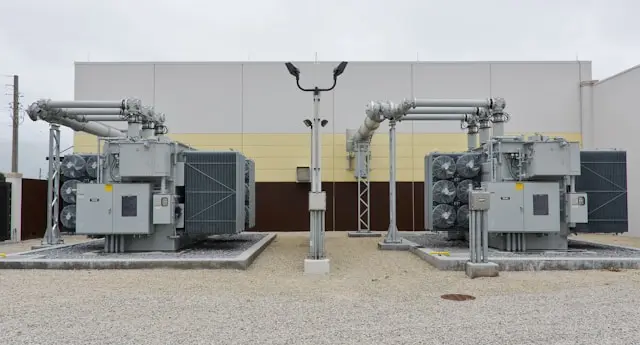
Helsingborg sits on one of Sweden's most complete district heating systems. Öresundskraft's network reaches 90% of multi-family dwellings. NSR's Filbornaverket waste-to-energy plant supplies roughly 60% of the base heat load. A SEK 1.8 billion grid reinforcement programme is underway. A 40 MW electric boiler is scheduled for commissioning. On paper, this is a city where the energy transition is working.
On the ground, the picture fractures. Power system engineering roles in Skåne now remain open for an average of 127 days, nearly double the 67-day average for general mechanical engineering positions. Öresundskraft's workforce grew from 380 to an estimated 410 by the end of 2025, yet the positions proving hardest to fill are the ones the entire investment programme depends on: high-voltage grid engineers, process automation specialists, and the data scientists needed to optimise load balancing across an increasingly complex district heating network. The investments are funded. The engineering plans exist. The professionals who must execute them do not exist in sufficient numbers within 200 kilometres of the city.
What follows is a sector intelligence brief covering Helsingborg's energy and cleantech market as it stands in 2026: the infrastructure trajectory, the employers shaping it, the compensation dynamics constraining it, and the specific hiring challenge that sits between capital commitment and operational delivery. This is the market as a senior hiring leader needs to understand it before making a recruitment or retention decision.
The Thermal Paradox: Energy Rich, Electrically Poor
Helsingborg's energy position contains a contradiction that defines its talent requirements. The city is thermally abundant. Filbornaverket processes 200,000 tonnes of waste annually, generating 70 MW of heat and 20 MW of electricity. The district heating network is mature and extensive. By most measures, Helsingborg has solved the heating decarbonisation problem ahead of schedule.
The electrical side tells the opposite story. Svenska Kraftnät's transmission capacity to Skåne remains constrained by the 600 MW Sydlänken cable capacity and the unresolved legacy of Barsebäck's nuclear decommissioning between 1999 and 2005. At the local level, queue times for new industrial connections at the Västhamnen and Berga substations now exceed 36 months. The Port of Helsingborg's transition to shore power alone will demand an additional 15 MW of grid capacity by 2026, competing directly with industrial electrification projects for the same scarce connection permits.
This creates the paradox. Helsingborg possesses the thermal infrastructure to serve as a regional decarbonisation hub for industrial heat, hydrogen production, and electrified process applications. But it cannot connect the electrical capacity required to exploit that advantage. Capital has moved. Physical infrastructure has not kept pace. And the professionals who could bridge this gap, the high-voltage grid engineers and transmission planning specialists, are the scarcest category in the Swedish energy labour market.
The talent implication is precise: the city does not need more energy strategists or sustainability consultants. It needs the engineers who design and commission 130 kV substations. It needs the process automation specialists who can integrate a 40 MW electric boiler into a waste-to-energy district heating network. These are not transferable skills from adjacent sectors. They are deep specialisms with multi-year development cycles, and the pipeline feeding them is structurally inadequate.
Who Runs Helsingborg's Energy Sector
The Municipal Anchor: Öresundskraft and NSR
Two municipally owned entities dominate Helsingborg's energy and industrial market. Öresundskraft AB, wholly owned by the city, operates production assets at Västhamnsverket, electricity distribution serving 165,000 customers, and broadband infrastructure. Its workforce reached approximately 410 FTEs by the end of 2025, with growth concentrated in grid development and network planning roles.
NSR, the regional waste management company serving six municipalities, operates Filbornaverket with 280 FTEs, including 45 operations specialists at the plant itself. The two organisations are functionally interdependent: NSR supplies the heat, Öresundskraft distributes it. Their combined workforce of nearly 700 represents the operational core of the city's energy transition.
Municipal ownership provides stability. Öresundskraft's turnover dropped to 4.2% in 2023, down from 7.1% in 2021, as economic uncertainty made public sector job security attractive. But that stability carries a structural cost. Municipal collective agreements cap senior specialist salaries in ways that private utilities are not bound by. This constraint shapes every hiring competition the organisations enter.
The Private and Research Layer
E.ON Energidistribution maintains the regional 130 kV infrastructure, employing approximately 120 FTEs in the Greater Helsingborg area. Climeon, the listed cleantech firm focused on HeatPower technology for industrial waste heat recovery, operates R&D and project functions locally with 85 FTEs.
RISE Research Institutes of Sweden runs smart grid and energy storage testing at the Mobile Heights Center, with 25 energy systems researchers. Helsingborg Stad's Climate Strategy Unit contributes 35 FTEs dedicated to energy transition coordination and acts as procurement anchor for SEK 450 million in annual energy-related municipal building retrofits.
The broader cleantech cluster includes 45 to 50 SMEs focused on building energy efficiency, maritime electrification, and industrial heat recovery, generating roughly SEK 2.3 billion in combined turnover and employing around 1,200 FTEs. The cluster has weight but lacks the formal organisational structure of Copenhagen's CLEAN network or Stockholm's KTH Innovation ecosystem. This informality matters for talent: it means Helsingborg's cleantech offer is less visible to candidates considering relocation than comparable clusters in competing cities.
The Investment Pipeline That Is Outpacing the Workforce
Öresundskraft's SEK 1.8 billion network reinforcement programme targets the 40 kV and 130 kV substations serving the industrial harbour, though internal assessments indicate this will resolve only approximately 40% of identified capacity deficits. The planned 40 MW electric boiler at Västhamnsverket, expected for commissioning by Q2 2026, is designed to absorb surplus renewable electricity. Its operational start depends on Svenska Kraftnät's transmission capacity allocations, a dependency that injects uncertainty into a project already competing for the same grid engineers needed elsewhere.
NSR's CCS feasibility study for Filbornaverket, completed in late 2025, outlines a SEK 3 to 4 billion pathway to operational carbon capture by 2030. This is not an incremental retrofit. It is the investment that determines whether the facility remains viable beyond 2040, given projections that combustible waste volumes will decline 15 to 20% by 2030 under EU waste hierarchy implementation. Without CCS, Filbornaverket faces stranded asset risk, potentially forcing Öresundskraft to source 40% of base load heat from imported biomass or electric boilers at 2.5 times current marginal cost.
The combined investment trajectory, including port electrification, grid reinforcement, the electric boiler, and CCS preparation, demands a workforce that does not yet exist locally. The city's 2035 climate neutrality target requires doubling district heating heat pump capacity from 35 MW to 70 MW. Given current grid constraints and 24-month lead times for large-scale heat pump procurement, this target has moved from ambitious to optimistic.
Every one of these projects requires specialised engineering talent that is not visible through conventional job advertising. The investment decisions have been made. The talent decisions have not kept pace.
Where the Compensation Maths Breaks Down
Municipal Salary Caps Versus Private Market Premiums
The compensation gap between municipal and private energy employers in Helsingborg is not a marginal difference. It is a systemic barrier to external recruitment at the specialist and senior levels where the most critical gaps exist.
A senior energy engineer or grid planner with 10 to 15 years of experience earns SEK 620,000 to 700,000 at a municipal employer. The equivalent role at E.ON or Vattenfall pays SEK 720,000 to 850,000. At the operations manager level in waste-to-energy, NSR's municipal scale caps at approximately SEK 750,000 excluding pension premiums, while Suez and Veolia offer SEK 850,000 to 950,000 for comparable scope. The gap widens further at director level, where Öresundskraft's collective agreement limits technical director compensation to approximately SEK 1.2 million unless individually exempted, while VP-level roles at listed cleantech firms and multinational energy corporates command SEK 1.5 million to 2.2 million.
The municipal pension and job security advantages partially offset the salary gap for traditional engineering roles. That offset collapses entirely for the digital specialists the sector now needs. AI and ML engineers capable of district heating load optimisation command compensation packages that sit 35 to 45% above what municipal agreements permit, according to comparisons with Stockholm fintech and energy-tech employer data.
The Poaching Premium
NSR and competing waste-to-energy operators report that district heating operations technicians with five or more years of experience command poaching premiums of 18 to 25%, according to survey data from Fackförbundet Kommunal and Sveriges Ingenjörer. E.ON and Vattenfall routinely recruit from Filbornaverket's operations team, offering total packages exceeding municipal scales by SEK 120,000 to 150,000 annually. For a facility employing 45 operations specialists, this represents a continuous extraction of experienced talent that no municipal salary structure can match reactively.
The organisations losing talent to these premiums cannot simply raise salaries. Municipal collective agreements constrain their flexibility. The result is a market where the cost of a failed senior hire is not just the direct recruitment spend but the cascading impact on an operations team already running below safe experience levels.
A Skills Pipeline That Covers Less Than Half the Demand
Lunds Tekniska Högskola produces approximately 45 power engineering MSc graduates per year. Sixty percent leave Skåne within two years of graduation, drawn to Stockholm and Gothenburg by salary premiums of 12 to 18% and access to international project portfolios. With 15 to 20 annual retirements in Helsingborg's energy sector alone, the local graduate pipeline covers less than 40% of replacement demand before accounting for any growth in headcount.
This arithmetic is the foundation of every hiring difficulty described in this article. It is not a temporary market imbalance. It is a permanent supply constraint that no amount of employer branding or graduate recruitment can resolve within a single planning cycle.
Stockholm draws the largest share, but Copenhagen presents a different competitive dynamic. Approximately 80 to 100 Swedish energy engineers currently commute across the Öresund Bridge to Danish utilities, attracted by net-after-tax advantages for high earners and English-language working environments. For a Helsingborg-based employer, this means the competitive radius extends across a national border. A senior transmission engineer living in Helsingborg already has access to the Copenhagen labour market without relocating.
Gothenburg competes specifically for process engineers in waste-to-energy, offering 8 to 10% higher wages and proximity to RISE's larger energy research facilities. The competitive field is not abstract. It has named cities, quantifiable premiums, and specific professional communities pulling talent out of the Helsingborg market at every experience level.
The implication for executive search in this sector is that the conventional recruitment playbook, advertising a role, waiting for applications, and shortlisting from the inbound pool, reaches at most the 10 to 15% of qualified professionals who happen to be actively looking. Unemployment among Swedish power systems engineers with five or more years of experience sits below 1.2%. Average tenure at current employers is 6.8 years. The data from LinkedIn Talent Insights confirms that 85 to 90% of qualified candidates for senior energy roles in Sweden are not applying to posted vacancies. They must be found through direct headhunting methods that reach professionals where they currently work, not where they are looking.
The Real Constraint Is Not Capital, It Is the Gap Between Two Workforce Generations
This is the analytical claim that the raw data points toward but does not state. Helsingborg's energy sector is not experiencing a generic hiring shortage. It is experiencing a generational discontinuity where two workforce types are needed simultaneously, and the market produces only one at a time.
The first type is the traditional power systems engineer: experienced in high-voltage grid infrastructure, comfortable with physical plant operations, trained in established Swedish engineering traditions. These professionals are retiring at a rate of 15 to 20 per year in Helsingborg alone, and their replacements are being drawn away by Stockholm and Copenhagen before they accumulate enough local experience to take over.
The second type is the digital energy specialist: data scientists for load balancing optimisation, cybersecurity professionals for smart grid protection, AI engineers for predictive maintenance and demand forecasting. These professionals do not exist in the traditional energy talent pipeline. They are trained in computer science and data engineering programmes, and they overwhelmingly choose technology companies, financial services, or consulting over municipal utilities.
The sector needs both simultaneously. The investment programme demands that traditional grid reinforcement continues while digital optimisation systems come online. The CCS feasibility work requires process engineers with decades of plant knowledge alongside modelling specialists with no plant background at all. Öresundskraft's low turnover rate of 4.2% tells only half the story. It means the traditional workforce is stable and loyal. But stability in the existing workforce does nothing to solve the acquisition problem for the workforce that does not yet exist within the organisation.
This bifurcation is what makes technology-sector hiring approaches relevant to what would traditionally be classified as an industrial utility. The digital talent this sector needs does not read energy sector job boards. They do not attend district heating conferences. They respond to different signals: remote work flexibility, technology stack quality, and the intellectual challenge of the problem being solved. Municipal employment terms, optimised over decades to attract and retain traditional engineers, are actively counterproductive for this population.
What Hiring Leaders in This Market Need to Do Differently
The regulatory environment adds a layer of paralysis. The proposed fjärrvärmeskatt modifications, under debate in the Riksdag through 2025, threaten to impose SEK 50 to 80 per MWh in additional costs on fossil-derived heat. Sweden's energy tax on electricity for heating, despite recent reductions, remains a barrier to heat pump electrification. These regulatory uncertainties do not prevent hiring directly. But they freeze investment decisions that would create the new roles and project mandates that attract ambitious professionals. A candidate evaluating a move to Helsingborg wants to see committed projects, not pending feasibility studies.
For organisations competing in this market, the most common reason executive searches fail is that they begin too late and rely on methods that cannot reach passive candidates. A power system engineering search in Skåne that runs 127 days costs more than the recruitment fee. It costs project delay, contractor premiums to cover the gap, and the compounding risk that the next retirement in the same team arrives before the first vacancy is filled.
Three adjustments change outcomes in this specific market:
First, talent mapping must precede vacancy creation. In a market where 85 to 90% of qualified candidates are passive and average tenure is 6.8 years, the time to identify who holds the skills you will need is before the retirement letter arrives. Mapping the 130 kV grid engineering community in southern Sweden and eastern Denmark is a finite exercise. There are perhaps 200 to 300 qualified professionals in the region. Knowing who they are, where they work, and what would move them is not a luxury. It is a prerequisite.
Second, compensation strategy must account for the municipal gap honestly. If the collective agreement limits a senior grid engineer's salary to SEK 700,000 and the private market pays SEK 850,000, the total proposition must close that gap through other means: pension advantages quantified explicitly, project scope that cannot be matched elsewhere, professional development investment, or hybrid working arrangements. A candidate who receives a counteroffer from E.ON at 20% above your ceiling will not be retained by vague promises of job security.
Third, the digital talent acquisition strategy must be separated entirely from traditional engineering recruitment. Different channels. Different employer value proposition. Different interview process. A data scientist evaluating a district heating optimisation role needs to understand the technical complexity and the data environment, not the pension terms. The interview process itself must reflect this: technical problem-solving over cultural fit screening, with a timeline that does not lose candidates to faster-moving technology employers.
For organisations in Helsingborg's energy sector facing searches where the candidate pool is measured in dozens rather than hundreds, where the competition extends across national borders, and where the investment timeline cannot wait for the labour market to correct itself, KiTalent delivers interview-ready executive candidates within 7 to 10 days through AI-enhanced direct search that reaches the passive professionals no job advertisement will find. With a 96% one-year retention rate across 1,450 placed executives, the method is built for exactly this kind of market: deep, narrow, and unforgiving of slow process. Start a conversation with our energy and industrial search team about how we approach senior hiring in constrained Nordic markets.
Frequently Asked Questions
What makes Helsingborg's energy sector difficult to hire for in 2026?
Helsingborg combines three constraints that amplify each other. The graduate pipeline from Lunds Tekniska Högskola covers less than 40% of replacement demand. Sixty percent of new power engineering graduates leave Skåne within two years for higher-paying roles in Stockholm, Gothenburg, or Copenhagen. Municipal collective agreements limit compensation at the city's two largest energy employers, Öresundskraft and NSR, creating a persistent gap against private utilities. Unemployment among qualified power systems engineers with five or more years of experience sits below 1.2%, placing 85 to 90% of the target candidate pool outside the reach of conventional job advertising methods.
What do senior energy engineers earn in Helsingborg?
A senior energy engineer or grid planner with 10 to 15 years of experience earns SEK 620,000 to 700,000 annually at municipal employers such as Öresundskraft. Private utilities including E.ON and Vattenfall pay SEK 720,000 to 850,000 for equivalent roles. Operations managers in waste-to-energy earn SEK 720,000 to 850,000, though NSR's municipal scale caps at approximately SEK 750,000. At technical director level, municipal agreements limit fixed salaries to around SEK 1.2 million, while VP roles at listed cleantech firms reach SEK 1.5 million to 2.2 million.
Which roles are hardest to fill in Helsingborg's energy sector?
Three categories face the most acute shortages: high-voltage grid engineers qualified for 130 kV and above infrastructure, process automation specialists for waste-to-energy plant operations, and energy optimisation data scientists with AI and ML capabilities for district heating load balancing. Power system engineering roles in Skåne remain open for an average of 127 days, according to data from Sveriges Ingenjörer, nearly double the duration for general mechanical engineering positions.
How does Helsingborg compete with Stockholm and Copenhagen for energy talent?
Stockholm draws 35% of Skåne's graduating power engineers within two years, offering 12 to 18% salary premiums and international project exposure. Copenhagen attracts senior transmission engineers with net-after-tax advantages and English-language environments, with 80 to 100 Swedish energy engineers already commuting across the Öresund Bridge. Helsingborg's competitive advantages are project proximity, the scale of its district heating infrastructure, and municipal employment stability. Translating these into compelling offers requires market benchmarking that quantifies total compensation against cross-border alternatives.
How does executive search work for passive energy sector candidates in Sweden?
In Sweden's energy sector, 85 to 90% of qualified senior professionals are not actively seeking new roles. Average tenure is 6.8 years. Effective search requires direct identification and approach of specific individuals within a mapped candidate universe. KiTalent's approach combines AI-powered talent mapping with direct headhunting to reach these professionals, delivering interview-ready candidates within 7 to 10 days. The pay-per-interview model means organisations only invest when they meet qualified candidates, reducing the financial risk of searches in extremely narrow talent pools.
What is the outlook for Helsingborg's energy investment and hiring through 2026?
Investment continues at pace. Öresundskraft's SEK 1.8 billion grid reinforcement programme is active, the 40 MW electric boiler at Västhamnsverket is expected online by mid-2026, and NSR's CCS pathway for Filbornaverket represents a potential SEK 3 to 4 billion commitment through 2030. Each project creates demand for specialised engineering and digital talent in a market where supply is already insufficient. The gap between capital deployment and workforce capacity is the defining challenge for every energy employer in the region through the next planning cycle.