Helsingborg's Maritime Cluster Spent Half a Billion on Electrification. The Talent to Run It Does Not Exist in Sufficient Numbers.
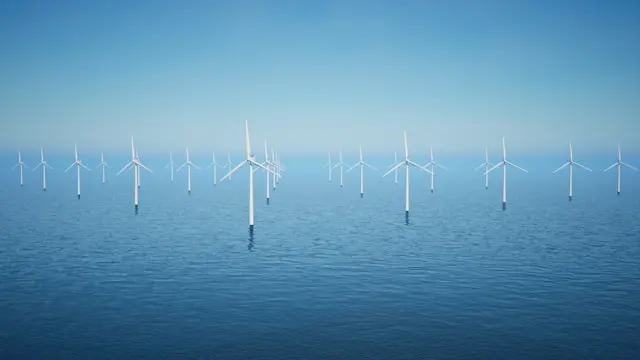
Helsingborg now operates the world's most advanced battery-electric ferry route. The Tycho Brahe and Aurora cross the Øresund with zero emissions, backed by SEK 300 million in shore-side charging infrastructure and another SEK 250 million committed to climate adaptation through 2026. YILPORT has invested a further SEK 180 million in crane electrification and automated gate systems at the container terminal. The capital has moved. The technology is installed. The problem is that the people who can maintain, operate, and lead these systems remain in critically short supply.
This is not a generic hiring challenge. Helsingborg's maritime cluster sits at the intersection of two forces pulling in opposite directions. On one side, a wave of green investment has rewritten every technical job description in the port and ferry ecosystem. On the other, the pool of professionals who hold both traditional maritime certifications and electric propulsion expertise remains vanishingly small across the entire Øresund region. The result is a market where a Chief Electrical Officer search can run 11 months, where terminal operators recruit from competitors at a 15% salary premium plus relocation bonuses, and where a municipal port authority restructures its entire HR policy to retain two IT managers.
What follows is a ground-level analysis of Helsingborg's maritime and logistics sector: the forces reshaping its talent requirements, where the most acute gaps sit, what the compensation data reveals, and what organisations hiring in this market need to understand before they begin their next search.
The Green Transition Rewrote the Job Descriptions. The Candidate Pool Did Not Follow.
The defining dynamic in Helsingborg's maritime cluster is not a capacity shortage or a trade downturn. It is a skills mismatch created by the speed of technological investment. Capital moved faster than human capital could follow.
ForSea's electrification programme required engineers with dual competencies: STCW III/1 maritime certification and hands-on experience with high-voltage battery systems compliant with IEC 60092. This combination barely existed as a job category five years ago. Today it defines the most critical roles on the Tycho Brahe and Aurora, and ForSea anticipates needing 15 to 20 additional battery systems engineers and maritime electricians by the third quarter of 2026 to support its next hybrid-electric vessel conversion.
The broader port ecosystem faces a parallel challenge. YILPORT's SEK 180 million automation investment reduced truck turnaround times by 22% in 2024. That efficiency gain did not reduce headcount. It replaced one kind of worker with another: operators who understand automated gate systems, electrified crane infrastructure, and Port Community System integration. The aggregate data confirms the gap. Vacancies for maritime engineers with electric propulsion experience averaged 127 days to fill across the Øresund region in 2024, according to the Swedish Public Employment Service. Conventional mechanical engineering roles filled in 54 days. The same market, the same geography, more than double the search duration.
This bifurcation is the central tension hiring leaders must grasp. Helsingborg's maritime cluster is not experiencing a broad labour shortage. The region's overall unemployment rate stands at 6.2%. General logistics roles show softening wage growth. The shortage is surgically precise: it affects only the roles that the green transition has created or transformed, and it is deepening as investment accelerates.
A Port That Cannot Expand Is Betting Everything on Talent
Physical constraints and the efficiency imperative
Port of Helsingborg handled approximately 7.4 million tonnes of cargo in 2023, making it Sweden's second-largest container port. That figure was down 4% from 2022's 7.7 million tonnes, and freight volumes remain 8% below pre-pandemic levels due to weak consumer demand across Scandinavia. Recovery to 7.8 to 8.0 million tonnes is projected by late 2026, contingent on manufacturing output.
The port's hard ceiling, however, is not demand. It is geography. The northern and eastern boundaries are fixed by urban infrastructure and the E4 motorway. The southern quay cannot expand due to environmental protections of the Øresund strait. Maximum theoretical throughput sits at approximately 8.5 million tonnes. Every percentage point of growth beyond the current 85% capacity utilisation must come from operational efficiency rather than physical expansion.
Why efficiency gains are talent-dependent
This constraint transforms the hiring equation. A port that can build a new terminal solves its growth problem with capital. A port that cannot build must solve it with people: systems integrators who can squeeze more throughput from existing quayside, digital logistics leaders who can optimise berth scheduling, and cybersecurity specialists who can protect the Port Community Systems on which that optimisation depends.
The Port of Helsingborg employs 156 direct FTEs, with an induced employment footprint of approximately 4,200 across the municipality. The direct headcount is small enough that a single departure at the senior technical level creates an outsized impact. When two IT infrastructure managers left for Volvo Group's Gothenburg logistics division in 2023, the port's response was not to post a replacement advertisement. According to the port CEO's interview in Hamn- och Stuveriarbetaren in March 2024, the organisation created an entirely new "Smart Port Innovation Lab" with hybrid work arrangements and equity-linked bonuses. This represented a structural change previously resisted by municipal HR policies.
The implication for any organisation hiring in this cluster is clear: the candidates who can solve Helsingborg's efficiency problem are also the candidates Gothenburg, Copenhagen, and Oslo want for the same reason.
The Compensation Reality: Where the Premiums Sit and Why They Are Not Closing
Maritime roles in Helsingborg carry material premiums over land-based logistics equivalents, and the premiums widen at the exact seniority levels where the shortage is most acute.
A Maritime Operations Director at VP level commands SEK 1.85 to 2.4 million annually in total cash, according to Sveriges Hamnar's 2024 Executive Compensation Survey. That represents a 12 to 18% premium over equivalent land-based logistics leadership roles. A Chief Sustainability Officer or Head of Decarbonisation sits at SEK 1.6 to 2.1 million, often with performance-linked components tied to emissions reduction targets. Senior Port Operations Managers earn SEK 980,000 to 1.25 million, carrying a 20 to 25% premium above general logistics managers due to 24/7 operational responsibility and safety certification requirements.
The electric propulsion premium
The sharpest premium sits at the specialist level. Shore-side maritime engineers earn SEK 750,000 to 950,000 annually. But electric propulsion specialists command an additional SEK 150,000 to 200,000 above their mechanical engineering peers. When ForSea's Chief Electrical Officer vacancy ran for 11 months in 2023, as reported in Sjöfartstidningen in December 2023, the role carried a 35% salary premium over standard chief engineer positions. Even at that level, the position ultimately required an internal secondment combined with external consultancy because no permanent candidate with both STCW III/1 certification and high-voltage battery system experience could be secured.
The geographic compensation ladder
The premium picture becomes more challenging when viewed against competing geographies. Copenhagen Malmö Port offers 15 to 20% higher base salaries for terminal operations roles, though Copenhagen's approximately 30% higher cost of living partially offsets the nominal gap. Gothenburg draws senior executives with broader strategic portfolios and packages 10 to 12% above Helsingborg. At the C-suite level, Norwegian shipping companies and ports pay SEK 3.5 to 4.5 million for equivalent VP roles, according to the Maritime Bergen Executive Recruitment Report 2024.
This creates what the data describes as one-way talent leakage at the most senior level. Helsingborg cannot match Oslo compensation. The cost-of-living offset that works against Copenhagen does not work against Norway, where salaries are materially higher in absolute terms. For organisations conducting senior leadership searches in Helsingborg's maritime sector, the challenge is not simply offering more money. It is constructing a proposition that competes on dimensions Oslo cannot easily replicate: proximity to the most advanced electric ferry operations in Europe, a role in a genuine green transition rather than an incremental one, and a quality of life that Helsingborg's smaller urban footprint provides.
The compensation gap between Helsingborg and its nearest competitors is not closing. It is widening fastest at exactly the seniority level where the most critical roles sit.
The Regulatory Wave That Creates Roles Before It Creates Candidates
Two regulatory frameworks are converging on Helsingborg's maritime operators simultaneously, and both create hiring demand for expertise that did not exist as a career category five years ago.
EU ETS and the compliance cost burden
Maritime transport enters the EU Emissions Trading System fully in 2026. Operators must purchase allowances for 100% of emissions, up from 70% in 2025. ForSea estimates SEK 45 to 60 million in additional annual compliance costs. This is not a one-time adjustment. It is a permanent operating cost that requires dedicated compliance and regulatory leadership to manage.
The FuelEU Maritime regulation adds a parallel layer, mandating progressive greenhouse gas intensity reductions for vessels calling at EU ports. Together, these frameworks require professionals who understand carbon market mechanisms, maritime emissions accounting, and the intersection of environmental regulation with route economics. Approximately 85% of qualified profiles with FuelEU Maritime expertise are already embedded in compliance roles within major ferry operators or classification societies, according to Lloyd's List Intelligence's Maritime HR Trends report for 2024.
TEN-T network integration requirements
The Øresund region's integration into the European TEN-T core network triggers new security and customs IT requirements. Operators across Helsingborg face SEK 40 to 60 million in compliance spending. This creates demand for specialists who combine customs procedure expertise with IT systems knowledge, specifically around cross-border Denmark-Sweden operations. The talent pool for this combination is small, highly passive, and disproportionately concentrated in Copenhagen.
For sustainability and regulatory specialists, the passive candidate ratio is severe. These professionals are not browsing job boards. They are managing live compliance programmes for organisations that cannot afford to lose them. A conventional search approach will surface generalist applicants without the specific regulatory depth these roles require.
The Demographic Cliff Behind the Skills Mismatch
The green transition skills gap would be manageable if it were the only pressure on the talent pipeline. It is not. Beneath the technology-driven shortage sits a demographic problem that will compound every hiring challenge in this cluster over the next decade.
Thirty-five per cent of current maritime officers serving Helsingborg routes are over 55 years old, according to the Swedish Maritime Administration's Seafarer Statistics for 2023. Swedish maritime academy output is insufficient to replace these retirements at current graduation rates. Lund University's Campus Helsingborg produces 80 to 100 graduates annually in Service Management and Supply Chain programmes, but these programmes do not produce the maritime officer certifications or electric propulsion specialisations that the cluster's most critical roles demand.
The arithmetic is unfavourable. ForSea alone employs 520 maritime staff. If even 30% of its officer corps reaches retirement age within the next seven years, that represents more than 150 positions requiring replacement at a time when the certification requirements for those positions have become materially more demanding. A retiring chief engineer who held conventional propulsion qualifications is being replaced by a role that requires conventional propulsion qualifications plus high-voltage battery system expertise plus IEC 60092 compliance knowledge. The replacement pool is a strict subset of the already-shrinking pipeline.
This is the dynamic that talent mapping and pipeline planning must address proactively. Organisations that wait until a retirement creates a vacancy before beginning their search will find that the 127-day average fill time is optimistic. The candidates capable of stepping into these dual-certified roles are already employed, already passive, and already being approached by competitors.
What Makes This Market Structurally Different From Other Maritime Clusters
Helsingborg's maritime hiring challenge is not simply "we need more engineers." The cluster's defining characteristic is that its green investment has been concentrated in a single geographic node that cannot physically expand and that sits within poaching distance of three larger, wealthier maritime employers.
The original analytical claim this data supports, and which hiring leaders must internalise, is this: Helsingborg's green transition has not reduced the workforce. It has replaced one kind of worker with another that does not yet exist in sufficient numbers. The SEK 550 million in combined electrification and climate adaptation investment did not eliminate jobs. It eliminated the relevance of the existing talent pool's certifications while simultaneously creating demand for certifications that the Swedish maritime education system has not yet scaled to produce.
This means the shortage cannot be solved by compensation alone. Oslo will always pay more. Gothenburg will always offer broader portfolios. Copenhagen will always provide greater international mobility. Helsingborg's hiring advantage must be constructed around what none of those competitors can offer: direct involvement in the most technically advanced electric ferry operation in Europe, a role at the frontier of maritime decarbonisation rather than in an organisation still planning for it, and a quality of life proposition in a city where SEK 1.8 million buys a materially different lifestyle than it does in Copenhagen or Oslo.
The YILPORT recruitment of a Senior Operations Manager from Copenhagen Malmö Port in the second quarter of 2024 illustrates how this works in practice. According to industry sources cited in Dagens Industri's maritime supplement in August 2024, the package included a SEK 180,000 relocation bonus and 15% above-market salary. That incident reportedly triggered CMP to implement six-month non-compete clauses for terminal operations staff. The lesson is not that Helsingborg can always outbid competitors. It is that a targeted, well-constructed proposition can move a specific individual when the role itself carries differentiation the current employer cannot match.
How Hiring Leaders Should Approach This Market in 2026
The traditional executive search playbook reaches a fraction of viable candidates in Helsingborg's maritime cluster. Port Operations Directors show average tenure of 6.2 years and near-zero unemployment. Seventy-five per cent of qualified maritime engineers with electric propulsion experience in the Øresund region are employed and not actively seeking roles. Active job postings for senior maritime technical positions consistently attract unsuitable generalist applicants.
This is a market that requires direct headhunting methodology. The candidates who can fill these roles are known within the cluster. They are working at CMP, at Port of Gothenburg, at classification societies like DNV, at Scandlines, or within the vessel technology divisions of ABB Marine. They are not reading job advertisements. They are managing live electrification programmes, running terminal automation projects, or leading regulatory compliance for organisations that depend on them daily.
Reaching them requires three capabilities that conventional recruitment does not provide. First, AI-powered talent mapping that identifies the specific intersection of maritime certification, electric propulsion experience, and geographic proximity. Second, a credible approach that leads with the role's technical differentiation rather than a generic opportunity description. Third, speed. In a market where the average fill time for electric propulsion engineers runs 127 days and where competitors actively poach from each other's senior teams, a search that takes three months to produce a shortlist will find that shortlist already depleted.
KiTalent delivers interview-ready executive candidates within 7 to 10 days through AI-enhanced direct search, with access to the passive talent that represents the majority of viable candidates in specialised maritime technical roles. With a 96% one-year retention rate across 1,450 completed executive placements, the approach is built for markets exactly like this one: small, highly specialised, and dominated by candidates who must be found rather than attracted.
For organisations competing for maritime leadership and specialist engineering talent in Helsingborg's green transition cluster, where the candidates you need are not visible on any job board and every month of vacancy compounds the operational risk, speak with our executive search team about how we approach this market.
Frequently Asked Questions
What maritime roles are hardest to fill in Helsingborg in 2026?
The three most constrained categories are maritime officers with dual conventional and electric propulsion certifications, port operations managers with digital logistics and automation expertise, and sustainability or compliance executives versed in EU ETS and FuelEU Maritime regulations. Electric propulsion engineering roles average 127 days to fill in the Øresund region, more than double the 54-day average for conventional mechanical engineers. The demographic pressure of 35% of current maritime officers being over 55 further tightens these markets. Organisations relying on job advertising to fill senior maritime roles consistently find that the strongest candidates are passive and unreachable through conventional channels.
What do senior maritime executives earn in Helsingborg?
Maritime Operations Directors at VP level earn SEK 1.85 to 2.4 million annually in total cash compensation. Chief Sustainability Officers command SEK 1.6 to 2.1 million, often with performance-linked components tied to emissions targets. Senior Port Operations Managers earn SEK 980,000 to 1.25 million, carrying a 20 to 25% premium over general logistics managers. Electric propulsion specialists earn SEK 150,000 to 200,000 above mechanical engineering peers at equivalent seniority. These figures reflect 2024 survey data from Sveriges Hamnar and Mercer Sweden.
How does Helsingborg compete with Gothenburg and Copenhagen for maritime talent?
Copenhagen Malmö Port offers 15 to 20% higher base salaries for terminal operations roles, though Copenhagen's approximately 30% higher cost of living partially offsets this. Gothenburg offers 10 to 12% salary premiums and broader strategic portfolios at Scandinavia's largest port. Helsingborg's competitive advantage lies in its position at the frontier of maritime electrification, its quality of life relative to cost, and the technical differentiation of roles in the world's most advanced battery-electric ferry operation. Compensation alone does not win candidates in this market. The role proposition must lead.
Why is the green transition making maritime hiring harder?
Maritime electrification has not reduced headcount. It has replaced conventional roles with positions requiring certifications that the education system has not yet scaled to produce. A retiring chief engineer held conventional propulsion qualifications. The replacement role demands those qualifications plus high-voltage battery system expertise plus IEC 60092 compliance knowledge. The replacement pool is a strict subset of an already-shrinking pipeline, creating acute supply inelasticity for the roles most critical to Helsingborg's decarbonisation investment programme.
What regulatory changes affect maritime hiring in Helsingborg?
Two frameworks are converging in 2026. Maritime transport now falls fully within the EU ETS, requiring operators to purchase emissions allowances for 100% of their carbon output. FuelEU Maritime mandates progressive greenhouse gas intensity reductions. Together these create demand for compliance professionals who understand carbon markets, maritime emissions accounting, and route economics. The Øresund region's TEN-T core network integration adds customs IT and security requirements worth SEK 40 to 60 million in compliance spending.
How can KiTalent help with maritime executive hiring in Helsingborg?
KiTalent uses AI-enhanced direct headhunting to identify and approach the passive candidates who represent 75 to 85% of the qualified talent pool in Helsingborg's maritime cluster. With interview-ready candidates delivered within 7 to 10 days and a pay-per-interview model that eliminates upfront retainer risk, the approach is designed for specialised markets where conventional recruitment consistently fails to reach the right people. KiTalent's market benchmarking capability provides real-time compensation intelligence to ensure offers are positioned competitively against Gothenburg, Copenhagen, and Oslo.