Why Ancona is a deceptively complex executive market
Searches in Ancona are managed from KiTalent's Turin hub, with support from our other hubs when the candidate pool crosses markets. Post a senior vacancy in Milan and you will receive hundreds of applications. Post the same role in Ancona and you will receive a fraction of that. Then half will lack the bilingual, cross-sector profile the role actually demands. The problem is not that talent does not exist here. It is that the talent pool is small, interconnected, and largely invisible to conventional recruiting methods.
Ancona's economy produced €8.7 billion in gross value added in 2025 and grew at 2.3%, outperforming the Central Italy average. Unemployment stands at 6.4%, down nearly a full point year on year. These are numbers that signal demand. They also signal scarcity. The executives who can run an offshore wind maintenance base, lead a geriatric biotech spin-off, or digitalize a family-owned mechatronics firm are not browsing job boards. They are deeply embedded in the same cluster of 18,850 active enterprises, often known by name within their sector.
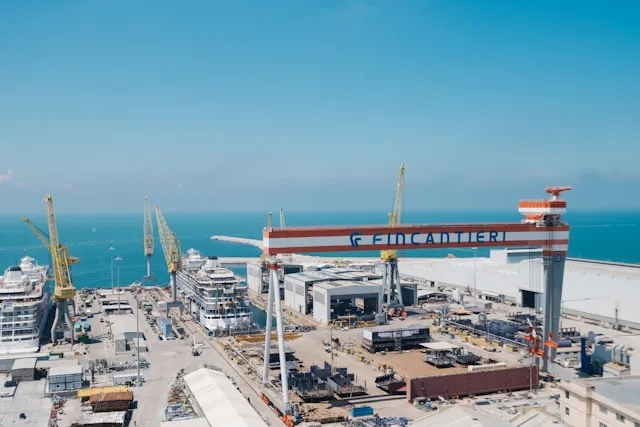
The completion of Terminal del Levante and the launch of the Offshore Wind Maintenance Base have accelerated Ancona's shift from transit hub to blue-technology node. Port throughput reached 12.4 million tonnes in 2025. The Port System Authority alone supports 2,400 direct and 8,500 induced logistics jobs. But the leadership profiles this ecosystem now requires, maritime logistics engineers, ESG and carbon accounting specialists, directors of sustainable supply chain, did not exist in this market five years ago. Supply has not caught up.
Despite a respected engineering faculty at Università Politecnica delle Marche, 35% of UNIVPM engineering graduates still migrate to Emilia-Romagna or Lombardy. The salary differential pulls them north. This creates a persistent gap in the mid-career population: the 35-to-45 age bracket where most future directors and C-suite candidates should be developing. For firms hiring senior leaders in Ancona, the passive majority of senior talent is not just a concept. It is arithmetic. The pool is finite, and the portion that is actively looking is negligible.
Twenty-eight percent of manufacturing employees in the Ancona metro are over 55. The mechatronics cluster along the Montagnola Corridor, the light-industrial zone of Piano San Lazzaro: these are ecosystems built on founder-era expertise. Succession planning in family-owned firms requires a different kind of search. It requires discretion, deep understanding of ownership dynamics, and the ability to assess whether an external leader can earn trust in a tightly held business. A generalist recruiter cannot do this credibly.
These three forces, a port economy demanding new leadership profiles, a thinned mid-career pipeline, and a generational succession wave, make Ancona a market where a Go-To Partner approach is not a luxury. It is the only model that delivers results.