Ancona Shipbuilding Has Orders Through 2029. It Does Not Have the Workforce to Deliver Them
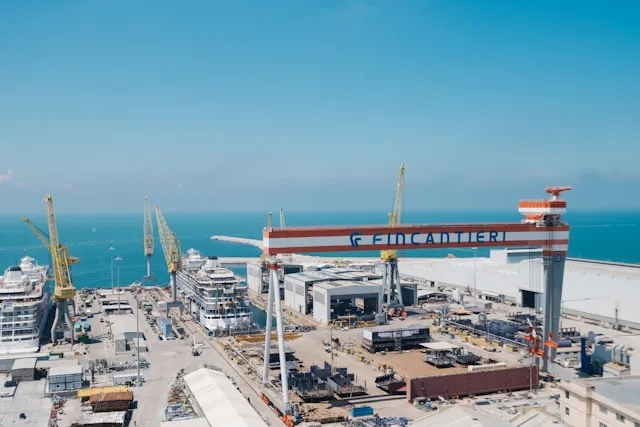
Fincantieri's Ancona yard is running at 94% capacity utilisation. Its order book stretches to the end of the decade. Two new 70,000-gross-tonnage LNG-fuelled cruise ships are scheduled for steel-cutting in the second half of this year, and a €120 million allocation from Italy's Naval Law is directing maintenance work toward the Adriatic cluster. By every conventional measure, Ancona's shipbuilding sector is thriving.
The problem is underneath the order book. A senior welding inspector search ran seven months before Fincantieri could fill it. Wärtsilä's Ancona service station restructured an automation engineer role into a hybrid arrangement with Trieste after three months of failed recruitment. Certified pipefitters rotate between the same three or four employers every 12 to 18 months, chasing premiums of €200 to €300 a month, because no new pipefitters are entering the market to replace them. The orders are real. The people needed to execute them are not arriving.
What follows is an analysis of the forces pulling Ancona's marine cluster in opposite directions: a demand signal that has never been stronger, and a supply constraint that is deepening with each passing year. This article examines where the gaps sit, what is driving them, what they cost, and what organisations hiring in this market need to understand before they begin a search.
The Order Book That Masks a Structural Problem
Ancona's shipbuilding and marine engineering cluster employs approximately 4,800 to 5,200 full-time equivalents across the province, including the direct Fincantieri workforce and the roughly 150 to 180 SME suppliers operating across the broader Marche region. Fincantieri's Ancona division alone carries 1,850 direct employees, up 14% from 1,620 in 2022, with an additional 850 to 900 indirect workers through on-site subcontractors like Impresub S.p.A. and Cimolai subsidiaries.
The numbers look healthy. They are not.
The aggregate employment figure has remained static at 4,800 to 5,200 since 2019, even as Fincantieri's direct headcount grew and the order pipeline expanded. This is the first tension in the data, and it matters enormously for anyone trying to hire in this market. Productivity gains and yard automation are absorbing volume growth without creating proportional new jobs. Fincantieri has invested €12 million in automated GMAW welding cells at Ancona since 2022. The investment has not reduced the workforce. It has replaced one type of worker with another that barely exists yet: robot welding operators who can programme and maintain the new cells.
The cluster is not growing. It is transforming. Capital has moved faster than human capital can follow.
This dynamic explains why the order book tells a misleading story about the health of the talent market. A hiring executive looking at Ancona sees a sector at near-full capacity with decade-long visibility. What they should see is a sector where every incremental order increases pressure on the same constrained pool of specialists, and where the automation investment intended to relieve that pressure has created a new category of scarcity on top of the old one.
Where the Gaps Are Most Acute
Certified Welders and Inspectors
Job postings for naval welders in Ancona province increased 34% between Q1 2023 and Q1 2025, according to the Unioncamere-Anpal Excelsior system. Average time-to-fill for certified welding positions now exceeds 4.5 months, against 2.1 months for general manufacturing roles. This is not a marginal difference. It is a signal that the talent pipeline has fundamentally broken.
The Fincantieri welding inspector search illustrates the depth of the problem. According to reporting in Il Resto del Carlino, the ISP/CSWIP 3.1U certified role remained open for seven months before Fincantieri filled it by recruiting the inspector from Cantiere Navale di Riva del Garda in Trentino, offering a 22% salary premium and relocation support. That premium was not negotiated. It was the price of the only available candidate.
Thirty-five percent of Ancona's current welding workforce is over 50. The local technical institute, ITIS Montani in Fermo, graduated 42 naval welders in 2024. That figure was 68 in 2019. The pipeline is narrowing at the exact moment demand is rising.
Naval Architects and Marine Engineers
Postings for naval architects in Ancona province grew 28% over the same period. The scarcity here is qualitatively different from the welding gap. Naval architects with structural and hydrodynamic expertise in the Marche region show a passive-to-active ratio of approximately 80/20. The qualified pool is employed by Fincantieri, Wärtsilä, or on Università Politecnica delle Marche research contracts. Average tenure at Fincantieri Ancona for this cohort is 9.2 years. These are not people scrolling job boards. They are deeply embedded in long-duration projects, and the conventional methods of executive search do not reach them.
The transition to digital twin technology and hull-monitoring IoT systems has compounded this shortage. The market now needs "hybrid" marine engineers who combine mechanical systems expertise with data analytics capability. UNIVPM produces 25 to 30 such graduates annually. Regional demand absorbs all of them and then some.
Marine Automation Engineers
Wärtsilä's failed search for a senior controls engineer to oversee LNG fuel-gas system retrofits is indicative. Based on publicly available job posting and interview data, the search stalled after three months because the candidate simply did not exist in Ancona's labour market. The solution was restructuring the role into a hybrid Ancona/Trieste arrangement, with the eventual hire commuting 280 kilometres weekly. The passive ratio for marine automation engineers sits at roughly 65/35, with the adjacent industrial automation sector in Emilia-Romagna's packaging machinery corridor competing for the same talent pool.
This is a pattern that extends beyond any single employer. The skills required to deliver Ancona's current order book are not the skills the market has. The gap is not closing. It is widening in real time.
The Compensation Equation That Pulls Talent Out
Ancona's compensation structure for shipbuilding professionals carries a specific paradox. Senior naval architects and marine engineers earn €65,000 to €78,000 at the specialist level and €110,000 to €140,000 at the VP or director level. These figures sit 10 to 12% above equivalent industrial engineering roles in Milan, according to Michael Page Italy's 2024 salary data. For mid-career professionals with families, Ancona's lower cost of living seals the deal. Housing costs run 30% below Genoa, according to Numbeo's cost-of-living index.
The problem emerges when you look north and west. Equivalent roles in Hamburg or Oslo command 15 to 20% more than Ancona. For the most skilled welders, the gap is starker. German shipyards in Hamburg and Kiel offer €3,200 to €3,800 per month gross for certified welders. Ancona pays €2,200 to €2,600. According to Fillea-Cgil's 2024 mobility report, this differential is driving emigration of the most skilled tradespeople under 35.
The result is a labour market that retains mid-career professionals effectively but loses its young high-performers before they reach the seniority that matters most. The 9.2-year average tenure for naval architects at Fincantieri reflects retention of an embedded cohort, not a continuously refreshing pipeline.
For hiring executives, the implication is concrete. Ancona can hold the talent it already has. It cannot attract the talent it needs to grow. Every search for a specialist under 40 with advanced certifications or digital engineering skills is effectively a search against Hamburg, Genoa, and Monfalcone simultaneously.
Understanding how compensation benchmarks vary across competing markets is no longer optional for anyone hiring in this cluster. It is the first step in building an offer that does not lose to geography before it reaches the table.
The Subcontractor Carousel and Its Cost
Perhaps the most revealing data point in Ancona's labour market is not a vacancy figure. It is a rotation pattern.
According to a November 2024 dossier from Fillea-Cgil Ancona, the subcontractor Impresub S.p.A. has been systematically recruiting pipefitters from Tecnavi S.r.l. and smaller repair yards, offering monthly premiums of €200 to €300. The base welder salary range of €1,850 to €2,100 per month makes even a modest premium consequential. The result is that the same 40 to 50 certified pipefitters rotate between employers every 12 to 18 months.
This is not competition. It is circulation. No new talent enters the system. The total pool remains fixed. The only variable is which employer holds the temporary allegiance of a specialist who knows they will be recruited again within the year.
The carousel effect carries a hidden cost that goes beyond wage inflation. Every rotation triggers onboarding, yard-specific safety re-certification, and project re-familiarisation. The financial cost of a poor hire is well-documented in executive search. In Ancona's case, the cost is subtler: it is not that employers are hiring the wrong people. It is that they are hiring the right people repeatedly, losing them, and then paying more to get them back from a competitor who will lose them in turn.
For SME repair yards operating on EBITDA margins of 5 to 8%, this cycle is existential. The larger design houses carry 12 to 15% margins and can absorb the premium. The smaller firms cannot. Consolidation is coming.
The original synthesis this data supports is counterintuitive but inescapable: Ancona's shipbuilding talent market is not experiencing a shortage in the way most hiring executives understand the word. It is experiencing a closure. The same finite group of specialists recirculates within the system. Recruitment activity is high, but net new talent entering the market is negligible. The order book is growing against a talent pool that is, in practical terms, fixed. Every new order does not create demand for new hires. It intensifies the competition for existing ones. This is not a gap that better job postings or higher salaries will close, because the candidates who would fill it do not exist in this geography in sufficient numbers.
The 2026 Transition and What It Means for Hiring
The year ahead introduces a specific complication. One major delivery exits the Fincantieri yard, creating what internal planning documents describe as a "valley" in steelwork intensity during Q2 and Q3 2026. This is likely to trigger short-term temporary layoffs under Italy's Cassa Integrazione system among subcontracted steel erectors, according to Fincantieri's Q3 2024 financial results presentation.
This might look like relief. It is not.
The valley is temporary. The two new LNG-fuelled cruise ships scheduled for steel-cutting in H2 2026 will ramp demand back to peak levels within months. The specialists placed on temporary layoff will be needed again almost immediately. The risk is that the best among them use the interstitial period to take permanent positions elsewhere, in Genoa, Monfalcone, or outside the maritime sector entirely.
The Naval Law Opportunity
The Italian Navy's Naval Law allocates €120 million in maintenance and upgrade work to the Adriatic cluster in 2026. Ancona is competing with La Spezia and Taranto for the mid-life update of Maestrale-class frigates. If secured, this contract would add 200 to 250 specialised jobs for 18 months. The skills required overlap directly with the profiles already in acute shortage: UHSS welding, classified naval systems engineering, and hull structural analysis.
Green Retrofit as Demand Multiplier
The EU's FuelEU Maritime regulation, enforcing escalating renewable fuel requirements through to 2030, is driving scrubber and LNG dual-fuel retrofit demand at Ancona's repair yards. The SME cluster is positioning for "hotel load" electrical upgrades on existing Adriatic ferries, with ASSONAVE projecting sectoral revenue growth of 8 to 9% in 2026.
Every one of these demand streams, the cruise order, the naval contract, the green retrofit work, draws from the same constrained talent pool. They do not compete with each other for revenue. They compete with each other for people.
The Infrastructure Ceiling
Ancona's talent constraint does not operate in isolation. It sits on top of a physical infrastructure constraint that limits the market's ability to grow into its demand.
The Ancona yard possesses only one graving dock capable of handling vessels over 150 metres. This creates queuing delays of three to four weeks for repair customers during peak season from April to October. The Autorità di Sistema Portuale del Mare Adriatico Centrale reports that ferry operators are diverting to competing yards in Durres, Albania, and Split, Croatia, rather than wait. Revenue walks out of the port because there is physically no space to service it.
The port authority is investing €45 million between 2024 and 2026 to upgrade Banchina Nazario Sauro's crane capacity to 150 tonnes, partly to attract offshore wind maintenance work. But physical expansion of the Fincantieri laydown area has been blocked since 2022 by a pending environmental authorisation that conflicts with the Conero Marine Protected Area designation.
This infrastructure ceiling matters for talent strategy in a direct way. A yard that cannot expand physically cannot offer the career trajectory that comes with increasing scale. A naval architect or engineering VP evaluating Ancona against Monfalcone or Genoa sees a yard constrained to mid-size vessels under 300 metres, with hull sections for anything larger floated elsewhere for final assembly. The ceiling constrains not just production. It constrains ambition. That constraint affects who is willing to relocate here.
There is also a less obvious labour-market dynamic at play. Marina Dorica, the leisure-yacht marina often cited as part of Ancona's maritime cluster, operates as a 1,200-berth facility hosting 12 to 15 marine service SMEs. Its yacht refitting sheds employ roughly 180 skilled tradespeople in electrical work, rigging, and joinery. Rather than synergising with the industrial cluster, the evidence from the Autorità's sustainability reporting suggests an inverse relationship. Yacht refit work pays €150 to €200 per day cash-in-hand for freelance riggers. This informal market competes directly with Fincantieri's industrial yards for the same marine electricians and joiners, creating wage inflation that destabilises the formal labour market rather than reinforcing it.
What This Market Requires From a Search Partner
The characteristics of Ancona's shipbuilding talent market make conventional recruitment approaches structurally inadequate. Eighty percent of qualified naval architects are passive. Senior welding inspectors do not respond to posted vacancies. The automation engineers this market needs are employed in adjacent sectors and will not find your job posting because they are not looking for it.
The candidate pool is small, embedded, and geographically dispersed across competing clusters from Trieste to Hamburg. A search that relies on applications will reach only the fraction of the market that is already in motion. In Ancona's case, that fraction consists disproportionately of entry-level fabricators and general fitters showing active ratios of 60/40. The senior specialists and leaders who determine whether a project delivers on time are, overwhelmingly, part of the hidden 80% of passive talent that no job board can surface.
KiTalent works in exactly these conditions. Using AI-enhanced talent mapping across industrial and manufacturing markets, KiTalent identifies and engages passive candidates in constrained, specialist-heavy sectors where traditional search fails. Interview-ready candidates are delivered within 7 to 10 days, under a pay-per-interview model that eliminates the upfront retainer risk that makes conventional retained search prohibitive for the SME yards competing alongside Fincantieri for the same talent.
With a 96% one-year retention rate across 1,450 completed executive placements, and average client relationships lasting over eight years, KiTalent's methodology is built for markets where the margin for error is zero and the cost of a failed search is measured in project delays, not just recruitment fees.
For organisations hiring senior naval engineers, shipyard leaders, or certified technical specialists in Ancona's marine cluster, where the candidates are passive, the geography is constrained, and every month of vacancy costs real production capacity, start a conversation with our industrial executive search team about how we approach this market.
Frequently Asked Questions
What is the average salary for a naval architect in Ancona?
Senior naval architects with 10 to 15 years of experience earn €65,000 to €78,000 base salary in Ancona, with total compensation reaching €72,000 to €88,000 including bonuses. At the VP or Director of Engineering level, base salaries range from €110,000 to €140,000 with total compensation of €130,000 to €170,000. These figures sit 10 to 12% above equivalent industrial engineering roles in Milan but 15 to 20% below Hamburg or Oslo. Accurate salary benchmarking for marine engineering roles is essential before structuring an offer in this market.
Why is it so hard to hire certified welders in Ancona?
Ancona's certified welder shortage reflects three converging forces. Thirty-five percent of the current welding workforce is over 50 and approaching retirement. The local technical institute graduated only 42 naval welders in 2024, down from 68 in 2019. German shipyards offer €3,200 to €3,800 monthly against Ancona's €2,200 to €2,600, pulling the most skilled young tradespeople northward. Average time-to-fill for certified welding positions now exceeds 4.5 months, more than double the general manufacturing average in the province.
How large is Ancona's shipbuilding workforce?
The sector employs approximately 4,800 to 5,200 full-time equivalents across Ancona province, including direct employment and the supply chain. Fincantieri's Ancona division alone carries 1,850 direct employees, with an additional 850 to 900 indirect workers through on-site subcontractors. Notably, this aggregate figure has remained essentially static since 2019 despite growing order volumes, as automation and productivity improvements absorb new demand without proportional job creation.
What types of ships does Fincantieri build in Ancona?
Fincantieri's Ancona yard specialises in mid-size cruise ships, luxury ferries, and naval auxiliaries. Current projects include luxury expedition cruise vessels for Silversea and a 238-metre hybrid LNG-electric ferry for a Scandinavian operator. The yard's dimensional constraint limits it to vessels under 300 metres. Hull sections for larger builds must be floated to Genoa or Monfalcone for final assembly, which shapes both the yard's commercial positioning and its talent requirements at the executive leadership level.
How can companies find passive shipbuilding talent in Italy?
Approximately 80% of qualified naval architects and 75% of senior welding inspectors in the Marche region are passive candidates who do not respond to posted vacancies. Average tenure at Fincantieri Ancona for senior technical staff is 9.2 years, indicating deep embedment rather than active mobility. Reaching these professionals requires direct, intelligence-led headhunting that maps the full candidate pool across competing clusters from Trieste to Genoa. KiTalent's AI-enhanced methodology delivers interview-ready candidates from these closed talent pools within 7 to 10 days.
What is driving demand growth in Ancona's maritime sector in 2026?
Three simultaneous forces are accelerating demand. Fincantieri's new LNG-fuelled cruise ship orders begin steel-cutting in H2 2026. Italy's Naval Law is directing €120 million in maintenance work toward the Adriatic cluster. And the EU's FuelEU Maritime regulation is creating scrubber and dual-fuel retrofit demand projected to grow the repair segment by 8 to 9% this year. All three demand streams draw from the same constrained specialist talent pool, intensifying competition for every qualified industrial and manufacturing professional in the region.