
The buyer question
Can a Rijeka petroleum mandate - process operations, terminal and marine handling or maintenance - be filled in this Adriatic cluster, and what does the public record actually prove?
What the public record shows
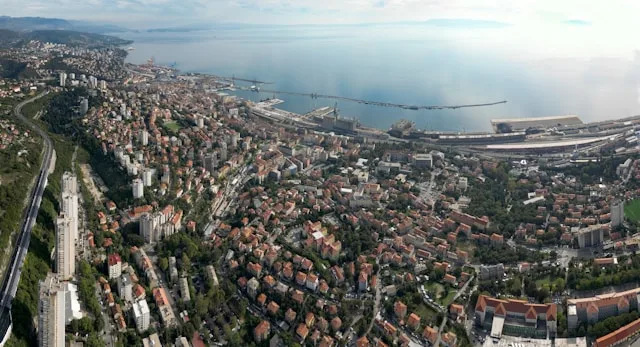
The public record for Rijeka's petroleum economy is anchored by the live city and port articles and by the city's heritage documentation. The port article describes the Port of Rijeka as the largest port in Croatia, with a cargo throughput of 13.6 million tonnes (2020) - mostly oil, general cargo and bulk cargo - and 344,091 TEU, while its current data panel carries 12.7 million tonnes and 520,866 TEU for 2022. The city article counts an oil refinery among Rijeka's nineteenth-century industrial development, and the heritage documentation dates the refining initiative to 1882 and the refinery's commissioning to 1883, with the INA record placing the founding in the Mlaka district.
Read alongside the sibling analyses on this site of Rijeka's port and shipbuilding markets, petroleum is the liquid-bulk leg of the same port economy: a cargo mix led by oil alongside general and bulk cargo, an industrial inheritance dating to the nineteenth century, and terminal-and-refinery operations recruiting alongside the container and shipyard employers those records document.
Neither the port throughput record nor the heritage date measures what a hiring leader needs to know: whether process operators, terminal and marine-handling specialists or maintenance engineers are available at a given certification level in a given quarter, or how modernisation investment converts into staffed roles. That requires a search with contacted, assessed and validated candidates.
What changes in this market
Employers in Rijeka's petroleum cluster prove themselves differently from Zagreb's corporate energy offices and from the container and shipyard employers of the same port: oil leads the recorded cargo mix, safety-certified operations run on regulatory timelines, and a refining inheritance that reaches back to the 1880s gives the cluster long process-operations continuity. Whether that continuity has left a deep but senior-skewed local pool of process specialists is not established by these records - it is a question a mandate-specific search must answer with contacted, assessed and validated candidates. Each function, phase and stage of a mandate here - process operations, terminal and marine handling, maintenance - proves itself against that structure rather than against a national average.
KiTalent's mandate analysis
- Frame the mandate by operation before the search: process operations, terminal and marine handling and maintenance certify differently and draw on different segments of the Adriatic-coastal pool.
- Treat the cargo mix as the demand anchor: a port whose recorded throughput is led by oil keeps structural demand for liquid-bulk and safety-qualified specialists.
- Benchmark against the sibling port and shipbuilding analyses on this site, which frame the same-city container-terminal and shipyard employers drawing on the same certified-industrial labour pool.
- Ask any search partner for contacted, assessed and validated candidates per certification profile before accepting cluster statistics as evidence of availability.
Where the public record stops
The figures above are the dated figures carried by the live encyclopedic and heritage records, not the Port of Rijeka Authority's own statistics. No located public record verifies refinery utilisation, storage-capacity or modernisation-investment figures, and none measures candidate availability at a given certification level in a given quarter. What the public record can prove stands above, with its dates attached.
Sources
- Wikipedia - Port of Rijeka (largest-port statement; 2020 and 2022 throughput entries)
- Wikipedia - Rijeka (city record; refinery heritage)
- Rijeka Heritage - Rijeka Oil Refinery (1882 initiative; 1883 permit and commissioning)
- Wikipedia - INA d.d. (refinery founded 1883 in Mlaka)
Related KiTalent research
- The Market Map Is Not the Shortlist: helps a buyer choose between testing the Rijeka petroleum market and commissioning a search with contacted, assessed and validated candidates
- How to Assess a Leader Beyond Competencies: shows how to gather decisional evidence for this mandate - the research method behind testing operation split, cargo-mix demand and sibling-port competition - with candidate evidence assessed conversation by conversation