Dubrovnik's Tourism Boom Has a Structural Problem: The Workforce That Should Run It Cannot Afford to Live There
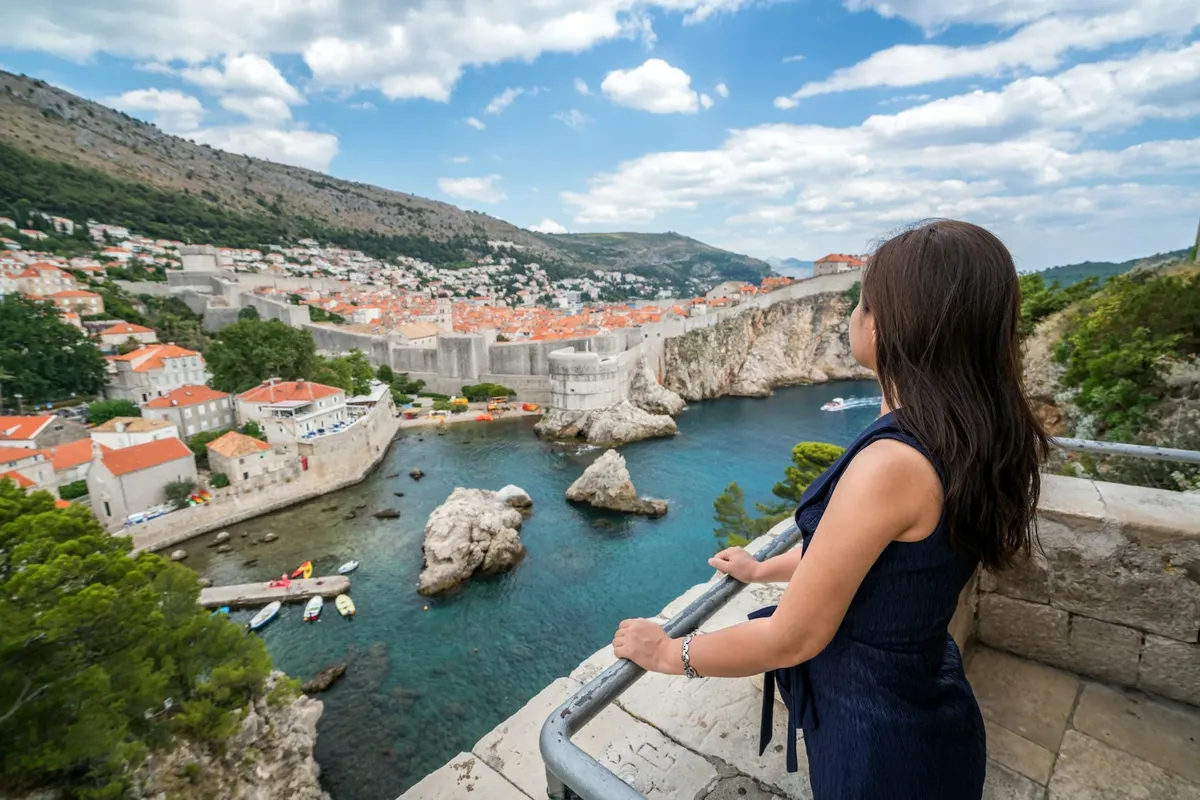
Dubrovnik recorded 1.87 million tourist arrivals in the first nine months of 2024 alone, a 12% year-on-year increase. Luxury hotel renovations totalling tens of millions of euros are completing on schedule. Pre-bookings for the 2026 peak season indicate occupancy rates above 94% in categorised accommodation. By every demand metric, this is a market operating at full capacity.
The supply side tells a different story. Rental prices in Dubrovnik rose 34% between 2022 and 2024. A one-bedroom apartment now costs between €900 and €1,200 per month. More than 60% of hospitality contracts are fixed-term agreements lasting three to seven months. The arithmetic is brutal: a seasonal worker earning a six-month wage cannot sustain a twelve-month cost of living in the city where the work exists. An estimated 1,200 qualified hospitality workers left Dubrovnik-Neretva County for German-speaking markets in 2023 and 2024, drawn by salaries 2.5 to 3 times higher and year-round contracts.
What follows is an analysis of the forces reshaping Dubrovnik's tourism and hospitality sector, the employers driving that change, and what senior leaders need to understand before they make their next hiring or retention decision. The investment story is real. So is the workforce crisis it is accelerating. The question is whether the market can reconcile the two before the gap becomes permanent.
The Investment Surge and Its Unintended Consequence
Dubrovnik attracted €340 million in tourism infrastructure investment in 2024, according to the Croatian Bank for Reconstruction and Development. Valamar Riviera completed a €45 million renovation of Hotel Dubrovnik, reopening in May 2025 with 150 full-time positions. Hilton Imperial Dubrovnik finished a €12 million refurbishment in early 2025. Adriatic Luxury Hotels committed €30 million to ESG-focused upgrades across its Excelsior and Villa Orsula properties by 2026. Reports of a Ritz-Carlton Reserve development on Lopud Island remain unconfirmed but consistent with the market's trajectory toward ultra-luxury positioning.
This capital is chasing a clear thesis: Dubrovnik's future lies in higher-value, lower-volume tourism. The city's "Respect the City" programme now limits daily city wall visitors to 6,000 through mandatory advance booking. Cruise passenger dispersal requirements cap simultaneous disembarkation at 4,000. These measures, tightened for 2026, are explicitly designed to reduce spontaneous, low-spend visitor traffic and increase demand for premium guided experiences and luxury hospitality.
The logic is sound. The execution has a flaw. Every new luxury property requires senior leadership. Every premium experience requires skilled specialists. The capital has arrived. The people to operate what it has built have not arrived at the same pace. Dubrovnik's tourism sector is investing in a quality pivot that depends on a talent pool it is simultaneously making harder to access, because the same investment cycle that improves hotels and port infrastructure has inflated the cost of living beyond what the sector's employment model can support.
Where the Workforce Pressure Is Most Acute
The Executive Layer: Searches That Run for Months
As of early 2025, the Croatian Employment Service registered 1,340 active job vacancies in Dubrovnik-Neretva County for accommodation and food service roles, a 23% increase year-on-year. The aggregate figure, however, masks a critical divergence. Average time-to-fill for general service positions runs 42 days. For specialised hospitality roles, it extends to 68 days.
At the executive level, the timelines stretch further. According to HVS Executive Search placement data, the Hotel Excelsior Dubrovnik advertised a Director of Food and Beverage position for approximately seven months before the role was filled, reportedly requiring engagement of an international hospitality executive search firm after the local candidate pool proved insufficient at the €80,000-plus compensation tier. This is not an isolated case. It reflects a systemic gap in luxury hospitality leadership talent across the Adriatic region.
HVS estimates that 80 to 85% of luxury hotel general manager placements in the Adriatic occur through executive search or direct headhunting rather than application responses. The qualified pool of executive chefs capable of Michelin-standard kitchen leadership in the Dalmatia region numbers fewer than 50 individuals. These professionals rarely post CVs publicly. Their average tenure exceeds four years. They are, by every measurable indicator, a passive candidate market where conventional job advertising reaches almost no one who matters.
The Specialist Layer: Revenue Managers, Guides, and Cruise Coordinators
The roles causing the most operational disruption sit in the middle of the seniority spectrum. Revenue management specialists, multilingual tour guides, and cruise operations coordinators share a common trait: they require a combination of technical capability and local market knowledge that cannot be imported quickly.
According to the Croatian Hotel Management Association, Valamar Riviera reportedly secured a Regional Revenue Manager from Amadria Park Hotels in Šibenik in late 2024 by offering a salary premium of approximately 35%, an estimated €65,000 annual package against an industry standard closer to €48,000. The premium reflects the scarcity of yield management expertise specific to the Adriatic luxury market, where dynamic pricing must account for extreme seasonality, cruise traffic volatility, and capacity constraints that do not exist in year-round resort markets.
The guide shortage is equally acute. Elite Travel Dubrovnik restructured its operations in February 2025 to launch a "Guide Incubator" programme, offering €2,000 monthly stipends during a three-month training period to attract graduate students from Zagreb and Split. As reported by the Dubrovnik Times, this arrangement was necessitated by the inability to fill 40 Mandarin-speaking guide positions through conventional hiring for the 2025 cruise season. The ratio of active to passive candidates for specialised shore excursion management roles runs approximately 1:4, according to CLIA's Eastern Mediterranean Workforce Study.
Each of these shortages has a compounding effect. A luxury hotel without a revenue management specialist underprices during peak periods and fails to capture the premium its capital investment was designed to generate. A shore excursion operator without Mandarin-speaking guides loses access to one of the fastest-growing visitor segments. The cost of an unfilled specialist role is not just the hidden cost of a bad hire; it is the revenue that never materialises.
The Housing Equation That Breaks the Employment Model
Here is the analytical claim that sits beneath every hiring statistic in this market. Dubrovnik's talent crisis is not primarily a skills crisis. It is a housing economics crisis dressed as a recruitment problem.
The data makes this inescapable. Seasonal hospitality contracts run three to seven months under Croatia's Labour Act. Rental prices in Dubrovnik require a twelve-month commitment at €900 to €1,200 per month for a one-bedroom apartment, according to Njuškalo.hr's Real Estate Price Index. Amendments to the Tourism Services Act effective January 2025 restrict short-term rentals to 60 days annually in historic core zones, a measure designed to free housing stock for permanent residents and workers. But the restriction addresses supply without resolving the structural mismatch: a six-month contract does not justify a twelve-month lease.
This is why salary premiums alone are not solving the problem. Employers can and do offer 20 to 35% above market rates. According to the Croatian Employment Service's emigration data, workers still leave. The pull of German-speaking markets is not just higher wages. It is the combination of higher wages, year-round contracts, and affordable housing that creates a viable life. Dubrovnik offers one of the three.
For senior leaders, this means the traditional approach of recruiting harder and paying more has a ceiling. The firms that will retain and attract talent in this market are those that can solve the housing equation directly, whether through employer-provided accommodation, year-round contract structures that justify relocation, or partnerships with municipal housing initiatives. Compensation benchmarking remains essential, but compensation alone cannot close a gap that is fundamentally about the cost of being present in the market.
Regulatory Tightening and Its Talent Implications
Dubrovnik's regulatory environment is moving in two directions simultaneously, and the tension between them is reshaping what the sector needs from its leaders.
The visitor management framework is tightening. The "Respect the City" programme, entering stricter implementation for 2026, imposes mandatory advance booking for city wall access, limits simultaneous cruise passenger disembarkation, and aims to disperse visitor flows across a wider geographic area including the Pelješac corridor now accessible via the bridge completed in 2022. UNESCO's 2024 monitoring mission warned of potential "reactive monitoring" status for the Old Town, a designation that would directly threaten the destination premium underpinning luxury pricing. According to the UNESCO World Heritage Centre's State of Conservation Report, the pressure on Dubrovnik's heritage status remains a live risk.
Simultaneously, the growth framework continues to expand. Dubrovnik Airport's terminal expansion targets capacity of 5 million passengers annually. The Dubrovnik-Neretva County Tourism Development Strategy projects 2.1 million arrivals and 5.4 million overnight stays for 2026.
These two trajectories require a specific kind of leader. The general manager who thrived by maximising volume in a pre-regulation market is not the same general manager who will thrive in a market where value per visitor matters more than visitor count. The revenue management specialist who optimised room rates based on historical demand curves must now account for regulatory caps on addressable market size. The tour operations director who scaled by adding coaches and guides must now design premium, small-group experiences that generate more revenue from fewer participants.
This shift in what leadership looks like creates a paradox for executive recruitment in this sector. The candidates with the most relevant experience in Dubrovnik are those who built their careers in the high-volume era. The candidates with the right instincts for the premium era may come from smaller luxury markets where capacity was always constrained. Finding someone who combines Adriatic market knowledge with a premium-first operational philosophy is the search that takes seven months, not seven weeks.
The Competitive Geography Pulling Talent Away
Dubrovnik does not compete for talent in isolation. It competes against domestic markets that offer better year-round economics, regional markets that offer tax advantages, and European markets that offer transformational salary multiples.
Domestic Rivals: Split and Zagreb
Split offers 15 to 20% higher compensation for equivalent hotel management roles, according to the HVS Salary Survey for the Adriatic region, combined with year-round employment that Dubrovnik's seasonal model struggles to match. Zagreb draws executive talent through corporate hospitality headquarters, international chain regional offices, and materially better childcare infrastructure, a factor that the Moveo HR Consultancy's Talent Mobility Report identified as decisive for hospitality leaders with families.
Regional Rivals: Montenegro and the Greek Islands
Montenegro's emerging luxury cluster presents the most direct competitive threat. New Aman, One&Only, and Hyatt properties in Kotor and Budva are actively recruiting Croatian hospitality managers. The incentive structure is stark: Montenegro's flat 10% personal income tax compares to Croatia's progressive rates of 20 to 30%, according to the Montenegro Investment Agency's incentive documentation. Combined with lower living costs, the effective compensation gap for a senior hospitality leader moving from Dubrovnik to Kotor can exceed 40%.
Greek islands including Santorini and Mykonos offer a different advantage: operating seasons running April through November versus Dubrovnik's effective May through October window. For guides and seasonal hospitality staff, this additional month at each end of the season translates directly into higher annual earnings, as reported by SETE, Greece's tourism confederation.
The German-Speaking Pull
The largest talent drain is the simplest. EU freedom of movement allows Croatian hospitality workers to take positions in Germany, Austria, and Switzerland at 2.5 to 3 times Dubrovnik's salary levels with year-round contracts. An estimated 1,200 qualified hospitality workers left Dubrovnik-Neretva County for these markets in 2023 and 2024 alone. This is not a temporary fluctuation. It is a structural outflow that reduces the experienced mid-career pool from which senior roles are eventually filled. The implications for long-term talent pipeline development are severe.
What the Compensation Data Actually Shows
Compensation benchmarks in Dubrovnik's hospitality sector reveal a market that is premium by Croatian standards but modest by the standards of the markets it competes against for talent.
A luxury five-star hotel general manager in Dubrovnik earns between €85,000 and €140,000 annually, with premium properties offering performance bonuses up to 30% of base, according to hospitalityON Magazine's Croatia compensation report and industry sources. At the senior manager level, an operations manager commands €45,000 to €58,000. A Director of Sales and Marketing at regional executive level earns €65,000 to €90,000, per Michael Page Croatia's Hospitality Salary Guide.
In tour operations, a managing director of a mid-size operator earns €55,000 to €75,000. Specialised licensed executive tour guides working retained arrangements earn €45,000 to €60,000 annually, while freelance rates during peak season run €150 to €300 daily. Port operations management ranges from €40,000 at senior level to €95,000 at the executive Port Authority director tier.
These figures tell a specific story. The top of the market is competitive enough to attract international candidates willing to accept Dubrovnik's lifestyle proposition. A general manager earning €140,000 with a 30% bonus structure and the prospect of running a property in one of Europe's most iconic destinations can make the economics work. The problem sits one and two levels below. A revenue management specialist at €48,000 to €65,000 faces the same €900-plus monthly housing cost as the general manager, but without the compensation to absorb it. Negotiating these packages effectively requires understanding exactly where the market breaks.
The compensation gap between Dubrovnik and Montenegro is widening fastest at precisely this mid-senior level, where Montenegro's tax advantage converts a modest gross salary difference into a material net income gap. For hiring leaders, this means counteroffer situations are increasingly resolved not by matching the number but by matching the lifestyle equation, a far more complex proposition.
How Organisations Should Approach This Market
The data points toward a market where the conventional hiring playbook fails at every level above front-of-house service. Job postings generate high volumes of applications for entry-level positions but reach almost none of the candidates who matter for specialist and leadership roles. At the executive chef level, recruitment occurs almost entirely through professional network referrals. At the general manager level, 80 to 85% of placements require direct search.
Three adjustments are necessary for organisations hiring in this market in 2026.
First, solve the housing barrier before it becomes a recruitment barrier. Valamar's scale allows it to provide staff accommodation as part of its employment proposition. Smaller operators and independent luxury properties must find equivalent solutions, whether through seasonal housing partnerships, lease guarantees, or conversion of restricted short-term rental stock into worker accommodation. Without addressing this, no salary premium will be sufficient to attract talent that has alternatives in Split, Montenegro, or Germany.
Second, extend search radius deliberately. Elite Travel's Guide Incubator programme, recruiting from Zagreb and Split with training stipends, is a model that applies beyond tour operations. The qualified talent pool within Dubrovnik proper is too small for the market's ambitions. Every executive and specialist search in this market must begin with the assumption that the successful candidate is currently outside the city and possibly outside Croatia. International executive search methodology is not a luxury in this market. It is the baseline requirement.
Third, reconsider the seasonal contract model for roles that require retention. Croatia's Labour Act limits seasonal contracts to six months. This creates a structural disincentive for training investment and makes it impossible for mid-career professionals to build a stable life in the city. The properties that convert their most critical specialist roles to permanent contracts, absorbing some off-season cost in exchange for retention, will build a competitive advantage that seasonal operators cannot match.
For organisations competing for hospitality leadership in Dubrovnik's premium-tier market, where the candidates capable of running a quality-over-quantity operation are not visible on any job board and the cost of a slow search is measured in lost peak-season revenue, speak with our executive search team about how we approach passive candidate markets in tourism and hospitality. KiTalent delivers interview-ready executive candidates within 7 to 10 days through AI-powered talent mapping that reaches the professionals who are not actively looking. Our pay-per-interview model means clients only pay when they meet qualified candidates, and our 96% one-year retention rate reflects the quality of match this market demands.
Frequently Asked Questions
What are the hardest hospitality roles to fill in Dubrovnik in 2026?
Luxury hotel general managers, executive chefs at Michelin standard, multilingual tour guides (particularly Mandarin and Japanese speakers), revenue management specialists, and cruise operations coordinators are the most difficult roles to fill. Time-to-fill for specialised hospitality roles averages 68 days versus 42 days for general service positions. At the executive level, searches can extend beyond six months. The qualified pool for several of these roles in the Dalmatia region numbers fewer than 50 individuals, making proactive headhunting methodology essential rather than optional.
Why is Dubrovnik losing hospitality talent to other markets?
Three factors drive talent outflow. German-speaking markets offer 2.5 to 3 times Dubrovnik's salary levels with year-round contracts. Montenegro's flat 10% personal income tax creates a material net income advantage over Croatia's 20 to 30% progressive rates. Within Croatia, Split offers 15 to 20% higher compensation with better year-round employment prospects. These external pulls are compounded by Dubrovnik's 34% rent increase between 2022 and 2024, which makes the city unaffordable for mid-career professionals on seasonal contracts.
How much does a luxury hotel general manager earn in Dubrovnik?
A general manager at a five-star luxury property in Dubrovnik earns between €85,000 and €140,000 annually. Premium properties including the Excelsior and Rixos offer performance bonuses up to 30% of base salary. At the operations manager level below, compensation ranges from €45,000 to €58,000. The gap between these tiers reflects the small number of executives with both Adriatic market knowledge and luxury hospitality credentials. Compensation data is drawn from HVS and hospitalityON surveys of the Adriatic region.
What impact do Dubrovnik's visitor caps have on hospitality hiring?
Visitor caps and the "Respect the City" programme are shifting demand from volume-driven roles toward premium experience design and revenue optimisation. Daily cruise passenger limits of 4,000 simultaneous disembarkations and city wall visitor caps of 6,000 per day reduce the addressable market for mass-market excursion operators by 15 to 20% compared to 2019 peaks. This increases demand for leadership talent experienced in premium positioning, dynamic pricing, and sustainable tourism compliance, roles that are harder to fill than volume-oriented equivalents.
How does seasonality affect executive recruitment in Dubrovnik?
Over 62% of hospitality contracts in Dubrovnik-Neretva County are fixed-term agreements lasting three to seven months. This seasonal structure creates two recruitment challenges. First, it limits the pool of candidates willing to relocate for a role that may not provide year-round income. Second, it reduces employer investment in training and development, further shrinking the skilled talent pipeline over time. Organisations that convert critical specialist and leadership roles to permanent contracts gain a measurable retention advantage in a market where competitors still rely on seasonal hiring cycles.
What is the passive candidate ratio for senior hospitality roles in Dubrovnik?
For luxury hotel general manager positions, an estimated 80 to 85% of placements occur through executive search or direct approach rather than application responses, according to HVS Executive Search. For specialised shore excursion managers, the ratio of active to passive candidates is approximately 1:4. Executive chefs at fine dining level have unemployment below 3% and average tenure exceeding four years. These figures mean that conventional job advertising reaches less than 20% of the viable candidate pool for Dubrovnik's most critical hospitality leadership roles.