Dubrovnik's Yacht and Nautical Sector in 2026: The Capacity Ceiling That Is Reshaping Every Hire
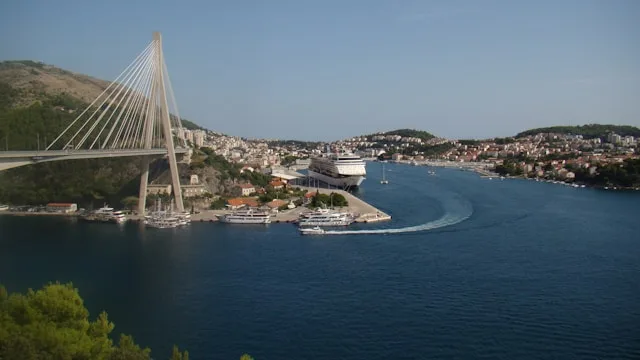
Dubrovnik's nautical sector generated €142 million in direct revenue through charter operations, marina fees, and provisioning in 2024. Berth utilisation at ACI Marina Dubrovnik hit 98% in peak season. Fleet operators are projecting 8% growth in 2026, concentrated in the lucrative 50-60ft catamaran segment. By every commercial measure, this is a market in expansion.
Yet the talent market tells a different story entirely. Marine electrician positions with STCW III/6 certification went unfilled for the entire 2024 operating season across multiple Dubrovnik operators. Technical roles sit vacant 2.1 times longer than hospitality positions. The University of Dubrovnik's maritime faculty produces roughly 45 graduates a year against sector demand for 80-90 new entrants. The investment is flowing in. The people are not.
What makes this market analytically distinct from other Mediterranean hiring challenges is a compounding constraint that no recruitment strategy alone can resolve. UNESCO heritage protections cap physical infrastructure. EU Green Deal mandates are raising operational costs. Seasonal employment structures drive senior talent toward year-round competitors in Palma, Genoa, and Athens. The result is a market where commercial ambition and human capital availability are moving in opposite directions. What follows is a detailed analysis of where these pressures converge, what they mean for compensation and hiring strategy, and what organisations operating in this corridor need to understand before their next critical search.
The Commercial Engine Behind the Hiring Pressure
The Dubrovnik-Neretva County hosts approximately 850 commercially registered charter vessels as of early 2025, with 60% of the fleet concentrated under four major operators. This is not a fragmented cottage industry. It is a professionalised sector contributing 18% of Dubrovnik's total tourism receipts, anchored by international fleet operators with substantial capital behind them.
The commercial momentum is real. Weekly charter rates for 40-50ft monohulls rose 12% year-on-year through 2024, settling between €4,200 and €4,800. The Croatian Charter Association projects 8% fleet growth in Dubrovnik for 2026, driven primarily by North American demand. Navigare Yachting maintains 120 vessels from its Komolac base. Sunsail and The Moorings, both TUI Group subsidiaries, operate a combined fleet exceeding 90 vessels. Orvas Yachting, the largest indigenous employer, runs 35 permanent and 85 seasonal staff.
But revenue growth has not translated into proportional workforce growth. Peak seasonal employment reached 4,200 in July 2024, against a year-round base of just 1,850 full-time equivalents. That ratio, a seasonal workforce fluctuation exceeding 300%, tells you everything about why senior technical and managerial talent treats this market with caution. The commercial engine is powerful. The employment proposition is brittle.
The Infrastructure Ceiling No One Can Lift
Here is the analytical claim that sits at the centre of this market's hiring problem and is not visible in any single data point alone: Dubrovnik's nautical sector has reached a structural ceiling where physical capacity constraints, regulatory protections, and workforce pipeline shortfalls are now reinforcing each other rather than operating independently.
The UNESCO World Heritage buffer zone prohibits permanent dry-dock facilities and new marina construction within a 500-metre to one-kilometre radius of the Old City walls. No new wet berths are planned within city limits. ACI Marina Dubrovnik's 380 berths at Komolac are the principal mooring facility, and they are functionally full. The Port of Dubrovnik Authority's Master Plan 2026-2030 allocates €12 million to infrastructure upgrades, but this investment targets shore-power electrification and waste-water pump-out facilities to meet EU Green Deal marina standards. It adds capacity for environmental compliance. It does not add capacity for vessels.
The Overflow Strategy and Its Limits
The Authority's planned response to the berth shortage is 120 "smart mooring" buoys in the Elaphiti Islands corridor. This is a throughput management strategy, not a growth strategy. Environmental protections in the Elaphiti archipelago restrict new anchoring infrastructure, meaning even the overflow solution operates within a regulatory constraint.
The practical result is visible in the data. Average vessel stays compressed from 3.1 days in 2019 to 2.3 days in 2024. The marina is not expanding. It is cycling faster. Shorter stays generate revenue, but they also intensify the operational demands on the workforce servicing those vessels. More turnovers per berth means more provisioning, more technical inspections, more crew transfers, and more pressure on the same constrained pool of qualified staff.
Why the Refit Bottleneck Compounds the Problem
Dubrovnik proper maintains only two operational boatyards with lifting capacity under 500 tonnes. An estimated 70% of structural refit and heavy maintenance work must relocate to Split, Šibenik, or Italian yards. This means the technical talent that performs complex work on vessels has limited reason to base itself permanently in Dubrovnik. The work migrates, and the workers follow it. Fleet Technical Directors overseeing 50-plus vessel maintenance cycles in Dubrovnik must coordinate dry-dock schedules across multiple cities, a logistical complexity that adds to the difficulty of the role and narrows the candidate pool further.
The infrastructure ceiling is not merely a facilities problem. It is a talent pipeline problem. When the physical capacity for skilled work is capped, the incentive for skilled workers to remain in or relocate to the market is also capped.
Three Shortage Verticals and What Each Reveals
The aggregate data is clear: technical positions in Dubrovnik's nautical sector remain open 2.1 times longer than hospitality roles, according to a joint survey by the Croatian Employers' Association and the Croatian Chamber of Commerce in mid-2024. But the aggregate obscures three distinct shortage patterns, each driven by different structural forces.
STCW-Certified Marine Engineers
Marine electricians holding STCW III/6 certification could not be hired at all during the 2024 operational season across multiple Dubrovnik operators. These employers offered wages 40% above the Dubrovnik-Neretva County average and still failed to fill the roles. They resorted to rotating freelance technicians from Split, incurring 25% higher logistical costs.
The shortage is not a compensation problem. It is a supply problem. The University of Dubrovnik graduates approximately 45 marine engineers, nautical officers, and maritime management specialists each year. The sector requires 80-90 new entrants annually. The structural deficit is filled, when it is filled at all, by Croatian nationals returning from foreign-flagged vessels or by foreign workers, primarily Serbian and Ukrainian marine technicians. Industry data from Seadog Recruitment's Adriatic analysis indicates that 80-85% of qualified marine engineers in the county are locked into permanent or long-term rotational contracts by February each season. By the time most operators begin pre-season recruitment, the active candidate pool has contracted to 15-20% of the qualified population.
This is a market where the hidden majority of qualified candidates are not merely passive. They are contractually committed months before demand peaks.
Fleet Maintenance and Technical Directors
According to reporting in Poslovni Dnevnik, a Dubrovnik-based charter fleet operator with more than 80 vessels reportedly spent six months in unsuccessful active recruitment for a Technical Fleet Manager in 2024 before securing one from a Split-based competitor at a 35% salary premium above 2023 market rates. HGK sectoral data shows average tenure for Marina Operations Directors and Technical Directors at 4.2 years, with recruitment occurring primarily through executive search and direct headhunting rather than job board applications.
The combination of low mobility, high specificity, and a small total market makes these roles functionally unsearchable through conventional methods. The total addressable candidate pool for a Fleet Technical Director with 100-plus vessel oversight experience, STCW III/2 certification, and Adriatic operational knowledge is measured in dozens across the entire Mediterranean.
Senior Skippers and Crew Leadership
Senior skippers with Yachtmaster Ocean certification and five or more years of Adriatic experience are 90% passively employed by March, moving only through network referrals. Several mid-sized charter companies with 30-50 vessel fleets implemented guaranteed winter employment contracts in 2024. These covered November through February in brokerage or vessel refit coordination roles. The purpose was to prevent senior skippers from migrating to Mediterranean winter bases where year-round work is available.
This restructuring signals something important. Employers are not simply paying more. They are fundamentally changing their employment model to retain talent that would otherwise leave the market entirely.
Compensation: The Gap That Widens at the Top
Executive compensation in Dubrovnik's nautical sector carries a 15-20% premium over equivalent corporate roles in Zagreb. But this premium is misleading when viewed against the competitive set that actually matters.
A Fleet Technical Director overseeing 100-plus vessels earns €75,000 to €90,000 annual gross in Dubrovnik, frequently supplemented with private health insurance and vehicle allowances. A Marina Operations Director with P&L responsibility and 50-plus staff commands €70,000 to €95,000 with performance bonuses tied to utilisation and safety metrics. Charter Company General Managers sit at €65,000 to €85,000 with profit-sharing arrangements.
These figures are 30-40% below comparable roles in Palma de Mallorca and Genoa, according to the Bluewater Yachting Industry Salary Survey for 2024. Split, Dubrovnik's primary domestic competitor, actually offers marine engineers 10-15% higher base salaries due to industrial shipyard concentration at Brodosplit and Marina Kaštela. And Split's residential costs sit 25% below Dubrovnik's.
This creates an asymmetric competitive position. Dubrovnik pays more than Zagreb but less than every meaningful competitor in its own sector. For a Fleet Technical Director weighing an offer, the calculation is not Dubrovnik versus a desk job in the capital. It is Dubrovnik versus Palma, where the same role pays €120,000-plus and the season runs year-round.
Montenegro compounds the pressure from the south. Porto Montenegro in Tivat competes on taxation, offering a 9% flat personal income tax rate compared to Croatia's progressive rates reaching 30%. For freelance skippers and technical contractors, the after-tax income differential is material. Italy draws Croatian marine engineers with contracts at €65,000 to €80,000 for similar roles, though language barriers limit that migration somewhat. Athens offers similar salary levels to Dubrovnik but with larger fleet volumes and VAT advantages for commercial yachts.
The compensation gap is not a static disadvantage. It is a dynamic one. As Dubrovnik's operational costs rise, including marine fuel averaging €1.85 per litre and winter storage costs up 22% due to EU energy efficiency requirements, the margin available for salary increases compresses. Employers cannot simply pay their way out of the shortage when their own cost base is rising faster than their pricing power allows.
The Seasonality Trap: Why Year-Round Employment Remains Elusive
Seventy-five per cent of nautical service jobs in Dubrovnik terminate between October and April. This single statistic explains more about the talent crisis than any other data point in this research.
The Dubrovnik Tourism Board and EU cohesion funds invest approximately €5 million annually in winter festival initiatives and shoulder-season marketing. These programmes aim to extend the tourism calendar. But nautical service employment is structurally disconnected from tourism demand diversification. Vessels must migrate south for winter refit cycles. Crews follow vessels. The work itself leaves the geography.
This is not a marketing problem that better branding can solve. It is a physical and operational reality. A 50-foot catamaran does not winter in Dubrovnik because Dubrovnik's two boatyards lack the capacity and the climate is not conducive to composite repair work at scale. The vessel moves to a yard in Split or across the Adriatic. Its maintenance crew moves with it.
The charter companies that introduced guaranteed winter contracts in 2024 were attempting to break this cycle. By offering senior skippers brokerage and refit coordination work from November through February, they created year-round employment in a market that structurally produces only seasonal roles. But this strategy has limits. It works for a handful of senior individuals whose skills transfer to office-based coordination. It does not work for marine electricians, diesel specialists, or composite repair technicians whose skills are hands-on and vessel-specific.
The cost of losing a senior hire and restarting a search each spring is substantial in any sector. In a market where 85% of qualified candidates are committed by February, the cost compounds. An organisation that loses a Fleet Maintenance Manager in October and begins recruiting in January is already too late.
Regulatory Change Is Raising the Entry Bar
New regulations effective January 2026 mandate AIS transponders on all commercial charter vessels over 24 metres. They also require digital crew manifests integrated with the Croatian e-Nautical system. The IT infrastructure investment per fleet operator ranges from €15,000 to €25,000.
ACI Marinas has committed to digitalisation of fleet management systems across its Croatian network, including predictive maintenance AI for the Dubrovnik facility. This commitment requires a 40% increase in technical staff by the second quarter of 2026.
These are not discretionary upgrades. They are compliance requirements. And they introduce a new category of hiring need: professionals who combine maritime domain knowledge with digital systems competence. A traditional marine engineer who has spent 20 years maintaining diesel engines is not automatically qualified to manage predictive maintenance AI. A software engineer from Zagreb who understands data systems has no familiarity with STCW certification requirements or vessel maintenance cycles.
The regulatory evolution is creating roles that sit at the intersection of two disciplines. Candidates who hold both maritime credentials and digital and AI-related technical competence are vanishingly rare in a market that already cannot fill its conventional technical roles.
The EU Green Deal requirement for shore-power connection capabilities on all commercial vessels over 24 metres by 2027 will add further pressure. The €8-12 million infrastructure investment required may exceed the liquidity of smaller operators with fleets under 20 vessels. This could trigger consolidation, concentrating employment under fewer, larger operators and potentially improving employment stability for the roles that survive. But it will also reduce the total number of employers competing for talent, which in smaller markets can reduce wage competition and make retention harder.
What Hiring Leaders in This Market Need to Do Differently
The conventional recruitment playbook fails in Dubrovnik's nautical sector for structural reasons, not execution reasons. Job postings reach 15-20% of the qualified candidate pool at best. The other 80-85% are already committed by February. The roles that matter most, Fleet Technical Directors, Marina Operations Directors, and STCW-certified senior engineers, are filled through direct approaches and network referrals. They are not filled through advertisements.
This means the method of search matters as much as the speed. An organisation that begins a conventional recruitment process in March for a peak-season role is competing for candidates who were approachable in November. The hiring cycle must run counter-seasonally. The identification work must happen when candidates are between contracts, not when they are mid-season and contractually bound.
For organisations competing for fleet leadership and senior technical talent in a market where 850 vessels depend on a workforce pipeline that produces half the graduates it needs, talent mapping conducted before the hiring need becomes urgent is not a luxury. It is the only approach that reaches the candidates who determine whether your fleet operates at full capacity or at a deficit.
KiTalent's AI-enhanced direct search methodology is built for precisely these conditions. In markets defined by high passive-candidate ratios, niche certification requirements, and cross-border competition, the ability to identify and engage candidates who are not visible on any job board is the difference between filling a critical role and operating without one. With a 96% one-year retention rate across 1,450-plus executive placements and a pay-per-interview model that eliminates upfront retainer risk, KiTalent works as a specialist partner for executive hiring across industrial and maritime sectors where conventional sourcing consistently underperforms.
For charter operators, marina management companies, and fleet services businesses competing for leadership talent in the Adriatic's most constrained hiring market, start a conversation with our executive search team about how a targeted, counter-seasonal search strategy can reach the candidates your competitors cannot.
Frequently Asked Questions
What is the average salary for a Fleet Technical Director in Dubrovnik?
A Fleet Technical Director overseeing 100-plus vessels in Dubrovnik earns €75,000 to €90,000 annual gross, typically supplemented with private health insurance and vehicle allowances. This represents a 15-20% premium over equivalent corporate roles in Zagreb but sits 30-40% below comparable positions in Palma de Mallorca or Genoa. The compensation gap at this seniority level is one of the primary reasons senior technical talent migrates to larger Mediterranean markets, making executive-level search in this sector particularly dependent on direct candidate engagement rather than inbound applications.
Why is it so hard to hire marine engineers in Dubrovnik?
The University of Dubrovnik graduates approximately 45 marine engineers and maritime specialists annually against sector demand for 80-90 new entrants. This creates a permanent structural deficit. Compounding the supply problem, 80-85% of qualified marine engineers in the Dubrovnik-Neretva County are locked into permanent or long-term rotational contracts by February each year. By pre-season recruitment windows, the active candidate market has contracted to 15-20% of the qualified population. Employers offering wages 40% above county averages still failed to fill STCW III/6 certified marine electrician roles during the entire 2024 season.
How does Dubrovnik's nautical sector compare to Split for maritime employment?
Split offers marine engineers 10-15% higher base salaries than Dubrovnik, driven by industrial shipyard concentration at Brodosplit and Marina Kaštela. Split's residential costs are approximately 25% lower than Dubrovnik's. However, Dubrovnik's charter sector offers higher-value client interaction, luxury provisioning experience, and superyacht exposure that Split's industrial maritime focus does not match. The choice between the two markets often depends on whether a candidate prioritises base compensation and stability or client-facing seniority and seasonal premium earnings.
What regulatory changes affect Dubrovnik's charter fleet in 2026?
From January 2026, all commercial charter vessels over 24 metres must carry AIS transponders and integrate digital crew manifests with the Croatian e-Nautical system. Each fleet operator faces IT infrastructure investment of €15,000 to €25,000. Additionally, EU Green Deal regulations require shore-power connection capabilities for all commercial vessels over 24 metres by 2027, necessitating €8-12 million in collective infrastructure investment. These mandates create new hiring requirements for professionals combining maritime domain knowledge with digital systems expertise.
How does KiTalent approach executive search in niche maritime markets?
KiTalent uses AI-enhanced talent mapping to identify qualified candidates who are not actively seeking new roles, which is critical in markets where 80-85% of the qualified workforce is passively employed. The methodology is particularly effective for roles requiring rare certification combinations, such as STCW III/2 qualified Fleet Technical Directors with Adriatic operational experience. With a pay-per-interview pricing model and interview-ready candidates delivered within 7-10 days, the approach eliminates the lag time that causes organisations in seasonal markets to miss their pre-season hiring windows entirely.
Is year-round employment possible in Dubrovnik's yacht sector?
Structural constraints make full year-round employment difficult for most nautical roles. Seventy-five per cent of nautical service jobs terminate between October and April because vessels migrate south for winter refit cycles and Dubrovnik's boatyard capacity is limited. Some charter companies have introduced guaranteed winter contracts for senior skippers, redeploying them into brokerage or refit coordination roles from November through February. However, this model works only for individuals whose skills transfer to office-based coordination and does not extend to hands-on technical roles such as marine electricians or diesel specialists.