Dubrovnik's Short-Term Rental Boom Has a Staffing Problem No Regulation Can Fix
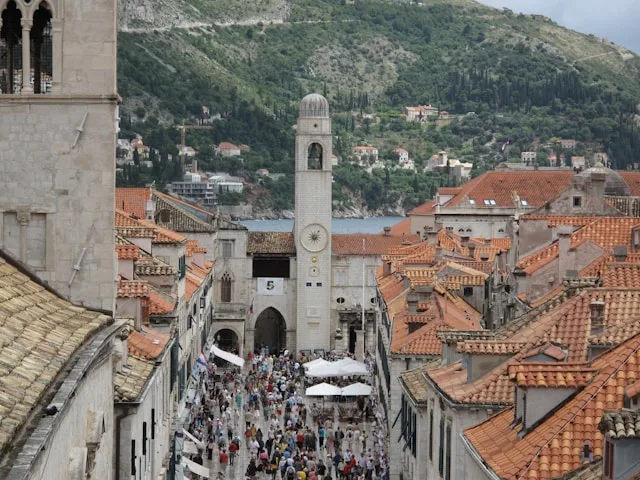
Dubrovnik's short-term rental sector controls roughly 4,200 active listings. That figure represents approximately 18% of the city's total housing stock. In the historic Old Town, STR penetration exceeds 35%. The market generates an estimated €180 million in annual revenue across Dubrovnik-Neretva County. By every capital metric, the sector is thriving. By every operational metric, it is breaking.
The core problem is not regulation, although regulation is tightening. It is not investor appetite, which continues to grow despite new restrictions. The problem is that the people required to run these properties at a professional standard do not exist in sufficient numbers. Maintenance technician vacancies sit at 45%. Revenue management analyst vacancies are at 38%. Property operations manager vacancies reach 31%. A Director of Operations search at the largest management firm in Southern Dalmatia ran for eleven months before the company gave up on the external market entirely.
What follows is a ground-level analysis of why Dubrovnik's STR sector is caught between accelerating institutional investment and collapsing operational capacity. The article examines where the talent gaps are sharpest, what forces are driving them, why conventional hiring methods fail in this specific market, and what organisations operating in Dubrovnik's real estate and hospitality sector need to do differently.
The Regulation Paradox: Barriers That Protect Incumbents Instead of Cooling Demand
Dubrovnik's regulatory trajectory has followed a pattern that many hiring leaders have misread. The City Council imposed a moratorium on new STR registrations in the historic core in 2023, extended into 2025. Croatia's 2024 amendments to the Tourism Services Act introduced 180-day rental caps for non-professional landlords. The Ministry of Tourism has signalled intent to implement a digital "tourism carrying capacity" tracking system by mid-2026, potentially triggering dynamic licence caps based on real-time infrastructure load.
The assumption behind these measures was that constrained supply would cool the market. It has not.
Transaction volumes for existing licensed properties rose 28% year-over-year in 2024. Institutional investors, including UK-based Henley Investments, actively consolidated inventory. In the historic centre, existing STR licences began trading at €15,000 to €25,000 premiums through unofficial transfer arrangements. The regulations did not deter capital. They created a moat around incumbent operators, raising the barriers to entry while making existing portfolios more valuable.
Why Consolidation Accelerates the Talent Crisis
This consolidation reshapes the talent picture in a way that is easy to miss. When amateur landlords exit the market and professional management companies absorb their inventory through lease-back agreements or outright purchases, the operational complexity per firm increases sharply. A company that managed 120 units in 2023 may now manage 200. The skills required to run 200 units across multiple platforms, with dynamic pricing, regulatory compliance, and luxury-tier guest services, are categorically different from those required to manage a handful of apartments.
Colliers International projects a 12 to 15% reduction in total STR listings through 2026 as compliance costs force remaining amateur operators out. Average daily rates are projected to rise 8 to 10%, reaching approximately €185 per night. The inventory shrinks. The revenue per unit rises. The operational demands on each remaining management company intensify. Every exit by an amateur landlord is an entry ticket for a professional operator who needs skilled staff that the market cannot provide.
The regulation is not cooling the sector. It is professionalising it. And professionalisation without a matching increase in qualified talent creates the acute operational gaps now visible across the market.
Where the Gaps Are Sharpest: A Vacancy Map by Function
The Croatian Employment Service reported Dubrovnik-Neretva County's unemployment rate at 6.2% in the third quarter of 2024, below the national average of 6.8%. At the macro level, this suggests moderate labour market slack. At the operational level, the numbers tell a different story entirely.
The disconnect reveals what is arguably the most important analytical insight in this market: Dubrovnik does not have a labour shortage in the aggregate sense. It has a skills-seasonality mismatch. Workers exist nationally. They cannot accommodate Dubrovnik's extreme seasonal peaks, do not possess the digital platform management skills that modern STR operations require, or will not relocate for a position that offers no year-round security.
Maintenance Technicians: The 45% Gap
Maintenance technician roles carry the highest vacancy rate in the sector at 45%, far above the national average. According to the Croatian Chamber of Trades and Crafts, 78% of Dubrovnik-based property management companies failed to fill maintenance technician roles within 90 days over the past 12 months. Typical vacancies extended beyond six months.
The consequences are immediate and expensive. Firms unable to hire locally contract with Zagreb-based maintenance companies at 40% cost premiums. A plumbing emergency in a €2.5 million villa cannot wait for a technician to drive five hours from the capital. Yet that is the reality for a material share of Dubrovnik's luxury rental operators.
Germany, Austria, and Ireland draw maintenance technicians out of Croatia's hospitality and construction sectors with salary multiples of three to four times the local rate, plus permanent contracts. Dubrovnik's seasonal economy cannot match permanent employment offers from Northern European markets. The pipeline is not producing replacements fast enough to offset the outflow.
Revenue Management Analysts: The 38% Gap
Revenue managers in the STR context are not traditional hotel pricing analysts. They operate across multiple platforms simultaneously, managing dynamic pricing algorithms on Airbnb, Booking.com, and direct booking channels. The role requires fluency in platform-specific yield optimisation tools, local demand patterns, and competitive rate intelligence. The vacancy rate for this function stands at 38%.
The poaching dynamics in this segment illustrate the pressure. In the second quarter of 2024, according to reporting in Poslovni Dnevnik, Sun Gardens Dubrovnik poached a Senior Revenue Manager from Rixos Premium Dubrovnik with a reported 35% salary premium and a guaranteed year-round contract. Three additional revenue managers changed employers within the following 90 days.
When a single hire triggers a cascade of four moves in a market this small, the talent pool is not just tight. It is a closed loop. The same individuals circulate between the same employers at escalating cost. No net new capacity enters the market through these moves.
Property Operations Managers: The 31% Gap
The 31% vacancy rate for property operations managers reflects a compounding challenge. These roles require coordination of cleaning teams, maintenance scheduling, guest services, and regulatory compliance across distributed inventory. The skill set is broad. The compensation for candidates with this breadth of experience often falls below what competing Mediterranean markets offer.
Barcelona and Lisbon pay 60 to 80% more for senior property management roles. Dubrovnik loses approximately 15 to 20% of its bilingual hospitality graduates to these markets annually, according to the University of Dubrovnik Career Centre's graduate tracking surveys. The pipeline that should feed local employers leaks at the point of graduation.
Compensation: Competitive Locally, Exposed Internationally
Executive compensation in Dubrovnik's STR management sector reflects a market caught between two pricing systems. Within Croatia, Dubrovnik commands a premium. Relative to its Mediterranean competitors, it falls short by margins that are large enough to drive permanent talent migration.
A Regional Managing Director overseeing a portfolio of 200-plus units earns between €75,000 and €110,000 annually at the executive level, with performance bonuses typically adding 20 to 30% of base salary. A Head of Revenue Management at director level earns €55,000 to €72,000. A Senior Property Operations Manager earns €38,000 to €50,000.
These figures carry 15 to 25% premiums over equivalent roles in Zagreb. They account for Dubrovnik's higher cost of living and seasonal intensity. But they remain 30 to 40% below comparable positions in Barcelona or Lisbon, according to Eurostat purchasing power parity data and Mercer's Adriatic region total remuneration surveys.
The compensation gap is not closing. It is widening at exactly the seniority level where the most critical hires sit. A senior revenue manager in Dubrovnik earning €38,000 can move to Barcelona for €65,000. A property operations head earning €50,000 in Dubrovnik could earn €80,000 in Lisbon. The cost-of-living differential between these cities is not large enough to offset the salary gap. And every year that Dubrovnik's STR sector grows without closing this compensation divide, the pool of candidates willing to stay or relocate shrinks further.
For organisations benchmarking their packages against this market, accurate salary data for the Adriatic hospitality sector is not optional. It is the difference between making a competitive offer and losing a candidate to a city that pays better for the same work.
The Seasonality Trap: Why Year-Round Roles Cannot Attract Year-Round Talent
Dubrovnik's economy concentrates 85% of tourism revenue between June and September. This extreme seasonality defines every hiring decision in the STR sector.
Adriatic Luxury Villas, the largest STR management firm in Southern Dalmatia, employs 85 full-time equivalents year-round and scales to 220 during peak season. Valamar Riviera, Croatia's largest hospitality group, maintains 650 local employees and expands to 1,400 seasonally. The workforce nearly triples in summer and contracts back in autumn.
This pattern creates an operational paradox. Year-round maintenance and pre-season preparation demand permanent staff. The economics of a seasonal market make permanent employment for many operational roles financially inefficient. The result is systemic understaffing during shoulder seasons and a hiring scramble every spring that repeats the same failures annually.
Senior roles in particular suffer from this dynamic. A Director of Operations or Head of Revenue Management is a year-round position with year-round responsibilities. But the market's seasonal reputation precedes it. Candidates considering Dubrovnik from Zagreb, Split, or abroad perceive the entire market as seasonal, even when the specific role is not. According to industry sources cited in the Dubrovnik Times, Adriatic Luxury Villas maintained an open search for a Director of Operations for eleven months. The role required bilingual capabilities, seven-plus years of hospitality management experience, and P&L responsibility for 300-plus units. The position was reposted three times with escalating salary bands before the company filled it through internal promotion of a Zagreb-based employee who received a relocation package.
The perception of seasonality functions as an invisible filter on every executive search in this market. It removes candidates from consideration before they ever see the role. Addressing this perception requires more than a job posting. It requires a direct approach to passive candidates who would not apply on their own but might be persuaded by a proposition they had not considered.
The Passive Candidate Problem in a Market This Small
The research from SELECTIO's Hospitality Practice estimates that 85 to 90% of qualified revenue managers in Dubrovnik are employed and not actively seeking new roles. Bilingual guest experience managers with five-plus years of luxury hospitality experience show active job-seeking rates below 5% on public platforms. Executive housekeepers with STR inventory turnover expertise are 78% passive.
In a market with 4,200 listings and fewer than 50 professional management firms, the entire senior talent pool for critical functions numbers in the low hundreds. When 85% of those individuals are passive, the effective accessible pool through job boards and inbound applications drops to a fraction that is too small to produce a viable shortlist.
This is the structural reality that conventional recruitment methods cannot solve. Posting a role on MojPosao.hr or LinkedIn reaches the 10 to 15% of the talent pool that happens to be looking. The other 85 to 90% must be identified through systematic talent mapping, approached directly, and presented with a proposition specific enough to overcome the inertia of their current employment.
The Greek islands add further competitive pressure. Santorini and Mykonos offer similar seasonal contracts with established expatriate worker infrastructure and often superior tipping cultures. Greek tourism businesses actively recruit at Dubrovnik job fairs. Split, Croatia's second-largest city, offers a similar coastal lifestyle with 20 to 30% lower cost of living and a larger year-round economy. Zagreb offers 25 to 35% higher base salaries and full-year stability. Every competing geography has at least one advantage Dubrovnik cannot match through compensation alone.
In this environment, the only way to access the candidates who could fill these roles is to find them before they start looking. That requires headhunting methodology designed for markets where the visible candidate pool is a fraction of the actual one.
What This Means for Hiring Leaders in Dubrovnik's STR Sector
The investment thesis for Dubrovnik's short-term rental market remains strong. Regulatory barriers are concentrating value among professional operators. Average daily rates are rising. Institutional capital is flowing in. Euro adoption has removed currency risk for EU investors. Bookings in 2024 exceeded 2019 levels by 12%.
None of this matters if the operational capacity to run the properties does not exist.
The organisations that will win in this market over the next 12 to 24 months are not the ones with the most capital or the best locations. They are the ones that solve the staffing problem first. A portfolio of 300 luxury units with a 45% maintenance technician vacancy rate and no permanent Director of Operations is an asset underperforming its potential by a margin that dwarfs any regulatory cost.
The talent strategy for this market requires three elements that most Dubrovnik operators currently lack. First, compensation packages benchmarked not against Zagreb or Croatian averages but against Barcelona and Lisbon, because those are the markets taking your candidates. Second, year-round contract structures for roles that require year-round commitment, even when the revenue peak is seasonal. The cost of a year-round salary for a revenue manager is a fraction of the revenue lost to suboptimal pricing during shoulder months. Third, a search methodology that reaches passive candidates who are not on any job board and will not respond to any job posting.
The cost of getting a senior hire wrong in this market is compounded by the time required to restart a search. Eleven months for a Director of Operations is not an outlier in Dubrovnik. It is a pattern consistent with a market where the traditional search process reaches perhaps 15% of viable candidates. The remaining 85% require identification through AI-enhanced talent mapping and direct, confidential outreach.
KiTalent delivers interview-ready executive candidates within 7 to 10 days through a methodology built precisely for markets like this one. The pay-per-interview model means no upfront retainer. Clients pay when they meet qualified candidates, not before. With a 96% one-year retention rate across 1,450-plus executive placements, the approach is designed for markets where the wrong hire is not just expensive but structurally damaging.
For organisations competing for operations directors, revenue managers, and senior property management leaders in Dubrovnik's intensifying STR market, where the candidates who can run a 200-unit luxury portfolio are not visible on any platform, speak with our executive search team about how we identify and deliver the talent this market requires.
Frequently Asked Questions
What is the current size of Dubrovnik's short-term rental market?
Dubrovnik contained approximately 4,200 active STR listings as of late 2024, representing roughly 18% of the city's total housing stock. The historic Old Town exceeds 35% STR penetration. The sector generates an estimated €180 million in annual revenue across Dubrovnik-Neretva County. Professional management companies control approximately 45% of inventory, with the top 10 firms managing around 1,850 units collectively. Regulatory consolidation through 2026 is projected to reduce total listings by 12 to 15%, concentrating the market further among professional operators.
Why is it so difficult to hire property management executives in Dubrovnik?
Three forces converge. First, 85 to 90% of qualified candidates in senior roles are passive and not visible on job boards. Second, Dubrovnik's seasonal reputation deters candidates who perceive even year-round roles as unstable. Third, competing Mediterranean cities pay 30 to 40% more for equivalent positions, creating a permanent talent drain. The result is vacancy rates of 31% for property operations managers, 38% for revenue management analysts, and 45% for maintenance technicians. These are not cyclical gaps. They are embedded in the market's structure and require direct executive search approaches rather than conventional job advertising.
What do senior property management roles pay in Dubrovnik?
A Regional Managing Director overseeing 200-plus units earns €75,000 to €110,000 annually with 20 to 30% performance bonuses. A Head of Revenue Management at director level earns €55,000 to €72,000. A Senior Property Operations Manager earns €38,000 to €50,000. These figures carry 15 to 25% premiums over Zagreb equivalents but sit 30 to 40% below Barcelona and Lisbon, which directly contributes to candidate migration to those markets.
How has regulation affected Dubrovnik's STR investment market?
Counter to expectations, regulatory tightening has increased investor activity. The moratorium on new STR registrations in the historic core made existing licences more valuable. Transaction volumes for licensed properties rose 28% year-over-year in 2024. Institutional investors are consolidating inventory as amateur landlords exit due to compliance costs. Regulations have functioned as barriers to entry that protect incumbent operators rather than deterrents to capital deployment. Croatia's Ministry of Tourism plans further measures through 2026, including a digital carrying-capacity tracking system.
How can KiTalent help with hospitality executive hiring in Dubrovnik?
KiTalent uses AI-enhanced talent mapping and direct headhunting to identify the passive candidates who represent 85 to 90% of qualified talent in Dubrovnik's STR management sector. Interview-ready candidates are delivered within 7 to 10 days. The pay-per-interview model eliminates retainer risk. With a 96% one-year retention rate and over 1,450 executive placements completed globally, KiTalent is built for markets where the visible candidate pool is a fraction of the actual one.
What are the biggest risks to Dubrovnik's short-term rental sector in 2026?
The primary risks are operational, not financial. Demographic projections show a 14% working-age population decline in Dubrovnik-Neretva County by 2030. Infrastructure operates at 94% capacity during peak season. The political movement for STR density reductions now holds city council representation. And 68% of investment properties carry variable-rate Euribor-linked financing, making the sector sensitive to ECB monetary policy. The most immediate risk for operators, however, is that staffing gaps are degrading service quality in a market where luxury positioning depends on consistent guest experience.