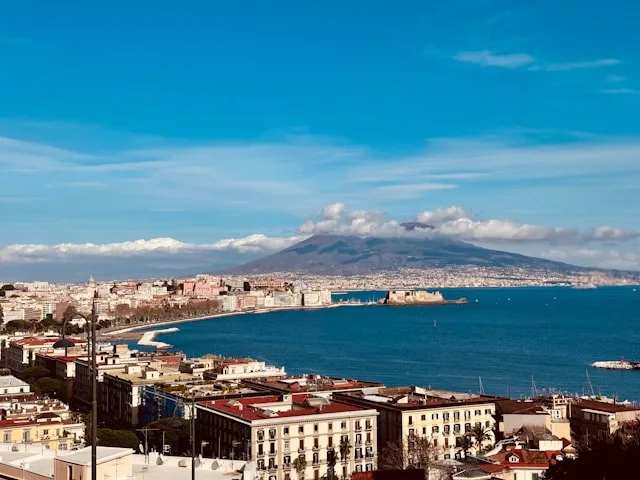
Naples Is Investing €480 Million in Its Port. It Cannot Find the People to Run It.
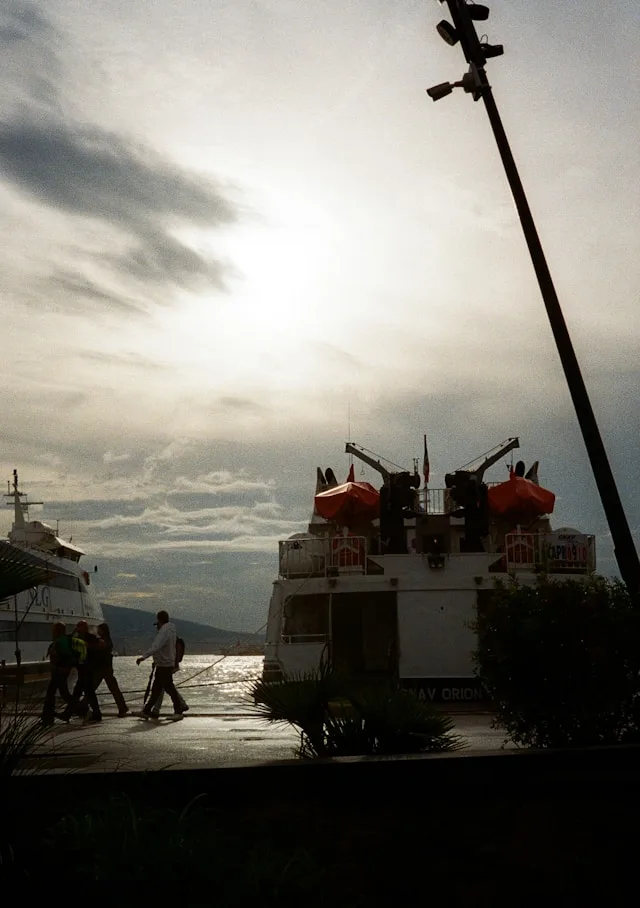
The Port of Naples handled 11.8 million ferry passengers and 1.2 million cruise passengers in 2024. It processed over half a million container units. It is the primary Ro-Ro hub for Southern Italy and the gateway for Mediterranean cruise tourism below Rome. By any throughput measure, it is a port that works.
But throughput measures do not capture what is happening beneath the surface. A €480 million infrastructure programme funded by the EU's NextGenerationEU mechanism is now underway. Shore power electrification at Stazione Marittima. Expanded Ro-Ro facilities at Calata Porta di Massa. A digital twin for port traffic management. Container handling capacity is set to rise 15% by the end of 2026. The ambition is real. The capital is committed. And the people required to operate the result do not exist in sufficient numbers anywhere in the Campanian labour market.
What follows is an analysis of the forces reshaping Naples' maritime and logistics sector: where the investment is flowing, why the talent pipeline has not kept pace, what roles are hardest to fill, what they pay, and what organisations competing in this market need to understand before they make their next senior hire.
The Port in 2026: Capital Moves Faster Than Human Capital Can Follow
Naples ranks as Italy's third-largest passenger port, behind Civitavecchia and Savona. Its container throughput stabilised between 520,000 and 550,000 TEU annually through 2024 and 2025. That figure sits well below Genoa's 2.6 million TEU but remains comparable to Livorno, and it reflects a structural ceiling rather than a demand problem. Draft limitations of 13 to 15 metres at container berths prevent Ultra Large Container Vessels from making mainline calls. Naples functions, in container terms, as a feeder port.
The infrastructure programme now entering its delivery phase is designed to change the equation. Shore power facilities at cruise berths are scheduled to become operational by the second quarter of 2026. The Ro-Ro expansion at Calata Porta di Massa targets the ferry and freight traffic that has historically been Naples' competitive strength. The digital twin implementation represents the most ambitious technology investment a Southern Italian port has attempted, aiming to bring traffic management into real-time predictive territory.
Where the Money Goes and Where the People Are Not
The analytical tension at the centre of this market is straightforward but underappreciated. Infrastructure investment of this scale assumes a workforce capable of operating what it builds. LNG bunkering facilities require LNG bunkering specialists. Shore power systems require shore power technicians. Digital twins require professionals who understand both port operations and data architecture. The regional labour market shows zero surplus in any of these categories.
This is the original insight that makes the Naples story distinct from a generic port expansion narrative. The capital has moved faster than human capital could follow. The risk is not that the investment fails to materialise. It is that the infrastructure becomes stranded capacity: built, commissioned, and underutilised because the operators, technicians, and managers it requires have not been recruited, trained, or attracted to the region.
The Retirement Wave Compounding the Gap
The workforce demographics sharpen this problem further. According to INAPP's 2024 analysis of Campanian port labour, 34% of port operations staff are over 55. That percentage translates into a skills cliff for traditional maritime crafts, including stevedoring and ship maintenance, projected to become operationally visible by 2027 and 2028. Unioncamere and Excelsior forecast demand for 3,800 new logistics and maritime professionals across Campania during 2026. The projected supply-demand gap is 1,200 unfilled positions, concentrated in specialised technical roles.
The retirement wave and the infrastructure programme are not separate problems. They are the same problem at two different speeds. The port is simultaneously losing the experienced operators who run its current systems and failing to attract the new-generation specialists who will run the systems replacing them.
The 42,000-Person Cluster: Who Works Where
The maritime and logistics cluster in the Metropolitan City of Naples directly employs approximately 42,000 people. That figure distributes unevenly across four categories, each with distinct talent dynamics.
Port operations and stevedoring account for roughly 8,500 employees. Maritime transport, covering shipping companies and agencies, employs around 6,200. Logistics and warehousing, concentrated at the Interporto di Napoli in Nola and across the hinterland, is the largest segment at 18,000 employees. Ancillary services including customs brokerage, freight forwarding, and ship supplies account for 9,300.
The common assumption that Naples' maritime employment clusters around the waterfront is misleading. The Interporto di Napoli at Nola, 30 kilometres inland, handles 70% of the port's container traffic and hosts 250 logistics companies across a 3 million square metre facility. DHL Supply Chain operates there. Amazon opened a fulfilment centre in 2023. Regional operators like Alfiere S.p.A. run customs brokerage and maritime logistics from the same zone. The Interporto is, in employment terms, the gravitational centre of the cluster. Molo Beverello, which dominates the postcard image of Naples' port, is primarily a passenger ferry terminal.
This geographic split matters for hiring. A terminal operations manager at the port and a supply chain director at Nola are both part of the maritime logistics cluster but operate in different physical environments, draw from different candidate pools, and face different daily infrastructure constraints. The A1 motorway connection between Naples and the Interporto at Nola experiences chronic congestion that adds four to six hours to container transit times against a theoretical 90-minute journey, according to Assologistica's 2024 infrastructure report. That congestion is not just a logistics bottleneck. It is a quality-of-life factor that shapes where professionals are willing to work.
The Three Hardest Roles to Fill in Naples Maritime Logistics
The 34% vacancy rate for technical and professional roles, against just 8% for operational positions, tells the story in aggregate. But aggregate figures obscure the specific pressure points where hiring leaders spend the most time and lose the most searches.
Terminal Operations Managers
A terminal operations manager search in Naples typically runs 127 days. The equivalent search in Genoa averages 68 days. In Northern European ports, it averages 54 days. The gap is not about demand volume. It is about a specific skills combination that the Naples market cannot produce in sufficient quantity.
The role requires both P&I (Port and Terminal Management) certification and hands-on experience with Terminal Operating Systems such as Navis N4 or SPARCS. Candidates who hold both are scarce everywhere in Italy. In Naples, where the terminal operator base is smaller and the pay is lower than Genoa, they are close to nonexistent as active job seekers. Approximately 85% of qualified candidates for director-level port operations roles are passive, employed, and not actively looking, with average tenure in current roles exceeding five years according to Hays Italy's 2024 executive market report.
The implication for any organisation running a terminal operations search from Naples is that conventional job advertising will not reach the candidate pool that matters. The 127-day average is not a measure of process inefficiency. It is a measure of how long it takes a standard search to fail before the hiring organisation changes its approach.
Ship Agency Operations Specialists
Maritime agencies in Naples report typical vacancy persistence of four to six months for bilingual ship agents capable of handling Post-Panamax vessel clearances. The language requirement is non-negotiable: Italian-English bilingualism is mandatory at this level. The technical requirement is equally rigid: experience with the specific clearance protocols for large modern vessels.
According to Federagenti's 2024 survey of Naples-based members, signing bonuses of €8,000 to €12,000 for experienced agents recruited from competitors have become increasingly standard among mid-sized agencies serving the cruise sector. That premium is a market signal. When employers routinely pay five-figure bonuses simply to move a candidate from one local firm to another, the market is not short of demand. It is short of supply in absolute terms.
Customs and Trade Compliance Specialists
Senior customs brokers holding AEO (Authorised Economic Operator) certification exhibit a 78% passive candidate rate, according to Confetra's 2024 competencies observatory. Recruitment for these roles occurs primarily through executive search rather than job postings. The Union Customs Code expertise required at this level takes years to develop. It cannot be accelerated by training programmes alone.
This category sits at the intersection of regulatory knowledge, operational experience, and institutional relationships. The cost of a wrong hire at this level is not merely financial. A customs compliance failure at a port of this scale carries regulatory consequences that extend far beyond the individual appointment.
Compensation: What Naples Pays and Why It Is Losing People to Genoa and Milan
Naples maritime logistics compensation is governed at its base by collective bargaining agreements under the CCNL framework. But for senior management and specialised roles, the CCNL minimum is a floor, not a ceiling. The gap between that floor and what the market actually requires to attract and retain talent is where the competitive dynamics play out.
At the senior specialist and manager level, terminal operations managers with eight to twelve years of experience command €65,000 to €82,000 in base salary, plus bonuses of €8,000 to €15,000. At the executive and VP level, terminal directors and port operations vice presidents earn €120,000 to €160,000 base, with total compensation reaching €180,000 at the largest terminals. Senior ship agents earn €48,000 to €62,000 base. General managers of ship agencies and maritime services directors sit between €90,000 and €130,000 base plus performance bonuses, with multinational operators at the top of the range.
Supply chain and logistics roles at the Interporto and Nola zone follow a similar pattern: €55,000 to €72,000 base for supply chain managers, €100,000 to €140,000 base for directors and VPs, with e-commerce and logistics companies paying 20 to 30% premiums over traditional maritime firms.
The Genoa and Milan Premium
These figures trail Northern Italy by 15 to 20% across equivalent roles. For most operational and management positions, Naples' lower cost of living partly offsets the gap. Candidates considering a move weigh total purchasing power, not headline salary alone.
But for digital and tech-hybrid roles, the gap widens to 35 to 40% versus Milan. This is where the attrition becomes acute. A logistics data analyst or ERP specialist in Naples earns materially less than the same professional in Milan's logistics hub, and Milan offers the remote work flexibility that Naples-based employers rarely match. According to AlmaLaurea's 2023 graduate tracking data, the Milan metropolitan area has absorbed approximately 15% of Naples-trained logistics graduates from the University of Naples Parthenope and Federico II over the past three years.
Genoa compounds the pressure from a different angle. Genoa's port authority has actively recruited Naples-based talent for its expanding Vado Ligure container terminal, offering relocation packages and housing subsidies alongside compensation premiums of 18 to 25% for equivalent port operations roles. When a competitor offers a quarter more pay and covers your moving costs, the counteroffer from your current employer must be substantial to hold.
Barcelona adds a third vector. For cruise line operations talent, Barcelona offers comparable compensation but with international career trajectories and English-language working environments that attract Naples-based cruise operations managers seeking multinational mobility. The compensation is not the differentiator. The career path is.
The net effect is a market where Naples produces and develops maritime logistics talent that other cities then acquire. The pipeline feeds competitors. Fixing compensation alone will not reverse this. The proposition required to retain senior talent must address career trajectory and working conditions, not just base salary.
Regulation, Infrastructure, and the Risks That Shape Every Hire
No hiring decision in Naples' maritime sector exists independently of the regulatory and infrastructure environment. Three forces constrain the market in ways that directly affect what organisations need from their senior teams.
Environmental Compliance and the Fit for 55 Burden
The EU's Fit for 55 regulations require €200 million in port infrastructure investment for shore power and LNG bunkering by 2030, according to the Port Authority's ecological transition plan. The shore power electrification at Stazione Marittima, due to become operational in early 2026, is the most visible piece. But smaller logistics operators face compliance costs of €500,000 to €2 million per facility. That burden threatens consolidation among smaller firms, which in turn concentrates employment among larger operators and reduces the diversity of the employer base.
For hiring leaders, this means two things. First, EU Green Deal compliance and emissions management experience is now a mandatory competency at the executive level. Second, the consolidation wave will reshape which organisations are hiring and which are being absorbed. Professionals with experience managing regulatory transitions of this complexity command a premium that is only going to increase.
Labour Market Rigidity
Port labour falls under the CCNL Portualità, which imposes strict seniority rules that limit flexible hiring for digital roles. The 2016 Jobs Act port reforms created a dualism between permanent dockworkers and temporary logistics staff that complicates workforce planning. An organisation that needs to hire a data architect for its port operations cannot simply slot that role into the existing framework. The contractual architecture was designed for a different era of port work.
This rigidity does not prevent hiring. It slows it, adds legal complexity, and requires hiring leaders who understand both the regulatory framework and the operational reality. It also means that the most adaptable employers, those with the legal and HR sophistication to work within and around the framework, have a material advantage in attracting digital talent.
The Red Sea Disruption
The ongoing Houthi attacks in the Red Sea have redirected Asia-Europe shipping traffic around Africa, increasing fuel costs for Naples-based operators by 18 to 22% and extending voyage times. According to Grimaldi Group's Q3 2024 quarterly report, these disruptions have compressed margins on ferry services to Greece and the Middle East. For a port where cruise passenger revenue contributes €450 million annually to local GDP, geopolitical disruption is not an abstract risk. It is a margin event that affects hiring budgets and investment timing.
The organisations best positioned to manage through this volatility are those whose senior teams combine operational expertise with commercial resilience. The Red Sea crisis is a reminder that maritime leadership is not just about running a terminal efficiently. It is about adapting to conditions that change faster than any strategic plan anticipated.
What This Market Requires From Executive Search
The Naples maritime logistics market in 2026 presents a specific hiring challenge that conventional recruitment methods cannot solve. The numbers make the case plainly. A 34% vacancy rate in technical and professional roles. An 85% passive candidate rate at director level. A 127-day average time-to-fill for terminal operations managers. A projected 1,200 unfilled specialised positions across Campania. And an infrastructure investment programme that will create entirely new role categories, LNG bunkering, shore power, digital twin management, for which no established regional talent pool exists.
The Port Community System Napoli Network has reached 85% adoption for customs documentation among port operators. Digitisation is advancing. But the integration with hinterland logistics remains fragmented compared to Northern Italian ports, and the professionals capable of bridging that gap are precisely the ones the market cannot find through job advertising.
For organisations competing for senior maritime and logistics leadership in Southern Italy, the search methodology matters as much as the search itself. The candidates who will run Naples' expanded port infrastructure are not reading job boards. They are running terminals in Genoa, managing supply chains in Milan, or overseeing cruise operations in Barcelona. Reaching them requires direct identification and approach through systematic talent mapping, not advertising and waiting.
KiTalent delivers interview-ready executive candidates within 7 to 10 days through AI-enhanced direct headhunting, reaching the passive senior professionals who represent 80% or more of the viable candidate pool in this market. With a 96% one-year retention rate for placed candidates and a pay-per-interview model that removes upfront retainer risk, the approach is designed for markets where speed and precision both matter. Naples' maritime sector is exactly that kind of market.
For organisations filling critical leadership and specialist roles across Naples' port and logistics cluster, where the infrastructure is arriving and the talent is not, start a conversation with our executive search team about how we approach this market differently.
Frequently Asked Questions
What is the average salary for a port operations manager in Naples?
A terminal operations manager in Naples with eight to twelve years of experience earns €65,000 to €82,000 in base salary, with bonuses of €8,000 to €15,000. At the director and VP level, base salaries range from €120,000 to €160,000, with total compensation reaching €180,000 at the largest terminals such as TCN and Grimaldi operations. These figures trail Northern Italian equivalents by 15 to 20%, though Naples' lower cost of living partially offsets the gap. For digital and technology hybrid roles, the differential widens to 35 to 40% compared to Milan.
Why is it so hard to hire maritime logistics specialists in Naples?
Naples faces a convergence of three pressures. First, 34% of port operations staff are over 55, creating a retirement wave that removes experienced operators faster than they are replaced. Second, the €480 million infrastructure upgrade programme is creating demand for roles, such as LNG bunkering specialists and digital twin managers, that barely existed two years ago. Third, Genoa and Milan actively recruit Naples-trained talent with compensation premiums of 18 to 40% and relocation support. The result is a 34% vacancy rate for technical and professional roles and a projected 1,200 unfilled positions across Campania in 2026.
How does Naples port logistics compensation compare to Genoa?
Genoa offers compensation premiums of 18 to 25% for equivalent port operations roles. For container terminal managers and maritime engineers, the premium reflects both Genoa's larger throughput volumes and its role as Italy's primary container port. Genoa's port authority has also introduced relocation packages and housing subsidies specifically targeting Naples-based professionals for its expanding Vado Ligure terminal. For supply chain digitisation roles, Milan offers even larger premiums of 35 to 40% combined with remote work flexibility.
What are the biggest infrastructure challenges facing the Port of Naples?
The port faces three material infrastructure constraints. Draft limitations of 13 to 15 metres prevent Ultra Large Container Vessels from making mainline calls, limiting Naples to feeder services. The A1 motorway connection to the Interporto di Nola suffers chronic congestion adding four to six hours to container transit times. And compliance with EU Fit for 55 regulations requires €200 million in additional investment for shore power and LNG bunkering by 2030. The current upgrade programme addresses some of these constraints but not all.
How can organisations find senior maritime talent in Naples when most candidates are passive?
At director level, approximately 85% of qualified port operations candidates are passive, and 78% of senior customs brokers with AEO certification are not actively seeking new roles. Conventional job advertising reaches a fraction of this market. Executive search firms specialising in industrial and logistics sectors use direct identification through AI-powered talent mapping to reach professionals in current roles across Naples, Genoa, Milan, and competing Mediterranean ports. KiTalent's methodology delivers interview-ready candidates within 7 to 10 days, with a 96% one-year retention rate.
What impact has the Red Sea crisis had on Naples maritime hiring?
The Houthi attacks in the Red Sea have redirected Asia-Europe shipping around Africa, raising fuel costs for Naples-based operators by 18 to 22% and extending voyage times. This has compressed margins particularly on ferry services to Greece and the Middle East. The financial pressure affects hiring budgets and investment timing across the cluster. Organisations now prioritise senior leaders who combine operational expertise with commercial resilience and experience managing through sustained geopolitical disruption.