Naples Cultural Tourism Hiring: Record Visitors, Record Vacancies, and the Talent Gap Growth Cannot Close
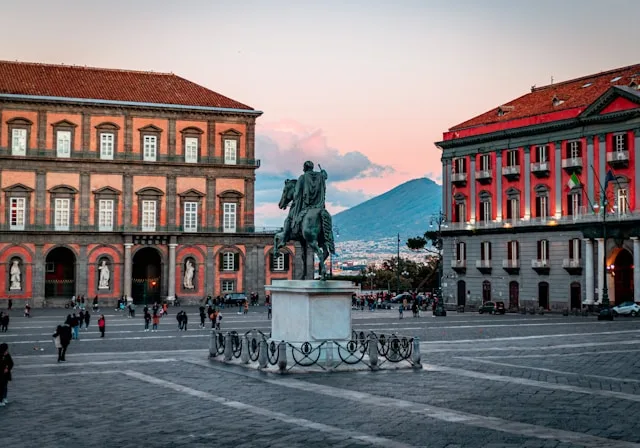
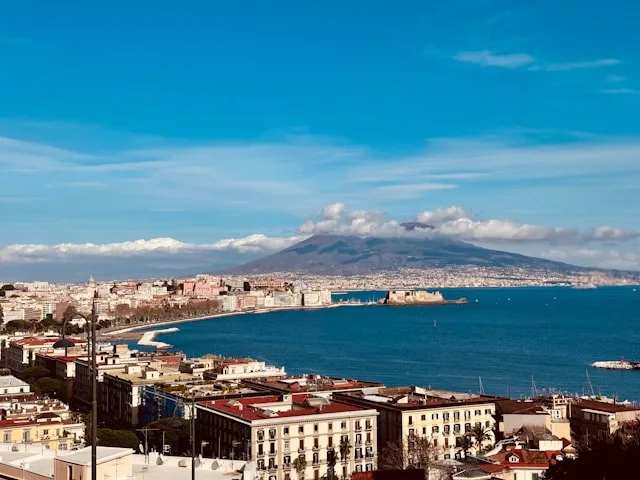
Naples recorded 4.3 million tourist arrivals in 2024. The trajectory through early 2025 pointed toward 4.5 million. Port expansion and a refurbished high-speed rail terminal are now delivering even greater capacity in 2026. By every volume measure, the city's cultural tourism economy is succeeding.
The staffing picture tells a different story. Across the province, 4,800 hospitality positions remained unfilled at the close of 2024. Vacancy duration had increased 34% compared to 2019. Boutique hotels in the Chiaia district ran without Food and Beverage Managers for the better part of a year. Historic pizzerias introduced equity participation schemes to attract master pizzaioli after conventional compensation failed. Licensed archaeological guides capable of serving East Asian markets were poached at 30% premiums. The growth is real. The workforce to sustain it is not.
What follows is an analysis of the forces pulling Naples' cultural tourism economy in opposite directions: expanding capacity on one side, tightening talent supply on the other. The article maps where the most acute shortages sit, what drives them, why conventional hiring methods fail in this market, and what organisations operating in Naples and the wider Italian hospitality sector must do to compete for the leadership talent that determines whether growth translates into profit or simply into higher costs.
A Tourism Economy Growing Faster Than Its Workforce
The numbers behind Naples' visitor economy are difficult to argue with. The 6.2% year-on-year increase in arrivals through 2024 extended a post-pandemic recovery that had already surpassed 2019 benchmarks. The luxury segment reported average daily rates of €220 to €280 in the historic centre, with peak-season occupancy reaching 88%. Cruise traffic through the Port of Naples reached 1.42 million passengers in 2024, making the city the Mediterranean's fourth-largest cruise homeport. Regulatory changes redirected an estimated 12,000 nightly stays annually from short-term private rentals to licensed hotels, stabilising formal occupancy further.
By 2026, the infrastructure investments underway have started to materialise. The Stazione Napoli Centrale high-speed rail terminal refurbishment reached completion in the second quarter. The Port of Naples' Waterfront di Levante cruise terminal upgrade has increased passenger handling capacity by 18%, with projections now pointing toward 1.7 million cruise arrivals. Boutique accommodation supply grew approximately 9% through year-end 2026, concentrated in the Chiaia and Vomero districts.
All of this should be good news for employers in the sector. More visitors. More rooms. More revenue per available room. But revenue projections require people to deliver the service those visitors expect. And the hospitality talent pipeline in Naples has not expanded in proportion to the capacity it must now support. The Unioncamere Campania data on unfilled positions represents a structural condition, not a seasonal fluctuation. The vacancy duration increase of 34% since 2019 means searches are not simply hard. They are taking materially longer, in a market where the consequences of an empty leadership seat compound weekly.
Where the Talent Gaps Are Most Acute
The shortages in Naples' cultural tourism sector are not distributed evenly. They cluster around three distinct role categories, each with its own dynamics, its own compensation pressures, and its own reasons for resisting conventional recruitment methods.
Executive Leadership in Boutique and Luxury Properties
General Manager and senior F&B leadership roles in independent luxury properties represent the most acute gap. According to HVS data, 85 to 90% of qualified General Managers in the Campania region are passive candidates. Active unemployment for experienced GMs sits below 2%. The candidates who could fill these roles are already employed at comparable establishments in Rome or Milan and are not looking.
The pattern reported by Federalberghi Napoli is telling. Properties such as Hotel Piazza Bellini and Decumani Hotel De Charme maintained vacancies for Food and Beverage Manager roles for eight to eleven months during 2024, despite offering packages exceeding collective bargaining agreements by 25%. An eight-month vacancy in an F&B leadership role does not simply reduce service quality. It constrains the property's ability to develop its culinary offering, manage supplier relationships, and train seasonal staff before peak season arrives. The cost is cumulative and largely invisible on a P&L until it surfaces as a margin problem.
Executive General Managers in Naples command base compensation of €110,000 to €145,000 plus performance incentives. This sounds competitive until you compare it to Milan, where the same role at a comparable property commands a 35 to 45% premium. The gap is not closing. It is widening at precisely the seniority level where the most consequential decisions are made.
Specialist Culinary Talent
The second shortage sits in the specialist culinary category, particularly among master pizzaioli capable of delivering the calibre of craft that premium culinary tourism demands. Naples' culinary identity is a core economic asset. Seventy-eight percent of Michelin-listed restaurants and premium pizzerias sit within the UNESCO perimeter. The city's food economy is not a support function for tourism. It is a primary driver of overnight stays and visitor spend.
According to FIPE Campania, L'Antica Pizzeria da Michele and its affiliated group Da Michele Export restructured hiring in 2024 to include equity participation for master pizzaioli after failing to fill specialist roles for six months. They were already offering wages of €2,100 to €2,400 monthly, 15% above the CCNL minimum. When above-market pay fails for six months, the problem is not compensation alone. It is supply. The number of master pizzaioli capable of meeting the standard required by heritage-brand establishments is finite, and the international drain is considerable.
Executive Chef roles for Neapolitan cuisine specialists sit in an 80% passive market. Average tenure is 4.2 years. Turnover happens through poaching, not through job boards. A standard recruitment campaign reaches the 20% of this market that is already looking to move. The 80% who are not looking are the ones you need. Reaching them requires a fundamentally different method, one built on identifying and engaging passive candidates who will not respond to a listing.
Licensed Archaeological Guides with Language Capability
The third shortage is more niche but economically consequential. Naples' archaeological tourism economy generates a "commuter" effect: 62% of cultural visitors sleep in the city but consume archaeological experiences outside the city proper, at Pompeii, Herculaneum, and the National Archaeological Museum. The guides who interpret these sites for high-spending international visitors, particularly from East Asian markets, represent a licensed, supply-constrained profession.
The Travel Weekly Italia report on Napoli Turistica's poaching of a senior archaeological guide from Context Travel in Q2 2024, at a 30% premium plus guaranteed year-round employment, illustrates the market dynamics clearly. Licensure requires Ministry of Culture certification. Supply is capped by the certification pipeline. Seventy percent of qualified guides are passive. Incumbents hold exclusive contracts with established operators. A new entrant to the market cannot simply advertise for this role and expect qualified applicants.
The language dimension compounds the constraint. Mandarin and English fluency, combined with deep archaeological knowledge and Italian licensure, describes a candidate profile that barely exists in sufficient numbers. The shortage here is not a hiring problem. It is a knowledge problem. You cannot recruit expertise that has not yet been produced by the certification and education systems in sufficient quantity.
The Structural Misalignment Between Growth and Staffing
Here is the observation that the raw data does not state but that the combination of data points makes unavoidable. Naples is investing in the wrong kind of growth for the workforce it can actually staff.
The port expansion projects 1.7 million cruise passengers for 2026. Cruise passengers have an average dwell time of 4.2 hours. They fill seafront restaurant seats but do not stay overnight. They drive volume metrics but not the high-dwell, high-spend cultural tourism that boutique properties and Michelin-starred restaurants depend on. The ISTAT data shows record arrivals, yet Federalberghi reports declining profit margins for four-star properties, with GOPPAR falling 3.4% as labour costs inflate faster than rate increases can absorb.
The city's economic model is splitting in two. One model serves high-volume, low-dwell cruise transit traffic. The other serves low-volume, high-dwell cultural tourism. The workforce requirements for each are fundamentally different. A cruise-oriented seafront restaurant needs reliable seasonal service staff. A boutique cultural hotel needs a General Manager who can develop year-round programming, a Revenue Manager who can price dynamically across a 12-month cycle, and an Executive Chef whose reputation itself becomes a demand driver.
The infrastructure investments are expanding the first model. The talent shortages are in the second. Capital has moved faster than human capital can follow. The port is ready. The rail terminal is ready. The boutique properties opening in Chiaia and Vomero are ready. The leaders required to run them are not available in sufficient numbers, and the search methodologies most employers use in this market are not designed to find them.
Why Conventional Hiring Fails in This Market
Naples' hospitality talent market presents a combination of features that systematically defeats traditional recruitment approaches. Understanding why requires examining each feature in turn.
The Passive Candidate Dominance
The passive candidate ratios in this market are stark. Eighty-five to ninety percent of qualified luxury GMs are passive. Eighty percent of executive chefs are passive. Seventy percent of licensed archaeological guides are passive. A job posting, however well-crafted, reaches only the fraction of the market that is actively looking. In the roles that matter most to organisational performance, that fraction is between 10% and 20%.
This is not a general observation about executive hiring. It is a specific, measured feature of the Campania hospitality market. The implication for hiring executives is direct: any search strategy that begins and ends with advertising will systematically miss the majority of the talent pool. The difference between a search that reaches passive candidates and one that does not is the difference between a shortlist of three genuinely qualified candidates and a shortlist of none.
The Geographic Drain
Naples loses talent in three directions simultaneously. Rome and Milan offer 30 to 40% higher base salaries and clearer pathways to international chain corporate roles. The Amalfi Coast and Sorrento offer higher seasonal earnings for mid-level service staff, with sommeliers in Positano earning €3,500 to €4,500 monthly in high season versus €2,200 to €2,800 in Naples. Internationally, Italian executive chefs and hotel directors with English proficiency are actively recruited by cruise lines and Middle Eastern luxury properties, which offer packages 50 to 80% above Naples market rates.
Each drain operates at a different seniority level and through a different mechanism. The domestic drain to Rome and Milan pulls senior leadership. The regional drain to the Amalfi Coast pulls mid-level specialists. The international drain to Dubai, London, and the cruise lines pulls anyone with language skills and ambition. A Naples employer competes on all three fronts simultaneously. The cost of losing a senior hire to any of these competitors is not just a recruitment cost. It is the compound effect of months without leadership, followed by months of onboarding, in a market where peak season waits for no one.
The Compensation Paradox
Naples employers have responded to shortages in the way employers usually do: by raising pay. Packages exceeding the CCNL by 15 to 25% are now common for specialist roles. Equity participation and profit-sharing arrangements have emerged at historic pizzerias. Accommodation allowances and guaranteed winter employment are offered to offset seasonal instability.
These are intelligent adaptations. They are also insufficient. When Hotel Piazza Bellini offers 25% above the collective bargaining agreement and still cannot fill an F&B Manager role for eleven months, the problem is not the price. The problem is that the candidates who meet the brief are not in the market. They are employed, satisfied, and not searching. No amount of compensation inflation will reach a candidate who never sees the role. What changes the outcome is a different search method entirely: one that identifies specific individuals, maps their current situations, and approaches them with a proposition calibrated to what would actually move them.
Regulation, Risk, and the Constraints Ahead
The talent pressures in Naples' cultural tourism sector exist within a regulatory context that is tightening rather than loosening. Several converging forces will shape what employers can do and what they need from their leadership teams.
UNESCO Preservation and Access Restrictions
UNESCO's World Heritage Centre has warned that Naples' World Heritage Site may face "in-danger" listing if visitor management plans are not implemented by 2026. The Municipio di Napoli is drafting zoned access restrictions for the Decumani during peak cruise arrival days, which would legally cap restaurant and shop foot traffic. For historic centre F&B operators, this is not an abstract heritage issue. It is a direct constraint on revenue per available seat hour.
The implication for talent is immediate. Properties and restaurant groups operating within the UNESCO perimeter will need leaders who understand not only hospitality operations but also heritage compliance, stakeholder management with municipal authorities, and the ability to build revenue models that function within capacity constraints. This is a sustainability and compliance skillset layered on top of traditional hospitality leadership. Sustainability Manager roles at the executive level, commanding €60,000 to €75,000, are emerging as a distinct category. The candidate pool for these roles is thin because the role itself barely existed five years ago.
Labour Market Rigidity
Italy's CCNL for tourism imposes seasonal contract limits of nine months for intermittent work. This conflicts directly with Naples' emerging year-round cultural tourism model. Employers who want to retain staff through winter archaeological conferences, Christmas markets, and corporate events face a choice: absorb the higher cost of permanent employment or accept annual turnover as seasonal workers depart and must be re-recruited. Neither option is efficient. Both require leadership teams sophisticated enough to manage workforce planning across regulatory constraints that were designed for a different era of Italian tourism.
Environmental and Infrastructure Risk
The ongoing bradyseism in the Campi Flegrei caldera has triggered periodic seismic activity since 2023, causing booking cancellations in the Posillipo and Bagnoli districts and complicating insurance underwriting for new developments. Separately, IMO 2030 sulphur caps will require €400 million in port shore-power infrastructure upgrades by 2027. Delays could reduce cruise calls, undermining the economic model of the entire seafront promenade cluster, which derives 40% of its annual revenue from cruise passenger traffic according to the Port Authority's sustainability plan.
These are not hypothetical risks. They are active planning considerations for any organisation investing in Naples hospitality capacity. The leaders capable of managing a property or restaurant group through this environment need a combination of operational excellence, regulatory fluency, and crisis management capability that narrows the candidate pool further still.
What This Means for Hiring Leaders in 2026
The synthesis of these forces produces a market that is easy to misread. The headline numbers suggest abundance: record visitors, expanding infrastructure, growing accommodation supply. The operational reality is scarcity at every leadership level that determines whether that growth generates returns.
The Federalberghi data on declining GOPPAR for four-star properties alongside record occupancy is the clearest signal. Naples' cultural tourism economy is approaching a tipping point where the inability to staff leadership roles becomes the binding constraint on profitability. You can fill rooms. You can fill restaurant seats. But if the General Manager seat, the Executive Chef role, and the Revenue Manager position are empty or filled with compromise candidates, the revenue those rooms and seats generate will leak steadily through operational inefficiency, missed pricing opportunities, and service inconsistency.
For organisations operating in this market, the traditional hiring playbook reaches, at best, 15 to 20% of the candidates qualified to fill the most consequential roles. The remaining 80 to 85% must be found through direct headhunting and talent mapping that identifies specific individuals, assesses their readiness to move, and presents a proposition designed around what would actually change their mind. In a market where Rome offers 35% more money and Dubai offers tax-free packages, that proposition must go beyond compensation. It must include a role that offers something the candidate cannot get elsewhere: creative autonomy, equity participation, or a leadership position at a property whose brand and location are genuinely unique.
The time dimension matters as much as the method. An eight-month vacancy in an F&B Manager role at a boutique property does not simply mean eight months of suboptimal performance. It means missing an entire peak season. In a market where April to October occupancy runs at 88%, a search that begins in January and concludes in September has already cost the property the majority of its annual revenue opportunity. Speed in executive search is not a luxury. It is a financial imperative.
KiTalent delivers interview-ready executive candidates within 7 to 10 days through AI-enhanced direct search methodology built specifically for passive candidate markets. The firm's 96% one-year retention rate reflects a search process calibrated to match not just skills and seniority but the specific motivational factors that determine whether a candidate stays beyond the first year. In a market where counteroffers and competing propositions are the norm rather than the exception, retention begins at the search stage, not after the offer letter is signed.
For hospitality groups, independent luxury properties, and cultural tourism operators competing for leadership talent in Naples, where the candidates you need are employed, passive, and being courted by Rome, Milan, and the international market simultaneously, start a conversation with our executive search team about how we approach this specific market.
Frequently Asked Questions
What are the hardest hospitality roles to fill in Naples in 2026?
General Manager roles at luxury and boutique properties, Executive Chef positions specialising in Neapolitan cuisine, and licensed archaeological guides with Mandarin or English fluency represent the most acute shortages. Federalberghi Napoli data shows F&B Manager vacancies running eight to eleven months at some independent properties. The passive candidate rate for luxury GMs in Campania reaches 85 to 90%, meaning the vast majority of qualified candidates are employed and not actively searching. Specialist culinary roles show similarly constrained supply, with employers now offering equity participation to attract master pizzaioli. Reaching these candidates requires proactive executive search methods rather than job advertising.
What does a General Manager earn at a luxury hotel in Naples?
Executive-level General Managers at luxury and boutique properties in Naples command base salaries of €110,000 to €145,000 plus performance incentives. Senior specialist and manager-level GMs earn €65,000 to €85,000 plus bonus. Naples remains a discount market relative to Northern Italy, with Milan offering 35 to 45% premiums for comparable property sizes. To offset the gap, Naples employers increasingly offer non-monetary retention tools including accommodation allowances, equity in restaurant ventures, and guaranteed winter employment to smooth seasonal income fluctuations.
Why is Naples losing hospitality talent to other markets?
Naples faces a three-directional talent drain. Rome and Milan offer 30 to 40% higher base salaries and clearer career pathways to international chain corporate roles. The Amalfi Coast draws mid-level specialists with higher seasonal earnings. Internationally, cruise lines and luxury Middle Eastern properties recruit Italian executive chefs and hotel directors at packages 50 to 80% above Naples rates. The combination creates persistent outward pressure at every seniority level and makes retention as critical as recruitment for Naples hospitality employers.
How does UNESCO heritage status affect hiring in Naples?
UNESCO monitoring reports have warned that Naples' World Heritage Site may face "in-danger" listing without adequate visitor management. The municipality is drafting zoned access restrictions for peak cruise arrival days, which would cap foot traffic in the historic centre. This creates demand for a new category of leader who combines traditional hospitality management with heritage compliance, stakeholder management, and revenue modelling within capacity constraints. Sustainability Manager roles at the executive level now command €60,000 to €75,000, but the candidate pool is thin because the role is new.
How can hospitality employers in Naples reach passive candidates?
With 85 to 90% of qualified luxury GMs and 80% of executive chefs classified as passive, job postings reach only a fraction of the relevant talent pool. KiTalent's AI-enhanced talent mapping and direct search approach identifies specific individuals currently employed at target properties, assesses their readiness to consider a move, and approaches them with a tailored proposition. The firm delivers interview-ready candidates within 7 to 10 days and maintains a 96% one-year retention rate, reflecting a process built for exactly the kind of passive, high-tenure candidate market that defines Naples hospitality.
What impact will Naples' port expansion have on hospitality hiring?
The Waterfront di Levante cruise terminal upgrade projects 1.7 million cruise arrivals in 2026, an 18% increase over 2024. This expansion primarily benefits seafront promenade F&B operators who depend on cruise passenger flow. However, cruise passengers average only 4.2 hours of dwell time, sustaining volume-driven businesses rather than the boutique overnight segment. The port expansion increases demand for seasonal customer-facing staff while doing little to address the acute shortages in executive leadership, specialist culinary roles, and cultural tourism management that constrain the higher-value segment of the market.