Asti's Agri-Food Sector Has Invested Millions in Automation. It Still Cannot Find the Leaders to Run It
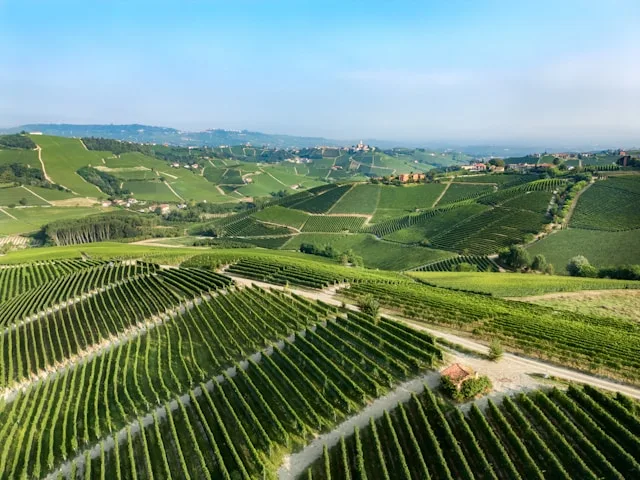
Asti province bottled over 52 million units of Moscato d'Asti and Asti Spumante in a single recent vintage cycle, processed 12,000 tonnes of Tonda Gentile hazelnuts through its confectionery supply chain, and generated €1.2 billion in agri-food turnover through 2025. The cooperative wineries of Canelli and Vinchio-Vaglio alone completed €45 million in automation investments between 2022 and 2024. By any capital metric, this is a sector that has modernised.
Yet the roles created by that modernisation are going unfilled at rates that would alarm any board. Oenologist positions in Asti take an average of 127 days to fill. Specialised technical vacancies carry an 8.3% vacancy rate against a 3.1% sector average. Food safety managers are being drawn out of the province by competitors offering 25 to 35% salary premiums. The capital has moved. The human capital has not followed.
What follows is an analysis of how Asti's agri-food sector arrived at this position, why its cooperative ownership structures and infrastructure deficits compound the hiring challenge, and what organisations in the province must do differently to attract and retain the senior technical and commercial leaders this market now requires.
A Province That Modernised Its Equipment but Not Its Talent Model
The €45 million invested by Asti's large cooperative wineries between 2022 and 2024 was concentrated in automated bottling lines, precision fermentation monitoring, and digitised inventory management. According to Unioncamere Piemonte's observatory on agri-food mechanisation, these investments reduced the need for manual production labour. They simultaneously created acute demand for a different kind of worker: technical directors capable of managing automated facilities, oenologists fluent in both traditional method sparkling wine production and digital agronomy, and quality managers whose certifications span BRC, IFS, and the incoming EU Digital Product Passport framework.
This is the core tension the data reveals. Asti did not fail to invest. It invested in machinery that requires people who barely exist in the provincial labour market. The cooperative wineries automated their bottling lines and then discovered that the professionals needed to optimise those lines, to manage the food safety compliance around them, and to sell the output into export markets with demanding documentation requirements, are not available through traditional local recruitment channels.
The bifurcation is stark. While large cooperatives completed their automation programmes, over 140 artisan confectionery and specialty food SMEs in the province continue to operate with pre-2010 processing equipment. These smaller producers face a different version of the same problem. They cannot attract food safety managers because they cannot match the compensation offered in neighbouring Cuneo province, and they cannot invest in cold-chain modernisation because the cost of a bad senior hire in a business with 20 to 50 employees is proportionally catastrophic.
The result is a two-speed sector where capital investment and talent investment have become entirely disconnected.
The Oenologist Shortage No Job Posting Can Solve
The most visible hiring crisis in Asti's agri-food sector sits at the oenologist level. Senior DOCG-specialist oenologists carry a passive candidate ratio of 85 to 90%, meaning that fewer than one in ten qualified professionals is actively looking for a new role at any given time. Average tenure in the specialism is 9.2 years. Unemployment among qualified oenologists sits below 2%.
These figures describe a market where traditional job advertising reaches almost none of the candidates who matter. The professionals Asti's cooperatives and private wineries need are already employed, already settled, and already embedded in production cycles that make mid-vintage departures reputationally damaging.
The Skills Mismatch Within Oenology
The shortage is not simply numerical. It is qualitative. Medium-sized cooperatives with 150 to 300 employees report systematic difficulty securing oenologists who combine traditional method sparkling wine expertise with English-language export documentation skills. These are not two separate competencies that happen to be scarce. They are two competencies that the historical training pipeline never combined. Italian oenology programmes have historically produced either technically brilliant winemakers with limited commercial and linguistic fluency, or commercially oriented graduates who lack the deep cellar expertise required for DOCG-level sparkling production.
The result is that a search for a senior oenologist in Asti province typically extends four to six months beyond the planned start date. Not because candidates do not exist globally. Because the specific intersection of traditional method mastery, digital agronomy literacy, and export documentation fluency produces a candidate pool measured in dozens, not hundreds.
Compensation Cannot Close This Gap Alone
At the executive level, a Technical Director overseeing multiple facilities in Asti commands €85,000 to €110,000 plus performance incentives tied to vintage quality metrics. This represents a 15 to 20% premium over comparable roles in Southern Italian wine regions. It also represents an 8 to 12% deficit against comparable positions in Champagne, France.
That deficit matters more than it appears. A senior oenologist weighing an offer from a Champagne house against one from Canelli is not simply comparing base salary. The Champagne role comes with global brand prestige, established international distribution networks, and a career trajectory that leads to group-level technical leadership. The Asti cooperative role, however well compensated by Italian standards, comes with the structural constraints of cooperative governance that limit equity participation and bonus structures.
The organisations that understand how to negotiate offers with passive senior candidates recognise that compensation is only one variable. For oenologists, the proposition must include the winemaking challenge itself, the vintage ambition, and the degree of creative autonomy. Cooperatives that frame the role purely in financial terms will continue losing candidates to private estates in Tuscany and Franciacorta where equity stakes are available.
Food Safety Directors: The Role Asti Keeps Training and Losing
Food safety and quality directors represent the second acute shortage in the province. The passive candidate ratio for professionals with BRC and IFS auditor credentials sits at 75 to 80%. Qualified individuals receive three to five direct recruiter approaches monthly.
The problem is compounded by proximity. Alba, 35 kilometres southwest, hosts Ferrero's global operations. Turin, 45 kilometres northwest, houses the headquarters of Lavazza, Martini, and multiple multinational food groups. Both locations offer compensation premiums of 18 to 22% above Asti provincial employers for equivalent food safety roles.
Artisan confectionery SMEs in Asti face particularly intense pressure. A food safety manager earning €48,000 to €62,000 at a 30-person amaretti producer can be offered €60,000 to €76,000 by a Ferrero supply chain facility in Alba with better equipment, clearer career progression, and access to international projects. The typical poaching premium of 25 to 35% above Asti market rates, as documented by Federalimentare Piemonte, describes a gravitational pull that no individual SME can resist through compensation alone.
This creates a pattern familiar to anyone who has studied talent dynamics in specialised food and beverage sectors. The province trains and develops food safety talent through its SME base. That talent gains certifications and experience. Larger employers in neighbouring provinces then acquire that talent at a premium the originating employer cannot match. The cycle repeats.
The retention tools Asti employers deploy are not negligible. Housing costs in the province run 40% below Turin equivalents. Some senior oenologists receive vineyard-to-bottle ownership stakes. Quality of life in a small Piedmontese town carries genuine appeal for professionals with families. But these advantages are increasingly insufficient against the hybrid and remote-work flexibility offered by Turin-based corporates. A food safety director who can work two days from home for Lavazza in Turin has a materially different daily life from one who must be on a production floor in Nizza Monferrato five days a week.
The Regulatory Wave That Will Deepen Every Existing Shortage
Three regulatory deadlines are converging on Asti's agri-food sector in 2026 and 2027, each of which demands compliance expertise that barely exists in the provincial talent pool.
EUDR and Supply Chain Traceability
The EU Deforestation Regulation, effective from late 2025, requires geolocation traceability for hazelnut and cocoa supplies. For Asti's confectionery producers, this means every batch of Tonda Gentile hazelnuts must carry verifiable origin data through the entire supply chain. Compliance costs run €45,000 to €80,000 per SME for supply chain mapping software alone, according to Coldiretti Piemonte's impact assessment. The capital cost is burdensome. The human capital cost may be worse. Someone must implement these systems, manage the data, and ensure ongoing compliance. That someone requires a combination of food supply chain knowledge and digital systems fluency that the current provincial workforce largely lacks.
F-Gas Transition and Cold-Chain Overhaul
The prohibition on high-GWP refrigerants in new cold-chain equipment adds a second compliance burden. In Asti, 78% of artisan processors use pre-2005 refrigeration systems running on refrigerants that face regulatory phase-out. Replacing these systems is not a like-for-like equipment swap. It requires cold-chain logistics managers who understand both food engineering requirements and the technical specifications of next-generation refrigeration. The province currently faces a 45,000 cubic metre deficit in refrigerated storage capacity, a gap that cannot be closed without professionals who combine engineering competence with food safety certification.
The EU Digital Product Passport
Mandatory IoT temperature monitoring investments for the EU Digital Product Passport framework are estimated at €75,000 to €120,000 per SME facility. Implementation requires technical integration skills that overlap with neither traditional oenology nor conventional food safety management. The professionals who can bridge this gap sit at the intersection of food technology and industrial IoT, a profile so scarce that even major technology employers struggle to source it.
Each regulation individually would strain the provincial talent pool. Together, they create compound demand for compliance expertise at exactly the moment when the existing pool is already depleted by neighbouring competitors.
Why Asti's Cooperative Structure Is Both Its Greatest Asset and Its Deepest Hiring Constraint
Here is the observation that the aggregate data obscures: the cooperative model that made Asti's wine sector globally competitive is now the primary barrier to attracting the executive talent it needs to remain so.
Approximately 78% of vineyard production in the province operates through cooperative structures. These cooperatives provide extraordinary advantages: shared logistics, collective bargaining power, centralised cold-chain infrastructure serving 180 member growers, and the ability to invest €45 million in automation over three years. No individual small grower could achieve this alone.
But cooperatives are governed by member votes. Executive compensation packages must be approved by grower assemblies. Equity participation for external managerial talent is structurally limited. Performance incentive schemes are designed around collective vintage outcomes, not individual executive contribution. A Technical Director at a Asti cooperative cannot be offered a 5% equity stake. A Commercial Director cannot negotiate a bonus structure tied to their personal sales achievement without navigating a governance process designed for agricultural consensus.
Compare this to a privately owned estate in Franciacorta or Tuscany, where the owner can offer a senior winemaker equity, a bonus linked directly to export revenue growth, and the authority to make investment decisions without committee approval. The compensation headline in Asti may be competitive. The total proposition is not.
This is not a problem that modernisation alone can solve. The cooperatives automated their production lines, but they did not modernise their governance and incentive structures. The €45 million in capital investment coexists with talent retention mechanisms designed for an era when the typical cooperative employee was a local viticulturist who lived three kilometres from the cellar and expected lifetime employment. That employee profile no longer describes the Technical Director, Food Safety Director, or Export Manager the sector now requires.
For organisations whose traditional recruitment approach has stopped delivering results, this structural mismatch between capital investment and organisational design is where the real diagnostic work begins.
Export Growth on Borrowed Infrastructure
Asti's specialty food exports grew at 6.2% annually between 2022 and 2024, with particular strength in high-margin fresh confectionery that requires cold-chain integrity throughout distribution. This growth is impressive. It is also fragile.
Only 34% of SME processing facilities in the province maintain HACCP-compliant continuous cold-chain infrastructure from reception through packaging. The comparable figure in Emilia-Romagna's "Food Valley" is 68%. Asti's export growth has occurred not because the province built adequate cold-chain infrastructure, but despite the fact that it did not. The growth has been sustained through reliance on third-party logistics providers based in Turin and Milan, which raises unit costs and compresses the margins available for talent investment.
This creates a vicious cycle. Export growth should generate the revenue to invest in infrastructure and talent. But the cost of outsourcing cold-chain logistics to external providers absorbs a disproportionate share of that revenue. The margin compression means Asti's SMEs cannot match the compensation offered by better-capitalised competitors in Cuneo and Turin. The talent they cannot retain is exactly the talent that could help them build the in-house cold-chain capability that would reduce their logistics costs.
The A33 motorway between Asti and Cuneo, whose completion has now slipped to 2026 or 2027, compounds the problem. Refrigerated transport to Ligurian export ports runs through congested secondary routes that add cost and transit time. Every additional hour in transit is a food safety risk for temperature-sensitive confectionery products. Every additional cost per kilometre is margin that could have funded a salary increase for a food safety manager who is currently being courted by a Ferrero facility in Alba.
The Regione Piemonte's allocation of €18 million specifically for Asti province cold-chain modernisation and digital traceability systems through its Piano Agroalimentare is a meaningful intervention. But capital grants without accompanying talent to implement the systems they fund will produce underutilised equipment, not competitive advantage.
What Hiring Leaders in Asti Must Do Differently
The data is clear on what does not work. Posting a vacancy for a senior oenologist when 85 to 90% of qualified candidates are passive and averaging 9.2 years of tenure produces a predictable outcome: a four to six month delay and a compromised shortlist. Competing on salary alone against Turin and Alba employers who offer 18 to 22% premiums plus hybrid flexibility is a losing strategy for a province whose production-site roles require physical presence.
Building a Proposition Beyond Compensation
Asti's genuine advantages are real but undermarketed. Housing costs 40% below Turin. A production environment where a senior leader can oversee the entire value chain from vineyard to export shipment. The intellectual challenge of managing DOCG-regulated production where yield constraints and quality requirements are among the most demanding in European winemaking. For the right candidate, these are compelling. But they must be articulated as part of a structured proposition, not assumed to be self-evident.
The province's most effective retention tool has been vineyard-to-bottle ownership stakes for senior oenologists. This model should be extended and formalised. Cooperatives that cannot offer equity can offer governance participation: a seat on the technical committee, formal authority over vintage decisions, a professional identity that goes beyond employee status. These propositions require careful negotiation and positioning with candidates who have multiple options.
Reaching the Candidates Who Are Not Looking
In a market where the three critical role categories all show passive candidate ratios above 70%, the organisations that succeed will be those that reach candidates before they consider moving. This requires direct headhunting methodology rather than job advertising, systematic talent mapping of the 85 to 90% of oenologists who will never respond to a job board posting, and the ability to approach a Food Safety Director in Alba with a proposition that addresses their specific career constraints rather than a generic job description.
KiTalent's AI-enhanced direct search methodology was designed for precisely this type of market: specialist, passive, and geographically concentrated, where the total addressable candidate pool is measured in dozens rather than thousands and where conventional executive recruiting methods consistently fail. With a pay-per-interview model that eliminates retainer risk for SMEs operating on compressed margins, and a 96% one-year retention rate that reflects the quality of candidate-to-role matching, the approach directly addresses the hiring realities Asti's agri-food leaders face.
For organisations competing for oenologists, food safety directors, and export managers in a province where the best candidates are already employed, already being approached by three to five recruiters monthly, and already weighing offers from better-capitalised competitors in Turin and Alba, start a conversation with our executive search team about how a targeted, AI-mapped approach to this specific talent market delivers interview-ready candidates within 7 to 10 days.
Frequently Asked Questions
Why is it so difficult to hire senior oenologists in Asti province?
Senior DOCG-specialist oenologists in Asti carry a passive candidate ratio of 85 to 90%, meaning almost none are actively seeking new roles. Average tenure exceeds nine years, and unemployment in the specialism sits below 2%. The specific combination of traditional method sparkling wine expertise, digital agronomy literacy, and English-language export documentation skills produces an extremely narrow candidate pool. Standard job advertising reaches fewer than one in ten qualified professionals. Direct headhunting approaches targeting passive candidates are required to access this market effectively.
What do food safety directors earn in Asti's agri-food sector?
At senior manager level, food safety directors leading HACCP and BRC implementation in Asti earn €48,000 to €62,000 annually. Group Quality Directors overseeing multiple sites command €75,000 to €95,000. However, Turin-based multinationals offer 18 to 22% premiums above Asti employers for comparable roles, and Ferrero supply chain facilities in neighbouring Alba routinely offer 25 to 35% above Asti market rates. Competitive offers must factor in total proposition, including quality of life and housing cost advantages, not salary alone.
How does EU regulation affect hiring in Asti's food processing sector?
Three regulatory deadlines are converging: the EU Deforestation Regulation requiring geolocation traceability for hazelnut supplies, the F-gas prohibition forcing cold-chain equipment replacement, and the EU Digital Product Passport requiring IoT temperature monitoring. Each demands compliance expertise in short supply. SME implementation costs range from €45,000 to €120,000 per regulation, and the professionals required to manage these transitions combine food technology, digital systems, and regulatory knowledge in a profile that barely exists in the current provincial workforce.
What are the main retention challenges for agri-food employers in Asti?
Asti competes for talent against Turin, Alba, and Emilia-Romagna, all of which offer higher compensation, stronger career trajectories, and in Turin's case, hybrid working arrangements unavailable in production-site roles. The cooperative ownership structure that dominates the province limits equity participation and performance bonuses for external executive talent compared to privately owned estates in other Italian wine regions. Retention depends on articulating non-financial advantages: housing cost savings, vineyard-to-bottle career scope, and governance participation opportunities.
How can Asti's SMEs compete for talent against larger competitors?
SMEs with 20 to 50 employees cannot match the compensation premiums offered by Ferrero, Lavazza, or Turin multinationals. They must compete on proposition: the breadth of the role, the proximity to production, the ownership culture, and the speed of career progression that a smaller organisation enables. Critically, they must also change how they search. With passive candidate ratios above 70% for every critical role category, KiTalent's talent pipeline methodology identifies and approaches candidates who would never appear through conventional channels, delivering qualified professionals to interview within days rather than months.
What is the salary range for Export Sales Managers in Italian specialty foods?
Senior Export Sales Managers with established territory management earn €52,000 to €65,000 fixed plus 15 to 25% variable compensation. At Commercial Director level, managing Americas or Asia-Pacific markets, total packages reach €90,000 to €120,000 with a larger variable component. Active candidates at this level typically lack the established buyer networks that make the role valuable, which means proven revenue-generating export managers are almost exclusively passive candidates requiring direct search approaches.