Asti's Wine Sector Is Exporting More and Retaining Less: The Talent Contradiction Behind DOCG Growth
Asti's wine economy generated €423 million in export value in 2023. That figure represents a 4.5% increase on the prior year, driven largely by the growing international appetite for Moscato d'Asti and the steady performance of Asti Spumante in the US, German, and Japanese markets. By any conventional measure, this is a sector in robust health.
The contradiction sits beneath the headline number. The same sector that is selling more abroad is haemorrhaging the technical and commercial talent it needs to sustain that growth. In 2024, 28% of senior enologist positions across the DOCG zone remained unfilled after 90 days. Export manager roles requiring US or Asian market expertise showed a 35% vacancy rate. Enrollment at the Scuola Enologica di Alba, the sector's primary training pipeline, has fallen 12% since 2020. The workforce that built Asti's international success is ageing, migrating, and not being replaced at sufficient volume or speed.
What follows is a structured analysis of the forces reshaping Asti's wine production economy: the market pressures, the talent dynamics, the compensation realities, and the systemic constraints that make this one of Italy's most complex executive hiring environments. For any organisation operating in or hiring for this sector, the data reveals a market where the conventional recruitment playbook reaches fewer than one in five of the candidates who matter most.
The Structure of the Asti Wine Economy in 2026
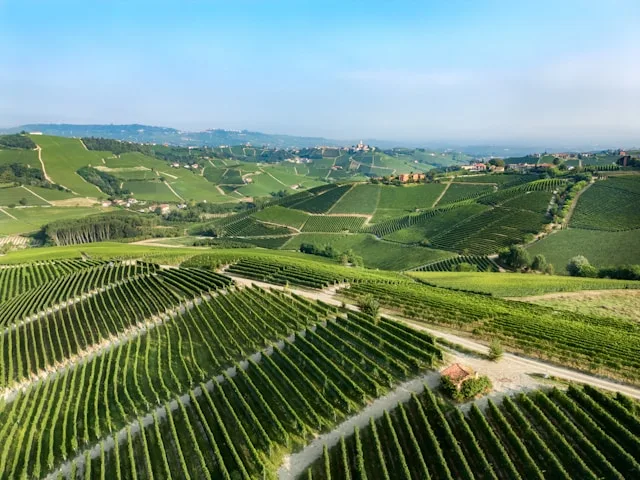
The Asti DOCG production zone spans 52 municipalities across the provinces of Asti, Alessandria, and Cuneo. Approximately 9,800 hectares of dedicated Moscato Bianco vineyards form the productive base, with 87% of individual vineyard holdings smaller than 5 hectares. This extreme fragmentation shapes everything that follows.
Cooperative wineries dominate volume. Roughly 70 to 75% of all Asti DOCG and Moscato d'Asti DOCG production by volume originates from cantine sociali, according to the Consorzio di Tutela dell'Asti DOCG's 2024 annual report. The largest single entity, Cantina Sociale di Canelli, comprises over 400 member-growers, employs 150 people directly, and processes approximately 25 million kilograms of Moscato grapes annually. Its turnover reached €85 million in 2023.
Family-owned estates tell a different story. Operations like Paolo Saracco (30 hectares), Cascina Castlet (45 hectares), and Caudrina (35 hectares) drive the premium end of the market. Their single-vineyard Moscato d'Asti commands 40 to 60% price premiums over cooperative bulk wine, according to Gambero Rosso and Wine Spectator reporting. At the cellar door, the bifurcation is stark: premium Moscato d'Asti fetches €2.80 to €3.50 per bottle, while bulk Asti Spumante sold to industrial bottlers moves at €1.20 to €1.50.
This dual structure creates two distinct talent markets operating in the same geography. Cooperatives need production managers who can optimise volume within DOCG yield caps. Estates need senior enologists who can express terroir in a single-vineyard bottling. The skills overlap less than outsiders assume.
The Consorzio and the Institutional Framework
The Consorzio di Tutela dell'Asti DOCG functions as the sector's anchor institution, representing 3,400 growers and over 200 bottlers. With a staff of just 12 and a budget of €8.2 million, it manages DOCG protocol compliance, collective investment, and the strategic direction articulated in its 2024 to 2026 plan. That plan calls for premiumization: a shift toward lower-sugar, terroir-specific expressions of Moscato d'Asti, projected to grow at 5 to 6% in value against just 2% for Asti Spumante.
The bottling market itself remains fragmented. The Herfindahl-Hirschman Index for Asti bottling sits at an estimated 850, according to ISMEA analysis, well below the concentrated structures of Prosecco (HHI above 2,500) or Champagne. The top 10 bottlers control only 55% of export volume. This fragmentation means no single company sets the talent market. Compensation norms, search practices, and retention strategies vary dramatically between a cooperative processing 25 million kilograms and a family estate with 25 employees.
Where the Talent Gaps Are Most Acute
The Asti wine sector employed an estimated 4,200 to 4,800 direct full-time equivalents in the province as of 2024. Against that base, the sector generated 320 new job postings during the year, a 15% increase over 2023, while operating at a wine-sector unemployment rate of just 3.2%. The regional average across all sectors was 6.8%. This is a market with very little slack.
Three role categories account for the most consequential shortages.
Senior Enologists: The 80% Passive Problem
Senior enologists with DOCG-specific experience are the single hardest hire in the Asti zone. According to Assoenologi's 2024 survey, 28% of advertised senior enologist positions remained unfilled after 90 days. The active-to-passive ratio for candidates with five or more years of DOCG experience sits at 20% active and 80% passive, according to Hays Italy's wine and spirits sector analysis.
These candidates do not browse job boards. Their average tenure is 7.2 years. They move for two reasons: technical autonomy, meaning the ability to direct vineyard practices and not merely execute them, or equity stakes. A typical search pattern observed in 2024 involved mid-sized estates offering €55,000 to €65,000 for senior enologists, experiencing four to six months of search duration before ultimately recruiting from a competitor at a 20% salary premium plus housing allowance. The hidden 80% of passive talent in this sector is not hidden by choice. It is locked in by tenure, rural location, and the deeply personal relationship between an enologist and a specific terroir.
Export Managers: The US Market Bottleneck
The vacancy rate for export sales managers requiring US or Asian market expertise reached 35% in 2024, according to ManpowerGroup's talent shortage survey for the wine and spirits sector. These roles are not merely commercial. They require specific technical knowledge: TTB compliance frameworks, established relationships with distributors like Southern Glazer's Wine and Spirits or Republic National Distributing Company, and fluency in the three-tier system that governs US alcohol distribution.
Searches for these candidates typically extend 120 to 150 days. Candidates in this space receive an average of 2.3 competing offers during any active search process, according to Hays Italy's salary guide. The active-to-passive ratio is even more extreme than for enologists: 15% active, 85% passive. Top performers are frequently bound by 12 to 18 month non-compete agreements, the standard in Italian commercial contracts, and locked into long-term bonus cycles that create substantial counteroffer risk at the point of resignation.
Vineyard Mechanics: The Skills That Did Not Exist Five Years Ago
The third shortage is less visible but equally constraining. As estates invest €15,000 to €25,000 per property in precision agriculture technology, including GPS-guided tractors, pneumatic harvesters, drone-based canopy monitoring, and soil sensors, the demand for technicians capable of maintaining this equipment has outstripped supply. Coldiretti Asti's 2024 training needs assessment flagged this as an emerging bottleneck. The investment in automation and precision technology has not reduced the vineyard workforce. It has replaced one kind of worker with another that does not yet exist in sufficient numbers.
The Compensation Reality Across the Value Chain
Understanding why searches stall in Asti requires understanding what the market actually pays and how those figures compare to the competing geographies that draw from the same talent pool.
Technical and Enology Roles
At senior specialist level, a Capo Cantina or senior enologist earns €48,000 to €65,000 in base salary, with performance bonuses tied to vintage quality adding €5,000 to €12,000. Company housing, a vehicle, and wine allocations are standard non-cash components. At executive level, a Direttore Tecnico or production director overseeing multiple facilities commands €90,000 to €130,000, with the largest operations (Gancia, major cooperatives) offering €150,000 or more.
A critical premium applies to candidates with proven experience in premium Prosecco or Champagne production. These individuals command 25 to 30% above standard Italian market rates, reflecting both their scarcity and the transferable knowledge they bring to Asti's premiumization strategy.
Commercial and Export Roles
Export managers at the senior specialist level earn €55,000 to €75,000 in base salary, with commission structures adding €15,000 to €40,000. At commercial director level, total compensation reaches €110,000 to €160,000 with car allowances and long-term incentive plans. These figures are competitive within the Italian food and beverage sector but fall materially short of what the same candidates could earn in Prosecco's larger industrial groups or in international wine markets.
The Geographic Pay Gap That Drives Attrition
The compensation data becomes most revealing when placed against Asti's competitor geographies. Alba, just 30 kilometres west, offers 15 to 25% higher base salaries for equivalent enologist and export manager roles. The differential is driven by wine valuations: Barolo averages €35 per bottle against Asti's €8. Prosecco's major groups (Zonin, Mionetto) offer 10 to 15% higher compensation for production managers along with corporate career ladders that Asti's SME structure cannot replicate. Champagne offers salary multiples of 2.5 to 3 times Italian market rates. Napa Valley offers equity participation.
The net result is measurable. Assoenologi's Piedmont section recorded a net outflow of 8 to 12 mid-career enologists annually from Asti to Alba alone. The Scuola Enologica di Alba estimates that 18% of its graduates leave Italy entirely within three years, drawn to France or California. The talent pipeline is producing fewer graduates into a market that is simultaneously losing its mid-career professionals to better-compensated competitors.
The Premiumization Paradox
Here is the analytical tension that makes Asti's talent challenge distinct from a simple supply-and-demand mismatch.
The Consorzio's strategic plan calls for premiumization. Moscato d'Asti should grow in value, not volume. Lower yields, terroir-specific expressions, and higher price points are the stated path forward. This strategy demands exactly the kind of senior enologists and vineyard directors who can express differentiation in a bottle: professionals with deep site knowledge, the authority to direct vineyard practice, and the technical skill to manage native yeast fermentations and lower-intervention winemaking.
Yet the cooperative structure that controls 70 to 75% of production volume optimises in the opposite direction. Cooperatives exist to service member payouts, which means maximising throughput within legal yield limits. DOCG yields have actually increased 3% since 2020, approaching the legal maximum of 10 tonnes per hectare for Moscato d'Asti, even as the premiumization narrative has intensified. The top five cooperatives process 45% of total grape volume, creating oligopsony power in raw material purchasing that further incentivises volume over quality differentiation.
The sector is pulling itself in two directions simultaneously. The premiumization strategy requires a smaller, more specialised, higher-paid workforce capable of producing wines that justify €3.50 per bottle at the cellar door. The cooperative volume model requires production managers who can process 25 million kilograms efficiently and keep member returns stable. These are not the same professionals. They are not attracted by the same propositions. And the market is splitting in two as a result.
This is the observation that does not appear in any of the sector's published data but follows directly from it. The compensation gap between Asti and its nearest competitors is not closing. It is widening fastest at exactly the seniority level where the premiumization strategy is most dependent on individual talent. The family estates that need senior enologists capable of single-vineyard expression are competing for the same professionals that Alba's Barolo estates will pay 25% more to acquire. The cooperatives that need high-volume production directors are competing with Prosecco groups that offer corporate career progression. Both halves of the Asti market are losing the talent arms race to differently structured competitors, and the sector's internal strategic contradiction ensures that neither half can respond by simply raising compensation, because the economics of each model constrain what they can afford to pay.
The Structural Constraints Compounding the Hiring Challenge
The talent challenge does not exist in isolation. A series of regulatory, demographic, and climatic pressures compound the difficulty of attracting and retaining leadership talent in Asti's DOCG zone.
Regulatory Rigidity and Frozen Supply
DOCG yield caps of 10 tonnes per hectare for Moscato d'Asti and 9.5 for Asti Spumante are enforced by the Italian Ministry of Agriculture. Total plantings remain effectively frozen under EU planting rights schemes, with liberalisation postponed to 2026, capping the production zone at 9,800 hectares. These constraints prevent volume responses to market demand, creating margin pressure when fixed costs rise.
Labelling restrictions add a further limitation. The prohibition on vintage dating for most Asti Spumante limits premium positioning relative to Champagne or Franciacorta. For a hiring leader trying to attract a production director from a competitor denomination, the inability to offer the same creative and commercial latitude represents a real obstacle.
EU Common Agricultural Policy greening requirements mandate 35% of vineyards under ecological focus areas by 2027, adding an estimated €450 per hectare in annual compliance costs according to the Regione Piemonte's rural development plan. Organic conversion, now underway on 18% of vineyards (up from 12% in 2020), requires three-year conversion costs of €3,000 per hectare in certification and yield loss. Every one of these mandates increases the demand for technically sophisticated leadership while simultaneously compressing the margins available to pay for it.
The Generational Cliff
Forty percent of Asti vineyard owners are over 65. Coldiretti Asti's 2024 generational transition survey identified 3,200 hectares, representing 32% of total DOCG area, with no identified successors. The alternative use case for this land is hazelnut cultivation, which delivers higher returns per hectare with lower labour requirements. If even half of the at-risk hectares convert, the DOCG zone contracts by 16%, reducing the production base that sustains the cooperative and bottling ecosystem.
This is not a distant concern. It is a succession planning challenge unfolding now, one that affects not just land ownership but the institutional knowledge held by retiring grower-producers who have managed specific vineyards for decades.
Climate Vulnerability as a Talent Amplifier
The Asti zone is rated "high" for climate vulnerability by the European Environment Agency. Growing Degree Days increased from 1,450 (1990 to 2010 average) to 1,680 (2020 to 2024), pushing sugar accumulation faster than acid retention and threatening the aromatic preservation critical to Moscato typicity. Hail insurance claims rose 40% between 2019 and 2023. Summer droughts in 2022 to 2024 reduced yields by 8 to 15% in non-irrigated hillside vineyards, which represent 60% of the total DOCG area.
The Consorzio estimates €18 million in sector-wide investment is needed by 2027 for hail nets, irrigation infrastructure (currently restricted under DOCG rules but under review), and canopy management systems. Each of these adaptations requires technical leadership capable of implementing them. The climate crisis does not create a separate talent demand. It amplifies the existing one, adding climate adaptation expertise to the already long list of capabilities that senior enologists and vineyard directors must possess.
What This Market Requires From a Search Process
Asti's wine sector is not a market where posting a vacancy and waiting for applications will reach the candidates that matter. The data is unambiguous on this point. For senior enologists, 80% of viable candidates are passive. For export directors with US market access, 85% are passive. Average tenure for the professionals most in demand is over seven years. They are embedded in their current roles, often in rural locations where professional networks are personal rather than digital, and they move through relationship-based outreach rather than application processes.
A conventional search in this market has a structural ceiling. It reaches at most 20% of the available candidate pool, and that 20% is disproportionately composed of junior professionals or those actively seeking to leave an underperforming employer. The strongest candidates, those with DOCG-specific vintage experience, established distributor relationships, or proven track records in premiumization, are not looking. They must be found, assessed, and approached directly.
The direct headhunting methodology required for this market demands three capabilities that most conventional search processes lack. First, deep talent mapping of the 52-municipality DOCG zone and its competitor geographies in Alba, Prosecco, and beyond. Second, the cultural intelligence to engage Italian wine professionals who value technical autonomy and terroir connection over corporate titles. Third, the speed to present qualified candidates before competing offers close the window. In a market where candidates receive 2.3 competing offers on average, a search that takes six months is a search that fails.
KiTalent delivers interview-ready executive candidates within 7 to 10 days through AI-enhanced identification of passive talent, combined with sector-specific intelligence in food, beverage, and consumer goods markets. The pay-per-interview model means organisations invest only when they meet qualified candidates, removing the retainer risk that makes many smaller estates and cooperatives hesitate to engage executive search at all. With a 96% one-year retention rate across 1,450 placements, the approach is built for markets where the cost of a wrong hire is measured not just in salary but in lost vintages and damaged distributor relationships.
For organisations competing for senior enologists, export directors, or production leadership in Italy's most constrained wine talent market, where the candidates you need are passive, the competitors are paying more, and the margin for error is one harvest, speak with our executive search team about how we approach this sector.
Frequently Asked Questions
What is the average salary for a senior enologist in Asti?
A senior enologist in the Asti DOCG zone earns €48,000 to €65,000 in base salary, with vintage quality bonuses of €5,000 to €12,000. Non-cash benefits typically include company housing, a vehicle, and wine allocations. At production director level, compensation reaches €90,000 to €130,000, with the largest cooperatives and industrial bottlers offering €150,000 or more. Candidates with Champagne or premium Prosecco experience command 25 to 30% premiums. These figures trail Alba's Barolo zone by 15 to 25% for equivalent roles, creating consistent compensation negotiation challenges for Asti employers.
Why is it so difficult to hire export managers in the Italian wine sector?
Export managers with US or Asian market expertise show a 35% vacancy rate in Asti's wine sector. The difficulty stems from three factors. First, top candidates are overwhelmingly passive, with only 15% actively seeking roles. Second, the skills required are highly specific: TTB compliance knowledge, three-tier distribution system expertise, and established relationships with major US distributors. Third, Italian non-compete clauses of 12 to 18 months restrict candidate mobility. Searches typically extend 120 to 150 days, and candidates receive an average of 2.3 competing offers during any active process.
How large is the Asti DOCG wine production zone?
The Asti DOCG zone encompasses approximately 9,800 hectares of dedicated Moscato Bianco vineyards across 52 municipalities in the provinces of Asti, Alessandria, and Cuneo. Eighty-seven percent of individual holdings are smaller than five hectares, reflecting extreme land fragmentation. EU planting rights restrictions have effectively frozen total plantings at this level, preventing volume expansion. Production reached 67 million bottles of Asti Spumante and 52 million bottles of Moscato d'Asti in the most recent full-year data, with Moscato d'Asti showing stronger unit value growth.
What are the biggest risks facing Asti's wine sector in 2026?
Three risks converge in 2026. Climate vulnerability has increased Growing Degree Days by 16% over two decades, threatening Moscato's aromatic character. Generational succession affects 40% of vineyard owners who are over 65, with 3,200 hectares at risk of abandonment or conversion to hazelnut cultivation. And potential US Section 232 tariff reinstatement places €93 million in export value at risk. Each of these risks intensifies demand for experienced leadership at exactly the moment the talent pipeline is contracting. Working with a specialist executive search firm can accelerate access to the passive candidates needed to fill these critical roles.
How does KiTalent approach executive search in the wine and food sector?
KiTalent uses AI-enhanced talent mapping to identify and approach passive candidates who are not visible through job boards or traditional recruitment channels. In sectors like wine production, where 80% of senior enologists and 85% of export directors are passive, this direct approach is essential. KiTalent delivers interview-ready candidates within 7 to 10 days, operates on a pay-per-interview model with no upfront retainer, and maintains a 96% one-year retention rate across more than 1,450 executive placements. The methodology is designed for fragmented, relationship-driven markets where speed and precision determine search outcomes.
How does Asti's wine talent market compare to Prosecco and Alba?
Asti competes directly with Alba (30 kilometres west) and the Prosecco zone (250 kilometres east) for senior enologists and commercial directors. Alba offers 15 to 25% higher base salaries driven by Barolo's higher wine valuations. Prosecco's larger industrial groups offer 10 to 15% higher compensation plus corporate career ladders unavailable in Asti's SME structure. Internationally, Champagne offers 2.5 to 3 times Italian salary multiples. Asti experiences a net annual outflow of 8 to 12 mid-career enologists to Alba alone, while 18% of graduates from the Scuola Enologica di Alba leave Italy within three years.