Athens Georgia Manufacturing Talent: The $45 Million Investment That Created a Harder Hiring Problem
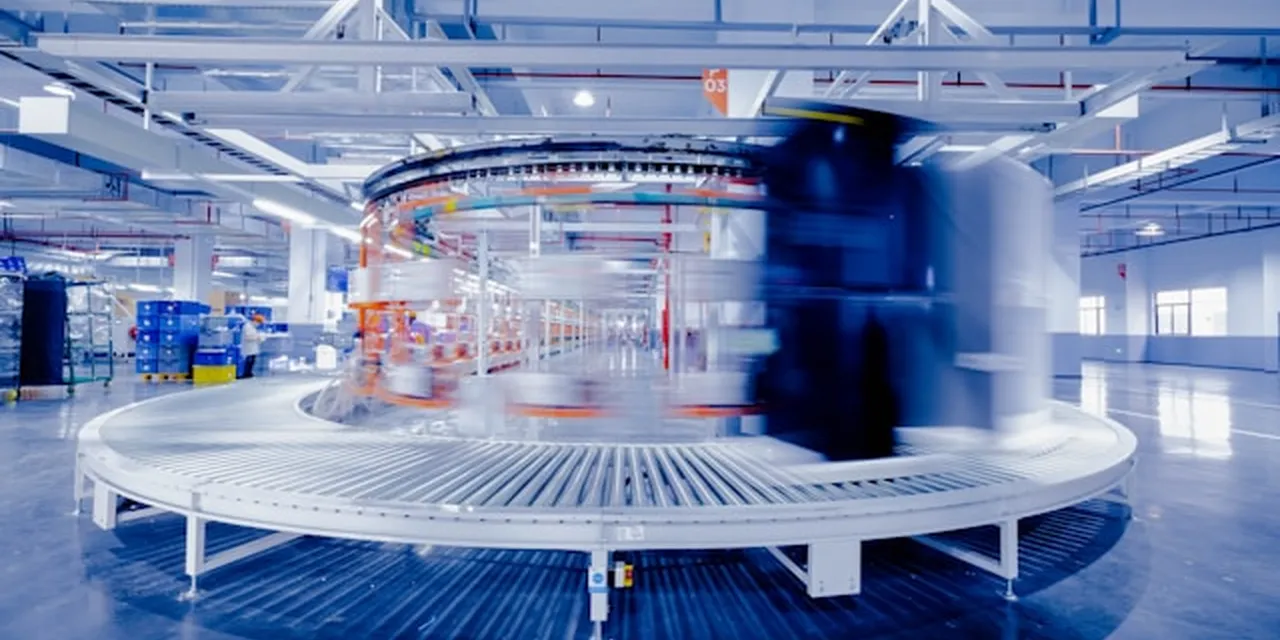
Athens, Georgia's advanced manufacturing sector entered 2026 with a paradox that no capital budget can resolve. Caterpillar's Athens facility committed $45 million to automated welding cells and IoT-enabled predictive maintenance systems across 2025 and 2026. The investment was designed to push production volumes up by 12% in the small dozer segment without adding headcount. It has succeeded on the volume side. On the talent side, it has replaced one category of worker with another that barely exists in this market.
The assumption behind every automation investment is that fewer workers will be needed. In Athens, the opposite has occurred at the skill level that matters most. The facility no longer needs as many general assemblers. It urgently needs electro-mechanical maintenance technicians who can troubleshoot PLC systems, robotic welding cells, and hydraulic diagnostics simultaneously. As of early 2025, there were 142 open positions for industrial maintenance technicians across the Athens MSA, with only 0.4 qualified candidates available per opening. The automation investment did not reduce the workforce problem. It concentrated it into a narrower, harder-to-fill category.
What follows is a ground-level analysis of how Athens's manufacturing sector arrived at this point, why the talent pipeline that should be solving the problem is not, and what hiring leaders in this market need to understand before they commit to their next search. The data covers the full chain: from the macroeconomic forces shaping demand, through the specific roles and compensation benchmarks driving competition, to the structural constraints that make this small-city market one of the most challenging in the Southeast for skilled manufacturing hiring.
The Market Athens Has Built and the Workforce It Now Requires
Athens-Clarke County's advanced manufacturing sector employed approximately 8,200 workers as of late 2024, representing 12.3% of total nonfarm employment in the metropolitan statistical area. That figure places manufacturing as the second-largest private employment category after the University of Georgia's institutional footprint. But the composition of that workforce is changing faster than the pipeline can follow.
Caterpillar's Athens plant, the anchor employer with 1,400 direct employees, produces small and medium track-type tractors (D3 through D6 dozer models) and hydraulic excavators in the 320 and 323 series. Roughly 75% of production ships to export markets in Latin America, Europe, and Africa. The facility was running at 94% capacity utilisation through late 2024, constrained not by order demand but by skilled maintenance availability.
CertainTeed Corporation, a Saint-Gobain subsidiary, operates an asphalt roofing shingles plant with approximately 240 production staff following a $20 million granule line expansion completed in 2023. Melling Automotive Products adds another 180 employees in precision engine component machining. Eaton Corporation maintains a distribution centre with limited light assembly employing around 95 people.
A Cluster Built on Heavy Equipment, Exposed to Global Cycles
The cluster's defining characteristic is its export orientation. Caterpillar's 75% export ratio ties Athens's manufacturing health directly to Brazilian infrastructure spending, European Union construction budgets, and Latin American currency stability. According to the Federal Reserve Bank of Atlanta's regional economic analysis, a 1% increase in the federal funds rate correlates with a four-to-six month lag in reduced export orders for Athens-produced dozers. This is not a theoretical sensitivity. It is the operating reality that shapes every hiring decision at the facility.
The Athens Industrial Zone reports 87% occupancy for Class A manufacturing space at $6.85 per square foot, meaningfully below the Atlanta metro average of $8.40. That cost advantage attracts interest from potential new entrants. But infrastructure constraints limit absorption: the eastern quadrant of the zone lacks three-phase power redundancy, and the CSX Athens Subdivision rail line operates at 78% capacity utilisation with heavy equipment flatcars competing against agricultural exports for scheduling priority.
For hiring leaders evaluating Athens as a manufacturing market, the picture is one of a tightly concentrated cluster with strong anchor employers, competitive real estate costs, and genuine infrastructure ceilings that cap growth velocity. The workforce pressure is not coming from rapid expansion. It is coming from a skills transformation inside existing operations.
Why the Automation Investment Deepened the Shortage
Caterpillar's $45 million capital programme across 2025 and 2026 targeted two categories of automation: robotic welding cells for dozer frame assembly and IoT sensor networks for predictive maintenance across production lines. The business case was straightforward. Volume in the small dozer segment was projected to grow 12%, and the facility needed to absorb that growth without proportional headcount increases. The UGA Selig Center for Economic Growth projected 2.4% manufacturing employment growth for the Athens MSA through 2026, lagging the state average of 3.1% precisely because of these automation-driven productivity gains.
The projection was correct at the aggregate level. Total headcount at Caterpillar has remained approximately flat. But the composition of that headcount has shifted sharply. Every automated welding cell requires technicians certified in ABB and FANUC robotic systems. Every IoT-enabled predictive maintenance sensor network requires personnel fluent in Allen-Bradley and Siemens PLC programming. The general assembler roles that automation displaced were comparatively easy to fill. The maintenance and programming roles that replaced them are not.
This is the analytical point that the headline numbers obscure. Capital moved faster than human capital could follow. The $45 million went into the facility in a defined timeline against a defined project plan. The workforce capable of maintaining and programming that equipment operates on a completely different timeline, one governed by apprenticeship durations, certification requirements, and the seven-year average tenure of the technicians who already hold these skills elsewhere.
The result is a facility running at 94% capacity not because it lacks orders or equipment, but because it lacks the people qualified to keep the new equipment running. That constraint is not visible in the aggregate employment data. It is visible only in the 142 open maintenance technician positions and the 0.4 qualified candidates available per opening.
The Specialisation Mismatch That Talent Numbers Cannot Explain
On paper, Athens should not have a manufacturing talent shortage. The University of Georgia produces approximately 850 engineering graduates annually. Athens Technical College graduates over 200 students per year in CNC and welding programmes. Georgia Quick Start, the state-funded customised training provider, delivered 47,000 contact hours to Athens manufacturers in fiscal year 2024 alone. The raw output is substantial.
The gap is not in volume. It is in specialisation.
UGA's College of Engineering emphasises software, biomedical, and civil engineering. These are the disciplines that attract research funding and student interest. Mechanical engineering and manufacturing systems engineering receive less emphasis. The 850 annual graduates include a meaningful proportion whose training does not align with the electro-mechanical, PLC-fluent, hydraulic-system-literate profile that Caterpillar and CertainTeed need.
The Technical College Pipeline Produces Entry-Level Candidates Into a Market That Needs Journeymen
Athens Technical College's CNC and welding programmes are well-regarded. Caterpillar's "Learn and Earn" apprenticeship partnership with the college represents exactly the kind of employer-educator alignment that workforce development advocates recommend. But the pipeline produces entry-level workers with zero to three years of equivalent experience. The critical shortage is at the journeyman and senior technician level: professionals with five or more years of hands-on experience with FANUC or Siemens controls, Mastercam programming capability, and the diagnostic intuition that only comes from years of troubleshooting production equipment under pressure.
The data makes this gap explicit. CNC machinist roles for entry-level candidates operate in a 60% active market. Candidates with five or more years of experience shift to 70% passive. Industrial maintenance technicians are even more extreme: unemployment in this classification in the Athens MSA runs below 1.8%, with an active-to-passive candidate ratio of approximately 1:4. The qualified technician who could fill the hardest roles is already employed, typically with average tenure exceeding 7.2 years in their current position, and is not responding to job board postings or conventional recruitment advertising.
Local workforce development boards reported that 40% of advanced manufacturing searches for Mastercam programmers failed to yield three qualified candidates within 90 days during the second half of 2024. This is not a pipeline problem that more graduates will solve in the near term. It is a maturity gap. The people this market needs have experience that cannot be compressed into a two-year programme.
The Geographic Competition That Keeps Athens at a Disadvantage
Athens does not compete for manufacturing talent in isolation. It sits within a triangle of larger, better-resourced manufacturing centres that systematically drain its candidate pool. Each competitor pulls differently, but the effect compounds.
Atlanta: The Vertical Mobility Magnet
Atlanta, 68 miles to the southwest, offers 15% to 22% higher compensation for equivalent manufacturing engineering roles. A senior manufacturing engineer earning $102,000 to $128,000 in Athens can command $118,000 to $142,000 in the Atlanta metro. The cost of living differential is 34%, which partially offsets the salary premium in real terms. But compensation is not the primary pull factor.
Atlanta draws Athens talent with career trajectories that Athens cannot match. Caterpillar's Atlanta division offices, Siemens regional operations, and Delta's technical facilities all offer vertical mobility into corporate engineering and supply chain strategy roles. Athens is a plant town. For an ambitious manufacturing engineer reaching the ceiling of plant-level responsibility, Atlanta offers the next step. This creates a recurring drain on experienced mid-career talent that Athens employers struggle to counter with retention packages alone.
Greenville-Spartanburg: The Apprenticeship and Signing Bonus Advantage
Greenville-Spartanburg, South Carolina, 130 miles east, hosts BMW Manufacturing and Michelin operations. The compensation for CNC and automation specialists is comparable to Athens, but the competitive dynamics differ. Greenville-Spartanburg offers stronger German-style apprenticeship programmes, higher density of automotive Tier 1 suppliers, and signing bonuses of $10,000 to $12,000 for mid-level machinists. Athens employers typically offer $5,000 to $7,500 for equivalent hires.
The signing bonus gap is a direct competitive disadvantage in a market where journeyman-level machinists are 70% passive. A passive candidate weighing two comparable offers will notice a $5,000 difference in upfront cash. That gap is large enough to move decisions.
Chattanooga: The EV Career Trajectory
Chattanooga, 180 miles northwest, presents a different kind of threat. Volkswagen's EV expansion and the proximity of Ford's BlueOval City operations draw maintenance technicians with premiums of $8,000 to $12,000 above Athens market rates. More importantly, Chattanooga offers career trajectories in electric vehicle battery manufacturing, a growth sector with long-term demand visibility that Athens's heavy equipment cluster cannot match.
For a maintenance technician in Athens weighing a move, the Chattanooga proposition is not just more money. It is a career bet on a growing sector versus a mature one. That perception, whether fully accurate or not, shifts decisions at the margin.
The cumulative effect is that Athens loses talent in three directions simultaneously, each for a different reason. Compensation alone will not solve a problem that is also about career trajectory, sector perception, and signing bonus competitiveness. Organisations hiring in Athens need a search methodology that reaches candidates before these competing markets do.
What Athens Manufacturing Roles Actually Pay in 2026
Compensation benchmarking in this market requires precision because the ranges are narrower than in larger metros, and the gap between competitive and uncompetitive offers is often only $10,000 to $15,000 at the specialist level.
At the senior specialist and manager tier, a senior manufacturing engineer with eight or more years of experience and a PE or PMP credential commands $102,000 to $128,000 in base salary. Maintenance managers supervising teams of 20 or more technicians earn $95,000 to $118,000 base with 10% to 15% bonus potential. These figures reflect Athens's cost of living index of 0.92 against the national average, meaning that purchasing power is slightly above what the nominal figures suggest.
At the executive level, plant manager roles at facilities with 1,000 or more employees command $185,000 to $245,000 base salary plus 35% to 50% annual bonus potential and long-term incentive compensation. Responsibilities include P&L oversight, union relations where applicable, and export compliance. VP of Operations roles covering Athens plus two to three additional regional facilities range from $225,000 to $310,000 base plus LTI and relocation packages. These roles require integration with Port of Savannah logistics and international supply chain management.
The critical insight for hiring leaders is that the compensation required to attract candidates in executive and senior technical searches has risen faster than standard cost-of-living adjustments would predict. The Georgia Department of Labor Employment Cost Index shows approximately 4% wage inflation for manufacturing roles through 2024 into 2025. But for the specific roles in acute shortage, particularly electro-mechanical maintenance technicians and experienced CNC machinists, the effective premium to move a passive candidate is running well above that baseline.
Regional workforce data shows Tier-2 automotive suppliers in the Athens area offering $15,000 retention bonuses for CNC machinists with five or more years of FANUC or Siemens control experience specifically to prevent poaching by larger heavy equipment manufacturers. When employers are spending $15,000 simply to retain existing staff, the cost of acquiring equivalent talent from outside the market is materially higher.
The Structural Constraints That Will Not Resolve by 2027
Several features of the Athens market are not cyclical. They are embedded in the city's geography, infrastructure, and regulatory environment, and they will shape hiring conditions for years beyond any single business cycle.
Housing Affordability as a Talent Ceiling
The median home price in Athens-Clarke County reached $285,000 in the fourth quarter of 2024. The affordability ceiling for manufacturing workforce median incomes of $58,000 annually is approximately $220,000. That $65,000 gap directly limits inbound migration of experienced trades workers from lower-cost markets. A maintenance technician considering a relocation from a smaller Georgia city or from rural Tennessee faces a housing cost that may erase most or all of a wage increase. This constraint is particularly acute for the mid-career specialists Athens most needs. Entry-level workers can rent. Experienced workers with families need to buy.
Rail and Export Infrastructure
The CSX Athens Subdivision rail line's 78% capacity utilisation creates scheduling constraints for heavy equipment flatcars competing with agricultural exports. The $40 million in siding and bridge upgrades required to accommodate projected Caterpillar growth is not scheduled for completion until the fourth quarter of 2027. Until then, 2026 export volume growth may be constrained regardless of production capacity.
Environmental Permitting
Athens-Clarke County's designation as a Marginal Nonattainment Area for EPA ozone standards creates 12 to 18 month permitting delays for manufacturing expansions exceeding 100 tons per year of VOC emissions. This directly affects CertainTeed's potential for additional coating lines and any new entrant considering Athens for surface treatment or painting operations. The permitting timeline adds a layer of uncertainty to expansion decisions that competing markets in South Carolina or Tennessee do not impose.
These are not problems a single employer can solve. They are market-level conditions that every hiring leader and every candidate evaluating Athens must factor into their decisions. The cost of a misaligned executive hire in a market with these constraints is amplified because the replacement search will face the same barriers on a compressed timeline.
What This Means for Hiring Leaders in Athens Manufacturing
The conventional approach to manufacturing hiring in a market like Athens follows a predictable sequence: post the role, screen inbound applications, interview the active candidates who respond, and offer the best available. In a market where 80% of senior manufacturing engineers are passive, where industrial maintenance technicians have unemployment below 1.8%, and where 40% of Mastercam programmer searches fail to produce three qualified candidates in 90 days, that approach reaches a fraction of the viable market.
The candidate who can solve Athens's hardest problems is already employed. They have been in their current role for seven years on average. They are not checking job boards. They receive two to three unsolicited inquiries per month already. Moving them requires not just a competitive offer but a proposition that addresses the specific calculation a passive candidate makes: compensation, career trajectory, relocation viability, and role scope.
KiTalent's approach to executive search in industrial and manufacturing markets is built for exactly this profile. AI-powered talent mapping identifies the passive candidates who match the technical and leadership requirements before a search formally begins. The pay-per-interview model means clients meet interview-ready candidates within 7 to 10 days without an upfront retainer. With a 96% one-year retention rate across 1,450 executive placements globally, the methodology is designed for markets where traditional recruitment consistently fails to reach the right candidates.
For organisations hiring plant managers, VP-level operations leaders, or senior technical specialists in Athens's manufacturing sector, the question is not whether qualified candidates exist. They do. The question is whether your search method can reach them before Atlanta, Greenville, or Chattanooga does.
For hiring leaders facing these conditions, start a conversation with our manufacturing and industrial search team about how we identify and engage the passive candidates this market requires.
Frequently Asked Questions
What is the average time to fill skilled manufacturing roles in Athens, Georgia?
As of late 2024, the average time to fill skilled production roles in the Athens MSA stood at 94 days, compared to 67 days nationally and 82 days for Georgia overall. CNC machinist roles at the journeyman level averaged 118 days to fill. Industrial maintenance technician positions at Caterpillar and CertainTeed regularly remained open for 120 or more days. These extended timelines reflect extreme market tightness, with unemployment among production occupations at just 2.8% and a qualified-candidate-to-opening ratio of 0.4 for electro-mechanical maintenance technicians.
What does a plant manager earn in Athens, Georgia's manufacturing sector?
A plant manager overseeing a heavy equipment or materials manufacturing facility with 1,000 or more employees in Athens earns $185,000 to $245,000 in base salary, plus 35% to 50% annual bonus potential and long-term incentive compensation. VP of Operations roles covering multiple regional facilities command $225,000 to $310,000 base plus LTI and relocation packages. These figures reflect Athens's cost of living index of 0.92 against the national average. Detailed compensation benchmarking for specific roles is available through KiTalent's market benchmarking service.
Why is Athens, Georgia struggling to fill manufacturing positions despite having a major university?
The University of Georgia produces approximately 850 engineering graduates annually, but the emphasis is on software, biomedical, and civil engineering rather than the mechanical, electro-mechanical, and manufacturing systems specialisations that local employers need most. Athens Technical College produces well-trained entry-level CNC and welding graduates, but the critical shortage is at the journeyman level requiring five or more years of hands-on experience. The gap is not in graduate volume. It is in specialisation and experience maturity.
How does Athens compete with Atlanta, Greenville, and Chattanooga for manufacturing talent?
Athens faces a three-directional talent drain. Atlanta offers 15% to 22% higher compensation and corporate career trajectories unavailable in a plant-focused market. Greenville-Spartanburg offers comparable wages but stronger apprenticeship programmes and signing bonuses nearly double those typical in Athens. Chattanooga's EV sector offers both premium compensation and long-term career positioning in a growth industry. Competing effectively requires identifying and engaging passive candidates through direct search before these markets reach them first.
What impact is Caterpillar's automation investment having on Athens manufacturing jobs?
Caterpillar's $45 million investment in automated welding cells and IoT-enabled predictive maintenance is enabling 12% volume growth in the small dozer segment with flat overall headcount. However, the investment has shifted demand from general assembly roles to highly specialised maintenance and programming positions. Technicians certified in ABB and FANUC robotic systems and fluent in PLC programming are now the critical constraint. The automation did not reduce workforce pressure. It concentrated it into a narrower category where qualified candidates are scarcer.
How can manufacturers in Athens find passive candidates who are not actively job searching?
With industrial maintenance technician unemployment below 1.8% and senior manufacturing engineers operating in an 80% passive market, job postings and inbound applications reach only a fraction of viable candidates. Effective hiring in this market requires proactive identification through AI-powered talent mapping and direct headhunting, approaching qualified professionals who are not visible on any job board. KiTalent delivers interview-ready candidates within 7 to 10 days using this methodology, with clients paying only when they meet qualified candidates.