Atlanta's Film Stages Are Full. Its Crew Rosters Are Not. Inside the Talent Crisis Stalling the South's Production Capital
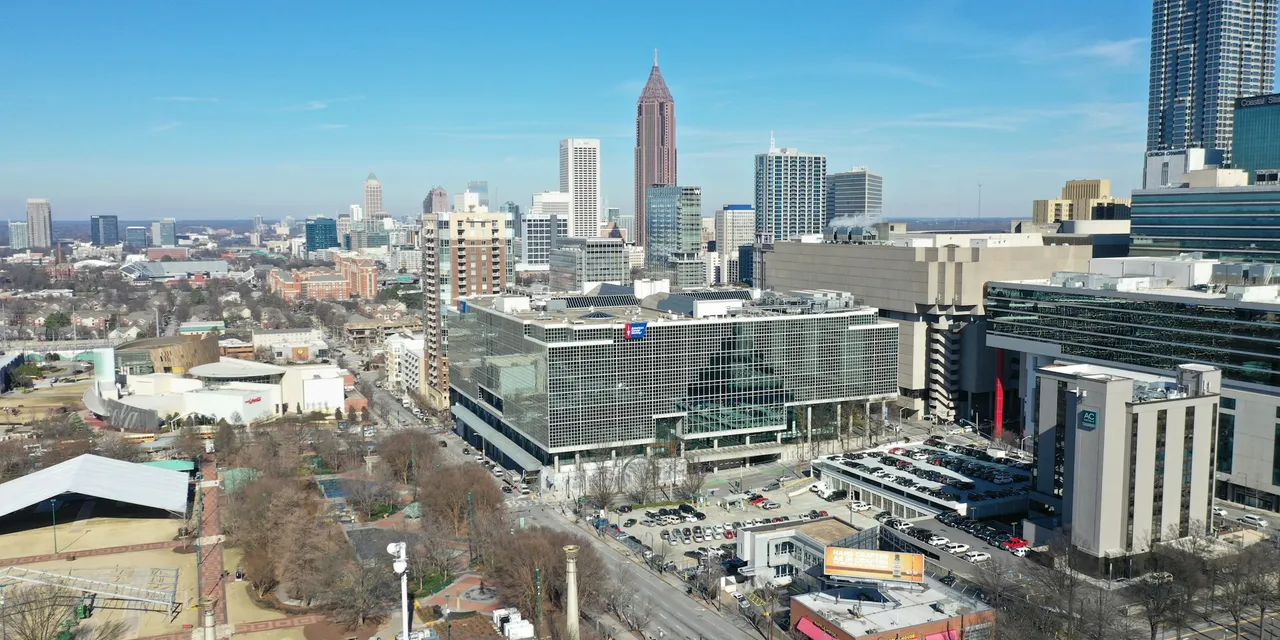
Atlanta entered 2026 with 94 certified sound stages within a 30-mile production zone, studio utilisation rates touching 95%, and streaming commitments from Netflix and Amazon MGM Studios totalling over 4,200 combined production days. By every infrastructure metric, this is a production market operating at peak capacity. It is also a market where 22% of approved productions experienced start-date delays last year because key crew positions could not be filled.
The gap between physical capacity and human capital is the defining tension of Atlanta's entertainment economy in 2026. Sound stages sit booked but underutilised. Production schedules compress to absorb post-strike backlogs while the crew pool that must execute those schedules shrinks in the roles that matter most. The shortage is not evenly distributed. It concentrates in three specific functions: production accountants, senior VFX artists, and specialised grip and electric crews. These are the roles where passive candidate rates exceed 80%, where time-to-fill has tripled historical benchmarks, and where the cost of a failed search is not merely financial but operational, measured in delayed start dates, relocated productions, and insurance adjustments triggered by crew fatigue.
What follows is a detailed analysis of where Atlanta's production workforce gaps are most acute, why the standard approaches to filling them are failing, and what hiring leaders in studio operations and content strategy need to understand about competing for talent in a market where the real constraint is not space but people.
The Post-Strike Compression That Broke the Labour Model
The 148-day WGA strike and concurrent SAG-AFTRA stoppage of 2023 created a 14-month production backlog. By early 2025, Atlanta-based productions were running at 118% of pre-strike volume. That surge has not fully subsided. The compression forced standard prep periods to contract by 30 to 40%, according to the Film Workforce Development Alliance's post-strike recovery analysis. Productions that would normally allow eight weeks of pre-production were launching in five.
The human cost of that compression showed up in IATSE Local 479's Q4 2024 reporting: overtime utilisation exceeded contractually permitted thresholds by 22%. The consequences were immediate and measurable. OSHA safety inspections increased. Fatigue-related production insurance adjustments followed. And six mid-budget productions in the $15 to $40 million range relocated to Albuquerque and Toronto during peak 2025 spring booking windows because they could not secure crew in Georgia.
This is the dynamic that makes Atlanta's current market different from a standard cyclical upturn. The backlog did not merely increase demand. It compressed timelines in ways that made the existing workforce less effective, not more. A Key Grip working 14-hour days across back-to-back productions is technically employed but functionally degraded. The quantity of available labour hours has not kept pace with the intensity of demand, and every failed search or delayed hire cascades forward into the next production's schedule.
Production Accountants: The 127-Day Search That Defines the Market
A Shortage That Job Boards Cannot Reach
Of the three critical shortages, production accounting is the most severe and the least visible to anyone outside the production finance chain. Atlanta faces a 34% shortfall in experienced production accountants. As of January 2025, 85 open positions sat across active productions against just 56 qualified local candidates. At the Key Production Accountant level, requiring five or more years of studio feature experience, average time-to-fill extended to 127 days. The historical benchmark is 45 days.
The passive candidate rate explains why. According to the Film Workforce Development Alliance, 82% of qualified production accountants are currently employed and not actively seeking new roles. Average tenure in current positions sits at 2.3 years, indicating high retention until direct recruitment breaks the inertia. Public job postings in this segment function as compliance gestures. They do not generate qualified applicants.
What a Typical Search Failure Looks Like
A pattern typical of this market: a major Netflix feature shooting at Tyler Perry Studios in Q4 2024 reportedly extended its Key Production Accountant search for 143 days before securing a candidate from the Los Angeles market, according to the Film Workforce Development Alliance's recruitment case study data. The successful hire required a $22,000 relocation bonus and an 18% salary premium above Georgia market rates. The production absorbed nearly five months of delay and incremental cost before filling a single role.
Senior production accountants at the Key Accountant level now command $4,200 to $5,500 per week on a project basis, or $165,000 to $195,000 as an annual equivalent. At the executive tier, Production Finance Controllers earn $285,000 to $340,000 base with 25 to 40% bonus potential. These figures reflect Atlanta's market rates. Los Angeles and New York offer 8 to 12% higher base compensation, but with cost-of-living indices 35 to 40% above Atlanta's. The real competitive threat is not New York. It is Albuquerque, where Netflix's growing hub offers comparable living costs with newer infrastructure and a less saturated talent pool.
The implication for hiring leaders is direct: the production accountant you need is already working on someone else's feature. Reaching them requires direct headhunting into active productions, not advertising into a candidate pool that functionally does not exist.
Senior VFX Artists: $40 Million in Work That Cannot Be Staffed
Atlanta's post-production sector absorbed $340 million in capital investment through 2025. Company 3 and Method Studios expanded their Midtown presence by 35%, adding 12 VFX bays and 4 HDR finishing theatres. Cinelease Studios completed a 50,000-square-foot expansion in Gwinnett County for colour grading and Dolby Vision mastering. The infrastructure is world-class. The people to operate it are not available in sufficient numbers.
Senior-level VFX artists, specifically Compositors, CG Supervisors, and Lighting TDs, carry a 28% vacancy rate at major Atlanta post-production houses. Company 3's Atlanta office reported 14 unfilled senior positions as of Q4 2024. Across the local VFX sector, houses are turning away an estimated $40 million in contract value annually because they cannot staff senior technical roles, according to the Georgia Film Office's post-production capacity study.
The passive candidate rate is 85%. Active unemployment among Houdini FX TDs and Unreal Engine technical artists sits below 3%. Transitions happen through recruiter relationships, not job boards. And the talent that Atlanta does develop tends to leave. According to the Film Workforce Development Alliance's retention analysis, approximately 30% of entry-level VFX talent migrates to Vancouver or London within 18 months of initial hire.
Why Talent Leaves Despite Lower Pay Elsewhere
This is one of the most counter-intuitive dynamics in the research. Vancouver and London offer 15 to 25% higher compensation for senior VFX roles, but their cost-of-living indices are materially higher. On a purchasing-power basis, Atlanta should be the more attractive market. Yet the migration pattern persists.
The explanation lies in career trajectory and union coverage. Vancouver offers IATSE Local 839 representation. London offers BECTU membership. Both markets provide structured career ladders, pension contributions, and health coverage that Atlanta's project-based freelance model does not replicate at equivalent scale. For a 28-year-old Compositor weighing a 15% pay increase in Vancouver against remaining in Atlanta at a higher real wage, the long-term calculation favours the market with institutional career infrastructure.
This dynamic challenges a foundational assumption in Georgia's economic development strategy: that tax-incentive-driven production volume alone secures long-term workforce retention. It does not. For specialised technical roles, fiscal incentives attract productions. They do not retain the people who execute them. Atlanta is building stages faster than it is building careers, and the VFX talent flight is the clearest evidence of that imbalance.
Senior Compositors and CG Supervisors command $125,000 to $155,000 annually in Atlanta, with a 20 to 25% premium for Unreal Engine and real-time engine specialists. At the VP of VFX and Post-Production level, compensation reaches $310,000 to $395,000 base with equity participation. The zero-sum competition for this talent is fierce. According to The Hollywood Reporter, Crafty Apes reportedly secured a Senior Compositor from FuseFX in September 2024 with a $35,000 signing bonus and guaranteed 60-hour work weeks, illustrating the premium required to move passive candidates between firms within the same city.
Grip, Electric, and Below-the-Line: The Workforce Running on Fumes
IATSE Local 479 reports a 92% employment rate among active members. Best Boy Electric and Key Grip positions carry what the union describes as "permanent open" status across 60% of active productions. The union's permit book, the non-member hiring list used when member availability is exhausted, has expanded to 1,400 names. But producers report that 40% of permittees lack the set etiquette training required for high-stakes Marvel and Warner Bros. productions, according to IATSE Local 479's training director in comments to Deadline.
This creates a two-tier workforce problem. The experienced union members are overworked, hitting overtime thresholds that trigger safety inspections and insurance adjustments. The available non-union permittees are undertrained for the complexity that major studio productions demand. The middle ground, experienced crew available at reasonable hours, has effectively disappeared.
Key Grips and Best Boys are 70% passive candidates, employed through union referral systems that prioritise existing relationships. Entry-level electricians and grips show higher active candidacy at around 40%, but many lack Georgia tax credit compliance training needed for immediate deployment. New Orleans and Albuquerque compete aggressively for experienced Keys and Gaffers, offering comparable day rates of $450 to $600 with lower housing costs and less congested shooting environments.
Housing affordability compounds the problem directly. Atlanta's average rent in production-adjacent neighbourhoods rose 24% between 2022 and 2024, outpacing the 12% wage growth for below-the-line crew. Production accountants and assistant directors report housing burden ratios exceeding 45% of income, well above the 30% industry standard. Trilith's residential community and Tyler Perry Studios' employee housing initiatives are steps forward, but they accommodate less than 5% of total workforce demand. The remaining 95% of crew members absorb the full cost differential, and some are choosing not to.
Virtual Production: The 60% Supply Shortfall in Tomorrow's Core Skill
Virtual production technology is projected to reach 40% of Atlanta's total production volume in 2026, up from 28% in 2024. Trilith's StageCraft volume runs at 85% booked utilisation for LED wall productions. Prysm Stage in Decatur, opened in Q4 2024, offers 2.5mm pixel pitch LED volumes competitive with Los Angeles and London's top facilities. The hardware investment has been made.
The workforce to operate it has not materialised. VP technical director and LED technician roles face a 60% supply shortfall. These specialisms require hybrid cinema and gaming skillsets: professionals who understand both on-set production workflows and real-time game engine architecture. Georgia's workforce development pipelines do not yet produce this hybrid profile in meaningful numbers, according to the Georgia Film Academy's workforce gap analysis.
The immediate consequence is imported talent. Studios are bringing Unreal Engine specialists from Seattle and Austin's gaming sectors at 35% compensation premiums, according to the CBRE Tech Talent Report. This is not a sustainable staffing model. It is an emergency measure that inflates costs for every production using virtual stages and creates dependency on a talent pool that has no organic reason to relocate permanently to Atlanta.
Content strategy executives are now expected to understand this technology at a strategic level. According to Russell Reynolds Associates' 2024 media sector briefing, 60% of executive searches for Head of Content Strategy roles specified familiarity with generative AI tools for pre-visualisation and localisation. The VP of Physical Production and Studio Operations Director roles that increased 45% year-over-year in demand require hybrid expertise spanning Georgia tax incentive monetisation, union negotiation across IATSE, SAG-AFTRA, and DGA, and virtual production technical oversight. Finding a single executive who credibly covers all three domains is the kind of C-level search challenge that no job posting can solve.
The Legislative Threat That Shadows Every Hiring Decision
Georgia's 30% transferable tax credit remains among the most competitive in North America. It is also the single largest source of uncertainty in every long-term workforce investment decision made in this market.
House Bill 1180, introduced in the 2024 legislative session, proposed annual expenditure caps and sunset clause modifications. The bill did not pass. But the Georgia Film Office's own modelling projected that a $900 million annual cap would force immediate relocation of 40 to 45% of current productions to Louisiana, New Mexico, or Toronto. Each 5% reduction in the total credit value, from 30% to 25%, correlates to $280 million in lost direct production spend and 3,200 job losses statewide, according to the Motion Picture Association's economic impact analysis.
The 2026 legislative session presents continued regulatory uncertainty. New Mexico's 25 to 40% refundable credit, including a 5% rural uplift, is gaining ground. New York's 30% post-production credit specifically targets VFX work. The UK's Audio-Visual Expenditure Credit offers a 25% cash rebate, rising to 34% for animation, and continues to pull high-end VFX work from Atlanta, particularly for Marvel's UK-based secondary units, according to the British Film Institute.
For hiring executives, the legislative risk does not require action today. It requires awareness. Every executive hire, every relocation package, every long-term retention programme is implicitly a bet that Georgia's incentive structure will remain stable. If you are building a talent pipeline in this market, you need to understand the policy floor beneath it. And right now, that floor has not been formally guaranteed beyond the current session.
What Hiring Leaders in Atlanta's Production Market Must Do Differently
The original analytical insight that runs through every data point in this analysis is this: Atlanta's production market has achieved infrastructure maturity without achieving workforce maturity. The city has built a world-class stage and post-production footprint on the assumption that talent would follow capital investment. It has not, at least not at the specialised mid-career and senior levels where shortages are most acute. Physical capacity without commensurate human capital creates what the research calls "phantom vacancy," stages that are booked, paid for, and sitting partially idle because the crew to operate them cannot be assembled on schedule.
This means the organisations hiring in this market must approach talent acquisition fundamentally differently than they would in Los Angeles or London.
First, accept that the candidate you need is working on someone else's production. With passive candidate rates of 82% for production accountants, 85% for senior VFX artists, and 70% for experienced grip and electric crew, the addressable market through job advertising is a fraction of the total talent pool. The 80% of qualified professionals who are not actively looking will never see your posting. Reaching them requires structured direct search: talent mapping across active productions, competitor post-houses, and adjacent markets like gaming and interactive entertainment.
Second, understand that compensation is necessary but not sufficient. Atlanta's cost-of-living advantage is real, but career trajectory, union coverage, and housing affordability are eroding it for the specific roles in shortest supply. A Senior Compositor weighing Atlanta against Vancouver is not comparing salaries. They are comparing career architectures. The total proposition required to move a passive candidate must address trajectory, stability, and quality of life, not just the weekly rate.
Third, compress your search timeline or lose to the market. A 127-day search for a Key Production Accountant is not just slow. It is a production delay measured in hundreds of thousands of dollars. In a market where the strongest candidates are off the table within weeks of becoming available, traditional search processes that take months to produce a shortlist are structurally disadvantaged. The firms that fill these roles are the ones that can present qualified, vetted candidates before the rest of the market knows they are available.
KiTalent works with production companies, studios, and entertainment groups to fill executive and senior specialist roles across the entertainment and technology sectors through AI-enhanced direct search. Our model delivers interview-ready candidates within 7 to 10 days and charges on a pay-per-interview basis, with no upfront retainer. In a market where 96% of the talent pool is invisible to conventional methods and the cost of a vacant key role is measured in production days lost, that speed and precision is not a convenience. It is a competitive requirement.
For studio operations leaders, content strategy executives, and production finance teams competing for senior talent in Atlanta's entertainment market, where the candidates you need are embedded in active productions and the cost of delay compounds daily, start a conversation with our executive search team about how we approach this market.
Frequently Asked Questions
Why is there a production accountant shortage in Atlanta's film industry?
Atlanta's production accountant shortage stems from a 34% gap between open positions and qualified local candidates. With 85 roles open against 56 available professionals as of early 2025, the deficit concentrates at the Key Production Accountant level where five-plus years of studio feature experience is required. The 82% passive candidate rate means most qualified accountants are already employed on active productions. Average time-to-fill has stretched to 127 days, nearly triple the 45-day historical benchmark. Direct search into active productions is the only reliable sourcing method for these roles.
How competitive is Georgia's film tax credit compared to other states?
Georgia's 30% transferable tax credit (20% base plus 10% promotional uplift) remains among North America's strongest incentives. However, New Mexico offers a 25 to 40% refundable credit with a rural uplift, and New York provides a 30% credit specifically targeting post-production VFX work. Internationally, the UK's 25% cash rebate (34% for animation) competes directly for high-end visual effects projects. Legislative uncertainty around potential annual caps adds risk for long-term workforce planning, making executive hiring strategy in entertainment and technology a critical factor in Georgia's talent retention.
What are the biggest VFX hiring challenges in Atlanta?
Senior VFX roles carry a 28% vacancy rate at major Atlanta post-houses, with local facilities turning away an estimated $40 million in annual contract value due to staffing gaps. The shortage is most acute for Houdini FX TDs, Unreal Engine specialists, and CG Supervisors. With 85% of qualified candidates passively employed and active unemployment below 3%, conventional recruitment yields almost no results. Atlanta also loses approximately 30% of entry-level VFX talent to Vancouver and London within 18 months, attracted by stronger union coverage and structured career progression.
How has the 2023 writers' strike affected Atlanta production hiring?
The 148-day WGA and concurrent SAG-AFTRA strikes created a 14-month production backlog that compressed 2024 and 2025 shooting schedules. Atlanta productions reached 118% of pre-strike volume, with prep periods contracted by 30 to 40%. This surge drove IATSE Local 479 overtime utilisation 22% above contractual thresholds, triggered increased OSHA inspections, and forced six mid-budget productions to relocate when crew could not be secured. The compression turned a manageable staffing challenge into an acute crisis that persists into 2026.
What salaries do senior production roles command in Atlanta's entertainment sector?
Key Production Accountants earn $4,200 to $5,500 weekly or $165,000 to $195,000 annually. Production Finance Controllers at the VP level command $285,000 to $340,000 base with 25 to 40% bonuses. Senior VFX artists earn $125,000 to $155,000, with a 20 to 25% premium for Unreal Engine specialists. VP of VFX and Post-Production roles reach $310,000 to $395,000 base with equity. VP of Studio Operations roles pay $275,000 to $350,000. For organisations benchmarking these figures against competitor markets, executive compensation benchmarking provides the context needed to build competitive offers.
How can studios find passive entertainment production talent in Atlanta?
With passive candidate rates exceeding 80% across production accounting, senior VFX, and experienced grip and electric roles, studios must move beyond job postings entirely for critical hires. KiTalent uses AI-powered talent mapping to identify and engage the professionals embedded in active productions who will never appear on a job board. Our direct search methodology delivers interview-ready candidates within 7 to 10 days, with a 96% one-year retention rate, ensuring that hires stay beyond the first project cycle.