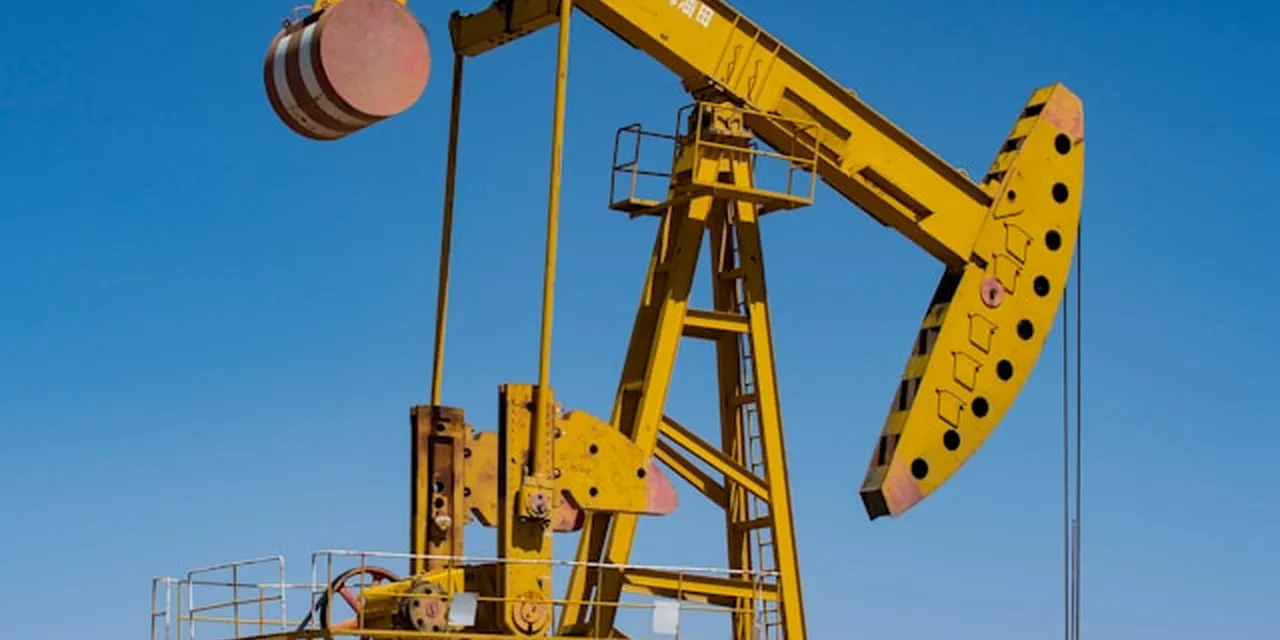
Atyrau's Oil and Gas Logistics Talent Gap: Why $45 Billion in Upstream Investment Made the Bottleneck Worse
The Tengiz Future Growth Project added 260,000 barrels per day of production capacity when it came online in September 2024. It was the largest single industrial investment in Kazakhstan's history, valued at $45.2 billion. Yet the logistics infrastructure responsible for moving chemicals, equipment, maintenance modules, and refined products through Atyrau still depends on a river port with a 2.5-metre navigable depth and a four-month ice season.
That mismatch is now the defining feature of Atyrau's talent market. The region does not lack jobs. It lacks the specific professionals capable of operating a supply chain that was built for a smaller production base and never upgraded to match the capital that flowed upstream. Sour gas operations specialists, multimodal logistics coordinators, and HSE managers with Caspian-specific experience sit at the intersection of acute demand and near-zero local supply. Roles in these categories remain unfilled for 120 to 180 days. Employers poach from one another at premiums of 30 to 40 per cent. The cycle repeats.
What follows is an analysis of the forces that created this bottleneck, the specific talent categories most affected, and what organisations operating in or hiring for the Atyrau region need to understand before they commit to their next search. The data covers cargo volumes, compensation benchmarks, competitor geography, and the regulatory constraints that make this market unlike any other in the Caspian energy corridor.
A Port Built for a Smaller Era
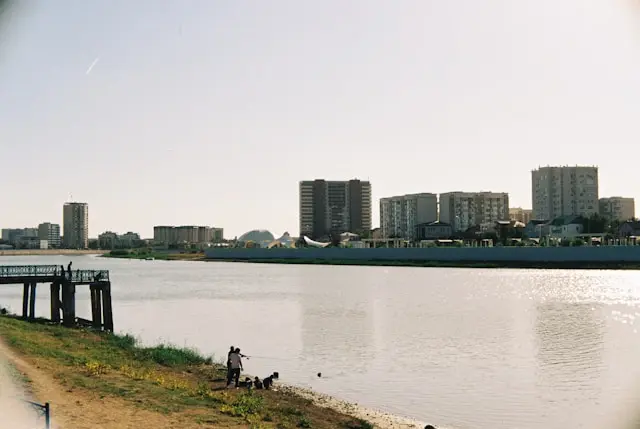
The Atyrau River Port sits 35 kilometres upstream from the Caspian Sea on the Ural River. It handled approximately 1.2 million tonnes of cargo in 2024, primarily diesel fuel, gasoline, and construction materials for the oil sector. Those numbers sound substantial until placed in context. The port's navigable channel restricts vessel capacity to roughly 3,000 to 5,000 deadweight tonnage. Caspian-class tankers cannot call directly. Every oversized shipment requires lightering or transshipment at the river mouth, adding $8 to $12 per tonne in handling costs according to the EBRD's Kazakhstan Transport Strategy Review.
The seasonal constraint compounds the problem. Ice formation on the Ural River typically runs from late November through late March, reducing the commercial navigation window to approximately 240 days per year. During the four months the port is ice-bound, all cargo shifts to road and rail. That modal shift carries a 35 to 40 per cent cost premium, according to a Eurasian Development Bank working paper on Caspian transport corridors.
The result is a port operating at 60 per cent annual capacity utilisation. Not because demand is insufficient, but because the river itself imposes a hard ceiling on throughput for nearly half the year. For hiring leaders in Atyrau's oil, energy, and renewables sector, this means every logistics role carries an implicit requirement: the person filling it must be able to manage a supply chain that fundamentally changes shape twice a year.
Why the FGP Did Not Fix the Infrastructure
The $45.2 billion Tengiz Future Growth Project prioritised upstream production capacity. That was its mandate, and it delivered. But the capital allocation decision left logistics redundancy unaddressed. Atyrau's river port, its classification yard, and its road network were not upgraded in proportion to the production growth they now serve.
This is the core analytical tension in the region. Capital moved faster than infrastructure could follow, and infrastructure moved faster than human capital could follow that. The professionals who can operate a constrained, seasonal, multimodal supply chain at the scale now demanded by Tengiz and Kashagan operations are not being produced by Kazakhstan's training pipeline at anything close to the required rate. They are being recycled between the same employers, at rising cost, with no net increase in capacity. The investment created a world-class upstream operation served by a logistics chain designed for a previous era, and the talent market reflects that contradiction exactly.
The Talent Categories That Matter Most
The completion of the FGP shifted demand away from project managers and construction coordinators. The region's hiring need has moved decisively toward operations and maintenance profiles. Three categories now dominate the shortage.
Sour Gas and HSE Specialists
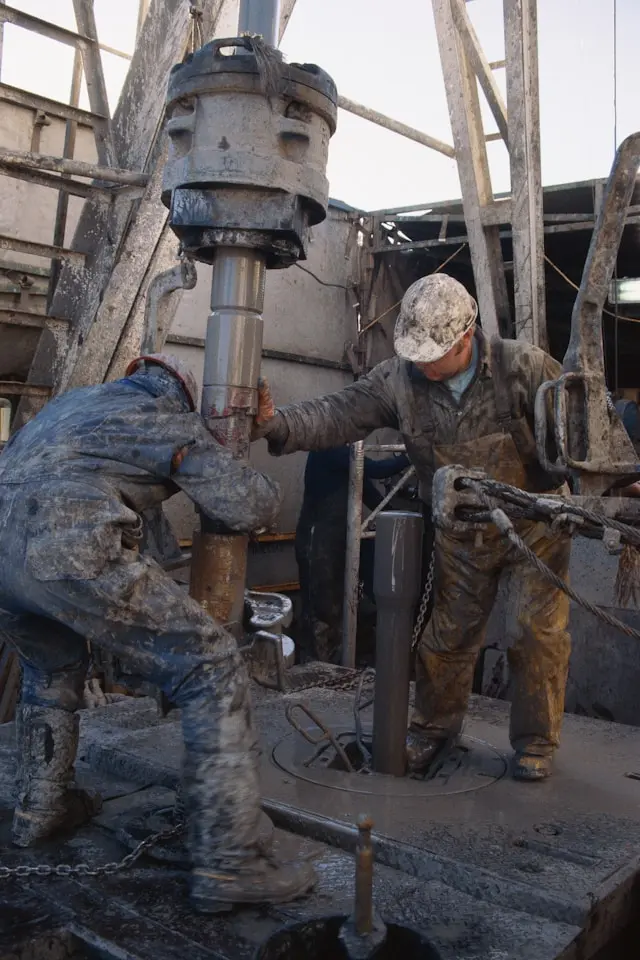
Tengiz and Kashagan both produce crude with extremely high hydrogen sulphide content. Roles requiring ten or more years of experience in H2S environments typically remain unfilled for 120 to 180 days. The candidate pool is not merely small. It is functionally closed. An estimated 85 to 90 per cent of qualified senior petroleum engineers in the region are passive, meaning they are employed, not searching, and reachable only through direct headhunting methods or executive search.
HSE managers with Caspian-specific experience face similar dynamics. Market unemployment in this category sits below 2 per cent, with average tenure of five to seven years at current employers. These professionals do not appear on job boards. They receive two to three unsolicited recruiter approaches per month, which means they have learned to filter aggressively. A generic outreach from an unfamiliar firm will not reach them.
Multimodal Logistics Coordinators
This is the role category where Atyrau's constraints are most visible. The ideal candidate holds simultaneous expertise in Caspian maritime regulations, Kazakh rail tariff systems, and international project logistics. Industry reports describe this combination as "nearly impossible to source locally." Employers compensate by hiring expatriate rotational workers or flying specialists in from Astana, both of which increase cost and reduce continuity.
The problem is not simply that the skills are rare. It is that the skills are rare in combination. An experienced maritime logistics professional from Aktau does not necessarily understand KTZh rail tariff structures. A rail specialist from Astana may have no exposure to Caspian winter navigation protocols or ice-class vessel operations. The talent mapping required to identify candidates who hold all three competencies in a single profile is a fundamentally different exercise from a standard logistics search.
Compensation: The Hardship Premium and Its Limits
Atyrau compensation includes a 20 to 30 per cent hardship premium over equivalent roles in Almaty or Astana. At senior specialist and manager level, supply chain and logistics roles command $6,000 to $9,000 per month in total cash compensation. At executive and VP level, the range rises to $15,000 to $25,000 per month. Petroleum engineering operations roles at the executive level reach $18,000 to $30,000 per month.
These figures, drawn from the Mercer Kazakhstan Total Remuneration Survey 2024 and the Hays Kazakhstan salary guide, tell only part of the story. Executive packages at the major international oil companies frequently include rotational schedules and housing allowances that add $40,000 to $80,000 annually to total compensation. A VP-level petroleum engineer on a 28/28 rotation at Tengiz, with accommodation and flights included, may earn a total package exceeding $400,000 annually.
The hardship premium works at the specialist level. It stops working at the senior executive level. The reason is geographic competition.
Baku offers 15 to 20 per cent higher net compensation for senior Caspian oil and gas professionals, with greater international exposure and a more developed urban environment. Dubai and Abu Dhabi offer tax-free salaries and a career trajectory that Atyrau cannot match. For VP-level professionals and above, the calculation is not whether the Atyrau premium is large enough. It is whether the premium compensates for what Atyrau lacks: international schooling, lifestyle infrastructure, and a professional network that extends beyond the Tengiz-Kashagan-Karachaganak triangle. For many of the most mobile senior leaders, it does not.
This creates what the KAZENERGY industry analysis describes as a "brain drain" at the top. The professionals who could lead Atyrau's next phase of operational maturity are the same professionals with the most options elsewhere. Understanding how to negotiate compensation packages that address lifestyle constraints as well as salary is essential for any organisation attempting to attract senior talent to the region.
Local Content Requirements and the Management Gap
Kazakhstan's Subsoil Use Code mandates 90 per cent Kazakhstani workforce at operational levels and 70 per cent at managerial levels for oil and gas operators. This regulation was designed to build local capacity. Its unintended effect has been to create a structural tension between compliance and competence.
Aggregate unemployment in the Atyrau region sits at 4.8 per cent. That figure suggests a relatively tight but functional labour market. It is misleading. The shortage is not a quantity gap. It is a quality gap. The region produces enough workers for field technician and junior administrative roles. It does not produce enough mid-level managers with five to fifteen years of specialised experience. Employers face a choice: hire an expatriate and risk breaching local content requirements, or leave the position vacant and absorb the operational cost of the gap.
Neither option is sustainable. The expatriate route triggers regulatory scrutiny and higher costs. The vacancy route degrades operational performance at a moment when Tengiz's expanded production base demands more logistics coordination, not less. The hidden cost of a prolonged executive vacancy in this environment compounds rapidly. A missing logistics director does not simply leave a seat empty. It leaves a seasonal supply chain without the person responsible for managing its most complex transitions.
The professionals most affected by this dynamic are trilingual technical communicators with fluency in Kazakh, Russian, and English. This combination is required for regulatory submissions, international vendor coordination, and internal reporting within the IOCs. The trilingual requirement alone eliminates a substantial portion of otherwise qualified candidates.
The Middle Corridor Effect and Atyrau's Evolving Role
The Trans-Caspian International Transport Route, known as the Middle Corridor, has reshaped container transit through Kazakhstan. Volumes rose 64 per cent year on year in 2024, according to the Kazakhstan Temir Zholy operational report. Atyrau handles only a fraction of this volume compared to the deep-water ports at Aktau and Kuryk. But the corridor's growth has elevated Atyrau's importance as a rail logistics node, particularly for the Atyrau classification yard and the intermodal terminals connecting the region's oil infrastructure to the broader Eurasian network.
KazMunayGas has responded by announcing a dry port logistics complex near the Atyrau airport, scheduled for phased opening in 2026. The dry port is designed to offset the river port's seasonality by providing year-round rail and road transshipment capacity. Digitalisation of customs and port operations through the Astana Hub initiative targets a 20 per cent reduction in cargo processing times by end of 2026, though implementation in Atyrau lags behind Astana and Almaty.
These investments will create a new category of hiring demand. The dry port requires professionals who understand both traditional rail logistics and digital customs platforms. The digitalisation initiative requires SAP and ERP implementation experience in resource-constrained environments. Neither profile is currently abundant in the Atyrau talent pool. The same pattern that characterised the FGP era is repeating: infrastructure investment is outpacing the availability of the people needed to operate it.
For organisations planning their talent pipeline in the Atyrau region, the implication is clear. The hiring need is shifting again, just as it shifted from construction to operations in 2024. The next wave of demand will sit at the intersection of logistics, technology, and regulatory compliance. Waiting until the dry port opens to begin sourcing these profiles means entering a market where every competitor has the same idea at the same time.
Geopolitical Risk and the Cost of Disruption
The Caspian Pipeline Consortium operates at over 95 per cent capacity. It is the primary crude export route for Kazakhstani oil. Any disruption, whether from maintenance, sanctions-related technical complications, or political friction, immediately forces rail diversion through Atyrau. When that happens, the region's logistics infrastructure is overwhelmed.
EU and US sanctions on Russian maritime and logistics entities have already disrupted traditional Caspian vessel chartering. Costs for ice-class tonnage have risen 25 to 30 per cent since 2022, according to Reuters. The Kazakhstani tenge has depreciated against the dollar, trading at 510 to 520 KZT/USD in late 2024 compared to 470 in early 2022. This increases costs for imported equipment while creating payroll inflation for USD-denominated expatriate contracts.
Proposed KTZh rail tariff increases of 12 to 15 per cent further threaten Atyrau's competitiveness as a transshipment point. The cumulative effect of sanctions spillover, currency movement, and tariff escalation is a logistics environment where costs are rising from multiple directions simultaneously. The organisations that manage these pressures successfully are the ones with logistics leadership capable of modelling multi-variable cost scenarios and adapting supply chain routing in real time.
This is not a skill that can be taught in a two-week training course. It requires years of operational experience in the Caspian corridor, combined with financial modelling capability and regulatory awareness across multiple jurisdictions. The professionals who hold this combination are exactly the passive candidates who will never appear through conventional job advertising. They must be found, assessed, and engaged through a process built for a market where 85 to 90 per cent of viable candidates are not looking.
What This Means for Organisations Hiring in Atyrau
The standard executive search approach does not work in Atyrau. The reasons are specific and compounding.
First, the candidate pool is overwhelmingly passive. At senior levels, active applicants represent at most 10 to 15 per cent of qualified professionals. The rest are employed, reasonably compensated, and not monitoring job boards.
Second, the skills required are combinatorial. A logistics search in Atyrau is not a search for a logistics professional. It is a search for someone who understands Caspian maritime regulation, Kazakh rail tariff systems, H2S safety protocols, seasonal supply chain transitions, and trilingual stakeholder communication. Each additional requirement narrows the pool exponentially.
Third, geographic competition is intense. Baku, Dubai, and Astana all offer credible alternatives to Atyrau for the same professionals. A search that does not address the lifestyle and career trajectory concerns specific to an Atyrau posting will lose candidates to markets that have already solved those problems.
KiTalent's approach to executive search in industrial and manufacturing markets addresses these constraints directly. AI-powered talent mapping identifies the specific intersection of skills, geography, and willingness to relocate that defines a viable candidate in this market. The result is interview-ready candidates delivered within 7 to 10 days, drawn from the passive pool that conventional methods never reach. With a 96 per cent one-year retention rate across 1,450 completed executive placements, the approach is built for markets where the cost of a failed search is not merely financial but operational.
For organisations competing for sour gas operations leadership, multimodal logistics directors, or senior HSE talent in Atyrau's Caspian corridor, start a conversation with our executive search team about how to reach the candidates this market requires.
Frequently Asked Questions
What types of cargo does the Atyrau River Port handle?
The Atyrau River Port primarily handles refined petroleum products, construction materials, and containerised supplies for the upstream oil sector. It serves as a supply base and product distribution point for the Tengiz and Kashagan oil fields. The port maintains rail, road, and river intermodal capacity but is constrained by a 2.5-metre navigable draft and a four-month ice season that limits the commercial navigation window to approximately 240 days annually. Bulk crude export from the region is dominated by the Caspian Pipeline Consortium and rail infrastructure rather than the river port itself.
Why is it so difficult to hire logistics professionals in Atyrau?
The difficulty stems from a combinatorial skills requirement. Atyrau logistics roles demand simultaneous expertise in Caspian maritime regulations, Kazakh rail tariff systems, seasonal supply chain management, and often trilingual communication in Kazakh, Russian, and English. Each requirement narrows the candidate pool. At senior levels, 85 to 90 per cent of qualified professionals are passive and not actively searching. Firms specialising in direct headhunting for hard-to-fill leadership roles consistently outperform job advertising in this market because the candidates who fit never see a job posting.
What do senior oil and gas roles pay in Atyrau?
Total cash compensation at the executive and VP level ranges from $14,000 to $30,000 per month depending on the function. Supply chain and logistics VPs earn $15,000 to $25,000 monthly, while petroleum engineering executives command $18,000 to $30,000 monthly. These figures include a 20 to 30 per cent hardship premium over Almaty and Astana. At major IOCs, rotational schedules and housing allowances can add $40,000 to $80,000 annually to total packages.
How does Kazakhstan's local content requirement affect hiring in Atyrau?
The Subsoil Use Code mandates 90 per cent Kazakhstani workforce at operational levels and 70 per cent at managerial levels. This creates a tension between compliance and the shortage of experienced local mid-management professionals. Employers must either hire expatriates and risk regulatory scrutiny or leave specialised roles vacant. The requirement particularly affects roles demanding ten or more years of sour gas or Caspian logistics experience, where the local talent pipeline has not yet produced sufficient depth.
What cities compete with Atyrau for senior oil and gas professionals?
Atyrau competes primarily with four markets. Astana attracts mid-level managers with superior infrastructure and international schooling. Aktau competes for Caspian maritime and logistics talent with lifestyle advantages. Baku offers 15 to 20 per cent higher net compensation with greater international exposure. Dubai and Abu Dhabi draw the most senior executives with tax-free salaries and career trajectories that Atyrau cannot currently match. Understanding this competitive geography is essential for building a compensation strategy that retains leadership talent.
What is the Middle Corridor's impact on Atyrau's logistics sector?
The Trans-Caspian International Transport Route has elevated Atyrau's role as a rail logistics node. Container transit through Kazakhstan rose 64 per cent year on year in 2024, though Atyrau handles a fraction of total Middle Corridor volume compared to Aktau and Kuryk. The planned dry port logistics complex near Atyrau airport, scheduled for phased opening in 2026, is designed to offset river port seasonality and position Atyrau for increased rail and road transshipment. This expansion will create new demand for professionals combining logistics expertise with digital customs and ERP platform experience.