Aurora's Logistics Market Is Split in Two: The Cold Chain Talent Crisis Behind the Headline Numbers
Aurora, Colorado, sits at the centre of one of the most deceptive industrial markets in the western United States. The headline number says there is slack: 12.4% industrial vacancy across the Denver-Aurora metro, a figure that tripled between early 2022 and late 2024. But that headline number is lying by omission. Beneath it, two entirely different markets operate on two entirely different logics, and the one that matters most for Aurora's economic future is the one where vacancy barely exists, rents run 85% above standard, and the people qualified to work inside its walls number fewer than 12,000 in the entire country.
The split runs through every dimension of this market. Dry bulk warehouse space sits idle, available for sublease, pushed onto the market by Amazon's post-pandemic retrenchment. Temperature-controlled distribution, by contrast, operates at 97-98% occupancy with new speculative cold-storage projects racing to deliver into a structural deficit. The talent implications of this split are severe. The workers, engineers, and leaders required to run automated cold chain facilities are not the same people who staff conventional fulfilment centres. They hold different certifications, they operate under different regulatory frameworks, and they are dramatically harder to find.
What follows is a structured analysis of the forces reshaping Aurora's logistics sector, the employers driving that change, and what senior leaders need to understand before they make their next hiring or retention decision in this market.
The Two Markets Inside Aurora's I-70 Corridor
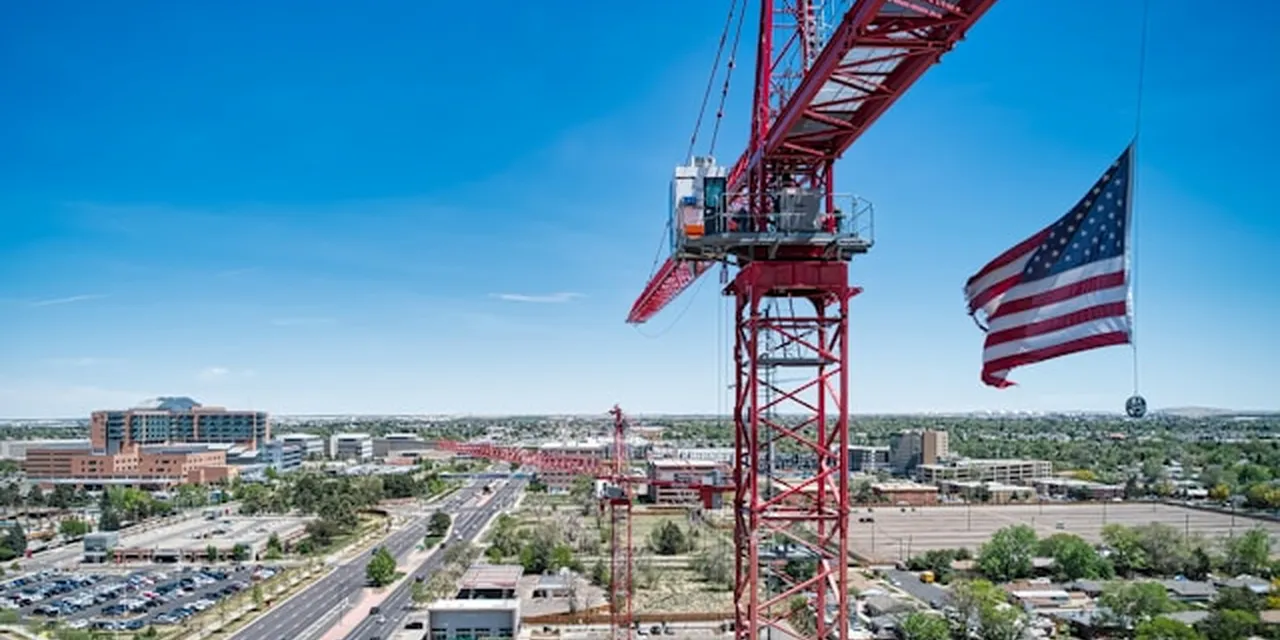
Aurora's logistics infrastructure clusters in the northeastern quadrant of the city, anchored by the E-470 beltway and the Pena Boulevard corridor. The geography is intentional. The E-470 interchange with I-70 sits ten to twelve minutes from Denver International Airport by truck, and the 30-minute drive radius reaches downtown Denver and the I-25 north-south corridors. For distribution operators, this is one of the best-connected nodes in the Mountain West.
The problem is that "logistics" in Aurora describes two fundamentally different sectors sharing the same postcode. The first is conventional dry warehouse and fulfilment. This market has softened materially. Negative absorption of 1.2 million square feet through 2024 tells the story. Amazon's subleasing activity alone pushed 1.8 million square feet of excess space onto the Denver metro market, according to Business Insider's reporting, and Class A bulk distribution rents fell 8.3% year-on-year to $9.85 per square foot.
The second market is temperature-controlled distribution. Cold chain facilities in the Denver-Aurora metro held vacancy at 2-3% through 2024 while commanding rents of $18 to $24 per square foot triple net. That is not a premium. That is a different asset class priced accordingly.
Why the Cold Chain Deficit Is Structural
The deficit is not a temporary lag between demand and delivery. New cold-storage construction requires ammonia or CO2 cascade refrigeration systems, specialised insulation, and regulatory compliance with OSHA's Process Safety Management standards. Build times run 18 to 24 months longer than dry warehouse. Interest rates above 6.5% through late 2024 further constrained speculative development. Even with 2.1 million square feet of industrial space under construction in the Aurora and Adams County submarket as of late 2024, the cold chain share remains small relative to demand. Colorado's cold-storage inventory was projected to grow at 4.5% annually through 2026, driven by pharmaceutical distribution from Kaiser Permanente's nearby campus and food processing expansion. That growth rate requires both physical space and the human capital to operate it. The space is arriving. The human capital is not.
What the Headline Vacancy Number Conceals
A hiring leader reading the CBRE market outlook might conclude that Aurora is a buyer's market for industrial talent. More space, lower rents, slower absorption. That conclusion holds for conventional fulfilment. It is dangerously wrong for cold chain operations. The bifurcation means an executive search for logistics leadership in this market requires understanding which side of the split a role sits on before the search can even be scoped correctly.
The Employers Defining Aurora's Logistics Economy
Aurora's Transportation and Warehousing sector employs between 18,500 and 20,000 workers, representing 12.8% of the city's total private employment. That is more than 50% above the national average concentration of 8.4%. The dependency runs deep, and it is concentrated among a small number of anchor employers.
Amazon operates three facilities in Aurora: the 855,000 square foot DEN3 centre at 24000 East 19th Avenue, the 1.02 million square foot robotics-enabled DEN8 at 19001 East 68th Avenue, and the DEN5 facility at 4201 North Chambers Road. Combined estimated headcount sits between 3,500 and 4,200. The DEN8 facility, which opened in 2022, was expected to reach full operational velocity of approximately 2,500 full-time employees by mid-2026. FedEx Ground operates its primary Denver metro sortation hub from 16000 East 32nd Avenue with 800 to 950 employees.
On the cold chain side, Lineage Logistics runs a 226,000 square foot automated cold storage facility at 14400 East 33rd Place, operating across a temperature range from minus ten degrees Fahrenheit to 55 degrees. Americold operates a 215,000 square foot facility in unincorporated Adams County with an Aurora postal address. XPO Logistics maintains a last-mile delivery station with an estimated 200-plus drivers.
The geographic clustering matters. The Aurora Corporate Centre at the I-70 and E-470 junction encompasses over 1,200 acres of master-planned industrial land. The Pena Boulevard Logistics Corridor concentrates air-cargo dependent facilities that draw on DIA's 720 million-plus pounds of annual cargo throughput.
This concentration creates a paradox for hiring leaders. The talent pool is physically proximate to multiple employers, which should make hiring easier. Instead, it makes retention harder. A cold chain maintenance supervisor at Lineage can drive eight minutes to an Americold facility. An operations manager at a 3PL can walk to an interview at Amazon. The proximity that makes Aurora attractive for logistics operations also makes it a poaching ground.
The Original Analytical Claim: Automation Has Replaced One Workforce with Another That Does Not Yet Exist
The data in Aurora's logistics market contains a tension that most analysis overlooks. Amazon deployed robotics at DEN8. Lineage invested in automated storage and retrieval. Capital has flowed into productivity technology across the corridor. And yet hiring demand for logistics workers in Aurora rose 14% year-on-year in 2024, with 2,800 to 3,200 active job postings monthly.
The standard reading of this data is that automation augments rather than replaces labour. Throughput increases require more hands even as each unit requires fewer. That reading is partly correct but misses the deeper shift.
What automation has actually done in Aurora's logistics market is replace one type of worker with another type that does not yet exist in sufficient numbers. A conventional warehouse associate needs to lift, sort, and move product. A warehouse associate in a robotics-enabled facility needs to operate alongside autonomous systems, troubleshoot conveyor stoppages, and interpret WMS dashboards. An ammonia refrigeration technician in a manual cold store is a different professional from a technician maintaining automated storage and retrieval in a cascade CO2 system.
The capital investment moved faster than the human capital could follow. Aurora's employers did not reduce their labour needs. They traded a problem they knew how to solve, high-volume hourly hiring, for a problem that is structurally harder: finding technicians, engineers, and supervisors whose skills sit at the intersection of automation, cold chain compliance, and high-velocity operations. The 14% increase in job postings is not evidence that automation failed to reduce headcount. It is evidence that automation created roles the market had not yet produced the people to fill.
This dynamic is not unique to logistics. It mirrors the pattern seen across technology-driven sectors where AI and automation reshape role requirements faster than training pipelines can respond.
The Three Talent Gaps That Define This Market
Ammonia Refrigeration Technicians: A Certification Bottleneck
The most acute shortage in Aurora's logistics sector is not a leadership gap. It is a technical certification bottleneck. Cold chain facilities using industrial ammonia refrigeration systems require technicians holding RETA CARO or CIRO certification. According to the Refrigerating Engineers and Technicians Association, only 12,000 technicians hold these certifications nationally. Fewer than 5% of the broader HVAC technician workforce qualifies.
In the Denver-Aurora metro, the HVAC and refrigeration technician unemployment rate stood at 0.8% against a 3.2% general unemployment rate as of mid-2023. A facility like the Lineage Logistics Aurora operation or comparable Americold sites typically experiences 90 to 120 days to fill an Ammonia Refrigeration Technician II role, compared to a 45-day national average for similar positions. RETA's 2024 Workforce Survey documented this gap clearly.
The market for these technicians is 75% passive. They move through referral networks, not job boards. A cold chain operator in Aurora's logistics market cannot post a role on Indeed and expect to reach the candidates who matter. The search requires direct identification and outreach through methods designed to reach the hidden 80% of talent not visible through conventional channels.
CDL Class A Drivers: A Front Range Structural Deficit
The Colorado Motor Carriers Association reported a regional shortage of 1,800 to 2,200 Class A CDL drivers across the Front Range in 2024. This is not an Aurora-specific problem, but Aurora's E-470 toll corridor compounds it in a way unique to this market. Commercial trucks pay $0.35 to $0.45 per mile on E-470, translating to $14.50 to $18.00 per return trip between the I-70 interchange and DIA. Over a year, that is $4,500 to $6,000 per truck in toll costs alone compared to using untolled I-70 and I-225 routes.
Drivers are 60% active job seekers but highly selective. Home-time guarantees, route predictability, and toll reimbursement are now table stakes. Schneider National's Aurora terminal publicly advertised $5,000 to $10,000 retention bonuses for experienced drivers in 2024, with starting rates of $0.72 to $0.78 per mile. That reflects a 15% premium over 2022 levels. The counteroffer and retention bonus cycle in this segment is self-reinforcing: each round raises the floor for the next competitor's offer.
Senior Operations Leadership: The Passive Candidate Problem
At the director level and above, approximately 85% of qualified supply chain and logistics leaders in the Denver-Aurora market earning $180,000 or more are passive candidates. They are not reading job boards. They are not responding to recruiter InMail. They are solving complex operational problems inside facilities that cannot afford to lose them, which means the proposition required to move them must address far more than compensation.
A pattern documented across Aurora's E-470 corridor involves 3PLs and Amazon Delivery Service Partners competing for operations directors with signing bonuses of $15,000 to $25,000 and base salary premiums of 20%. According to Business Insider's March 2024 reporting and Robert Half's 2025 Salary Guide data, this competition has pushed Regional Director and VP Operations compensation in the Colorado market to $195,000 to $265,000 base plus 30 to 40% in bonus and equity. VP of Cold Chain Operations roles command $175,000 to $230,000 base plus long-term incentive participation.
These leaders are not found through traditional hiring methods. They require direct identification through talent mapping and a structured outreach process that begins with understanding what would make them move, before any role is presented.
The Competitive Threat: Where Aurora Loses Talent
Aurora does not compete for logistics leadership in isolation. Three external markets draw candidates away from the Colorado Front Range, and each exploits a specific vulnerability.
Dallas-Fort Worth offers the most direct threat. Texas has no state income tax, creating an effective 4.4% savings for a $150,000 earner. Executive compensation in DFW logistics runs 15 to 20% above Denver-Aurora equivalents at the same seniority level. DFW Airport handles materially more cargo volume than DIA. For a senior operations leader evaluating two offers, the financial arithmetic frequently favours Texas.
Phoenix presents a cost-of-living argument. Housing runs approximately 25% below Denver-Aurora levels. The I-10 logistics corridor has expanded rapidly, and cold chain investment in the Phoenix market is accelerating. For a mid-career operations manager with a family, the housing differential alone can outweigh a modest salary increase.
Salt Lake City competes on comparable outdoor amenities and a growing tech-logistics hybrid sector, though its smaller market size limits upward mobility for senior leaders.
Within the metro, Aurora faces a different kind of competition. Commerce City's I-270 corridor offers lower land costs for hourly workforce employers. Downtown Denver and the Denver Tech Center attract supply chain technology roles by offering urban amenities that Aurora's industrial zones cannot match. A senior automation engineer choosing between a WMS implementation role in Aurora's E-470 corridor and a similar role based in the Tech Center often chooses the latter, even at comparable pay.
The consequence for Aurora employers is that salary benchmarking alone is insufficient. A competitive offer must account for the total cost of working in Aurora relative to these alternatives, including toll costs, commute patterns, and the lifestyle differential that each competing market uses as a recruiting tool.
Structural Constraints Shaping Every Hire
Several forces beyond employer control constrain the hiring environment in Aurora's logistics sector, and any search strategy that ignores them will stall.
Housing affordability is the most immediate. Aurora's median home price reached $475,000 by late 2024. Warehouse associates earning $42,000 to $48,000 annually cannot buy in the city they work in. Many commute from exurban Adams County or Weld County. Long commutes correlate directly with higher turnover, and turnover in high-velocity fulfilment already exceeds 100% annually. For hourly roles, the housing crisis is a retention crisis.
The regulatory environment adds complexity. The Denver Metro and North Front Range region holds a "Serious" non-attainment classification for ground-level ozone from the EPA. Stricter emissions controls on diesel trucking fleets are expected by 2026, including potential bans on pre-2010 engines. Colorado House Bill 21-1107 modified independent contractor definitions for workers' compensation, increasing labour costs 12 to 18% for delivery service partners operating in Aurora. Pending "fair workweek" ordinances under consideration by Denver City Council add further regulatory uncertainty for employers with cross-jurisdictional delivery routes.
Amazon's sublease activity introduces headcount uncertainty. While the DEN8 facility is expected to reach full operational capacity, Amazon's broader industrial footprint reductions create a confusing signal. Is the market expanding or contracting? The answer, consistent with the two-market thesis of this article, is both. Conventional fulfilment is rationalising. Cold chain and specialised distribution are growing. Employers hiring into the growing segment must communicate that distinction clearly to candidates evaluating stability risk.
The Bilingual Imperative
One workforce characteristic receives too little attention in national analyses. Colorado Department of Labor and Employment data indicates that 62% of Aurora's logistics workers identify as Hispanic or Latino. Bilingual operations management, fluency in both Spanish and English with the ability to lead diverse warehouse teams, is not a desirable qualification in this market. It is a functional requirement. Employers searching for senior operations leadership who treat bilingual capability as optional rather than essential are searching with a fundamental misunderstanding of the workforce they will manage.
What This Means for Hiring Leaders in 2026
Aurora's logistics market in 2026 presents a deceptive surface. Industrial vacancy has risen. Rents have fallen for dry warehouse. Amazon's retrenchment created headlines suggesting oversupply. A hiring leader reading only the top-line metrics might conclude that this is a comfortable environment to recruit.
The reality beneath those metrics is far more challenging. Cold chain operations run at near-zero vacancy with rents approaching $24 per square foot. The certified ammonia refrigeration technicians required to maintain those facilities number 12,000 nationally, with a 0.8% unemployment rate in the Denver metro. Senior operations leaders are 85% passive, and competing markets in Texas and Arizona offer financial propositions that Aurora cannot match on compensation alone.
Traditional hiring approaches, job postings, inbound applications, contingent recruiters working from the same visible candidate pool, consistently fail in this market. They reach the 15 to 30% of candidates who are actively looking. The other 70 to 85%, the ones with RETA certifications and robotics facility experience and cold chain compliance expertise, must be found through direct headhunting methods that identify, map, and engage specific individuals.
For organisations competing for cold chain leadership, automation engineering talent, or senior operations directors in Aurora's logistics market, where the qualified candidates are not visible on any job board and the cost of a vacant role is measured in throughput lost and contracts missed, speak with our executive search team about how KiTalent approaches this market. With interview-ready executive candidates delivered within 7 to 10 days, a 96% one-year retention rate, and a pay-per-interview model that eliminates upfront retainer risk, KiTalent's AI-enhanced direct search methodology is built for exactly the kind of passive, specialised candidate market that Aurora's logistics sector represents.
Frequently Asked Questions
What is driving the logistics talent shortage in Aurora, Colorado?
Aurora's logistics talent shortage is driven by a split market. Conventional warehouse space shows elevated vacancy, but temperature-controlled distribution operates at 97-98% occupancy. The cold chain segment requires ammonia refrigeration technicians holding RETA CARO or CIRO certification, of whom only 12,000 exist nationally. Automation investment has not reduced labour demand. It has created new roles requiring skills at the intersection of robotics, cold chain compliance, and high-velocity operations. Senior leadership roles are 85% passive, meaning the most qualified candidates are not applying to posted positions. Standard hiring methods reach a fraction of the viable talent pool.
What do logistics executives earn in the Aurora and Denver metro area?
Compensation varies sharply by specialisation. Senior Operations Managers in e-commerce fulfilment earn $118,000 to $142,000 base plus 15-20% bonus. Regional Directors and VPs of Operations command $195,000 to $265,000 base plus 30-40% in bonus and equity. Cold Storage Operations Managers earn $98,000 to $128,000, while VP of Cold Chain Operations roles reach $175,000 to $230,000 plus long-term incentive plans. Senior Automation Engineers earn $125,000 to $155,000 base. VP of Supply Chain Technology roles reach $210,000 to $285,000. These figures reflect the Denver-Aurora metro as of late 2024 and early 2025.
Why is cold chain hiring harder than conventional warehouse hiring in Aurora?
Cold chain facilities require regulatory compliance with FDA FSMA, HACCP, and OSHA Process Safety Management standards for ammonia systems. The technicians who maintain these facilities hold specialised certifications that fewer than 5% of HVAC professionals possess. Time-to-fill for ammonia refrigeration roles runs 90 to 120 days in the Denver metro versus a 45-day national average. The candidate market is 75% passive, meaning most qualified professionals move through referral networks rather than job boards. Facilities cannot operate without these roles filled, making every vacancy a direct throughput constraint.
How does Aurora compete with Dallas and Phoenix for logistics talent?
Aurora faces a financial disadvantage against Dallas-Fort Worth, where no state income tax saves a $150,000 earner roughly 4.4%, and executive compensation runs 15-20% higher. Phoenix offers housing costs approximately 25% below Denver-Aurora levels. Aurora's advantages include four-season operability, proximity to outdoor recreation, and direct DIA access via the E-470 corridor. Effective talent pipeline strategies in this market must account for the total cost of living and working in Aurora, including E-470 toll costs for driver roles, and articulate lifestyle and career-growth propositions that pure compensation comparisons miss.
How can companies find passive logistics leaders in Aurora's market?
With 85% of qualified supply chain leaders earning $180,000-plus classified as passive candidates, conventional job advertising reaches a small minority of the viable talent pool. Effective executive search in this market requires proactive talent mapping to identify specific individuals with the right combination of automation, cold chain, and operational leadership experience. KiTalent's AI-enhanced direct search methodology identifies and engages these candidates through structured outreach, delivering interview-ready shortlists within 7-10 days. This approach is particularly effective in specialised markets like Aurora's cold chain segment, where the candidate universe is measurable and finite.
What regulatory changes affect logistics hiring in Aurora for 2026?
Several regulatory pressures are converging. The Denver metro's EPA "Serious" ozone non-attainment classification is expected to mandate stricter diesel emissions controls, potentially banning pre-2010 engines by 2026. Colorado HB 21-1107 reclassified many delivery drivers from independent contractors to employees, increasing labour costs 12-18% for delivery service partners. Pending "fair workweek" scheduling ordinances in Denver would affect Aurora employers with Denver delivery routes. These changes collectively increase the regulatory compliance expertise required of operations leaders in this sector, particularly at the director level and above.