Aveiro's Paper Sector Invested €52 Million in Modernisation. The Talent to Run It Has Not Followed.

Aveiro's Cacia industrial corridor is home to one of Southern Europe's largest uncoated woodfree paper manufacturing facilities. The Navigator Company's Cacia Mill, with installed capacity of approximately 600,000 tonnes per annum, anchors a regional economy that stretches from corrugated packaging converters to the specialised forest products terminal at the Port of Aveiro. Through 2025, the district registered 3,847 employees in paper and paper products manufacturing alone, representing 18.4% of Portugal's total paper sector workforce.
Yet this concentration of industrial activity masks an increasingly urgent problem. Navigator's "Transform 2025" programme concluded in late 2025 having deployed €52 million in digitalisation and energy efficiency upgrades at Cacia. The facility now requires a different workforce than the one it employed five years ago. Automation engineers, sustainability compliance specialists, and process control experts with paper machine-specific experience are in acute demand. The supply of these professionals has not kept pace. In 2024, process automation engineer positions in Aveiro's paper sector showed vacancy durations exceeding 120 days. Maintenance technician roles averaged 94 days open, compared with 58 days for equivalent roles in Lisbon's broader manufacturing sector.
What follows is a structured analysis of the forces reshaping Aveiro's paper and packaging sector, the employers driving that change, and what senior leaders need to understand before making their next hiring or retention decision in this market. The data covers the industrial configuration of the Cacia corridor, the regulatory pressures now rewriting every job description in the sector, the compensation dynamics that determine whether Aveiro can hold its specialists, and the search methodology required when the candidates you need are not looking.
The Cacia Corridor: An Industrial Cluster Built Around One Anchor
The Navigator Cacia Mill operates three UWF paper machines, employing approximately 520 direct personnel. An estimated 800 additional jobs in logistics and maintenance services depend on the mill's operations. The facility holds FSC and PEFC chain-of-custody certifications and supplies premium printing and writing paper to European and North African markets.
But Cacia is not a standalone operation. It sits at the centre of a network that extends in every direction. Fifteen kilometres away, the Estarreja Chemical Complex, operated by Bondalti Chemicals, employs 340 personnel supplying sodium chlorate and hydrogen peroxide directly to the paper sector. Bondalti committed €45 million to expanding its electrochemical production capacity in 2024. Closer to the mill, approximately 25 small-to-medium enterprises in corrugated board manufacturing, flexible packaging conversion, and label printing operate within 10 kilometres of Navigator's facility. Firms such as Primor Indústria de Embalagens (85 employees in corrugated packaging) and Flexitubo (120 employees in flexible industrial packaging) depend on the same talent pool, the same vocational training pipeline, and the same local housing market.
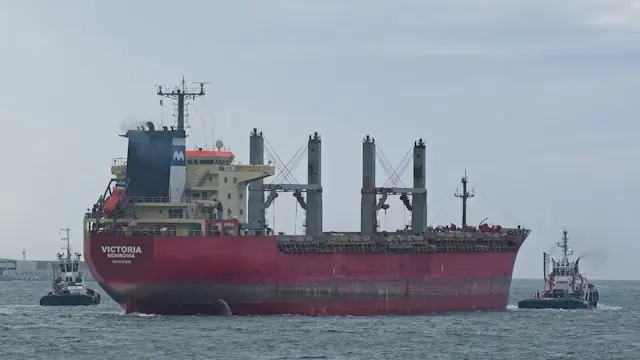
The Port of Aveiro completes the picture. Its specialised forest products terminal handled approximately 1.18 million tonnes of forest product movements in 2023, with Navigator accounting for an estimated 70% of that volume. The port's Multipurpose Terminal North, operated by YILPORT Liscont, processes containerised and break-bulk paper exports to Mediterranean, North European, and transatlantic destinations using specialised handling equipment that keeps damage rates below 0.2%.
Within this ecosystem, approximately 2,100 workers are directly employed in paper manufacturing, converting, and related chemical processing. The institutional pipeline runs through the University of Aveiro's Department of Chemistry and CICECO research institute, which graduate approximately 45 master's-level chemical engineers annually with paper-sector relevant skills. That number has not increased meaningfully in five years. The cluster's talent supply was sized for an era of stable production. It was not sized for what is coming next.
The Regulatory Squeeze That Is Rewriting Every Role
EU Packaging Regulation and the Pivot to Fibre-Based Materials
The most consequential force acting on Aveiro's paper sector in 2026 is not market demand. It is regulation. The EU Packaging and Packaging Waste Regulation (PPWR) imposes 2025 to 2030 recycling targets and restrictions on single-use packaging that are accelerating demand for fibre-based barrier coatings and moulded fibre technologies. Navigator Cacia is positioning to host pilot lines for these materials, requiring retooling of existing paper machines.
This is not an incremental adjustment. It represents a strategic diversification from graphic papers toward packaging substrates. The planned investments in advanced sorting and pulping technologies aim to process 150,000 tonnes per year of recovered paper for packaging grades. Every one of those pilot lines requires operators, engineers, and managers who understand both traditional paper machine technology and the new barrier coating chemistries. Those professionals are vanishingly rare.
Carbon Costs and Sustainability Compliance
Simultaneously, EU Emissions Trading Scheme Phase IV costs are projected to add €8 to €12 per tonne of paper production cost. For the Cacia facility, the carbon price averaging €80 to €90 per tonne CO2 through 2024 translated to approximately €6 million in annual compliance costs. The Corporate Sustainability Reporting Directive requires Navigator Cacia to provide audited sustainability data from 2025 onward. The EU Deforestation Regulation imposes traceability burdens on pulp sourcing, requiring supply chain transparency investments estimated at €2 to €3 million for the Cacia mill alone.
Each of these regulations creates specific hiring demand. Environmental managers familiar with EU ETS verification and REACH chemical regulations. Data infrastructure specialists to build CSRD-compliant reporting systems. Supply chain professionals who can implement deforestation traceability across cross-border pulp procurement. These are not roles that existed in the Cacia corridor five years ago in meaningful numbers. The regulatory burden has created a new category of employment, and the candidates to fill it must be sourced from a market that barely produces them.
The implication for hiring leaders is direct: the regulatory calendar is not waiting for the talent market to catch up. Compliance deadlines are fixed. The people needed to meet them are not yet in place.
Capital Moved Faster Than Human Capital Could Follow
Here is the analytical tension at the heart of Aveiro's paper sector in 2026. Navigator's €52 million "Transform 2025" programme modernised the Cacia facility's digital infrastructure and energy systems. Warehouse automation and predictive maintenance AI are reducing the need for operational labour. The facility's total headcount declined 4% year-on-year through 2024 as a consequence of those productivity improvements. The headline employment number is contracting by 3 to 5% through 2026.
But the headline number conceals a deeper shift. While operational roles are being eliminated, technical services and sustainability compliance roles are projected to grow 15 to 20% over the same period. The investment in automation has not reduced the workforce in aggregate terms so much as it has replaced one kind of worker with another that does not yet exist in sufficient numbers.
This is the original synthesis that emerges from the data: Cacia's modernisation programme solved an efficiency problem and created a talent problem in a single motion. The capital investment ran ahead of the human capital investment. The new machines, sensors, and control systems are installed. The people who can run them, maintain them, and extract their full value have not been trained, recruited, or retained at the pace the technology requires. The factory of 2026 is operational. The workforce of 2026 is not yet assembled.
This tension compounds further when set against the region's demographic trajectory. The Aveiro district faces a projected 8% decline in working-age population between 2025 and 2035, according to INE projections. The cohort of technical and vocational graduates entering the labour market is shrinking in absolute terms, even as the complexity of the roles they are asked to fill increases. A maintenance technician hired in 2015 needed mechanical aptitude and familiarity with paper machine clothing management. A maintenance technician hired in 2026 needs all of that plus proficiency in predictive maintenance AI systems and Siemens PCS7 or ABB DCS control platforms. The job title is the same. The job is not.
Compensation: Competitive Locally, Vulnerable Internationally
Compensation in Aveiro's paper sector reflects Portugal's lower cost base relative to Northern Europe, with meaningful premiums for specialised paper technology expertise. As of 2024 to 2025, a senior maintenance manager with 15 or more years of paper machine experience earned between €65,000 and €85,000 in total compensation. A VP of Operations or Mill Director with responsibility for a facility of Cacia's scale commanded €140,000 to €190,000, with long-term incentive plans pushing total packages to €220,000 to €280,000.
For process and technical specialists, the picture is tighter. A senior process engineer with paper technology expertise earned €48,000 to €62,000. An automation or control systems manager earned €58,000 to €75,000, reflecting a 15 to 20% premium over general manufacturing automation roles. Sustainability leadership roles, specifically heads of sustainability with EU ETS and CSRD expertise, commanded €70,000 to €95,000.
Despite general wage moderation across Portuguese industry at 2.1% average increases through 2024, paper sector technical roles in Aveiro experienced 5 to 7% annual premium inflation driven by candidate scarcity, according to CELPA's compensation survey data.
These numbers tell two stories simultaneously.
Domestically, Aveiro's compensation is competitive enough to hold most mid-level talent. The local cost of living is materially lower than Lisbon or Porto. A senior process engineer earning €55,000 in Aveiro lives better than one earning €65,000 in Lisbon.
Internationally, the picture inverts. Spanish paper and packaging clusters in Zaragoza and Burgos offer 25 to 35% salary premiums for Portuguese-speaking engineers and actively recruit from the University of Aveiro's graduating classes. More consequentially, Brazilian producers including Suzano and Klabin recruit senior Portuguese paper technologists for greenfield projects, offering total compensation packages three to four times Portuguese levels. This drain is most acute at the 10 to 15 year experience level, precisely the cohort that would normally be moving into plant leadership roles.
The result is a compensation market that holds its junior and mid-level talent reasonably well but loses its most experienced specialists to international competition at the exact career stage where they become most valuable. For hiring leaders, the implication is that salary benchmarking against domestic competitors alone will understate the actual cost of attracting and retaining the people who matter most.
The Port Bottleneck: Infrastructure Outrunning Its Workforce
The Port of Aveiro's €12 million dredging and berth extension project, completing in mid-2026, will accommodate Post-Panamax vessels and increase export capacity by 25%. This is significant investment in physical infrastructure. It requires an estimated 80 to 100 additional specialised logistics and customs operations personnel to be fully operational.
The data suggests the region cannot supply them at pace. IEFP figures show that the Aveiro district already exhibits a 94-day average vacancy duration for logistics coordinator roles in industrial sectors. Only 12% of vocational training graduates in the region specialise in port logistics annually. The supply chain director role, integrating port logistics, warehousing, and customer delivery for a facility of Navigator's scale, sits in the fully passive candidate market. These positions are filled through executive search mandates with six to nine month lead times.
This creates a scenario where physical export infrastructure growth may outpace the region's ability to supply the people needed to operate it. The economic return on port investment depends on throughput. Throughput depends on staffing the terminal, the customs operations, and the inland logistics chain. If the 80 to 100 additional roles required take 94 or more days each to fill, the expanded capacity sits partially idle for months after completion.
For organisations whose export strategy depends on the Port of Aveiro, the workforce planning horizon for logistics roles needs to begin well before the physical infrastructure is ready. The concrete and the cranes arrive on schedule. The specialists who run the terminal do not.
Where the Candidates Are and Are Not
The talent market for Aveiro's paper sector splits into three distinct segments, each requiring a fundamentally different hiring approach.
The Passive Senior Market
Mill directors, operations VPs, and paper machine superintendents operate in a 100% passive market. These individuals hold average tenures of 8 to 12 years and are recruited exclusively through direct headhunting approaches or internal rotation programmes within Navigator and Altri Group. They do not respond to job advertisements. They do not appear on candidate databases. Moving them requires not just a higher salary but a role proposition that addresses career trajectory, technical challenge, and geographic preference simultaneously.
Senior process control engineers with DCS specialisation show an estimated five-to-one ratio of passive to active candidates. This means that for every qualified professional visible to a job board or recruiter database, five more exist in roles they are not actively trying to leave. Recruitment for these roles relies on targeted identification of professionals through industry networks and AI-powered talent mapping rather than traditional advertising.
The Mixed Middle Market
Maintenance technicians present a 60/40 passive-to-active split at the general level. The top-tier specialists, those with hydraulic and paper machine-specific expertise, are overwhelmingly passive. Environmental compliance officers follow a similar pattern: active at the junior level, where graduate supply creates applicant pools, but passive at the senior level, where EU ETS trading and verification expertise is genuinely scarce.
The Active Junior Market
Logistics coordinators and general administrative roles operate in a more conventional active market, with higher unemployment rates and adequate graduate supply creating viable applicant pools. These roles, while important, do not represent the hiring challenge that keeps operations directors awake.
The implication is that traditional recruitment methods, including job postings and inbound application processes, reach only the bottom segment of the talent pyramid effectively. The roles with the longest vacancy durations and the greatest operational impact sit in the passive and mixed segments, where the search method matters as much as the compensation offer.
What Hiring Leaders in This Market Must Do Differently
Aveiro's paper and packaging sector presents a specific kind of hiring challenge. It is not a market where general recruitment volume is the problem. It is a market where the gap between what the modernised, regulated, export-oriented industry needs and what the regional talent pool produces is widening in precise, measurable ways.
The 120-day vacancy duration for process automation engineers is not a recruitment efficiency problem. It is a structural mismatch between the skills the "Transform 2025" programme requires and the skills the regional training pipeline delivers. The 94-day maintenance technician vacancy is not a matter of insufficiently attractive job advertisements. It is a reflection of a passive candidate market where the best-qualified professionals are employed, satisfied, and unlikely to respond to anything short of a direct, personalised approach that addresses their specific career calculus.
For senior leadership appointments in industrial manufacturing, the challenge intensifies further. A mill director search in this market carries a six to nine month lead time under conventional methods. In a regulatory environment where CSRD compliance deadlines and PPWR pilot line schedules are measured in quarters, not years, a nine-month leadership vacancy is not an inconvenience. It is a strategic liability.
KiTalent's approach to markets like Aveiro's paper sector begins with talent mapping that identifies the complete universe of qualified candidates, not just those who happen to be visible. In a market where over 80% of senior technical and executive talent is passive, AI-enhanced direct search is not a premium option. It is the only method that reaches the candidates who determine whether a facility meets its regulatory deadlines, fills its pilot lines with qualified operators, and utilises its expanded port capacity.
With a 96% one-year retention rate across 1,450 or more executive placements and a pay-per-interview model that eliminates upfront retainer risk, KiTalent delivers interview-ready candidates within 7 to 10 days. For organisations competing for scarce paper technology expertise in a market where the best candidates are not looking and the regulatory clock is not pausing, start a conversation with our executive search team about how we source leadership talent in specialised industrial markets.
Frequently Asked Questions
What is the average salary for a paper mill director in Portugal in 2026?
A VP of Operations or Mill Director with responsibility for a large-scale facility such as Navigator's Cacia Mill earns between €140,000 and €190,000 in base salary plus annual bonus. Long-term incentive plans can push total compensation to €220,000 to €280,000. These figures reflect 2024 to 2025 benchmarks with 5 to 7% annual premium inflation in specialised paper sector roles. Compensation at this level is competitive domestically but sits well below what Brazilian producers offer senior Portuguese paper technologists for greenfield projects, creating retention pressure at the most experienced career stages.
Why is it so hard to hire process automation engineers in Aveiro?
Process automation engineer positions in Aveiro's paper sector showed vacancy durations exceeding 120 days in 2024, more than double the average for equivalent roles in Lisbon. The difficulty stems from three converging factors: paper machine control systems require niche expertise in platforms like Siemens PCS7 or ABB DCS, the regional training pipeline produces a limited number of graduates with these specialisations, and the passive candidate ratio is estimated at five to one. Direct headhunting methods that reach passive professionals are essential because the vast majority of qualified candidates are employed and not actively searching.
How does the EU Packaging and Packaging Waste Regulation affect Aveiro's paper sector?
The PPWR's 2025 to 2030 recycling targets and single-use packaging restrictions are accelerating demand for fibre-based barrier coatings and moulded fibre technologies. Navigator's Cacia Mill is positioning to host pilot lines for these materials and has planned investments in advanced sorting and pulping technologies targeting 150,000 tonnes per year of recovered paper processing. This regulatory shift creates new roles in barrier coating chemistry, recovered paper quality management, and packaging substrate engineering that did not previously exist in the Cacia corridor at meaningful scale.
What is the talent competition between Aveiro and other paper manufacturing regions?
Aveiro competes for specialised talent against three distinct markets. Domestically, Setúbal offers 10 to 15% salary premiums and proximity to Lisbon. Figueira da Foz competes directly for process engineers through firms like Altri's Celbi mill. Porto's broader industrial sector draws mid-level technical talent toward diversified career paths. Internationally, Spanish clusters in Zaragoza and Burgos offer 25 to 35% premiums for Portuguese-speaking engineers, while Brazilian producers offer packages three to four times Portuguese levels for senior technologists willing to relocate.
How can KiTalent help with executive hiring in Portugal's paper and packaging sector?
KiTalent uses AI-enhanced direct search to identify and engage the passive candidates who dominate Aveiro's senior technical and executive talent market. In a sector where mill directors operate in a 100% passive market and senior process engineers show a five-to-one passive-to-active ratio, conventional recruitment methods reach only a fraction of qualified professionals. KiTalent delivers interview-ready candidates within 7 to 10 days through systematic talent mapping and market benchmarking, with a pay-per-interview model that removes upfront retainer risk. The firm's 96% one-year retention rate reflects the depth of candidate assessment applied before any introduction is made.
What impact will the Port of Aveiro expansion have on local hiring demand?
The port's €12 million dredging and berth extension project, completing in mid-2026, will increase paper export capacity by 25% and require an estimated 80 to 100 additional specialised logistics and customs operations personnel. Current vacancy durations for logistics coordinator roles in the Aveiro district average 94 days, and only 12% of regional vocational graduates specialise in port logistics. Organisations dependent on the port for export operations should begin building their talent pipeline well ahead of infrastructure completion to avoid capacity sitting idle due to workforce shortfalls.