Boston's Biotech Talent Shortage in 2026: The Roles No One Can Fill and What It Costs
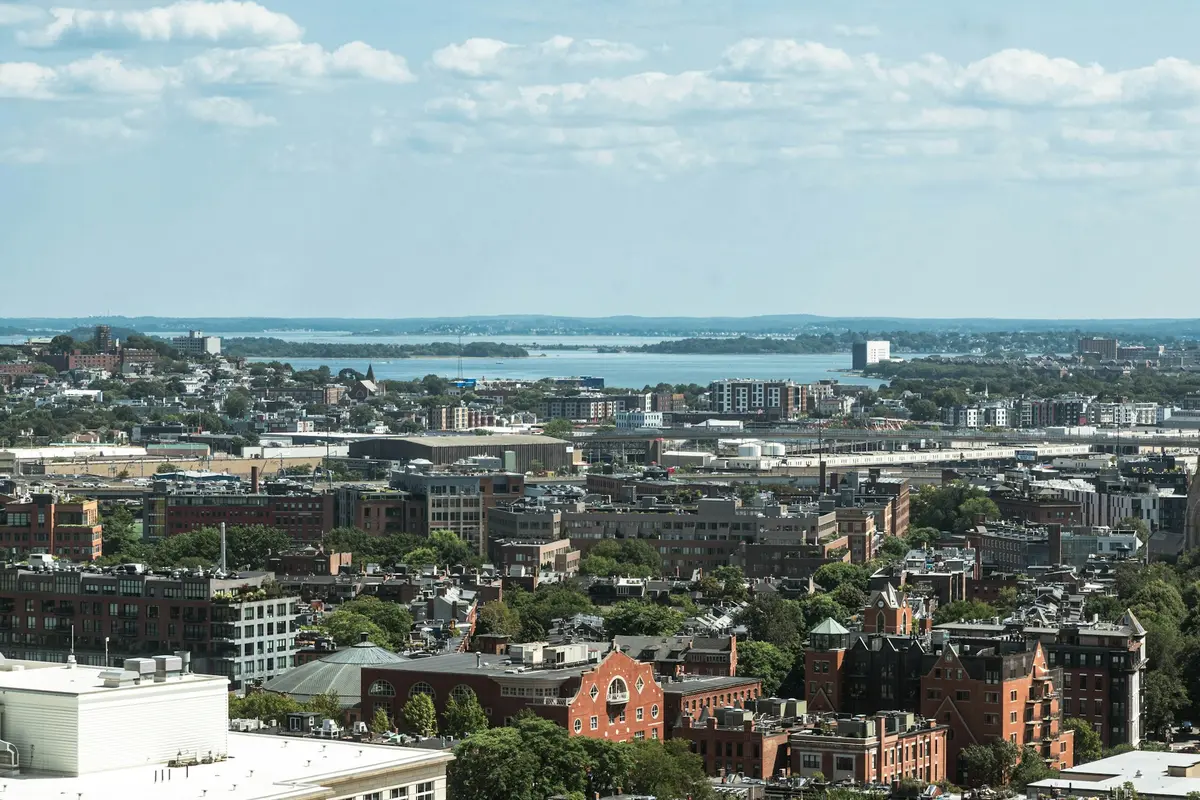
Cambridge, Massachusetts hosts over 600 life sciences companies within a single square mile of Kendall Square. Lab vacancy for Class A space in that square mile has been effectively zero for more than a year. The cluster that produces more drug discovery breakthroughs per capita than any other on earth cannot physically accommodate the companies trying to operate inside it, and it cannot find enough of the scientists those companies need to hire.
That physical and human capital squeeze is now the defining constraint on one of the world's most productive innovation ecosystems. The Boston-Cambridge biotech market employs approximately 118,000 people in direct biopharma roles and supports another 182,000 indirect positions, representing 18% of Massachusetts' total economic output. Yet in three critical disciplines, cell and gene therapy manufacturing, AI-enabled drug discovery, and CMC regulatory affairs, the ratio of qualified candidates to open roles has reached levels that make conventional hiring methods functionally useless.
What follows is a detailed analysis of where the shortages are most severe, what is driving them, why headline layoffs have obscured the real problem, and what organisations competing for leadership talent in this market need to do differently. The core argument is that the public narrative of biotech labour market slack, driven by visible restructurings at several major employers through 2024, has created a dangerous false confidence among hiring leaders. The underlying technical shortages have not eased. They have deepened.
The Cluster That Cannot Grow Fast Enough
Kendall Square's status as the world's densest biopharma cluster is not a marketing claim. According to MassBio's 2024 Industry Snapshot, the area exhibits the highest concentration of biopharma companies per square mile globally. The Broad Institute, with an annual budget exceeding $500 million, anchors a research corridor that includes the Whitehead Institute and the Koch Institute for Integrative Cancer Research. Moderna maintains its global headquarters here. Biogen's neurology research centre occupies a substantial footprint despite recent restructuring. Pfizer operates its Centers for Therapeutic Innovation and vaccine research operations across Cambridge and South Boston with approximately 1,500 local employees. Takeda runs its global R&D centre and rare disease unit from Cambridge with roughly 1,800 staff.
The Lab Space Ceiling
The physical constraint is not metaphorical. CBRE's Q3 2024 U.S. Life Sciences Report recorded Cambridge laboratory vacancy at 2.1%, with average asking rents of $110 per square foot on a triple-net basis. That figure represents the highest lab rental rate in the United States. For Class A space specifically, the vacancy rate is effectively zero. Tenants are pre-leasing developments two years before delivery, according to JLL's Boston Life Sciences Outlook.
Across the harbour in the Seaport District, Vertex Pharmaceuticals anchors 1.4 million square feet at Fan Pier, and the area has absorbed 1.2 million square feet of new lab development since 2023. Yet even this expansion has not relieved pressure. Incubators such as LabCentral and CIC report 98% occupancy with waitlists exceeding twelve months. Lab buildout costs in Kendall Square have reached $1,200 to $1,500 per square foot, 40% above the national average.
CBRE projects 2.5 million square feet of new lab supply entering the broader Boston market through 2025 and into 2026, primarily in Somerville, the Boston Marine Industrial Park, and suburban conversions. This new supply may moderate rents in secondary locations. It will not create a single additional square foot in Kendall Square itself. For hiring leaders, this means the physical proximity that makes the cluster valuable is simultaneously the constraint that limits who can operate within it, and therefore who can recruit from it.
The Layoff Illusion: Why Headlines Masked a Deepening Shortage
This is the analytical tension that matters most for anyone making hiring decisions in this market in 2026. The public narrative and the underlying reality have diverged.
Through 2024, several high-profile restructurings created the impression that Boston's biotech labour market had loosened. Biogen completed a global headcount reduction of approximately 1,000 positions, bringing its worldwide workforce to roughly 7,500. According to its 2024 Annual Report, Cambridge-based R&D operations saw proportionally smaller cuts, but the headline figure was widely reported. Bristol Myers Squibb and Sanofi also reduced staff in the Greater Boston area.
The impression left by these announcements was that candidates were newly available. That impression is wrong.
The restructurings targeted general and administrative functions and commercial roles. They did not touch the specialisms where shortages are most acute. Lab vacancy rates remained below 3% throughout the same period. Unemployment among life sciences professionals in Massachusetts stayed below 2.0%. Gene therapy manufacturing roles maintained sub-2% unemployment. The contraction and the shortage coexisted because they operated in entirely different segments of the same market.
This is the pattern that should concern hiring executives most directly. A CHRO reading headlines about biotech layoffs in late 2024 might reasonably have assumed that the hiring environment had improved. A CHRO who acted on that assumption, who slowed investment in executive search methodology or relaxed urgency on critical scientific hires, will have lost six months in a market where the best candidates were never available for even six weeks.
Three Shortages That Define the Market
Cell and Gene Therapy Manufacturing
The most acute shortage in the Boston-Cambridge market sits at the intersection of biological science and scaled manufacturing. Process Development Scientists and Vector Manufacturing Specialists are in demand at a ratio of roughly 3:1 against available supply. Roles at mid-stage gene therapy companies in the Seaport and Watertown submarkets typically remain unfilled for 120 to 150 days.
The retention dynamics compound the problem. According to MassBio's 2024 Talent Shortage Report, incumbent employers at blue-chip gene therapy firms are paying retention bonuses of $50,000 to $100,000 to prevent their specialists from being recruited by expanding majors such as Vertex and Moderna. A Principal Scientist in cell therapy with a PhD and eight years of experience commands $165,000 to $205,000 in base salary in the Cambridge market, a 12% premium over the national median. At the executive level, a Vice President of Gene Therapy or CGT Manufacturing earns $420,000 to $580,000 in base salary, with equity packages at publicly traded firms valued at $1.2 million to $2.5 million annually.
These are not candidates who respond to job postings. Roughly 80% are passive, locked into long-term retention packages at firms like Lonza and Catalent, with an average tenure of 5.2 years. Moving them requires a direct headhunting approach that reaches into competitor organisations, not a job board strategy that waits for applications.
AI and Machine Learning in Drug Discovery
The second critical shortage sits at the boundary between computational biology and medicinal chemistry. Moderna's announcement of 300-plus new technical hires in Cambridge for its "Intelligent Development" initiative in 2024 exemplified a market-wide acceleration. The problem is that the candidates these roles require are not in biotech. They are in Big Tech and quantitative finance.
According to Heidrick & Struggles' 2024 Digital Health Talent Report, Senior Director-level AI/ML roles for drug discovery at Cambridge biotechs backed by firms like Flagship Pioneering or ARCH Venture Partners remain open for six months or longer. Candidates are employed at Google DeepMind, Microsoft Research, Two Sigma, or Citadel. Recruiting them to biotech requires salary premiums of 40% to 60% above their current compensation, plus the proposition of relocation from San Francisco or New York.
A Director of Computational Chemistry with AI capabilities commands $220,000 to $280,000 in base salary, with sign-on bonuses of $50,000 or more as standard practice. At the executive level, a Chief Digital Officer or VP of AI/ML in biotech earns $450,000 to $650,000 in base, with total compensation exceeding $1.5 million at publicly traded firms. These figures are necessary but not sufficient. The proposition must also include scientific autonomy, publication rights, and a credible path to impact that a hedge fund or tech giant cannot match. For organisations seeking to build AI and technology capabilities within their scientific leadership, the competition is not with other biotechs. It is with entirely different industries.
CMC Regulatory Affairs
The third shortage is quieter but equally consequential. Chemistry, Manufacturing, and Controls regulatory strategists who manage FDA submissions are the professionals who determine whether a drug actually reaches patients. Their scarcity is less visible because the market clears so rapidly. According to the Regulatory Affairs Professionals Society's 2024 Workforce Report, CMC specialists show an 85% placement rate within 30 days of becoming available, with aggressive lateral hiring between Pfizer, Takeda, and Moderna.
This means the pool of available CMC talent at any given moment is vanishingly small. By the time a firm identifies a need and assembles a shortlist through conventional means, the candidates on that shortlist have already accepted offers elsewhere. The hidden 80% of candidates who never appear on job boards is not an abstraction in this market. It is a measurable fact with a 30-day clock attached.
Compensation Is Necessary but Not Decisive
The compensation data tells a story of escalation at every level. Vice Presidents of Clinical Development earn $385,000 to $525,000 in base salary, with total direct compensation reaching $650,000 to $950,000 depending on company stage. Chief Business Officers at mid-cap biotechs with market capitalisations between $5 billion and $20 billion earn $400,000 to $550,000 in base with total compensation of $1.8 million to $3.2 million including deal-based bonuses. Even at the Associate Director level, Clinical Operations leaders with seven to ten years of experience command base salaries of $195,000 to $245,000, with total cash compensation reaching $280,000.
These numbers are high by any standard. They are also table stakes. Every serious employer in the Boston-Cambridge cluster can offer packages in these ranges. The differentiator is not the number on the offer letter. It is the speed and specificity with which the offer reaches the right candidate.
A firm that takes 90 days to assemble a shortlist for a gene therapy manufacturing director is competing against firms that presented an offer to the same candidate in week three. The cost of that delay is not merely the recruiter's time. It is the cost of the programmes that stall while the role sits empty, the clinical milestones that slip, and the board meetings where the gap in leadership is visible but unresolved.
For senior candidates weighing multiple offers, the decision often turns on factors that compensation alone cannot address: scientific mission alignment, the credibility of the leadership team above them, and whether the equity component reflects genuine upside or diluted optionality. Understanding these motivations requires a search process that engages candidates as individuals, not as profiles in a database.
Geographic Competition Is Reshaping Candidate Flows
Boston-Cambridge does not compete in isolation. Three other markets are pulling talent in specific disciplines, and the dynamics differ for each.
For cell and gene therapy manufacturing, Research Triangle Park in North Carolina and Philadelphia's University City corridor are the primary competitors. RTP offers 20% to 25% lower compensation but materially lower cost of living, with housing costs 40% below Boston, and newer manufacturing facilities that appeal to mid-level production talent. This is where the Boston market loses manufacturing specialists who have reached a career stage where quality of life outweighs cluster prestige.
For AI and machine learning drug discovery talent, San Francisco and New York are the relevant competitors. San Francisco offers 10% to 15% higher base salaries for AI PhDs but with housing costs 30% higher than Boston. New York competes through proximity to financial services and emerging hybrid tech-biotech models that allow researchers to remain in quantitative finance while contributing to drug discovery programmes.
For executive clinical development leadership, San Diego competes aggressively. According to EY's 2024 Biotech Executive Survey, San Diego offers equivalent compensation packages with lifestyle advantages and more flexible hybrid work policies, typically three days in the office compared to four or five in Boston. This creates a specific retention risk for Boston-based directors and VPs who reach a career stage where the personal cost of the Boston commute and work pattern begins to erode their commitment.
The implication for hiring leaders is that international and cross-market executive searches are no longer optional for the hardest roles. A search confined to the Boston-Cambridge market excludes the candidates most likely to bring the cross-disciplinary capabilities these roles demand.
Systemic Risks That Hiring Leaders Cannot Ignore
Regulatory and Capital Headwinds
The Inflation Reduction Act's Medicare price negotiation provisions have already altered strategic behaviour. According to MassBio's 2024 Policy Survey, 15% of Boston-area biotechs have paused expansion plans for small molecule programmes in favour of biologics, redirecting hiring demand toward roles that are already in acute shortage. The FTC's heightened scrutiny of pharmaceutical mergers, with challenge rates reaching 35% in 2023 and 2024, threatens exit strategies for venture-backed companies and risks freezing hiring at Series B and C stages.
These regulatory shifts do not reduce demand for scientific talent. They redirect it. A biotech that abandons a small molecule programme does not eliminate its R&D team. It reassigns those scientists to biologics or out-licenses the programme and hires specialists in the new therapeutic modality. The net effect is increased competition for the same pool of gene therapy, cell therapy, and biological manufacturing professionals.
Immigration Vulnerability
Approximately 32% of Massachusetts biotech workers hold H-1B visas or other temporary work authorisations. Eighteen percent of scientific roles are filled by foreign nationals. Any change to H-1B lottery systems or Optional Practical Training duration would immediately constrain the supply of wet-lab scientists. This is not a hypothetical risk. It is a structural dependency that talent pipeline planning must account for in every workforce model.
MIT and Harvard combined produce approximately 2,500 STEM PhDs annually, with 40% entering industry directly and many joining local biotech firms. That pipeline is globally sourced. A policy change that reduces international graduate enrolment by even 10% would be felt in Boston's biotech workforce within two to three years.
Venture Formation Slowdown
Massachusetts saw 47 new biotech formations in 2024, down from 78 in 2021, according to the NVCA Yearbook. With the Federal Reserve maintaining rates above 4.5% through 2024, the cost of capital has suppressed venture creation despite continued demand for the science. The risk here is not immediate. It is a long-term erosion of the growth-stage employer base that feeds the cluster's dynamism. Fewer startups today means fewer mid-stage companies competing for talent in 2028, which means a thinner ecosystem that is more vulnerable to the concentration risk of depending on five or six large employers.
What This Means for Organisations Hiring in This Market
The original synthesis of this analysis is that Boston-Cambridge's biotech talent crisis is not a hiring problem in the conventional sense. It is a problem of category confusion. The professionals needed to fill the most critical roles in gene therapy manufacturing, AI-driven drug discovery, and CMC regulatory strategy exist in sufficient numbers globally. They do not exist in sufficient numbers within the pool of people who are looking for work, willing to relocate to Boston, and available within the timeframe that clinical programmes and board expectations demand.
The organisations that succeed in this market share three characteristics. They identify candidates before a role is formally opened, using talent mapping and market intelligence to understand who is reachable and what it takes to move them. They compress decision timelines ruthlessly, recognising that a CMC specialist is gone in 30 days and a gene therapy VP who enters the market passively will have four competing propositions within a fortnight. And they construct offers that address the whole decision, not just compensation, but scientific mission, leadership credibility, equity structure, and flexibility.
KiTalent's approach to executive search in healthcare and life sciences is built for precisely this kind of market. Using AI-enhanced talent mapping to reach the passive candidates who represent 80% to 95% of the qualified pool in the most critical disciplines, KiTalent delivers interview-ready executive candidates within 7 to 10 days. A pay-per-interview model means clients invest only when they are meeting qualified leaders. The result is a 96% one-year retention rate across 1,450-plus executive placements, with an average client relationship exceeding eight years.
For organisations competing for gene therapy, AI drug discovery, or clinical development leadership in the Boston-Cambridge market, where conventional search timelines are incompatible with the speed at which the best candidates move, start a conversation with our executive search team about how we can access the candidates your competitors have not yet reached.
Frequently Asked Questions
What is the current biotech talent shortage in Boston-Cambridge?
As of 2026, the Boston-Cambridge biotech cluster faces acute shortages in three disciplines: cell and gene therapy manufacturing, where demand exceeds supply by approximately 3:1; AI and machine learning drug discovery, where candidates are primarily drawn from Big Tech and quantitative finance rather than biotech; and CMC regulatory affairs, where specialists are placed within 30 days of availability. Overall life sciences unemployment in Massachusetts remains below 2.0%, and specialised scientific roles typically take over 90 days to fill through conventional methods.
Why are biotech layoffs not easing the hiring market in Boston?
The restructurings at companies like Biogen, Bristol Myers Squibb, and Sanofi through 2024 targeted general and administrative functions and commercial operations. They did not reduce headcount in the scientific and manufacturing specialisms where shortages are most severe. Lab vacancy remained below 3% and gene therapy manufacturing unemployment stayed under 2% throughout the same period. The headline layoffs created a misleading impression of market slack while deep-rooted technical shortages actually intensified.
What do senior biotech executives earn in the Boston-Cambridge market?
Compensation varies by function and company stage. Vice Presidents of Clinical Development earn $385,000 to $525,000 in base salary, with total compensation reaching $950,000. VP-level gene therapy manufacturing leaders earn $420,000 to $580,000 base with equity packages of $1.2 million to $2.5 million. Chief Digital Officers and VPs of AI/ML earn $450,000 to $650,000 base with total compensation exceeding $1.5 million. Chief Business Officers at mid-cap biotechs earn total packages of $1.8 million to $3.2 million.
How does Boston-Cambridge compete with other biotech hubs for talent?
The cluster competes with Research Triangle Park for manufacturing talent, with San Francisco and New York for AI/ML researchers, and with San Diego for clinical development executives. Each competitor offers specific advantages: RTP has 40% lower housing costs, San Francisco pays 10% to 15% more for AI PhDs, and San Diego offers more flexible work arrangements. Successful hiring in Boston increasingly requires cross-market search capabilities that source candidates from all competing hubs simultaneously.
How can organisations fill senior biotech roles faster in this market?
Speed requires three shifts: identifying candidates before roles are formally opened through proactive talent intelligence and market benchmarking, compressing internal decision timelines to match the 30-day window in which the best candidates are available, and constructing propositions that address scientific mission and equity structure alongside base compensation. KiTalent delivers interview-ready executive candidates within 7 to 10 days using AI-enhanced talent mapping focused on the 80% to 95% of qualified professionals who are passive and not visible through conventional channels.
What regulatory risks affect biotech hiring in Boston in 2026?
Two regulatory developments are reshaping hiring patterns. The Inflation Reduction Act's Medicare price negotiation provisions have led 15% of Boston-area biotechs to redirect investment from small molecule to biologics programmes, concentrating demand on already-scarce biological manufacturing talent. The FTC's increased challenge rate on pharmaceutical mergers threatens exit strategies for venture-backed companies, potentially freezing hiring at growth-stage firms that depend on acquisition as a path to liquidity.