Brno Shared Services Hiring in 2026: Why 4,200 Graduates a Year Cannot Fill the Roles That Matter
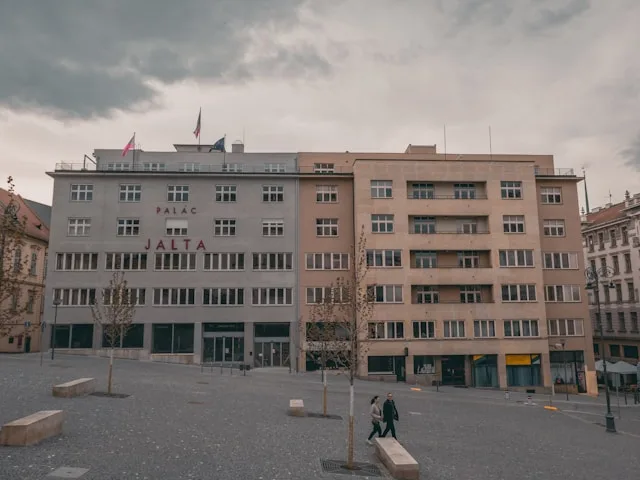
Brno's shared services sector now employs more than 33,000 professionals. Investment continues to flow in. Honeywell completed a €15 million expansion of its Global Business Services campus. Accenture grew its delivery centre past 1,800 staff. CzechInvest supported 12 new SSC projects in 2023 and 2024 alone. By every visible measure, this is a market in confident expansion.
Yet vacancy durations are moving in the wrong direction. A senior multilingual finance manager search in Brno now takes an average of 67 days to fill, up from 45 days in 2022. For IT architects, the figure is 94 days. The sector's overall vacancy rate of 8.4% exceeds both Prague's 6.1% and the broader Czech economy's 5.2%. The numbers describe a market where employer demand has outgrown the talent pipeline's ability to deliver the right candidates at the right level.
The core of this problem is not a headcount shortage. It is a specialisation mismatch that aggregate statistics have been hiding for years. What follows is a detailed analysis of why Brno's graduate supply, cost position, and competitive dynamics have created a hiring environment far harder to operate in than the headline growth figures suggest, and what senior leaders responsible for filling critical roles need to understand before they commit to their next search in this market.
Brno's Transition from Low-Cost Hub to Mid-Cost Specialist Market
The narrative that attracted multinational employers to Brno in the early 2010s was straightforward: a Central European city with strong universities, multilingual graduates, and operating costs 50 to 60 percent below Western European capitals. That narrative is no longer accurate enough to guide hiring strategy.
Average gross monthly salaries in Brno's SSC sector reached CZK 52,000 (approximately €2,050) in 2024. That represents a 9.2% year-on-year increase. The figure exceeds Krakow's CZK 48,000 and Bratislava's CZK 46,000. According to the Association of Business Service Leaders (ABSL), Brno has eroded 60 percent of its wage differential with Vienna since 2020. Productivity, measured as revenue per full-time employee, improved by only 12 percent over the same period.
This is not across-the-board inflation. The wage pressure is concentrated at exactly the level where the most critical roles sit: senior technical specialists and leadership positions. Entry-level customer service salaries have risen modestly. But a cybersecurity architect in Brno now commands CZK 1.4 to 1.8 million annually at the senior specialist level and CZK 2.8 to 3.6 million at VP level. An SAP project lead earns CZK 1.2 to 1.6 million at the manager level and up to CZK 3.2 million at the executive tier.
The Wage Compression That Changes Everything
The implication for hiring leaders is not simply that Brno costs more than it did five years ago. The deeper problem is that Brno's cost advantage now only holds against Munich, Vienna, and London. Against its actual regional competitors, it is becoming the expensive option. ABSL's own modelling warns that if wage growth exceeds 6 percent annually through 2026, Brno will price itself out of invoice-to-cash and basic HR administration work entirely. That threshold is already within reach.
Employers expanding in Brno are therefore making a specific bet. They are accepting permanently lower margins in exchange for the city's engineering depth, German-language density, and university research infrastructure. This is a sound strategy for high-value cognitive processing and IT development. It is an increasingly poor strategy for transactional work, and organisations that have not updated their Brno workforce plans to reflect this distinction are building cost structures their competitors will undercut from Ostrava or Krakow within 24 months.
The Graduate Paradox: Abundant Supply, Acute Scarcity
This is the analytical tension at the heart of Brno's talent market, and the one most commonly misunderstood by leaders making workforce planning decisions from outside the region.
Masaryk University and Brno University of Technology together produce approximately 4,200 business and IT graduates every year. The sector's net annual growth through 2026 is projected at roughly 1,500 roles. On paper, the pipeline is more than sufficient. In practice, vacancy durations keep lengthening.
The reason is that the market is not short of people. It is short of people who possess the specific combination of skills employers actually need. The ABSL Skills Gap Report documented the core bottleneck: German language proficiency at professional level combined with SAP expertise and domain-specific financial knowledge. Brno's recruitment community calls this the "Golden Trifecta." It is the combination that unlocks the highest-value finance and consulting roles serving the DACH market.
Where the Pipeline Breaks Down
Brno's 62 percent English fluency rate among university graduates is strong. Its 28 percent German proficiency, sustained by Masaryk University's Language Centre and a legacy of German-speaking technical education, is a genuine competitive advantage over Polish and Romanian hubs. But French and Nordic language capabilities remain scarce. Only 4 to 6 percent of the relevant workforce offers professional proficiency in either.
The graduates are there. The languages are partially there. What is missing is the layered specialisation that senior roles demand. A fresh graduate with theoretical business knowledge and B2-level German is not a substitute for a professional with seven years of SAP S/4HANA implementation experience who can conduct a functional requirements workshop in German and understands DACH financial compliance frameworks.
This is not a hiring problem. It is a knowledge problem. The specialisation that employers need takes years to develop, and the pipeline that creates it is narrower than the aggregate graduate numbers suggest. Every year, Brno produces more entry-level talent than the sector can absorb while simultaneously failing to produce enough mid-career specialists to fill the roles driving value. The apparent abundance masks an acute scarcity that no graduate programme redesign will fix within a two-year planning horizon.
The Automation Divide Is Splitting the Workforce in Two
The ABSL projects Brno's SSC workforce to reach 33,000 to 34,000 employees by the end of 2026, representing 4 to 6 percent net growth. But that net figure conceals two divergent trajectories moving in opposite directions within the same sector.
Growth is concentrated entirely in three areas: AI training data operations, cybersecurity monitoring centres, and R&D-aligned business services such as clinical trial data management. Traditional voice-based BPO headcounts declined 8 percent year-on-year through 2024. Invoice processing and basic HR administration roles are projected to decline a further 10 to 12 percent through attrition and automation, according to Deloitte's Central Europe Shared Services Trends Report.
McKinsey Global Institute modelling suggests that 18 to 22 percent of current Brno SSC roles face high automation potential by 2027. That exceeds the European SSC average of 15 percent. The reason is Brno's historical concentration in rules-based processes, the very work that first attracted employers to the city.
Capital Moved Faster Than Human Capital Could Follow
The investment in RPA tools and intelligent automation has not reduced the Brno workforce in aggregate. It has replaced one category of worker with another that does not yet exist in sufficient numbers. The JIC INMEC programme has incubated 14 BPO and SSC technology spin-offs since 2022, focused on robotic process automation. UiPath and Automation Anywhere developers are now expected to transition to intelligent automation, combining RPA with machine learning. But the professionals who spent a decade mastering invoice-to-cash processing cannot retrain as MLOps engineers within a single budget cycle.
The hiring leader commissioning a search for an AI operations specialist in Brno is therefore competing in a market where 90 percent of qualified ML engineers are placed through executive search rather than job boards, where average tenure is 3.2 years, and where the candidates who do exist are already holding multiple standing offers. The automation strategy was sound. The talent strategy to support it has not kept pace.
The Passive Candidate Reality That Defines Senior Hiring
The bifurcation between active and passive candidate pools in Brno is among the most extreme in any Central European SSC market. Understanding where the dividing line falls is essential for any organisation running a search above the operational level.
Active candidate markets exist at the entry level. Customer service representatives turn over at 25 to 35 percent annually, creating a reliable flow of job seekers. Junior accountants with zero to two years of experience actively apply. Masaryk University's career centre data shows that 65 percent of applications to Brno SSCs come from this cohort. For operational hiring, conventional job advertising still works.
Senior technical and leadership roles are a different market entirely. Cybersecurity specialists show an unemployment rate below 1.5 percent. According to ABSL's cybersecurity talent analysis, 85 percent of qualified candidates are employed and not actively searching. AI and machine learning engineers show a similar profile. Senior German-speaking SAP consultants typically hold two to three standing offers from competitors and move only for compensation increases of 30 percent or more, or for remote work guarantees.
The practical implication: senior searches in this market operate as 95 percent passive candidate environments. An approach built around job postings and inbound applications will reach, at best, 5 percent of the viable talent pool. The remaining 95 percent must be identified, approached, and compelled through direct methods. Firms that have not adapted to this reality are not just running slower searches. They are running searches that structurally cannot reach the candidates they need.
Competitive Pressure from Three Directions
Brno's SSC talent market does not exist in isolation. It sits within a triangular competitive field where different role categories flow toward different cities, and the dynamics of each corridor shape what is possible for employers trying to hire and retain.
Prague: The Domestic Pull
Prague draws mid-career professionals with five to eight years of experience. The pull is straightforward: 15 to 25 percent salary premiums and greater international career exposure. Brno's counter-argument rests on quality of life. Housing costs in Brno average CZK 95,000 per square metre compared to Prague's CZK 130,000. Commute times are shorter. But for professionals whose ambition is C-suite progression, Prague dominates. This creates a persistent drain at exactly the experience level where Brno's SSCs need their future site directors and delivery leads.
Krakow: The Scale Competitor
Krakow offers what Brno cannot match in volume. The University of Krakow and AGH University together graduate approximately 4,500 IT and finance students annually, roughly 1,000 more than Brno's combined output. Wage expectations in Krakow remain 10 to 12 percent below Brno. For employers evaluating where to place their next 500-seat operation, the arithmetic increasingly favours Poland.
Brno retains its advantage in two specific areas: the technical depth produced by VUT's engineering programmes, and the density of German-language capability. For employers whose primary client base is the DACH region, these two factors remain decisive. For employers serving English-only markets, the case for Brno over Krakow weakens with every percentage point of wage convergence.
Bratislava: The Eurozone Magnet
Bratislava's competitive pressure is the most targeted and the hardest to counter. It draws senior leaders with 10 or more years of experience. The pull factors are Euro currency stability and favourable tax treatment of executive bonuses, which delivers 10 to 15 percent higher net compensation at the VP level. For a site director earning CZK 3 million gross in Brno, the Bratislava equivalent puts more money in the bank account after tax. Combined with proximity to Vienna, the proposition is compelling for exactly the leadership profiles Brno most needs to retain.
The Czech government's Digital Nomad Visa, introduced in 2024, has paradoxically intensified rather than relieved this pressure. The visa enables Brno-based IT specialists to work remotely for Western European employers while living in the city. This drives up local salary expectations without expanding the pool of candidates available to Brno-based SSCs. The talent lives in Brno but works for someone else, at someone else's pay scale.
What This Means for Hiring Leaders Operating in Brno
The data assembled here points to a market that requires a fundamentally different hiring approach at the senior and specialist level than the one most organisations are running.
The talent pool for senior roles is small, passive, and already spoken for. A typical pattern documented across Brno's major SSCs shows SAP S/4HANA project leads remaining unfilled for 8 to 11 months. According to the Hays Czech Republic Salary Guide, 73 percent of Brno-based SSCs reported active SAP migration projects stalled because they could not secure German-speaking functional leads. Competitors are poaching at 25 to 35 percent salary premiums to move candidates from one employer to the next.
In cybersecurity, the pattern is even more acute. SOC Manager roles in Brno command immediate 40 percent base salary premiums when sourced from a competitor rather than recruited externally. According to ABSL, qualified candidates receive three to four concurrent offers within 48 hours of signalling availability on LinkedIn.
Thermo Fisher Scientific's Brno facility, according to Fierce Pharma, restructured its recruitment approach in 2024 to offer fully remote work for clinical data managers. The shift was specifically designed to retain talent being attracted by ICON plc's Krakow centre, which offered euro-denominated contracts. This example illustrates how the competitive pressure crosses both borders and sectors simultaneously.
The Search Method Determines the Outcome
In a market where the most critical roles take 67 to 94 days to fill, where 85 to 90 percent of senior candidates are passive, and where the candidates who do move command 30 to 40 percent premiums, the method of search is not a secondary consideration. It is the primary determinant of whether the search succeeds.
Organisations posting roles on job boards in this market are fishing in a pond that contains 5 percent of the fish. The other 95 percent require identification through systematic talent mapping, direct outreach, and a compelling proposition assembled before the first conversation. The time advantage matters too. When candidates receive multiple offers within 48 hours, a search that takes two weeks to produce a shortlist is structurally too slow.
KiTalent's approach to executive search in business services and technology markets is built for exactly these conditions. AI-enhanced talent mapping identifies the passive candidates that conventional methods miss, and the pay-per-interview model means organisations only invest when they meet qualified, interview-ready candidates. In a market as competitive as Brno's senior SSC tier, the combination of speed and precision is not a marginal improvement. It is the difference between filling the role and watching it sit open for another quarter.
For organisations competing for cybersecurity, SAP, and multilingual finance leadership in the Czech Republic's most contested talent market, where the cost of an unfilled senior role compounds through stalled projects and lost competitive positioning, start a conversation with our executive search team about how we approach searches in Brno and Central Europe.
Frequently Asked Questions
What is the average salary for shared services roles in Brno in 2026?
Salaries vary considerably by function and seniority. The average gross monthly salary across Brno's SSC sector reached CZK 52,000 (approximately €2,050) in 2024, with 9.2 percent annual growth continuing into 2026. Senior specialists in cybersecurity earn CZK 1.4 to 1.8 million annually. IT project managers earn CZK 1.2 to 1.6 million. Executive and VP-level roles in cybersecurity and data science reach CZK 2.8 to 3.6 million. Multilingual finance roles command CZK 900,000 to 1.3 million at the manager level. These figures are 60 to 70 percent of equivalent Prague salaries but 120 to 140 percent of Krakow equivalents.
Why is it so difficult to hire senior SAP consultants in Brno?
German-speaking SAP S/4HANA specialists represent the most acute shortage in Brno's SSC market. The role requires a combination of technical SAP expertise, professional-level German, and domain knowledge in financial processes. This "Golden Trifecta" is rare. According to Hays Czech Republic, 73 percent of Brno SSCs reported stalled migration projects due to inability to hire these profiles. Qualified candidates typically hold two to three standing offers and require 30 percent or more salary increases to move. Searches for these roles average 8 to 11 months using conventional methods. Firms specialising in direct headhunting achieve faster results by accessing the passive candidate pool.
How does Brno compare to Krakow for shared services recruitment?
Brno and Krakow compete directly for SSC investment and talent. Krakow offers larger graduate volumes (4,500 IT and finance graduates annually versus Brno's 3,500) and wage expectations that are 10 to 12 percent lower. Brno's advantages are concentrated in two areas: superior engineering depth from VUT's technical programmes and significantly higher German-language density. For employers serving DACH-market clients, Brno remains the stronger choice. For English-only operations prioritising scale and cost, Krakow increasingly wins on arithmetic.
What percentage of senior SSC candidates in Brno are passive?
Senior technical and leadership roles in Brno operate as approximately 95 percent passive candidate markets, according to LinkedIn Talent Solutions data for the region. In cybersecurity, 85 percent of qualified candidates are employed and not actively searching. Among AI and ML engineers, 90 percent of successful placements occur through retained search rather than job board applications. This means conventional recruitment advertising reaches only a small fraction of the viable talent pool for senior and leadership positions in shared services and technology.
What is driving automation risk in Brno's shared services sector?
Brno faces above-average automation exposure because of its historical concentration in rules-based transactional processes. McKinsey Global Institute estimates 18 to 22 percent of current roles face high automation potential by 2027, exceeding the 15 percent European SSC average. The affected functions are primarily finance and accounting (invoice processing, accounts payable) and HR administration. Growth is shifting toward AI operations, cybersecurity, and R&D-aligned services, creating demand for skills that the current workforce was not trained to provide.
How quickly can executive roles in Brno's SSC sector be filled?
Time-to-fill for critical roles in Brno averages 94 days for senior IT architects and 67 days for multilingual finance managers, both figures having increased since 2022. SAP project leads often remain unfilled for 8 to 11 months. KiTalent delivers interview-ready executive candidates within 7 to 10 days through AI-enhanced talent mapping that identifies passive candidates across the Central European market, with a 96 percent one-year retention rate for placed candidates.