Busan's Hospitality Infrastructure Boom Has Outrun Its Talent Supply: Why 1.2 Trillion KRW in Capital Cannot Staff Itself
Busan completed two of its largest hospitality infrastructure projects in the past eighteen months. The BEXCO Phase 3 expansion added 32,000 square metres of exhibition space. The new North Port international cruise terminal doubled berthing capacity for vessels exceeding 200,000 gross tonnes. Together, these represent 1.2 trillion KRW in capital deployment. Neither project solved the city's most acute operating constraint: the senior professionals required to run them.
The pattern is unusually clear. Physical capacity has expanded while human capital investment has stagnated. Aggregate hospitality wages in Busan grew at 2.1% annually through late 2024, trailing national inflation at 2.6% and Seoul's hospitality wage growth at 4.3%. The city now has world-class venues and terminals that cannot be fully utilised because the multilingual MICE technicians, casino VIP relationship managers, and cruise operations directors needed to activate them are either working in Seoul, Singapore, or Macau, or they are not looking for new roles at all.
What follows is an analysis of the forces reshaping Busan's hospitality and events sector, the specific roles where the shortages are most severe, and what organisations competing for leadership talent in this market need to understand before their next senior hire. The disconnect between capital and talent in Busan is not temporary. It is deepening, and it carries direct implications for every operator, convention bureau, and cruise line making staffing decisions in 2026.
A City That Built First and Hired Second
Busan's strategic ambitions have always exceeded its hospitality talent base. But the gap widened sharply during the infrastructure push of 2023 to 2025, driven by the city's bid for World Expo 2030 and the simultaneous expansion of its MICE and cruise infrastructure.
The logic was sound. BEXCO remains the definitive MICE anchor for Busan, generating approximately 42% of the city's total MICE economic impact despite representing only 23% of venue inventory by square meterage. The centre recorded 1.2 million visitors in 2023, recovering to 94% of pre-pandemic levels. BEXCO's 2026 masterplan forecasts 1.8 million visitors, 12% above the 2019 peak, driven by medical tourism conventions and K-content industry events. The expansion was necessary.
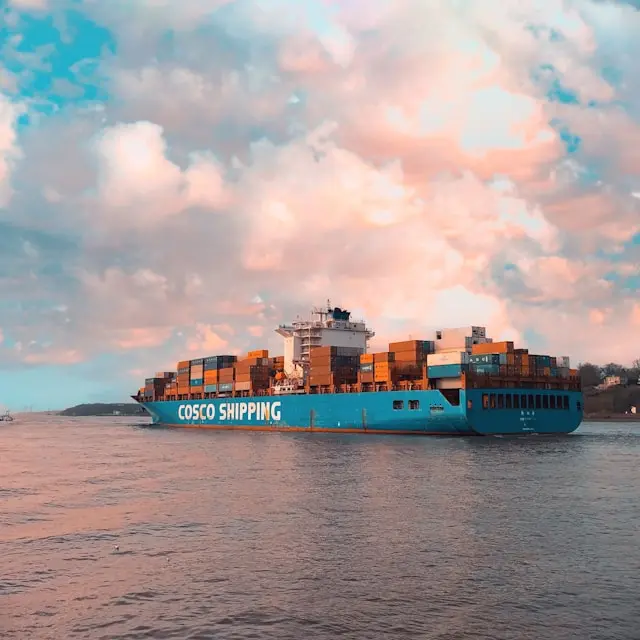
The cruise terminal followed similar reasoning. Busan handled 1.45 million cruise passengers in 2023, representing 78% of South Korea's total cruise throughput. The North Port terminal, which opened in early 2025 after a delay from its original 2024 schedule, doubles berthing capacity for the largest class of cruise vessels. Projected 2026 passenger movements stand at 1.8 million, assuming stabilisation in the China market.
Where the Logic Breaks Down
Capital investment moves on a construction timeline. Talent development moves on a career timeline. The two are fundamentally mismatched. BEXCO's Phase 3 required operational staffing ramp-up beginning in mid-2025, with 40 to 50 additional AV and IT specialists needed who possess simultaneous interpretation system expertise. These are not roles that can be filled from Busan's existing hospitality labour pool. The Busan Port Authority has maintained an open vacancy for a Terminal Operations Director for its cruise division since November 2023. As of late 2024, the search had run 13 months despite offering a 15% premium over standard public-sector wages. The role requires fluency in Korean and English plus either Japanese or Chinese, combined with international cruise line shore operations experience. That profile barely exists in the Korean market.
This is the original analytical tension at the heart of the article: Busan's infrastructure investment did not create a talent shortage. It revealed one that was already present but invisible when venues were smaller and demand was lower. The 1.2 trillion KRW in capital has not been matched by any comparable investment in developing, attracting, or retaining the senior professionals needed to make that capital productive. The city built capacity and assumed the people would follow. They have not.
The Barbell Market: Surplus Below, Scarcity Above
Busan's hospitality talent market does not behave like a single market. It behaves like two markets that share a postcode.
At the entry and mid-level, Busan has surplus labour. The city's overall hospitality unemployment rate sits at 6.8%, well above Seoul's 4.2% and the national average of 2.8%. Front-line positions in housekeeping and food and beverage service show high active candidate ratios, with 68% of positions filled through advertised vacancies and job fairs. There is no shortage of people willing to work in hospitality in Busan.
At the executive and specialist level, the market inverts completely. Hotel general managers at the luxury tier see 85% of placements occur through retained executive search rather than advertised vacancies. Active unemployment in this segment is below 2%. Casino VIP relationship managers who speak Mandarin represent an extreme passive candidate market: 90% of hires are direct headhunts from competitor properties or from casinos in Macau and Singapore. Applications from active job seekers in this niche are frequently screened out by HR departments as signals of desperation rather than genuine qualification.
The Mid-Career Flight Problem
The scarcity at the top is compounded by a drain at the middle. Senior MICE planners with international experience are actively recruited by Marina Bay Sands in Singapore and the Dubai World Trade Centre, where tax-free compensation or housing allowances effectively double net income. This creates what the Meeting Professionals International Asia-Pacific Talent Mobility Study describes as a "mid-career flight" phenomenon concentrated at the 8 to 12 year experience level. These are exactly the professionals who would, in a healthier market, be promoted into the senior roles Busan cannot fill.
The consequence is a missing generation of hospitality leaders. Busan develops talent through its lower ranks, watches its best mid-career professionals leave for international markets, and then finds itself unable to fill the director and VP-level roles that require precisely the experience those departed professionals accumulated elsewhere. The pipeline does not leak at one point. It leaks at the critical inflection where individual contributors become strategic leaders.
Haeundae's Oligopoly and Its Hiring Consequences
The Haeundae beachfront cluster is the gravitational centre of Busan's luxury hospitality market. It accounts for 68% of the city's luxury room inventory in the five-star category and captures 81% of international inbound guest-nights. Two conglomerate groups dominate.
Lotte Group operates Lotte Hotel Busan with 650 rooms, Lotte Resort Songdo, and the under-construction Signiel Busan. The group holds approximately 28% of luxury room nights in the market. Paradise Group operates Paradise Hotel Busan with 538 rooms, an integrated casino, and Paradise City Busan, a mixed-use complex. Paradise captures approximately 65% of foreign VIP casino gaming revenue in Busan.
Independent luxury competition exists. Park Hyatt Busan at 269 rooms and Ananti Hilton Busan target individual high-net-worth travellers rather than group MICE business. But the structural dynamic is oligopolistic. When two conglomerates control the majority of luxury inventory and nearly all casino-integrated hospitality, hiring becomes a zero-sum exercise.
The Poaching Cycle and Its Cost
The consequences are visible and expensive. According to the Korea Economic Daily, in March 2024 Paradise Hotel Busan recruited a VP of International Marketing for its casino division from competitor Grand Josun Busan, formerly the Hyatt Regency, with a reported annual compensation package of 480 million KRW, approximately $360,000 USD. That figure represented a 40% premium over the previous role and included performance bonuses tied to foreign VIP revenue targets. The move triggered a retaliatory salary adjustment cycle among Haeundae casino properties.
This is not an isolated incident. It is the predictable outcome of a concentrated market where the same small pool of qualified executives cycles between a handful of employers. Each move inflates compensation for the individual without expanding the talent supply. The market does not create new casino VIP marketing directors when one changes employers. It simply redistributes existing talent at higher cost. Operators who understand the dynamics of counteroffers recognise this pattern immediately. The price rises, but the problem persists.
The incoming supply pipeline makes this worse, not better. Approximately 2,400 new luxury and upper-upscale rooms will enter the Haeundae market across 2025 and 2026, including Signiel Busan and Ananti Penthouse. Each new property requires a full leadership team. The pool from which those leaders can be drawn has not grown. Revenue management directors with Seoul market experience are now the subject of active poaching campaigns, and the compensation required to pull a qualified general manager from a Seoul property to Busan continues to rise.
Seasonal Volatility and the Inbound Market Question
Busan's hospitality demand operates on a tripartite seasonality model that is distinct from Seoul's steadier business-travel baseline.
The summer peak in July and August drives 45% of annual leisure revenue. Haeundae hotels command ADR premiums of 180 to 220% above January baselines. The MICE and conference season runs across the shoulder months of April through June and September through November, with BEXCO's highest-value conventions clustered to avoid the monsoon in July. October's Busan International Film Festival creates a "super-peak" that stands apart from the summer leisure peak: during the 2023 festival, Haeundae district hotels reported 98.2% occupancy with average daily rates increasing 340% over baseline October levels. The trough from December through February, excluding Lunar New Year, sees citywide occupancy drop to 52 to 58%.
The China Dependency Overhang
This seasonal pattern interacts dangerously with Busan's inbound market concentration. The city exhibits extreme reliance on Northeast Asian short-haul markets. China historically represented 45 to 50% of inbound visitors at the 2016 baseline, but had recovered to only 28% by late 2024 following THAAD-related travel restrictions and diplomatic volatility. Japanese visitors hold a steady 22 to 25% market share, with the Fukuoka-Busan ferry and air routes driving weekend casino tourism. Vietnam and Philippines markets grew 34% year-over-year in 2023, but from low bases.
The practical effect is that Chinese group tourism, which is critical for both cruise terminal throughput and casino resort fill rates, remained at 61% of prior peaks through mid-2024. Operators have pivoted toward higher-yielding individual travellers, but this shift demands different talent. A group tour operation runs on logistics coordination and language capacity at volume. An individual high-net-worth strategy requires relationship management, personalised service design, and cultural fluency at a qualitatively different level. That is a different set of senior professionals, and the market has not produced them in sufficient numbers.
The cruise terminal faces a related exposure. Industry analysts note persistent risk of itinerary shifts to Yokohama or Shanghai if Busan's port fees increase. According to the Cruise Lines International Association's Asia outlook, the projected 1.8 million passenger movements for 2026 assume China market stabilisation that has not yet materialised. If Chinese cruise calls remain depressed, the new North Port terminal's doubled capacity becomes an expensive monument to optimism rather than a revenue asset.
Compensation: The Seoul Gap That Will Not Close
For hiring leaders in Busan's hospitality sector, compensation is both the most obvious tool and the least sufficient one.
Hotel general managers at five-star Haeundae properties earn 280 to 450 million KRW in base salary, with total compensation reaching 600 million KRW at top-tier properties like Paradise and Park Hyatt. Directors of sales and marketing at the luxury tier earn 120 to 180 million KRW base with incentives tied to group block bookings and MICE conversion. Senior event managers at BEXCO or major PCOs earn 65 to 85 million KRW as individual contributors with seven or more years of experience. VPs of convention services and MICE directors earn 140 to 220 million KRW, with the top decile at international hotel chains reaching 300 million KRW when international assignment allowances are included.
These figures are competitive within Busan. They are not competitive against Seoul or the international market.
Seoul hotel GMs and revenue directors command a 25 to 35% salary premium over their Busan counterparts. Signiel Seoul and Park Hyatt Seoul offer packages in the 400 to 550 million KRW range. For a candidate currently earning 450 million KRW in Gangnam, a lateral move to Busan at 350 million KRW is not a career proposition. It is a pay cut in a city where housing costs in Haeundae's Marine City luxury zone have risen 28% since 2021, according to KB Kookmin Bank real estate data, eroding whatever cost-of-living advantage Busan once offered mid-level managers.
The international drain compounds this. A senior MICE planner earning 180 million KRW in Busan can move to Dubai or Singapore for a tax-free package that effectively doubles net income. That calculus does not require a recruiter to explain it. The candidates who understand their own market value have already done the arithmetic.
For organisations competing in Busan's executive hospitality market, the implication is clear. Compensation alone will not close the gap with Seoul or Singapore. The proposition must include something those markets do not offer: a defined leadership trajectory, a scope of responsibility that exceeds what is available at a larger property in a more saturated market, or a role in a genuinely new operation where the executive shapes the culture from the ground up. Those propositions exist in Busan. But they must be articulated during a structured search process that reaches candidates who are not looking, not posted on a job board where they will never appear.
After the Expo Loss: What Drives Busan's 2026 Hospitality Market Now
Busan's unsuccessful bid for World Expo 2030, lost to Riyadh in November 2023, removed the single largest demand catalyst from the city's medium-term hospitality outlook. The projected 500 billion KRW infrastructure stimulus and its associated employment multiplier are gone. The Busan Metropolitan City Post-Expo Economic Adjustment Report revised growth assumptions from 8% down to 3 to 4% for the sector.
This does not mean demand has collapsed. It means the growth drivers have shifted. The MICE masterplan targeting 1.8 million BEXCO visitors by 2026 is anchored by medical tourism conventions and K-content industry events rather than Expo-related construction and visitor traffic. The cruise terminal expansion proceeds on its own logic. The hotel supply pipeline was committed before the Expo vote and cannot easily be reversed.
The Demographic Headwind
The deeper structural risk is demographic. Busan's working-age population between 15 and 64 is declining at 1.2% annually, according to Statistics Korea regional projections. The hospitality sector faces what the Bank of Korea's Busan Branch describes as a paradox: high youth unemployment coexisting with an unwillingness among young workers to accept service-sector conditions. This is not a problem that higher wages alone can solve. It is a cultural and structural mismatch between the work available and the work the available population will accept.
The combined effect of Expo loss, demographic contraction, and international talent drain means Busan's hospitality sector must do more with a shrinking pool. The 2,400 new hotel rooms entering the market in 2025 and 2026 risk RevPAR decline of 8 to 12% if BEXCO convention growth moderates, according to CBRE's Hotels Asia Pacific outlook. Every new property that opens without a full senior leadership team in place extends the period of suboptimal performance. And in a market where the cost of a misaligned executive hire is measured not just in salary but in the competitive position lost during months of underperformance, the speed and precision of the search process become the binding variable.
What This Market Demands of Executive Search
Busan's hospitality talent market has three characteristics that make conventional hiring methods structurally inadequate.
First, the candidates who can fill the most critical roles are overwhelmingly passive. Eighty-five percent of luxury hotel GM placements happen through executive search. Ninety percent of casino VIP relationship manager hires are direct headhunts. MICE digital event specialists with hybrid technology and bilingual capability show a passive-to-active ratio of three to one, with qualified professionals maintaining four to five year tenures and requiring relocation packages or title inflation to move. Conventional job advertising reaches, at best, the fraction of this market that happens to be dissatisfied at the moment the posting appears.
Second, the required profiles are cross-functional in ways that standard databases cannot map. A cruise terminal operations director must combine maritime logistics with hospitality service standards, regulatory compliance under both Korean port authority rules and CLIA international standards, and fluency in three languages. A MICE event technician must operate Cvent and Hopin alongside Korean-language platforms like Onoffmix while managing simultaneous interpretation systems. These are not profiles that appear in a keyword search. They require targeted identification across industries and geographies.
Third, the competitive set is not local. Busan does not compete for talent against other Busan employers. It competes against Seoul, Singapore, Dubai, and Macau. A search process that does not map the full competitive market and build a proposition calibrated to what each candidate would need to leave their current role will consistently lose the candidates it identifies.
KiTalent's approach to executive search in hospitality and luxury markets is built for exactly this kind of market. AI-powered talent mapping identifies passive candidates across geographies and adjacent industries, producing interview-ready shortlists within 7 to 10 days. The pay-per-interview model means clients invest only when they meet qualified candidates. And a 96% one-year retention rate reflects the rigour applied to matching candidates to roles, not simply filling vacancies. In a market where the wrong hire at general manager level can cost a property an entire peak season of underperformance, retention is not a secondary metric. It is the primary one.
For organisations operating in Busan's hospitality, MICE, or cruise sector and facing the executive-level shortages this market now produces at every turn, start a conversation with our executive search team about how a targeted, intelligence-led search reaches candidates that no job board in Korea or elsewhere will surface.
Frequently Asked Questions
What executive roles are hardest to fill in Busan's hospitality sector in 2026?
The most persistent shortages are in three categories: multilingual cruise terminal operations directors requiring Korean, English, and either Japanese or Chinese; casino VIP relationship managers with Mandarin fluency and international gaming experience; and MICE digital event specialists with hybrid technology stack proficiency. The cruise terminal director role at Busan Port Authority ran open for over 13 months. Casino VIP roles see 90% of hires sourced through direct headhunting rather than advertised vacancies. MICE digital specialists show average days-to-fill of 94 days compared to 34 days for generic marketing roles.
How does Busan's hospitality compensation compare to Seoul?
Seoul commands a 25 to 35% salary premium over Busan for hotel general managers and revenue directors at the luxury tier. A five-star GM in Haeundae earns 280 to 450 million KRW base, while comparable Seoul roles at Signiel Seoul or Park Hyatt Seoul offer 400 to 550 million KRW. Rising housing costs in Haeundae's Marine City have eroded Busan's cost-of-living advantage, making the net income differential even wider for mid-level managers considering relocation.
Why is executive search necessary for Busan hospitality hiring?
Busan's most critical hospitality roles sit in overwhelmingly passive candidate markets. Eighty-five percent of luxury hotel GM placements occur through retained search rather than advertised vacancies. The cross-functional nature of roles combining maritime logistics with hospitality standards, or hybrid event technology with bilingual interpretation, means standard job databases cannot identify qualified candidates. Executive search firms with AI-powered talent mapping reach the professionals who are not actively looking but would move for the right proposition.
What impact did losing the 2030 World Expo bid have on Busan's hospitality market?
The loss to Riyadh in November 2023 eliminated a projected 500 billion KRW infrastructure stimulus and its associated hospitality employment multiplier. Growth projections for the sector were revised from 8% to 3 to 4%. However, the MICE masterplan targeting 1.8 million BEXCO visitors by 2026 proceeds on revised drivers including medical tourism conventions and K-content events. The hotel supply pipeline of 2,400 rooms was committed before the Expo vote and continues into 2026.
How does Busan compete with international markets for hospitality talent?
Busan faces asymmetric competition from Singapore, Dubai, and Macau, where tax-free compensation or housing allowances effectively double net income for senior MICE planners and casino executives at the 8 to 12 year experience level. Competing requires more than salary adjustments. Operators must offer defined leadership trajectories, expanded scope of responsibility, and roles where executives shape new operations. A structured talent pipeline strategy that identifies and engages candidates before they enter active job markets is essential.
What is driving new hotel supply in Busan's Haeundae district?
Approximately 2,400 new luxury and upper-upscale rooms are entering the Haeundae market across 2025 and 2026. Major additions include Signiel Busan from Lotte Group and Ananti Penthouse. This supply risks ADR compression and RevPAR decline of 8 to 12% if BEXCO convention growth moderates. Each new property requires a full leadership team drawn from a senior talent pool that has not expanded proportionally, intensifying competition for qualified general managers, revenue directors, and director-level sales and marketing professionals.