Cagliari's Maritime Cluster Is Investing Billions While Losing the People It Needs Most
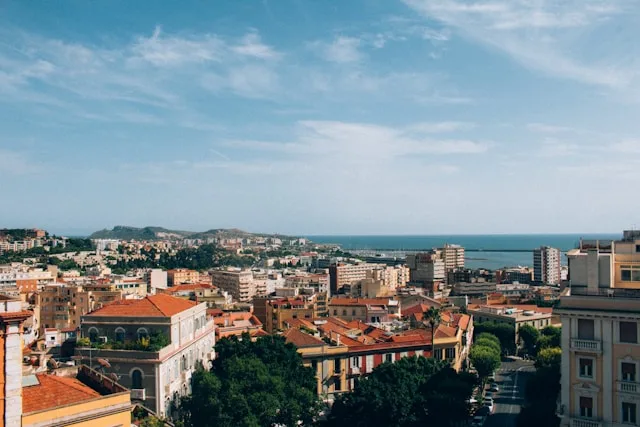
The Port of Cagliari handled 38.5 million tonnes of freight in 2024. Container throughput stabilised near 570,000 TEU. Ferry operators moved 1.2 million passengers across the Tyrrhenian Sea. From the outside, Sardinia's dominant port looks healthy. It is not.
Beneath those headline figures, a structural fracture is widening. The port's largest industrial anchor, the Sarroch refinery, is converting to a biorefinery configuration that will cut crude oil shipments by 60% and eliminate an estimated 400 logistics jobs by 2027. Public authorities have responded with more than €187 million in infrastructure investment. The problem is that the professionals required to operate, maintain, and manage the facilities being built do not exist in sufficient numbers anywhere in the Italian maritime market, let alone in Sardinia. Terminal operations managers take 127 days to hire in Cagliari. Marine engineers with LNG certification are passive at a ratio of nine to one. And 68% of local maritime employers reported difficulty filling technical roles in the second half of 2024, against a regional average of 41%.
What follows is an analysis of the forces reshaping Cagliari's maritime logistics cluster, the employers driving that change, and what senior leaders need to understand before they make their next hiring or retention decision in this market.
A Port in Transition: Where Cagliari Stands in 2026
Cagliari's port cluster operates under the oversight of the Autorità di Sistema Portuale del Mare di Sardegna and serves three distinct commercial functions: container transhipment for intra-Mediterranean routes, Ro-Ro ferry services connecting Sardinia to the mainland, and industrial logistics centred on the Sarroch refinery complex. Each of these functions is changing simultaneously.
Container traffic, managed by Contship Italia through the Cagliari International Container Terminal, has stabilised in the 560,000 to 580,000 TEU range following post-pandemic normalisation. The terminal's strategy depends on transhipment volumes from Asia-Mediterranean shipping alliances. CICT aims to reach 620,000 TEU in 2026, but only if dredging to 14.5 metres depth at the Canale dei Siculi is completed on schedule. According to the AdSP del Mare di Sardegna's Piano Operativo Triennale 2024-2026, berth utilisation already hits 85% during peak summer months when ferry, cruise, and container operations collide. Expanding capacity without expanding the pool of qualified terminal managers creates a bottleneck that no amount of concrete can solve.
Ferry operations remain the dominant passenger segment. Tirrenia, now fully integrated into the Grimaldi Group, and Moby maintain daily services to Civitavecchia, Naples, and Palermo. Together they handle approximately 220,000 freight units annually. The 2026 development that matters most for hiring leaders is the planned deployment of LNG-powered vessels on Cagliari routes. Grimaldi's Fleet Sustainability Report estimates €45 million in shore power infrastructure investment to support these new vessels. The technical staff required to operate LNG bunkering facilities and maintain alternative fuel systems are among the scarcest professionals in the Italian maritime sector.
Cruise traffic recovered to 280 calls carrying 380,000 passengers in 2024, still 12% below 2019 levels. New home-porting agreements with MSC Cruises and Costa Crociere for seasonal Mediterranean deployments should push that figure to 310 or 320 calls in 2026. But the cruise recovery story is secondary to the larger transformation underway. The real question for this market is not whether ships will come. It is whether the people to handle them will be there when they arrive.
The Sarroch Conversion: When Your Largest Client Shrinks
The Sarroch refinery, operated by Saras SpA, has been the gravitational centre of Cagliari's industrial logistics for decades. At full capacity, it processed 15 million tonnes of crude oil per year and supported approximately 1,200 direct logistics and transport jobs. That era is ending.
From Crude Processing to Biorefinery
Saras announced a strategic conversion to a 3.5 million tonnes per year biorefinery configuration, targeted for completion by late 2026. According to Saras SpA's Strategic Plan 2024-2028, maritime crude oil shipments to the port will fall by 60% by 2027. The Regione Autonoma della Sardegna's employment impact assessment projects a net negative employment effect during the 2025-2028 transition period.
This single corporate decision removes the stable base of liquid bulk traffic that has justified decades of logistics infrastructure investment. The 400 jobs directly dependent on crude handling do not transfer cleanly to biorefinery logistics. Biomass handling, biofuel distribution, and renewable feedstock coordination require different equipment, different certifications, and different people.
What Replaces the Volume
The port authority is pursuing two strategies to fill the gap. The first is offshore wind logistics. Cagliari is positioning itself as a supply base for floating offshore wind farms in the Sardinian Sea, with heavy-lift berths targeted for operational readiness in 2026. The second is an increase in break-bulk and project cargo associated with the biorefinery construction itself and broader renewable energy logistics across the island.
Both strategies demand project cargo engineers, heavy-lift coordinators, and professionals with experience in offshore energy logistics. These are not roles that Cagliari's existing workforce can fill. They are not roles that Sardinia's universities produce graduates for. And they are roles where the competition from Northern European offshore wind hubs, Aberdeen to Rotterdam to Esbjerg, is intense and better-compensated. The capital investment is moving faster than the human capital required to operationalise it.
The Skills Mismatch That Unemployment Figures Conceal
Cagliari's metropolitan area carries an unemployment rate of 14.2%, according to ISTAT's Labour Force Survey for Q3 2024. A hiring executive reading that statistic in isolation might assume talent is available. They would be wrong.
The 14.2% figure describes aggregate labour market slack. It tells you nothing about the availability of terminal operations managers with Navis N4 expertise, marine engineers certified for LNG bunkering, or compliance specialists fluent in the EU Carbon Border Adjustment Mechanism. For these roles, the effective unemployment rate is near zero.
Unioncamere Sardegna's Osservatorio delle Competenze reported that vacancies for Responsabili di Terminal in Cagliari remained open an average of 127 days in 2024. The equivalent role on mainland Italy filled in 67 days. That 60-day gap is the cost of insularity, skills mismatch, and a compensation structure that cannot compete with Genoa or Livorno.
The passive candidate dynamics in this market make the problem worse. Senior terminal operations managers show passive candidate ratios of 85 to 90%. Average tenure at current employers runs 7.2 years. Marine engineers with dual expertise in traditional steel repair and alternative fuel retrofits maintain near-zero active candidate availability. For every marine engineer with LNG certification who is actively looking for work in Italy, nine are employed, satisfied, and invisible to any job board.
This is not a shortage that job advertising can solve. It is a shortage that requires direct identification and approach of candidates who are not looking.
Compensation and the Geography Penalty
Cagliari's compensation structure for maritime logistics leadership reflects two competing forces: the technical scarcity of qualified professionals and the perceived disadvantage of an insular location.
What Terminal Leadership Earns
A Terminal Operations Manager in Cagliari commands €72,000 to €88,000 in base salary plus bonus. This represents a 12% premium over equivalent mainland Italian port roles, according to Michael Page Italy's 2024 Salary Guide. The premium exists not because Cagliari values these professionals more, but because it must pay more to attract anyone to an island with limited mainland connectivity and fewer career progression options.
At the executive level, a General Manager or Direttore di Terminal with P&L responsibility earns €125,000 to €165,000 annually. Multinational terminal operators add long-term incentives. But the pool is vanishingly small. According to Odgers Berndtson's Maritime and Aviation Practice Note, only 12 to 15 qualified professionals with Mediterranean container terminal leadership experience become available for lateral moves in any given year. That figure covers the entire Mediterranean basin, not just Italy.
Maritime Logistics Directors overseeing end-to-end supply chains for industrial clients earn €110,000 to €140,000. The ceiling is constrained by the limited scale of Sardinian industrial logistics compared to Northern Italy, where similar roles in Genoa or Milan command substantially more.
The Genoa and Barcelona Gap
Genoa offers 25 to 35% higher compensation for equivalent terminal operations roles: €90,000 to €110,000 for Operations Managers versus Cagliari's €72,000 to €88,000. The differential is not just monetary. Genoa provides access to Italy's largest container port, diversified logistics clusters, and a career trajectory that Cagliari's smaller market cannot replicate.
Barcelona competes on a different axis entirely. Bilingual maritime executives with Italian, Spanish, and English proficiency can access stronger international mobility pathways and lower personal taxation under Spain's Beckham Law regime. For a senior maritime professional weighing Cagliari against Barcelona, the calculation extends well beyond base salary.
The location penalty manifests in candidate demands. Professionals approached for Cagliari roles increasingly request remote work arrangements or rotational schedules, typically four weeks on and two weeks off. This flexibility is difficult to provide for hands-on port operations roles. A terminal manager cannot supervise vessel planning from a laptop in Milan. This tension between what candidates demand and what the role requires is a negotiation challenge that defines almost every senior search in this market.
Regulatory Pressure Is Creating Roles That Did Not Exist Three Years Ago
Two EU regulatory frameworks are reshaping the compliance requirements for every port operator in the Mediterranean. Both are creating demand for professionals who barely existed as a category before 2022.
Maritime ETS and the Cost Per Box
The inclusion of maritime transport in the EU Emissions Trading System from 2024 imposes additional compliance costs estimated at €8 to €12 per TEU handled. For a transhipment-focused operation like CICT, where margins are already thin compared to gateway ports, this cost is material. According to Transport and Environment's Maritime ETS Impact Assessment, the compliance burden falls disproportionately on Mediterranean transhipment hubs that compete on cost rather than service quality.
The professionals required to manage ETS compliance, carbon reporting, and emissions verification are specialists in EU environmental regulation with maritime operational knowledge. They do not come from traditional port management backgrounds. They come from energy regulation, environmental consulting, or carbon market trading. Finding them requires looking outside the maritime sector entirely, and then assessing whether they can adapt to the operational tempo of a working port.
Onshore Power Supply and the 2030 Deadline
The Alternative Fuels Infrastructure Regulation requires Cagliari to implement Onshore Power Supply for cruise and ferry vessels by 2030. Capital expenditure estimates range from €60 to €80 million. The funding mechanisms remain uncertain.
The engineering talent required for OPS installation and operation sits at the intersection of marine electrical engineering and port infrastructure. It is a niche within a niche. Combined with the demand for LNG bunkering specialists driven by Grimaldi's new vessel deployments, Cagliari needs to recruit from a talent pool that every other EU TEN-T corridor port is also pursuing.
The regulatory timeline is not negotiable. The cost of failing to fill these roles is not a slower project schedule. It is non-compliance with EU law.
Why the Investment Story and the Talent Story Are Moving in Opposite Directions
This is the analytical tension at the heart of Cagliari's maritime cluster in 2026, and the observation that the raw data alone does not surface clearly enough.
The Italian government has allocated €142 million under the PNRR for port-hinterland rail improvements in Sardinia. The port authority is investing in dredging, terminal automation, and heavy-lift berth readiness. Grimaldi is committing €45 million to shore power infrastructure. The Sardinian regional government is backing offshore wind logistics development. Total committed public and private capital for Cagliari's port cluster exceeds €200 million across these programmes.
Simultaneously, the Sarroch refinery conversion is removing the port's most stable industrial logistics client. The rail connection to the Gonnesa-Sarroch industrial zone permits only 6 to 8 freight trains daily, far below what EU Green Deal modal shift targets require. And the single-carriageway SS195 remains the primary road link to the port's industrial hinterland.
The investment is building capacity that the current workforce cannot staff and the current hinterland infrastructure cannot fully connect. Capital has moved faster than human capital could follow. The port is gaining berths, cranes, and regulatory obligations at a rate that outstrips its ability to recruit the people who make those assets productive.
This is not a problem that resolves through normal labour market mechanisms. Sardinia's universities produce approximately 30 maritime logistics graduates per year. The port cluster's annual hiring need for technical and managerial roles, calculated from the vacancy data and retirement projections in the Unioncamere data, exceeds 120. The arithmetic does not work. External recruitment, from the mainland and from other Mediterranean markets, is the only path, and it requires the kind of proactive talent mapping that goes far beyond posting a vacancy on a maritime jobs board.
What This Means for Hiring Leaders in 2026
The organisations best positioned to compete in Cagliari's evolving maritime cluster will share three characteristics. They will have invested in direct search capability before they needed it. They will have built compensation packages that acknowledge the location penalty honestly rather than pretending it does not exist. And they will have accepted that the most critical hires in this market require a search process that reaches the 85 to 90% of qualified professionals who are not looking.
The ferry operators deploying LNG vessels need bunkering and alternative fuel specialists. The terminal operator needs digitally fluent operations managers who can implement Navis N4 and IoT systems. The port authority needs regulatory compliance professionals who understand EU ETS and CBAM at operational level. The offshore wind logistics ambition needs heavy-lift project cargo engineers. None of these professionals are sitting in Cagliari waiting for a phone call. The traditional executive search process of posting, waiting, and hoping does not work in a market where the active candidate pool is functionally empty.
For organisations hiring in Sardinia's maritime sector, where 127-day vacancy durations are the norm and the candidate pool extends far beyond the island, KiTalent delivers interview-ready leadership candidates within 7 to 10 days through AI-enhanced talent identification across the full Mediterranean market. With a pay-per-interview model that eliminates upfront retainer risk, and a 96% one-year retention rate across 1,450 executive placements, the approach is built for markets where speed and precision both matter. Organisations competing for senior leadership in industrial and maritime operations can start a conversation with our executive search team about how we source for this specific cluster.
Frequently Asked Questions
What is the average salary for a Terminal Operations Manager in Cagliari?
Terminal Operations Managers in Cagliari earn €72,000 to €88,000 in base salary plus bonus, according to Michael Page Italy's 2024 Salary Guide. This represents a 12% premium over equivalent roles at mainland Italian ports such as Genoa or Livorno. The premium reflects Sardinia's insular location penalty. At the executive level, a General Manager or Direttore di Terminal with full P&L responsibility earns €125,000 to €165,000 annually, with additional long-term incentives at multinational operators.
Why is it so difficult to hire maritime logistics professionals in Sardinia?
The difficulty stems from a skills mismatch rather than absolute labour scarcity. While Cagliari's metropolitan unemployment rate stands at 14.2%, technical maritime roles require digitisation expertise, alternative fuel certifications, and regulatory compliance knowledge that the local workforce largely lacks. Passive candidate ratios of 85 to 90% for senior port operations roles mean the vast majority of qualified professionals are employed and not actively seeking new positions. Effective hiring in this market depends on direct headhunting methods that reach passive candidates.
How does the Sarroch biorefinery conversion affect Cagliari's port employment?
Saras SpA is converting the Sarroch refinery from 15 million tonnes per year crude processing to a 3.5 million tonnes per year biorefinery configuration by late 2026. This will reduce maritime crude oil shipments by 60% by 2027 and eliminate approximately 400 logistics and maritime agency jobs dependent on liquid bulk traffic. The regional government projects a net negative employment effect during the 2025 to 2028 transition. New roles in biomass handling and biofuel distribution will emerge, but they require different skill sets and will not absorb the displaced workforce on a one-to-one basis.
What regulatory changes are affecting maritime hiring in Cagliari?
Two EU frameworks are driving new hiring demand. The inclusion of maritime transport in the EU Emissions Trading System from 2024 requires carbon compliance specialists at every port handling significant tonnage. The Alternative Fuels Infrastructure Regulation mandates Onshore Power Supply installation for cruise and ferry vessels by 2030, requiring marine electrical engineers and infrastructure project managers. Both frameworks create demand for professionals who combine regulatory expertise with maritime operational knowledge. Searches for these hybrid profiles typically take four to six months.
How does Cagliari compete with Genoa and Barcelona for maritime talent?
Cagliari faces a compensation gap of 25 to 35% against Genoa for equivalent terminal operations roles, and competes against Barcelona's lower expatriate taxation and stronger international career pathways. To attract senior professionals, Cagliari employers increasingly need to offer rotational schedules, relocation support, and clear career progression commitments. Organisations that rely solely on standard CCNL salary scales without addressing the location penalty through creative compensation structures consistently lose candidates to mainland competitors.
What is KiTalent's approach to maritime executive hiring in the Mediterranean?
KiTalent uses AI-enhanced talent mapping to identify and approach the passive candidates who make up 85 to 90% of qualified maritime leadership professionals. Rather than depending on job advertising, the methodology maps the full Mediterranean market for professionals with specific operational and regulatory expertise, then engages them directly. Clients receive interview-ready candidates within 7 to 10 days, paying only when they meet qualified individuals. This approach is particularly effective in niche markets like Sardinian maritime logistics, where traditional search methods consistently fail to surface the right profiles.